

In this guide
Hager is a long-established name in UK electrical distribution, and householders researching a "hager battery" are usually trying to establish whether the company sells a home battery, what it costs, and what the warranty covers. The verified position is that no Hager home battery product facts are available: no capacity, no power rating, no warranty term, no price and no UK support contact. What can be set out with confidence is the general framework a household should apply to any home battery purchase, and the questions to put to an installer about a Hager system specifically.
The general figures are well established. Independent guidance puts a typical home system at 10 kWh of capacity1, and official guidance puts domestic battery storage at a lifetime of around 10 to 15 years, shorter than solar panels2. Official statistics describe batteries, both domestic and grid-scale, storing electricity for up to eight hours3. On cost, independent guidance gives 8 to 10 kWh batteries a battery-only price of £2,800 to £4,500 and an installed price of £4,500 to £7,000, as at March 20264.
Hager's home battery range at a glance
No Hager home battery range can be described from the available information. There is no capacity figure, no power rating, no model name, no warranty term and no published price for a Hager battery. A householder who has seen the Hager name on a consumer unit, a distribution board or an EV charge point should not assume that the same company sells a domestic battery, and should not rely on any specification found outside the manufacturer's own documentation.
What is documented about Hager is its activity in electrical components rather than storage. Hager LTD issued a UKCA Declaration of Conformity for its MCB product lines on 12 November 2025, declaring conformity under UK legislation and specified standards5. In March 2026 the company announced that its MCB Commercial Platform range incorporates recycled material developed with LATI, following a transition to recycled plastic for that platform implemented from September 20255. That is a components business pursuing a circular-economy route, not a documented home battery line.
For a household, the practical consequence is that any Hager battery claim should be verified against the manufacturer's own UK documentation before money changes hands. Where a specification cannot be produced, the safe assumption is that it does not exist in a form a buyer can rely on. The general range of what a home battery does is covered in the home battery storage guide, and the differences between system architectures are set out in AC-coupled and DC-coupled home batteries.
Who Hager is and what that means for a UK household

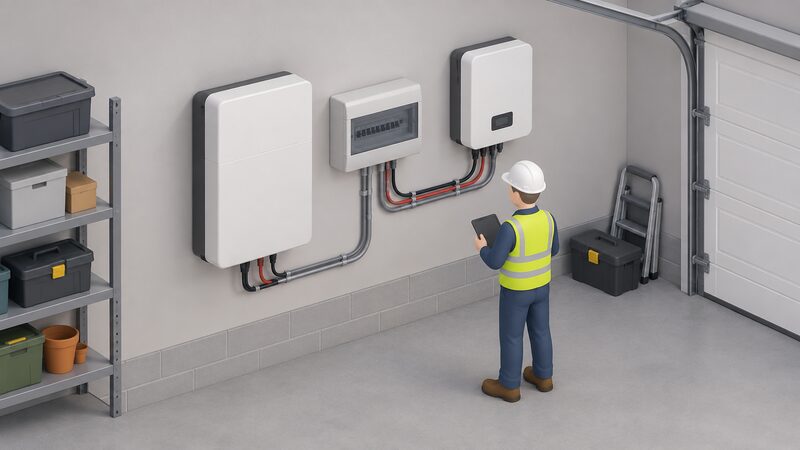
Hager's documented UK activity is in electrical components and conformity work. The UKCA Declaration of Conformity issued by Hager LTD on 12 November 2025 covers MCB product lines under UK legislation and specified standards5, and the company's recycled-material MCB platform was announced in March 20265. This is the profile of a components manufacturer with a UK legal entity and a compliance function, which matters for a household because it means there is a UK corporate presence to deal with, but it says nothing about domestic storage products.
The wider market context is that home batteries are now a mainstream domestic product. Independent guidance describes home storage batteries as storing electricity for use later, making an energy system more independent from the National Grid6. Official guidance notes that the average UK household already has many rechargeable items containing lithium ion batteries, including laptops, mobile phones, e-scooters, e-cigarettes and mobility vehicles7, so the chemistry is familiar even where the product is not.
For a household weighing a Hager system, the questions that matter are the ones any buyer should ask: who manufactures the cells, who provides the inverter, what the warranty guarantees in writing, who honours it in the UK, and what happens if the company exits the market. A UK legal entity and a conformity declaration are useful signals of an established business, but they are not a substitute for a product warranty document naming the battery.
Battery capacity and power ratings: what the numbers mean
Capacity and power are the two numbers that decide what a battery can do, and they are frequently confused. Capacity is measured in kilowatt hours and describes how much energy the battery holds; independent guidance puts a typical home system at 10 kWh1. Power, measured in kilowatts, describes how fast energy can be moved in or out, and it is the figure that determines whether a battery can run a heat pump, an EV charger or a whole house at once.
Duration follows from the two together. Official statistics describe batteries, both domestic and grid-scale, storing electricity for up to eight hours3. A battery rated at 10 kWh and able to discharge at a rate that empties it over eight hours is a different proposition from one that empties in two, even though the capacity figure is identical. The relationship between nominal capacity, usable capacity and depth of discharge is set out in battery capacity and usable capacity, and the rate limits are covered in battery power ratings and C-rate.
For a household, the practical test is to ask what the battery will actually run and for how long. A 10 kWh battery is a useful benchmark1, but the usable figure is lower than the nominal one, and the discharge rate caps what can be drawn at any moment. Efficiency losses between charge and discharge reduce the delivered energy further, which is covered in round-trip efficiency. None of these figures can be stated for a Hager product, because none are available.
| Measure | Unit | What it tells a household | Typical figure |
|---|---|---|---|
| Capacity | kWh | How much energy is stored | 10 kWh typical home system1 |
| Duration | hours | How long the store lasts | up to eight hours3 |
| Lifetime | years | How long the battery is expected to serve | around 10 to 15 years2 |
Warranty terms and what they cover

No Hager battery warranty term is available, so the terms cannot be described. What can be described is the shape of a home battery warranty in the UK market and the conditions that typically attach to it. One maker's product page lists a 10-year product and installation warranty as included with its solar battery8. That is a single maker's term for its own product and is not a market standard, but it shows the order of magnitude that appears in the market.
Registration is the mechanism that activates many warranties. Scheme rules for a solar panel installation programme require inverter product registrations to activate guarantees and warranties to be completed within 48 hours of commissioning9. That is a scheme rule rather than a general legal requirement, but it illustrates how tight registration windows can be. Safety guidance for other electrical products advises registering the product so the manufacturer can make contact if there is a safety recall10, and a separate safety notice repeats that registration lets a manufacturer contact an owner to repair or replace if a problem arises11.
The conditions attached to a warranty matter as much as its length. Retained capacity, throughput limits, the requirement to use a registered installer, servicing obligations and exclusions for unauthorised work are all common. The general framework is set out in home battery warranties, and the underlying degradation behaviour is covered in battery cycle life and degradation.
Installation, compatibility and pairing with solar
Installation of a home battery is not a plug-in exercise. Maker guidance states that a hybrid inverter is required if a battery is being added12, which means the battery is part of a system rather than a standalone appliance. Pairing rules differ between new and older equipment: one maker specifies plug to plug connections when pairing a new inverter with a new battery, and lug to lug when connecting an inverter to an older battery12. Some systems avoid the question by integrating the storage inverter and the battery in a single unit, combining the functions of DC- and AC-coupled solutions12.
Insurance-backed guarantees are a further installation condition. Providing an insurance-backed guarantee for a solar PV and/or electrical energy storage system installation is mandatory, while providing one for an EV charge point only installation is optional13. That places storage installations in a stricter category than charge points alone.
Solar pairing is the common configuration. Independent guidance describes a home battery capturing surplus solar energy for later use, including overnight EV charging, whereas without a battery unused solar electricity is wasted or exported to the grid, often at a relatively low rate14. Independent guidance also describes combining solar panels with a home battery to store renewable electricity to power a heat pump, making the household less reliant on grid electricity15. The installation process itself is covered in home battery installation, and the standards that govern it are in battery installation standards.

Cost and what drives the price
No Hager battery price is available, so no figure can be given for a Hager system. The market figures that do exist are indicative. Independent guidance gives 8 to 10 kWh batteries a battery-only price of £2,800 to £4,500 and an installed price of £4,500 to £7,000, as at March 20264. Case study data from the same period records a 10 kWh battery at a £4,000 measure cost in two separate cases, and a 5 kWh battery at a £2,250 measure cost in a third16.
The gap between battery-only and installed price is the labour, the inverter, the electrical work, the mounting and the certification. Three things move a quote most: the capacity chosen, whether the system is being added to existing solar or installed from scratch, and whether backup capability is included. A larger battery costs more in cells but the installation labour does not scale in proportion, which is why the installed price per kWh falls as capacity rises.
VAT treatment is not stated in these figures, so they should be read as quoted rather than as confirmed VAT-inclusive prices. The general cost picture is set out in how much does a home battery cost, and the arithmetic behind payback is covered in home battery savings and payback.
| System size | Battery-only price | Installed price | Source basis |
|---|---|---|---|
| 8 to 10 kWh | £2,800 to £4,500 | £4,500 to £7,000 | Independent guidance, March 20264 |
| 10 kWh | not stated | £4,000 measure cost | Case study data16 |
| 5 kWh | not stated | £2,250 measure cost | Case study data16 |
What owning a Hager battery means for energy independence
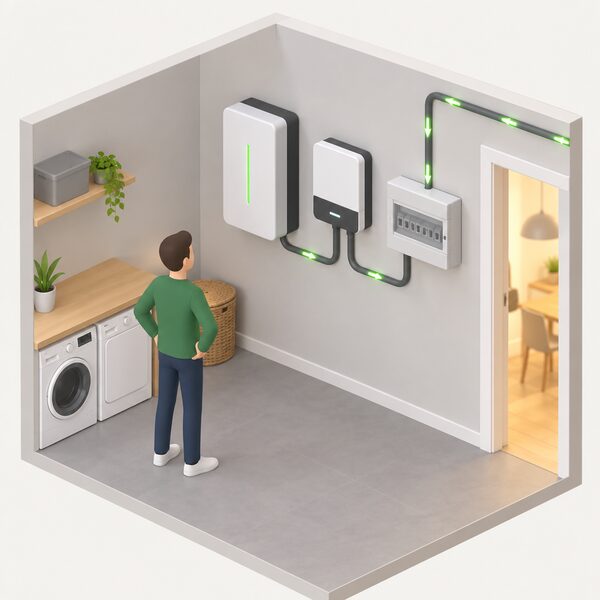
A home battery's contribution to independence is real but bounded. Independent guidance describes home storage batteries as storing electricity for use later, making an energy system more independent from the National Grid6. Independent guidance states that a home battery is most worthwhile if a household wants backup power, does not have full-retail export rates, or can access cheap overnight charging tariffs17. Those three conditions describe the situations where a battery changes the household's position rather than simply shifting when electricity is bought.
The dependence that remains is substantial. A battery charged from the grid still depends on a supplier and on a tariff that makes overnight charging cheap. A battery paired with solar reduces grid import but does not remove the connection, and solar output varies: independent guidance notes that solar panels do not need direct sunlight and can generate electricity on cloudy days18, that they do not require full sunlight, just light19, and that they can work year-round even without consistent direct sunlight20. At night they do not work at all20. A battery bridges that gap but does not eliminate it.
Backup capability is the sharpest limit. Independent guidance is explicit that not all systems are suitable for power cuts, and that a householder should ask the installer whether the battery will work in a power outage and for how long6. Without that confirmation, a battery may be a tariff-optimisation device rather than a resilience one. The wider picture is set out in home batteries and household energy independence and battery backup in a power cut.
"If you're looking to protect yourself against power cuts with a home battery, not all systems are suitable."
Where the information runs out
The honest position on a Hager home battery is that the available information does not support a product page. There is no capacity, no power rating, no warranty term, no price, no serial number location, no registration process and no UK support contact. A householder who needs those facts should obtain them from the manufacturer's own UK documentation or from the installer's written quotation, and should treat any figure that cannot be traced to those sources as unverified.
The general framework still applies. A typical home system is around 10 kWh1, domestic battery storage lasts around 10 to 15 years2, storage duration runs to up to eight hours3, and 8 to 10 kWh systems carry a battery-only price of £2,800 to £4,500 and an installed price of £4,500 to £7,000 as at March 20264. A hybrid inverter is required if a battery is being added12, and an insurance-backed guarantee is mandatory for a storage installation13.
For a household, the questions to settle before committing are the ones the market data cannot answer for a specific product: what the usable capacity is, what the power rating allows, what the warranty guarantees in writing and who honours it, whether backup is included, and what the registration deadline is. Where a manufacturer cannot answer those in writing, the risk sits with the buyer.
Sources20 cited
- Battery storage, Energy Saving Trust, 2026-08-19
- POSTnote 771: Electricity storage, UK Parliament, 2026-06-25
- Statutory security of supply report 2025, GOV.UK, 2025-12-17
- Balancing investment in clean heat and energy efficiency in Scottish housing retrofit, ClimateXChange, 2026
- Hager LATI collaboration on MCB circular economy, Hager, 2026-03-12
- Solar panel battery storage, Which?, 2026-05-14
- Lithium-ion batteries, North Wales Fire and Rescue Service, 2026
- Solar battery, Hive, 2026-09-17
- Barcud Solar Panel Installation Scheme Specification, Sell2Wales, 2026-06-15
- Portable heaters, Electrical Safety First, 2026-09-17
- Comment on Ofgem energy price cap announcement, Electrical Safety First, 2026-09-19
- Solar power for your home, BLUETTI UK, 2026-08-06
- How EPVS and Flexi-Orb are improving the standard of renewable energy installations, EPVS, 2026-09-17
- Can solar panels charge electric cars?, The CPA, 2026-04-15
- How to ensure a heat pump runs efficiently, Energy Saving Trust, 2026-05-19
- Clean heat: supporting low-income households, Energy UK, 2026-06-11
- Solar battery storage guide: is a home battery worth it?, IAA, 2026-09-20
- Generating renewable electricity, Energy Saving Trust, 2025-12-11
- Solar panels, Oxfordshire County Council, 2026-09-17
- Do solar panels work in winter?, Uswitch, 2026-09-15
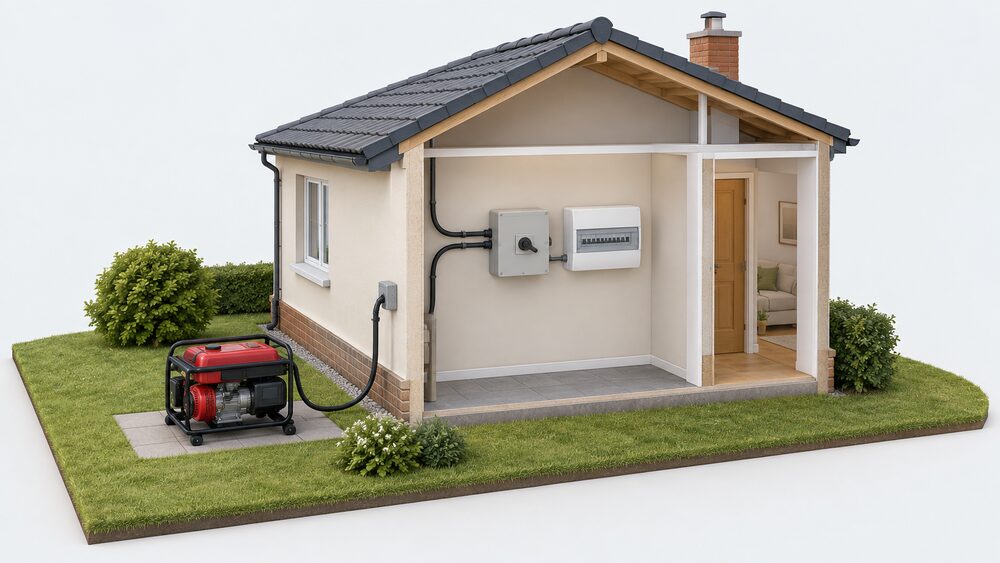 Hager changeover switches and consumer units for backup powerWhich Hager changeover switch suits your home, and what size generator or inverter will it handle?
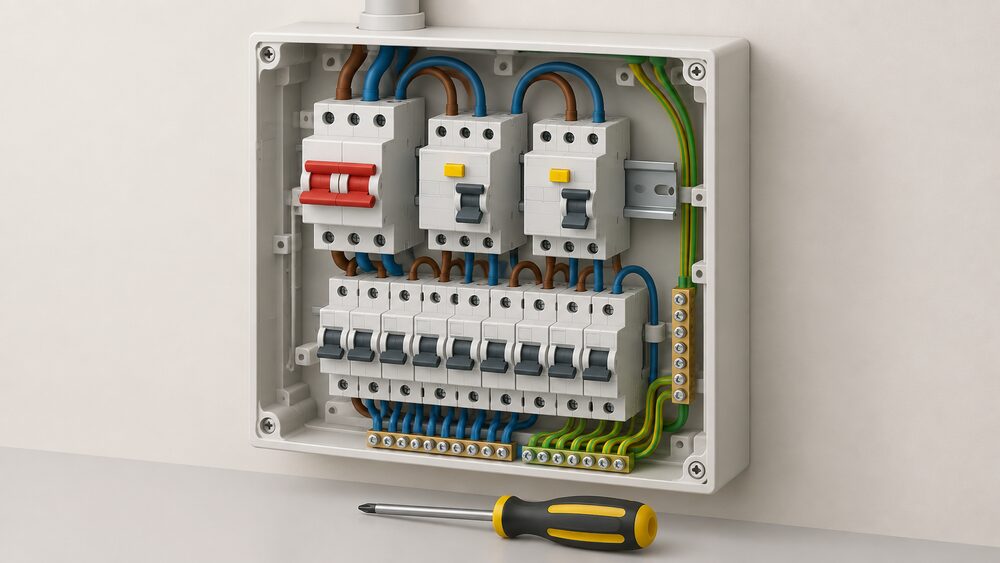 Hager consumer units and circuit protectionWhich Hager board suits a normal house, and what changes if you need three-phase?