In this guide
Livoltek is a storage brand that sells into the UK through distributors and installers rather than through a national service network. For a household, the practical questions are narrower than the product catalogue: which models can still be bought, what the warranty actually promises, and who answers when something goes wrong. On the first of those, the answer has changed. The iPower AC Coupled all-in-one system is listed as discontinued, with the reason given as phased out, and the Hyper-5kW inverter is listed as end of line and no longer available1.
The range that remains is built around hybrid inverters and lithium iron phosphate batteries. The low voltage BLF-SR5 to 35 battery range uses 5.12kWh packs with 100Ah cells in a modular stack design, and the AES series battery is a 51.2V, 100Ah unit with a 90% depth of discharge and a 6,000 cycle life3. The high voltage BHF system uses prismatic LFP cells with the same 90% depth of discharge5.
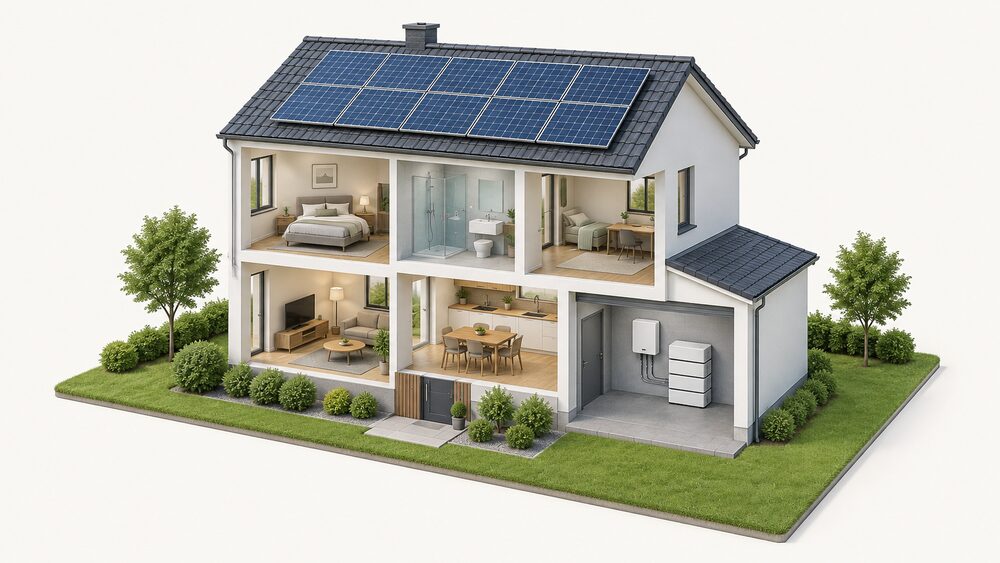
What that means for independence is mixed. A hybrid inverter and battery let a home store its own solar generation and shift when it draws from the grid, and Livoltek states that its hybrid inverter can work without a battery connected at all6. But the household remains tied to the grid for top-up, to an installer for warranty claims, and to the manufacturer's cloud service for remote monitoring and fault diagnosis7.
What Livoltek makes for the home
Livoltek's domestic line is a hybrid inverter paired with a battery, plus an AC charger for electric vehicles. The hybrid inverter is the centre of the system: it manages solar input, battery charging and discharging, and the flow to the house and the grid. Livoltek states that its hybrid inverter can work without a battery connected, which means a household can fit the inverter first and add storage later6.
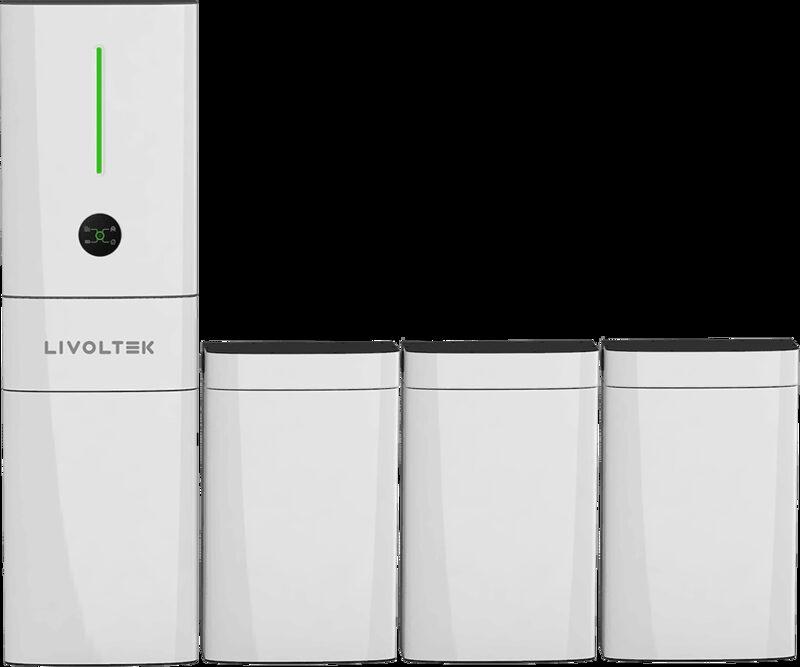
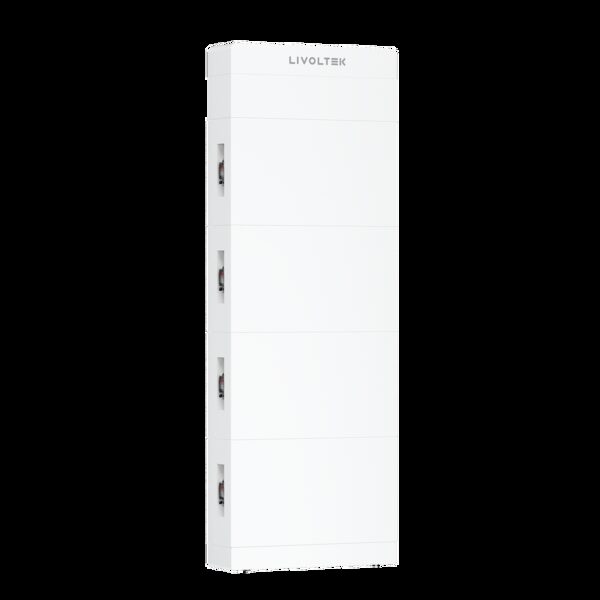
The batteries come in two architectures. The low voltage BLF-SR5 to 35 range is an LFP battery designed specifically for home energy storage, built from 5.12kWh packs with 100Ah cells, using a modular stack design that the maker describes as easy to install and expand, with a stacked installation design and high energy density3. The AES series battery is a 51.2V, 100Ah unit with a 90% depth of discharge and a 6,000 cycle life, using LFP chemistry and RS485 or CAN communication with its battery management system, and it can be installed on the floor or on the wall indoors or outdoors under an IP65 rating4.
The high voltage BHF system takes a different route, using prismatic LFP cells with a 90% depth of discharge and remote fault diagnosis, upgrade and maintenance built in5. For households that already have solar panels and want to add storage without replacing the inverter, Livoltek sold an AC coupled all-in-one system, described as a cost-efficient way to upgrade an existing PV system to a hybrid one7. That product is now discontinued1.
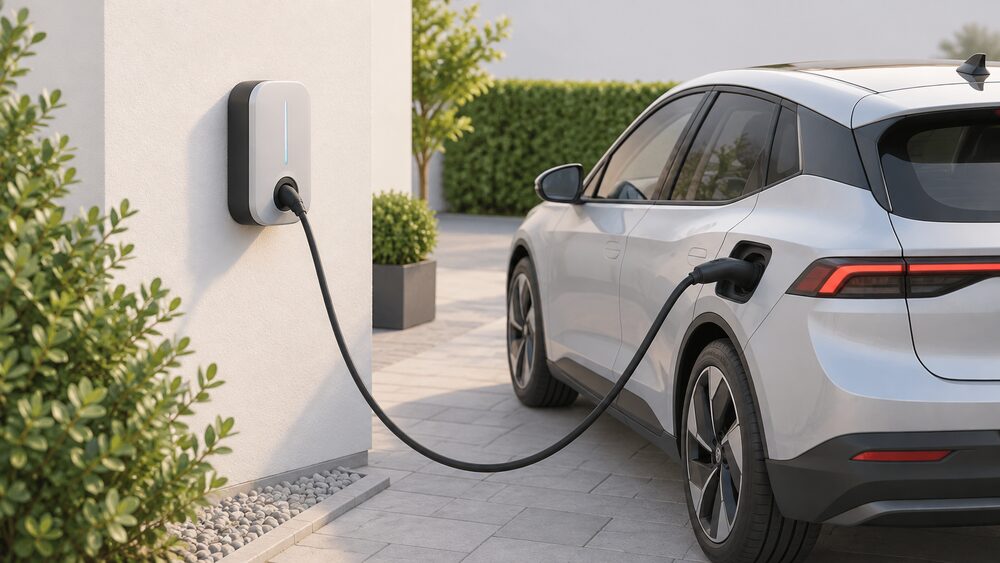
The ROBOT Home AC Charger is the third piece. Livoltek states that its EV chargers can be connected to all existing photovoltaic systems, allowing for 100% use of renewable energy for vehicle charging9. That claim is the maker's own and describes the design intent rather than a measured household result.
The hybrid inverter range: HP1, Hyper and Hyper series3.0
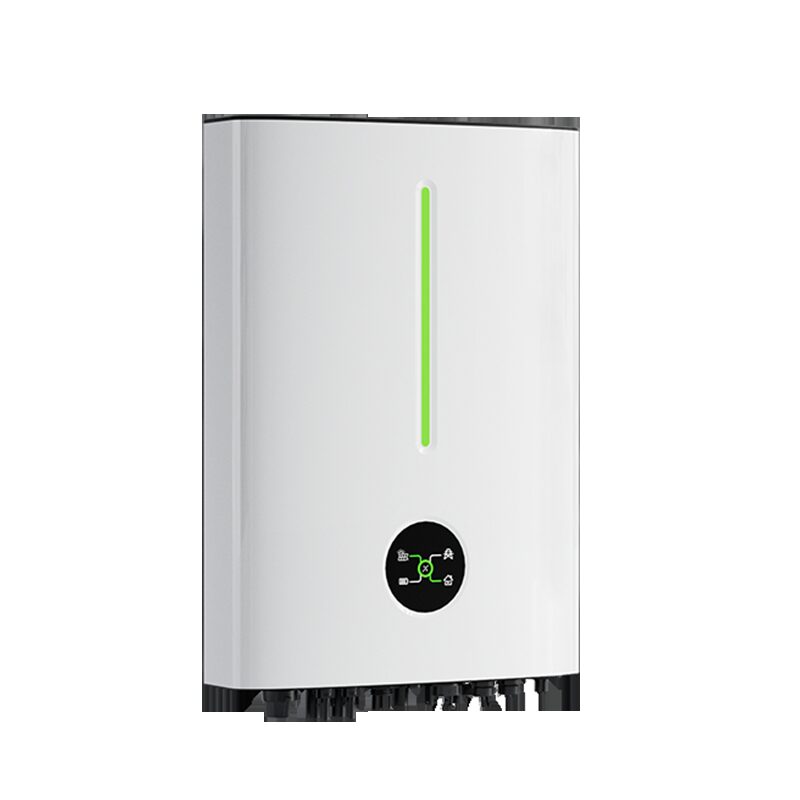
Livoltek's hybrid inverter catalogue has moved quickly. Those features matter for a household on a time-of-use tariff, because the time slots are what let the battery charge in a cheap window and discharge in an expensive one.
The single-phase Hyper series takes a different design approach: a fanless design described as quiet with a long lifespan, all-in-one or split application, 150% oversized and 150% yield, 24/7 monitoring and maintenance, high charging and discharging capacity, export power control and time-of-use shifts, and a modular and scalable design offering flexibility to start small and expand as energy needs grow10.
The Hyper series3.0 appeared in Livoltek's hybrid inverter category on 10 August 2026, the newest addition to the line11. Earlier listings in the same category include the HP3-5K, 6K, 8K, 10K and 12K D2 models dated 10 March 2025, the HP3-14.9K T2 dated 12 March 2025, and the HP3-37.5 S1 dated 12 September 202511.
For comparison, other makers in the same market publish similar hybrid specifications: GivEnergy's high voltage Gen 3 hybrid inverter pairs with modular LiFePO₄ batteries and carries in-built WiFi and LAN, a 120 to 510V battery voltage range, a 90V to 550V MPPT range, 30A charge and discharge current, 10,000W and 10,500W maximum charge and discharge power, and flexible rate tariff compatibility12. Hoymiles pairs its HIT series hybrid inverters with its LB series battery, and its HIS G3 series covers 3 to 6kW single-phase low voltage hybrid with support for batteries and diesel generators14. Fox ESS lists the H3 PRO as a hybrid inverter16. The pattern across the market is the same: a hybrid inverter is the box that decides where each kilowatt hour goes.
End-of-line and awaiting-stock models
Availability is the weakest part of the Livoltek picture in the UK, and it is worth checking before any specification is taken as current. Two products have been withdrawn. The Hyper-5kW inverter, described as WiFi and non-parallel compatible, is listed as end of line and no longer available as of 17 September 20262.
The BLF51-5 battery sits in a different category: awaiting stock rather than withdrawn. The product page states that the battery is awaiting stock arrival and due in soon, with no confirmed date17. That is a distributor's statement about availability, not a manufacturer's production schedule, so it should be read as an indication rather than a promise.
The specification of the BLF-SR5 to 35 range is published regardless. It uses 100Ah cells with a single pack capacity of 5.12kWh, a modular stack design described as easy to install and expand, a stacked installation design with high energy density, BMS intelligent management to extend battery life, a low temperature heating function that enables charging in cold environments, cycle times exceeding 6,000, and support for web and app remote data viewing and remote program upgrade3. The rated capacity of the BLF-SR05 is 100Ah3.
For households comparing modular options, the wider market includes stackable systems from several makers, and the principles of adding capacity later are set out in modular and stackable home batteries.
Warranty, registration and what the terms actually promise
Livoltek's warranty centre states that if a product is still under warranty, the owner can contact the installer for a warranty claim, providing the required warranty documents, and that in the event of any product-related issues within the warranty period the company will promptly replace or repair the product8. The default warranty on a Livoltek inverter is usually five years, and the company says to contact its staff if a longer term or an extension is wanted6.
The route is installer-led, which is common for storage brands without a national service force but has consequences. The claim depends on the installer still trading and still willing to act, and on the owner having kept the commissioning paperwork. Independent guidance on warranty registration in the heating market makes the same point: registration is usually done on the manufacturer's website or by calling them, and missing it can invalidate cover18. Other storage brands are more explicit about the requirement. myenergi states that registration must be completed to validate the warranty and enable support services, and gives its libbi battery module a 10-year warranty from the date of installation or commissioning19. BLUETTI tells buyers to register on its website once the product arrives to claim the warranty20.
The comparison matters because a five-year default with an installer-led claim is a shorter and more conditional promise than the ten-year terms some competitors publish. It also sits alongside a product line where two models have already been withdrawn, which is the point at which a warranty is most likely to be tested.
"If your product is still under warranty, you can contact your installer for a warranty claim, providing the required warranty documents."

Fault codes, serial numbers and diagnosis
Livoltek publishes remote fault diagnosis, upgrade and maintenance as a feature of its high voltage BHF battery system, which means the maker can read and act on some faults without a site visit5. What it does not publish in the material available is a fault code list for its own inverters.
The fault code guidance that does exist comes from other makers, and it is useful mainly for showing how these systems behave. SolaX states that a fault light on its inverter means the system has detected a warning or error, but that the red fault light alone does not identify the exact problem, and that the LCD screen carries the complete code and fault message22. SolaX also states plainly that error codes vary by inverter model and brand23. Growatt's published causes follow the same pattern: Error 203 relates to damaged PV cables, connectors or modules leading to a ground fault, with the fault LED illuminated and the inverter not connecting to the grid; Error 300 can come from an incorrect safety standard configuration, with the inverter disconnecting from the grid and entering a reconnection delay24. Growatt's storage inverter documentation describes Error 506 as occurring when communication between the machine and the battery is good in lithium battery mode but the battery is not connected26. Its off-grid documentation describes fault 52, bus voltage too low, as arising from a heavy load the battery cannot supply27.
Solplanet's guidance covers error 37 and error 46, both relating to the maximum DC input voltage, with a check of the open-circuit voltage of the strings against the inverter's maximum DC input voltage; error 51 relates to power distribution and a possible damaged fuse; and errors 1, 11 and 39 are described as permanent faults, with the advice to disconnect from the grid and PV array, reconnect after three minutes, and contact support if the fault persists28.
None of that is Livoltek's own list, and it should not be read as one. The practical route for a Livoltek owner is the installer who commissioned the system, or the maker's support channel. The general principles of alarms and what to do about them are covered in battery maintenance and faults.
On serial numbers, the sources give no location for a Livoltek inverter's serial number. The number is what a warranty claim needs, and it is normally recorded at commissioning.
Contact, monitoring and the cloud dependence
The sources give no UK phone number, postal address or email address for Livoltek. The published warranty route is through the installer8, and the company's support articles sit on its own website6. For contrast, other storage brands publish a direct UK contact: BLUETTI gives vip-uk@bluettipower.com for extended warranty questions30, and LG's battery recall notice gives a European telephone number, +49 (0) 6196 5719 660, for affected owners31. A household buying a Livoltek system is therefore relying on the installer as the first and often only point of contact.
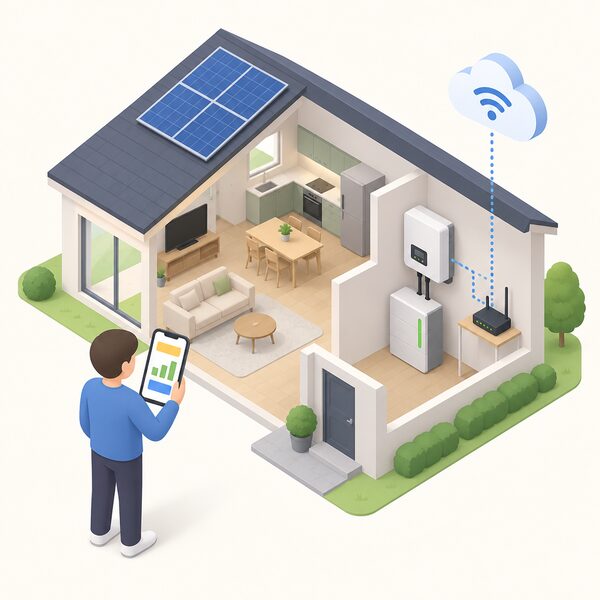
Monitoring runs through the Livoltek Cloud app and web portal, described as an energy monitoring system that lets a household track home generation and consumption32. The BLF battery range supports web and app remote data viewing and remote program upgrade3, and the BHF system supports remote fault diagnosis5.
That is the clearest dependence the brand creates. Local operation continues without an internet connection, but remote viewing, remote upgrades and remote diagnosis all depend on a broadband connection, the manufacturer's servers and the manufacturer's app. If the company's cloud service changes or ends, the hardware keeps working but the visibility does not. The wider question of what a monitoring app does and does not give an owner is covered in monitoring a home battery.
Case studies: what Livoltek's solar and irrigation projects show
Livoltek publishes case studies on its own site, and they are worth reading as illustrations of system design rather than as evidence of UK performance. A mobile solar-powered irrigation case study for farmers in Bihor County, Romania was dated 26 May 2025, and a case study on a solar plus storage system powering events at Verde Ballroom, Romania was dated 25 August 202533. Both are outside the UK, and neither is a domestic installation.
The wider evidence base for what a home system can do comes from independent sources. Energy UK's clean heat financing work describes a household case study involving an air source heat pump with radiators, a 3kWp solar PV array and a 10kWh battery34. The Home Energy Model, the government's calculation methodology, includes reworked solar PV and electric battery models35. An independent case study of a Halifax property describes a hybrid solar system with battery storage installed at the same time36. Tigo's guidance on DC coupled batteries works through an example assuming 10kWh daily battery discharge on a 15kW residential solar and storage site37. Enphase's simulation example for a bidirectional EV charger describes a home producing 61.1 kWh of solar energy and consuming 26 kWh in home loads over 24 hours38.
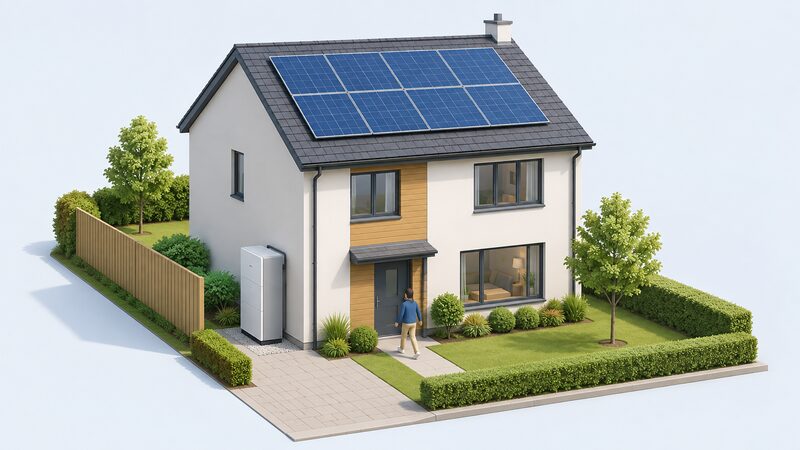
Those figures come from different contexts and different system sizes, and none of them is a Livoltek result. What they show collectively is the shape of a working home system: a solar array, a battery sized in the region of 10kWh, and a load that the battery covers for part of the day. Livoltek's own case studies sit outside the UK and outside the domestic market, so a household weighing the brand should look to the installer's own references and to the specification of the specific model being quoted.
Sources38 cited
- Livoltek iPower AC Coupled all-in-one listing, Solar Trade Sales, 2026
- Livoltek Hyper-5kW inverter listing, Solar Trade Sales, 2026
- Livoltek low voltage residential battery BLF-SR5 to 35, Livoltek, 2026
- Livoltek AC coupled all-in-one ESS battery, Livoltek, 2026
- Livoltek high voltage battery system BHF-S530, Livoltek, 2026
- Livoltek learning centre, Livoltek, 2026
- Livoltek AC coupled all-in-one ESS 3.5kW, Livoltek, 2026
- Livoltek warranty centre, Livoltek, 2026
- Livoltek ROBOT Home AC Charger, Livoltek, 2026
- Livoltek hybrid inverter single-phase 3-6kW, Livoltek, 2026
- Livoltek hybrid inverter category, Livoltek, 2026
- GivEnergy Hybrid Inverter Gen 3, GivEnergy, 2026
- GivEnergy products, GivEnergy, 2026
- Hoymiles HIT series, Hoymiles, 2026
- Hoymiles HIS hybrid inverter, Hoymiles, 2026
- Fox ESS H3 PRO, Fox ESS, 2026
- Livoltek LFP lithium battery 5.12kW listing, Solar Trade Sales, 2026
- Common mistakes that can invalidate your boiler warranty, Which?, 2025
- What is the myenergi libbi warranty, myenergi, 2026
- BLUETTI B500K expansion battery, BLUETTI, 2026
- BLUETTI B500K for Apex 300, BLUETTI, 2026
- SolaX solar inverter fault codes, SolaX, 2026
- SolaX grid voltage fault IE03, SolaX, 2026
- Growatt Error 203 PV isolation low, Growatt, 2025
- Growatt Error 300 AC voltage out of range, Growatt, 2025
- Growatt storage inverter FAQ, Growatt, 2026
- Growatt off-grid inverter FAQ, Growatt, 2026
- Solplanet solar energy questions, Solplanet, 2024
- Solplanet questions and answers, Solplanet, 2022
- BLUETTI extended warranty, BLUETTI, 2026
- LG ESS Home Batteries recall notice, LG, 2026
- Livoltek Cloud app and web, Livoltek, 2026
- Livoltek residential case studies, Livoltek, 2025
- Clean heat: financing the transition, Energy UK, 2025
- Home Energy Model consultation government response, Future Homes Hub, 2025
- Old follows new in Halifax, TLX Insulation, 2026
- Microinverter tax, DC optimizers and DC coupled batteries, Tigo Energy, 2025
- IQ Bidirectional EV Charger white paper, Enphase, 2026
 Livoltek EV ChargersLivoltek home EV chargers run from 7.3 kW single-phase to 22 kW three-phase, with dual-output models and solar pairing, but UK stock is thin and one ACE-S variant has been discontinued.