In this guide
Fox ESS is a hybrid inverter and battery brand that UK householders are increasingly likely to meet, because it is the volume leader in the domestic storage market rather than a niche import. The company states that it has been independently verified by SunWiz as the UK's No.1 brand by volume for both inverters and energy storage systems, and that data from S&P Global Insights places its market share at more than 35% of the UK domestic solar and storage sector1. It also reports being ranked No. 1 in the UK among residential energy storage providers for 2025, based on MWh shipments2.
The residential range is built around single-phase hybrid inverters, chiefly the H1(G2) and AC1(G2) family and the KH and KA series, with three-phase H3 and AC3 models for larger properties. Published maximum efficiency sits between 97.01% and 97.08% for the H1(G2) and AC1(G2) models, and reaches 97.80% on the KH and KA series3. The company's own headline figure is a 97.0% System Performance Index with an efficiency class of A, assessed by HTW Berlin5.
What follows is the range as the maker specifies it, the efficiency figures as published, the market position as claimed, and the dependencies a household takes on by choosing this ecosystem.
What Fox ESS makes: inverters, batteries and EV charging in one ecosystem
Fox ESS describes itself as a global leader in the development of advanced solar inverters, battery storage solutions, and EV charging technologies6. That three-part scope matters more than it first appears, because the value of a hybrid inverter depends on what it can be paired with. The company's own summary of the inverter's job is that it converts solar to AC, manages batteries, and powers reliable backup and off-grid systems6.
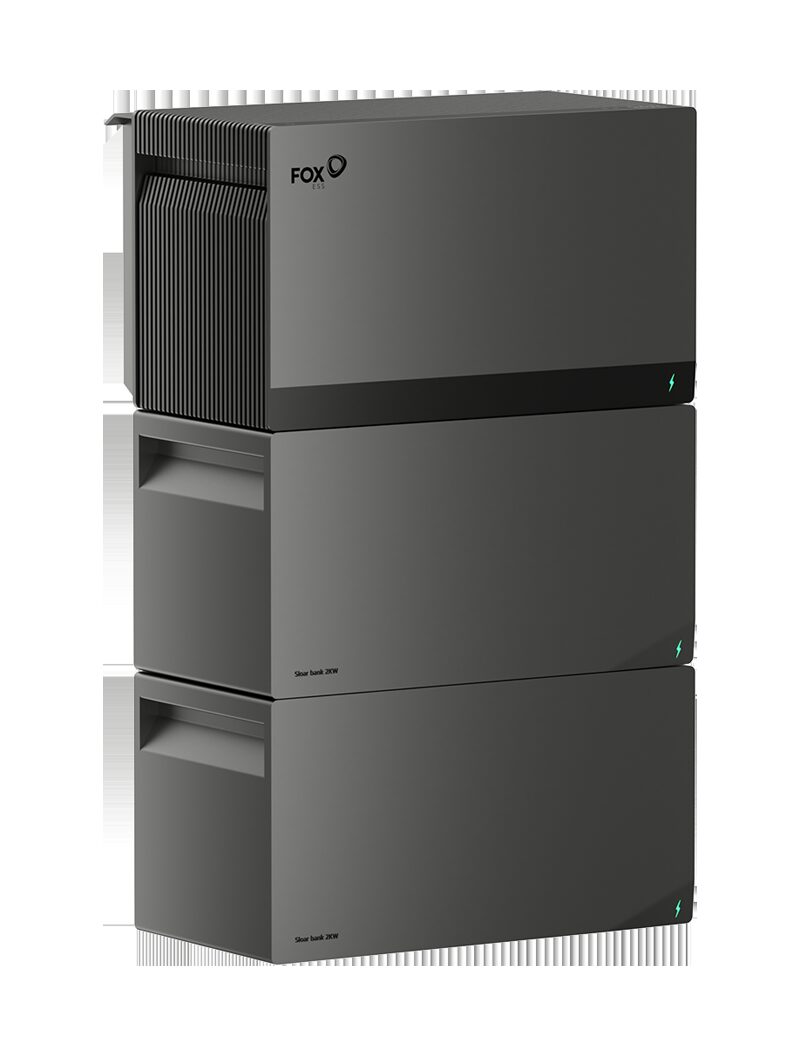
The battery side is high-voltage and modular. Fox ESS develops high-voltage residential battery systems for a range of home energy storage applications, and describes its batteries as high-performance, scalable lithium units for residential solar energy storage7. The EQ Battery Range is a modular, high-voltage range for residential systems, using natural convection cooling and CAN communication9. The EP range sits alongside it, and the KH and KA series are listed as pairing with the EP, EQ and CQ battery ranges10.
The EV charging side completes the loop. Fox ESS EV chargers are described as smart and solar-ready, integrating into the energy ecosystem, and the L Series models are intended to optimise usage of surplus solar generation12. In other words, the same brand can supply the inverter, the battery and the car charger, all intended to work as one system rather than three separate purchases.
That integration is the commercial argument for the brand, and it is also the first dependency. A household that buys into the ecosystem gets components designed to talk to each other, but the intelligence that coordinates them sits in the manufacturer's hardware and, for monitoring and remote control, in its cloud platform. The sections below set out what that means in practice.
The UK residential range: H1, KH, H3, AC3 and microinverters
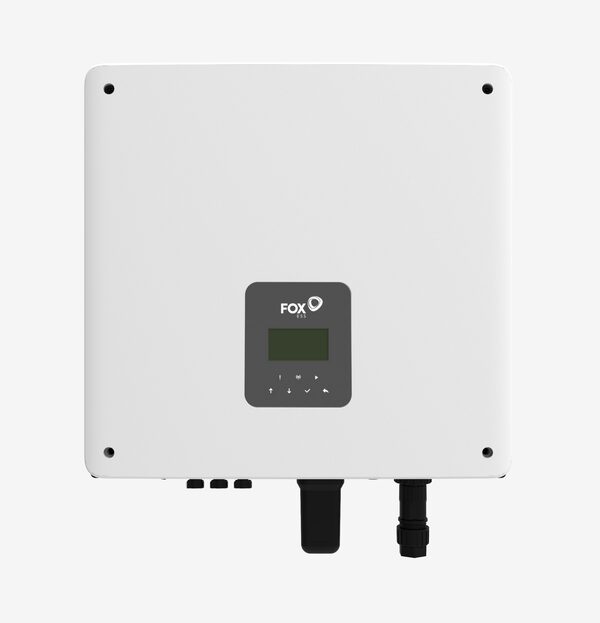
The range divides first by phase, then by whether the unit is a hybrid or an AC-coupled inverter. The H1(G2) and AC1(G2) family is described on its datasheet as a single-phase hybrid/AC inverter, and the published maximum efficiency figures run from 97.01% to 97.08% across the range3. European efficiency, a weighted figure that better reflects real operating conditions, runs from 95.26% to 96.33% across the same models3.
The KH and KA series is also a single-phase hybrid inverter, available in 7, 8, 9 and 10kW options, and pairs with Fox ESS high-voltage batteries including the EQ range, described as a modular, high-voltage battery range for residential energy storage systems10. Its EPS rated voltage is given as 220/230/240V4. For households looking at third-party flexibility services, the KH and H3 Smart Range sit within the compatibility list alongside the H1-G2, while the earlier H1-G1 is not compatible10.
For three-phase properties, the H3 is a three-phase hybrid inverter and the AC3 is a three-phase AC inverter, both transformerless, with CAN communication to the inverter and RS485 for BMS upgrades13. The distinction between them is the same as elsewhere in the market: a hybrid has a DC input for solar, an AC-coupled unit takes mains or AC-coupled generation and manages the battery.
| Family | Type | Published max efficiency | Outputs |
|---|---|---|---|
| H1(G2) / AC1(G2) | Single-phase hybrid/AC | 97.01% to 97.08%3 | Not stated in the datasheet cited |
| KH / KA | Single-phase hybrid | 97.80%4 | 7, 8, 9, 10kW10 |
| H3 | Three-phase hybrid | Not stated in the datasheet cited | Three-phase13 |
| AC3 | Three-phase AC | Not stated in the datasheet cited | Three-phase13 |
| Microinverter | Module-level | Not stated | Not stated6 |
Fox ESS also states that it has launched a more reliable and flexible microinverter to improve power generation efficiency and safety6. That is a separate architecture from the string and hybrid units above, and it is covered in more detail on the microinverters page. For the difference between the two approaches generally, see hybrid inverters.
Efficiency: class A and a 97.0% system performance index
Fox ESS publishes a System Performance Index of 97.0% and an efficiency class of A, both attributed to HTW Berlin5. The System Performance Index is a German assessment that weighs how a system performs across a realistic operating profile rather than at a single optimum point, which is why it sits close to, but not identical with, the headline maximum efficiency figures on the datasheets.
The datasheet numbers are the ones tied to specific appliances. On the H1(G2) and AC1(G2) range, maximum efficiency runs from 97.01% to 97.08% across the models, while European efficiency on the same units is lower, running from 95.26% to 96.33%3. The gap between the two figures is the honest measure of what a household should expect, because inverters rarely run at their maximum efficiency point for long.
The KH and KA series improves on both, at 97.80% maximum and 97.40% European efficiency4. That is a meaningful step, and it reflects the higher output class of those units rather than a different technology.
Two things drive real-world efficiency more than the badge. The first is the DC to AC conversion load: an inverter running well below its rated output is less efficient than one running near it, which is an argument for sizing the inverter to the array rather than oversizing it. The second is the battery round trip, which is not captured in the inverter efficiency figure at all. The solar panel sizing page covers matching array to inverter, and solar inverters explains the ratings in general.
Why Fox ESS leads the UK: No.1 by volume with more than 35% market share
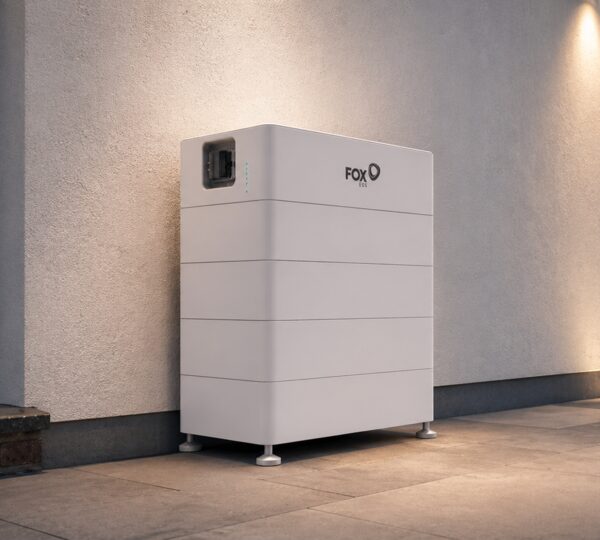
The market position is the most striking thing about the brand, and it is worth separating what is verified from what is claimed. Fox ESS states that it has been independently verified by SunWiz as the UK's No.1 brand by volume for both inverters and energy storage systems, and that S&P Global Insights data places its market share at more than 35%1. It separately reports being ranked No. 1 in the UK among residential energy storage providers for 2025 based on MWh shipments2, and describes itself as the UK's number one residential energy storage brand14.
For scale, the domestic electricity supply market is far more concentrated: the six biggest electricity companies held 91.2% of domestic electricity market share in Q1 202515. An inverter brand holding more than a third of the residential storage sector is a different kind of concentration, and it has practical consequences for parts, familiarity among installers and second-hand values.
Globally, Fox ESS states that it ranked No. 1 with a 10.5% share of the global residential energy storage system market in 2025 according to Frost & Sullivan, and that InfoLink Consulting's 1H26 global ESS shipment rankings placed it first among residential ESS suppliers7. It also states that it ranks 2nd globally for residential energy storage shipments1, and that its global market share rose by 50% in 2025 compared with 20242. Those two global claims sit alongside each other in the company's own material and are not reconciled there.
The UK lead matters to a household for unglamorous reasons: a brand with a large installed base tends to have more installers who know it, more spare parts in the supply chain and more documented fault history. It does not, on its own, say anything about how long any individual unit will last.
Scalability and backup: modular storage, EPS and off-grid capability
The storage architecture is modular by design. Fox ESS describes its residential batteries as having a modular design with flexible capacity options8, and its battery systems as scalable7. The EQ and CQ ranges use compact floor-mounted modules that can be stacked to build the capacity an installation needs10.
Backup capability is built into the hybrid inverters rather than sold only as an extra. Both the H1(G2)/AC1(G2) datasheet and the KH/KA datasheet list EPS output with battery3. EPS, or emergency power supply, is the function that keeps selected circuits live when the grid goes down.
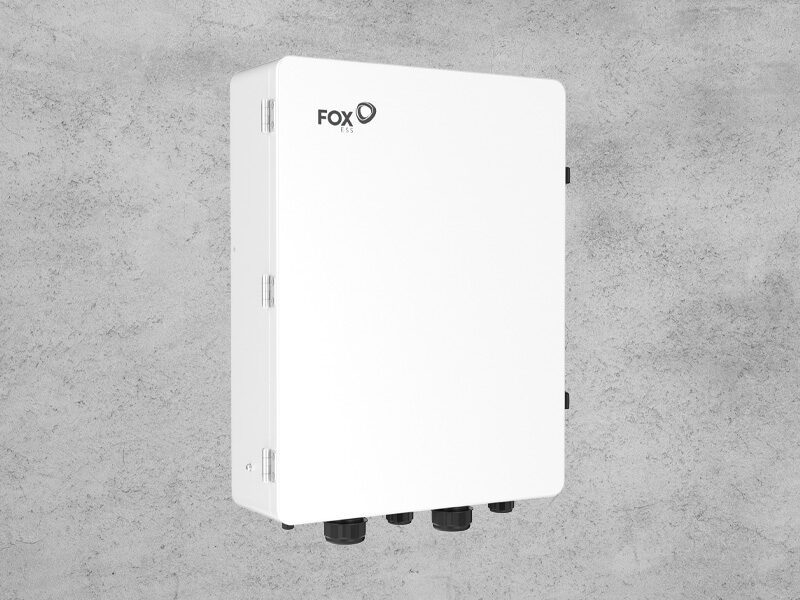
For whole-home backup there is a dedicated gateway. The EPS-BOX-SP is a single-phase whole-home backup gateway designed to provide emergency power during grid outages, and it isolates the property from the grid and, after a short transfer delay, restores power using battery and solar16. Fox ESS describes it as supporting full-home backup subject to system sizing, and lists it as compatible with H1-G2, KH, EVO and PowerQ inverters16.
The off-grid claim needs reading carefully. Fox ESS states that its inverter powers reliable backup and off-grid systems6, and that its battery systems can be paired with solar PV or installed as a standalone solution17. A system with EPS and sufficient storage can run selected circuits indefinitely if generation keeps up, but that is a sizing question, not a product feature. The off-grid solar page sets out what genuine independence requires, and adding battery storage to solar covers retrofit.
Who Fox ESS is: a Sino-British partnership with global reach
Fox ESS describes itself as a Sino-British partnership, supported by significant international shareholders alongside UK-based stakeholders1. The company says it was born from that partnership14, and its registered address is No. 939, Jinhai 3rd Road, Longwan District, Wenzhou, China3. The structure is not unusual in the sector, but it is worth stating plainly: the engineering and manufacturing base is Chinese, with UK shareholders and a UK commercial and service operation.
The scale is substantial. Fox ESS states that it operates in more than 90 countries, backed by 5 R&D centres and more than 5,000 employees5, and that it has built dedicated service branches across more than 90 countries and regions spanning Europe, the Americas, Africa, Asia and Oceania5. It describes itself as specialising in advanced inverter and energy storage solutions14.
On manufacturing standing, Fox ESS states that it is recognised as a BNEF tier 1 energy storage manufacturer1, and repeats the Tier 1 energy storage manufacturer status in a January 2026 press release18. That is the company's own description. Tier 1 status of this kind refers to energy storage manufacturing and is not a certification of any individual installation or of the installer who fits it.
The company has been building partnerships that extend what the hardware can do. It joined the Hive ecosystem, giving battery owners real-time insights into their energy storage through a unified dashboard view19, and Fox ESS battery and inverter products are listed among the devices that work with the Hive ecosystem20. A separate partnership with Axle Energy enables customers with Fox ESS battery and solar systems to join one of the UK's leading Virtual Power Plants18. Both arrangements add capability and both add a third party between the household and its own equipment.
UK availability, service and warranty handling
Fox ESS states that in the UK it has a dedicated service and support operation based from its national service centre, and that all enquiries are answered locally by technicians1. It describes its UK presence as offering localised UK service and support18. Contact addresses published by the company are service@fox-ess.com for service, info@fox-ess.com for general enquiries and sales@fox-ess.com for sales, with an international telephone number of +86 (510) 680929983.
The practical warranty route, however, runs through the installer rather than the manufacturer. Fox ESS states that its structure means a household's local installer, rather than a distant call centre, typically handles warranty and service issues5. That is the single most important thing to understand about owning one of these systems: the terms may be the manufacturer's, but the first call is the fitter's, and the quality of the installation and the installer's continued trading matter as much as the brand.
On availability, Fox ESS EV chargers are available to buy through Midsummer Wholesale12, a UK distributor. Inverter and battery pricing is not published by the manufacturer, so costs are installer-quoted; the solar panel cost page covers what drives a quote.
There is also a tariff dimension. E.ON Next's Next Optimise tariff lists Fox ESS among the systems it is compatible with, specifically all inverters and batteries within the H1-G2, KH and H3 Smart Range, noting that H1-G1 is not compatible21. That is a reminder that generation matters: an older H1-G1 unit cannot access that particular smart tariff, while a G2 unit can.
What owning a Fox ESS inverter means for household energy independence
The honest answer is that a Fox ESS system buys a household a great deal of operational control and no independence from the grid. The inverter converts solar to AC, manages the battery and can run backup circuits during an outage6. With the EPS-BOX-SP gateway, the property is isolated from the grid and power is restored from battery and solar after a short transfer delay16. That is genuine resilience: a home with a charged battery and a working gateway keeps selected circuits running when the network fails.
What remains is a set of dependencies. The system stays connected to the grid for import when storage runs low, and to a supplier for whatever it imports. The battery is a Fox ESS high-voltage unit, so replacement and expansion run through that manufacturer's range and its compatibility list9. Monitoring, remote control and the smart features that make the system worth optimising depend on the manufacturer's cloud platform and, through the Hive and Axle Energy arrangements, on third-party services19. Warranty handling depends on the installer who fitted it5.
The company's own framing of the benefit is about reducing reliance on the grid, cutting carbon emissions and lowering energy bills, achieved through real-time insight into stored energy and a unified dashboard19. Those are real gains in self-consumption, which is where most of the financial return sits. They are not independence.
For a household weighing this up, the questions that matter are the ones the specification sheets do not answer: how much storage is being installed, whether a backup gateway is included, which circuits it will carry, and how the installer's warranty obligations would be honoured if that business stopped trading. The solar and energy independence page sets out the wider picture, and Fox ESS vs Growatt compares the two brands directly.
Sources21 cited
- Fox ESS UK, Fox ESS, 2026
- Fox ESS ranks No. 1 in the UK for residential energy storage, Fox ESS, 2026
- H1(G2)/AC1(G2) datasheet, Fox ESS, 2025
- KH/KA datasheet, Fox ESS, 2026
- Energy storage battery buying guide, Fox ESS, 2026
- Products, Fox ESS, 2026
- Modular battery storage: scalable home energy system, Fox ESS, 2026
- Battery products, Fox ESS, 2026
- EQ battery range, Fox ESS, 2026
- KH and KA series hybrid inverter, Fox ESS, 2026
- EP batteries, Fox ESS, 2026
- Fox ESS EV chargers, Midsummer Wholesale, 2026
- H3/AC3 datasheet, Fox ESS, 2025
- FoxESS UK and Capture Energy partner to make home batteries smarter with AI, Fox ESS, 2025
- Energy statistics, Uswitch, 2025
- Whole home backup gateway, Fox ESS, 2026
- The simple home tech that can slash electricity bills by a third, Fox ESS, 2026
- Fox ESS and Axle Energy partner to unlock new value for distributed energy assets, Fox ESS, 2026
- Fox ESS joins Hive's eco-tech platform, Fox ESS, 2025
- Works with Hive, Hive, 2026
- Next Optimise tariff, E.ON Next, 2026
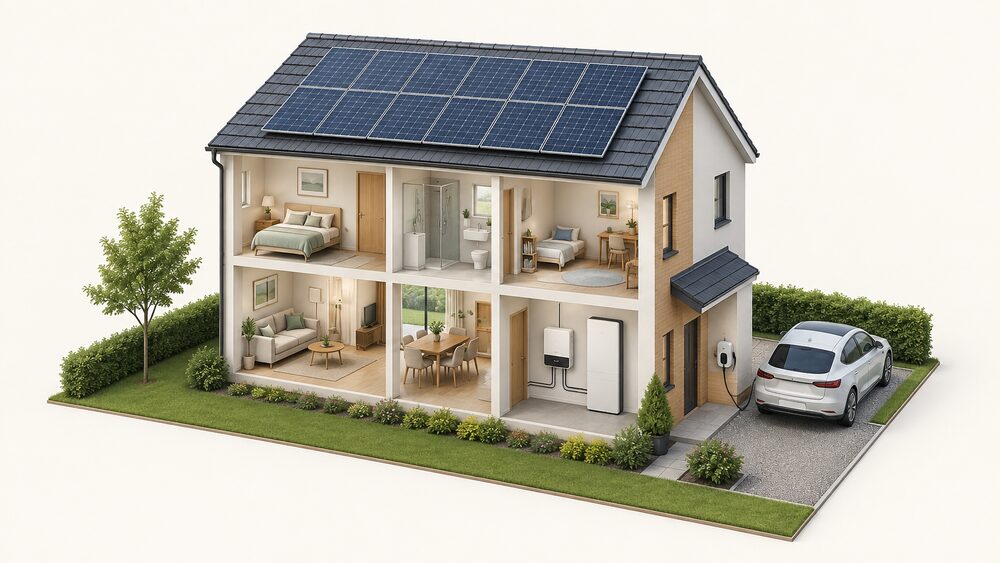 Fox ESS EV chargersCan a Fox ESS charger use your spare solar to fill the car?