In this guide
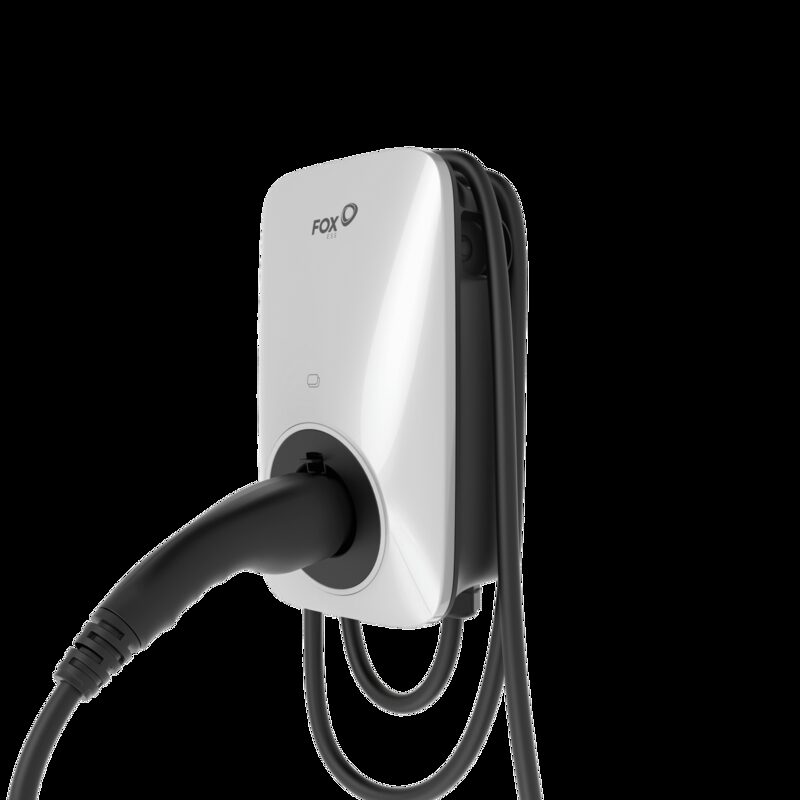
Fox ESS is a solar inverter and battery storage manufacturer that also sells a domestic EV charger, the L Series. The charger is a smart, solar-ready wallbox designed to sit inside the same energy ecosystem as the company's hybrid inverters and high-voltage batteries, rather than as a standalone product1. It is sold in the UK through wholesale distribution, with the company stating that it has been independently verified by SunWiz as the UK's number one brand by volume for both inverters and energy storage systems in Q2 20262.
The L Series supports scheduled charging, dynamic load adjustment and real-time monitoring through the Fox ESS app3. Those three functions cover the practical questions most households have: charging when electricity is cheapest, keeping the total draw within what the supply can carry, and seeing what the system is doing. The charger is described by the maker as optimising use of surplus solar generation, which is the point of buying a charger from a storage manufacturer rather than a standalone wallbox brand3.
What follows sets out what the L Series does, how it pairs with Fox ESS batteries and inverters, where it can be bought in the UK, who the company is, and what the arrangement means for a household's energy independence. It also states plainly where the dependence remains: on the grid, on a supplier, on an installer, and on a manufacturer's app and servers.
What the L Series does: solar surplus, tariff optimisation and load management
The L Series is described by Fox ESS under three headings: optimise usage of surplus solar generation, charge when electricity is cheapest, and reduce strain on your household supply3. Each of those is a distinct function, and together they explain why a household with solar would consider this charger over a basic wallbox.
Solar surplus charging means the charger can take generation that would otherwise be exported and put it into the car instead. That is the highest-value use of a solar array in most homes, because self-consumed electricity avoids a purchase at the retail rate rather than earning an export rate. The Energy Saving Trust notes that an attractive overnight rate is often the best option for charging, which sets up a genuine choice between daytime solar and cheap night power5. Which is better depends on the relative value of export payments and overnight rates in a given household's tariffs, and the two are not always available at the same time of day.
Tariff optimisation is the scheduled charging function: the charger can be set to run when electricity is cheapest3. Most EV tariffs involve a lower rate for charging overnight, and some are structured as two-rate tariffs where the cheap period can also run other appliances5. Octopus Energy, for example, offers three EV tariffs, with its original product giving five hours of cheaper energy every night7. A household on a tariff of that shape needs a charger that can be told when to run, which is what scheduled charging provides.
Load management is the third function, and it is the one that decides whether an installation is straightforward. EV chargers and other low-carbon technologies can push a home's electricity demand above the available supply, which may require an upgrade8. Dynamic load adjustment lets the charger reduce its draw rather than forcing a supply upgrade, which matters most in older properties with a single-phase supply and a full set of existing appliances. The wider subject of load management and load balancing covers how these systems measure and respond to household demand.
Smart control through the Fox ESS app
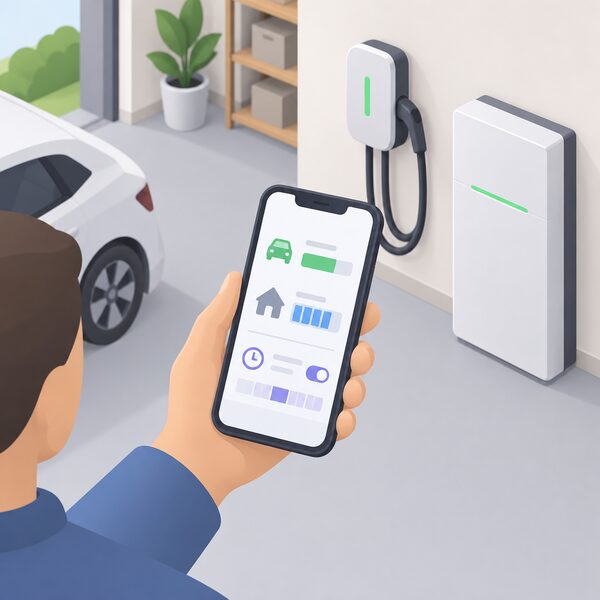
The L Series supports scheduled charging, dynamic load adjustment and real-time monitoring through the Fox ESS app3. That is the control layer for everything described above: without the app, the charger is a wallbox with a cable.
The app sits within a wider monitoring picture. Fox ESS joined Hive's eco tech platform in March 2025, a collaboration that gives battery owners real-time insights into their energy storage, a unified dashboard view, and the ability to track energy usage and optimise self-consumption in one place9. The stated purpose is to help reduce reliance on the grid and cut carbon emissions9. For a household running both a Fox ESS battery and an L Series charger, that single dashboard is the practical benefit: one place to see generation, storage and vehicle charging rather than three separate apps.
The dependence this creates is worth stating plainly. Remote scheduling, monitoring and any future firmware behaviour run through the manufacturer's app and servers, and through the household's broadband connection. Local charging at the unit continues without either, but the smart functions that justify the product's position in a solar ecosystem do not. This is the same trade-off that applies across the smart charger market, and it is covered in more detail under charger apps and connectivity.
How the charger fits with Fox ESS batteries and inverters
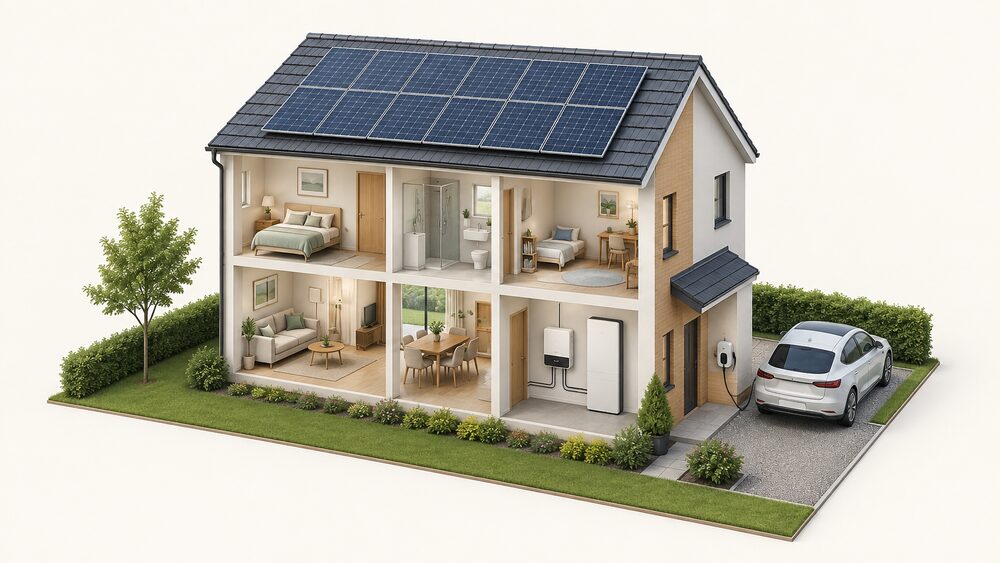
Fox ESS builds the charger as one component of a system rather than as a standalone device. Its high-voltage battery systems are designed to operate with compatible hybrid inverters as part of an integrated residential energy system1. The EQ Battery Range pairs with compatible Fox ESS hybrid inverters, including the H1-G2 and K Series, the H3 Smart and the H3 Pro4. The KH and KA Series hybrid inverters pair with Fox ESS high-voltage batteries including the EP, EQ and CQ ranges10.
The practical consequence is that a household can buy the pieces in stages. The KH and KA Series are described as battery ready, meaning they can be installed now without batteries and storage added later with no system redesign10. That matters for anyone who wants solar and an EV charger first and a battery second, or who is waiting on budget. The EQ range is a modular, high-voltage battery range for residential storage, IP65 rated and slimline for wall mounting4.
| Component | Pairs with | Note |
|---|---|---|
| EQ Battery Range | H1-G2 and K Series, H3 Smart, H3 Pro hybrid inverters4 | Modular, high-voltage, IP65, wall mounted4 |
| KH and KA Series hybrid inverter | EP, EQ and CQ battery ranges10 | Battery ready: install without batteries, add storage later10 |
| L Series EV charger | Fox ESS energy ecosystem3 | Scheduled charging, load adjustment, app monitoring3 |
The charger itself does not require a Fox ESS battery to work. It draws from the household supply like any wallbox. What the battery adds is the ability to store surplus generation and release it later, including into the car overnight, which is the arrangement described under charging an EV alongside a home battery. A household without storage can still use the charger's scheduling and load management, but the solar surplus it captures has to be used at the moment it is generated.
Where to buy in the UK: Midsummer Wholesale and HDM Solar

Fox ESS EV chargers are available to buy through Midsummer Wholesale, which lists the range on its trade site3. That is a wholesale route: the products are sold to installers and trade buyers rather than direct to householders, which is normal for solar and storage hardware. It means a household does not order a charger from Fox ESS and book a fitter separately; the installer supplies the unit and installs it as one job.
The consequence for pricing is that there is no published retail price for the charger in the material reviewed here. Prices are installer-quoted, and they will vary with the model, the cable arrangement, the length of the run from the consumer unit, and whether any supply or earthing work is needed. The general cost picture for a fitted home charge point is set out under home EV charger cost, and the installation process itself under home charge point installation.
Buying through the trade also shapes the warranty route. The seller and the installer are the first point of contact for a fault, and the manufacturer's support sits behind them. That chain is worth understanding before ordering, because it determines who a household calls when something stops working.
Who Fox ESS is: UK market position and Tier 1 status
Fox ESS describes itself as a global leader in advanced solar inverters, battery storage solutions and EV charging technologies11. It states that it is recognised as a Tier 1 energy storage manufacturer, and that it is recognised as a BNEF tier 1 energy storage manufacturer2. It also states that InfoLink Consulting's 1H26 global ESS shipment rankings placed it first among residential ESS suppliers, and that it ranks second globally for residential energy storage shipments1.
On the UK specifically, the company states that it has been independently verified by SunWiz as the UK's number one brand by volume for both inverters and energy storage systems, in Q2 20262. These are shipment volume claims, made by the manufacturer about its own position, and they describe how much product moves rather than how well it performs in a given house. Volume leadership does have a practical upside: a brand with a large installed base tends to have more trained installers and better parts availability.
Fox ESS describes itself as a Sino-British partnership, supported by significant international shareholders alongside UK-based stakeholders2. That structure is relevant to a household weighing where a product comes from and where support sits. The company states that it offers localised UK service and support11.
Service, warranty and support from the UK national service centre

Fox ESS states that in the UK it has a dedicated service and support function based from its national service centre, and that all enquiries are answered locally by technicians2. That is the company's own description of its support arrangement, and it is the main reassurance for a UK buyer: a fault does not necessarily route through an overseas call centre.
The published warranty figure in the material reviewed here is 12 years on the EQ Battery Range4. That is a battery product, not the charger, and no charger warranty term is stated alongside it. A household should therefore ask the seller for the written warranty document for the specific charger model before ordering, and check what it covers, how long it runs, and whether registration is required. The general framework for these terms is set out under charge point warranties and aftercare.
For a fault, the first step is the installer or electrician who fitted the unit, because supply voltage problems and wiring faults sit with the installation rather than the maker12. If the issue is with the supply itself, the distribution network operator for the area handles it, and SSEN, for example, takes enquiries by email at connections@ssen.co.uk13. Fault diagnosis more generally is covered under charge point faults and troubleshooting.
Tariffs, scheduling and flexibility services
Scheduled charging is only useful if there is a cheap period to schedule into. Most EV tariffs involve a lower rate for charging overnight, and some are two-rate tariffs where the cheap power can also run other appliances5. Smart charging tariffs make it cheaper to use electricity at night or at times of low demand14. EV tariffs typically charge a cheaper rate for electricity used at night, and are typically two-rate products15.
The pattern is consistent across the guidance. A case study household uses a low cost overnight tariff when it needs extra electricity to charge its EV17. The Energy Saving Trust's position is that an attractive overnight rate will often be the best option5. For a household with solar, the calculation is a comparison between exporting daytime generation and importing cheap night power, and the answer depends on the rates on offer at the time.
Outfox Energy launched its My EV tariff in March 2025. Whether that tariff, or any other, works with a specific charger is a question for the supplier, since the arrangement depends on how the tariff's control signals reach the hardware. The wider subject is covered under EV energy tariffs and home charging and charging overnight on a cheaper tariff.
Fox ESS announced a partnership with Axle Energy in January 2026, designed to empower residential and commercial energy users18. The customer agreement for any flexibility service sits with the provider offering it, not with the hardware maker, and households should read the terms of whatever they sign, including duration and exit. Flexibility services generally are explained under smart charging, flexibility and rewards.
What owning a Fox ESS charger means for household energy independence
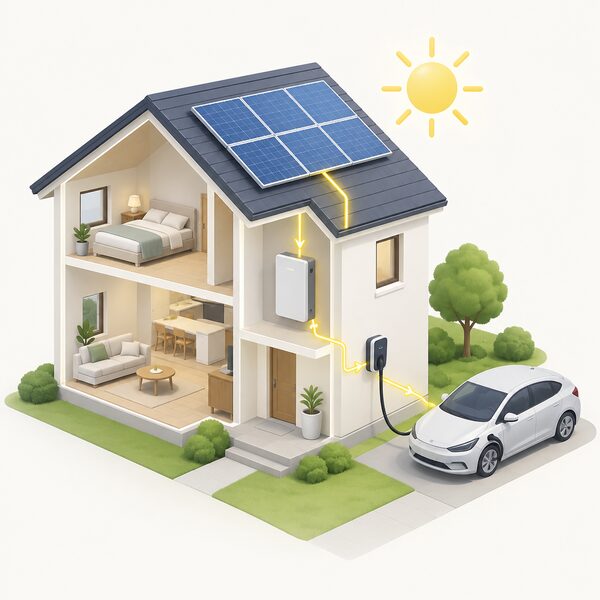
The case for this charger rests on self-consumption. Electrical energy storage is a way of increasing self-consumption and reducing reliance on the grid, and a charger that can absorb surplus solar does the same job for the car19. Fox ESS states that its Hive integration helps battery owners reduce reliance on the grid and cut carbon emissions, through real-time insights and a unified dashboard9. The combination of solar, battery and a solar-aware charger is the closest a typical home gets to running its motoring on its own roof.
The dependence that remains is substantial and worth naming. The household stays connected to the grid for everything the solar array and battery cannot cover, which in a UK winter is most of the demand. It stays with an electricity supplier for the import that remains, and on a time-of-use tariff for the cheap overnight rate that makes scheduled charging worthwhile. It depends on an installer for the fitting and for the first response to a fault. It depends on the manufacturer for the app, the servers behind it, and the firmware that governs how the charger behaves. And it depends on a broadband connection for the smart functions that distinguish this product from a basic wallbox.
None of that is unusual for a smart charger, and it does not undermine the case for buying one. It does mean that the independence on offer is partial: independence from the price of daytime grid electricity for the miles driven on solar, and from peak rates for the miles charged overnight, but not independence from the grid, the supplier or the manufacturer. Households weighing the wider picture can read EV charging and household energy independence, and those comparing solar against grid charging can read charging an EV from solar versus the grid.
Sources19 cited
- Modular battery storage: scalable home energy system, Fox ESS, 2026
- Fox ESS UK, Fox ESS, 2026
- Fox EV chargers, Midsummer Wholesale, 2026
- EQ Battery Range, Fox ESS, 2026
- Charging electric vehicles, Energy Saving Trust, 2026
- Time of use tariffs explained, Which?, 2026
- Octopus EV energy tariffs, Uswitch, 9 October 2025
- If your electricity supply can't cope with the new equipment, NIE Networks, 2026
- Fox ESS joins Hive's eco tech platform, Fox ESS, 20 March 2025
- KH/KA Series hybrid inverter, Fox ESS, 2026
- Fox ESS and Axle Energy partner, Fox ESS, 6 January 2026
- Voltage changes in your home or business, UK Power Networks, 2026
- EV connections, SSEN Distribution, 2026
- Electric vehicle charger installation and maintenance, NICEIC, 2025
- Energy flexibility, Smart Energy GB, 2026
- Benefits for Britain, Smart Energy GB, 2026
- Russell and Kate's story: solar panels and heat pump, Energy Saving Trust, 2026
- Tariffs for renewable technology, Energy Saving Trust, 2026
- Electrical energy storage systems, Flexi-Orb, 22 April 2025
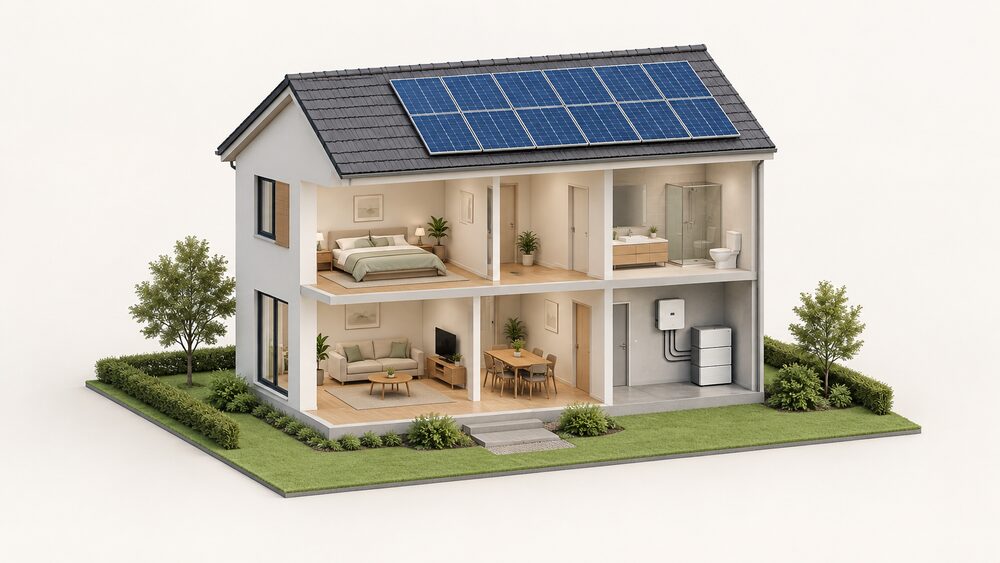 Fox ESS invertersFox ESS is now the UK's biggest home battery and inverter brand, so plenty of people are finding one already fitted when they buy a house or get a quote.