
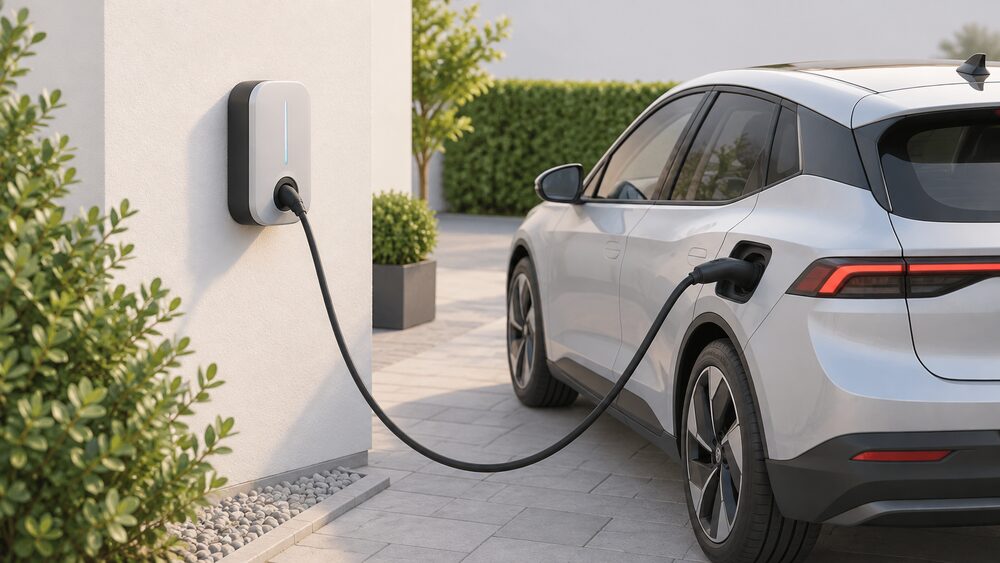
In this guide
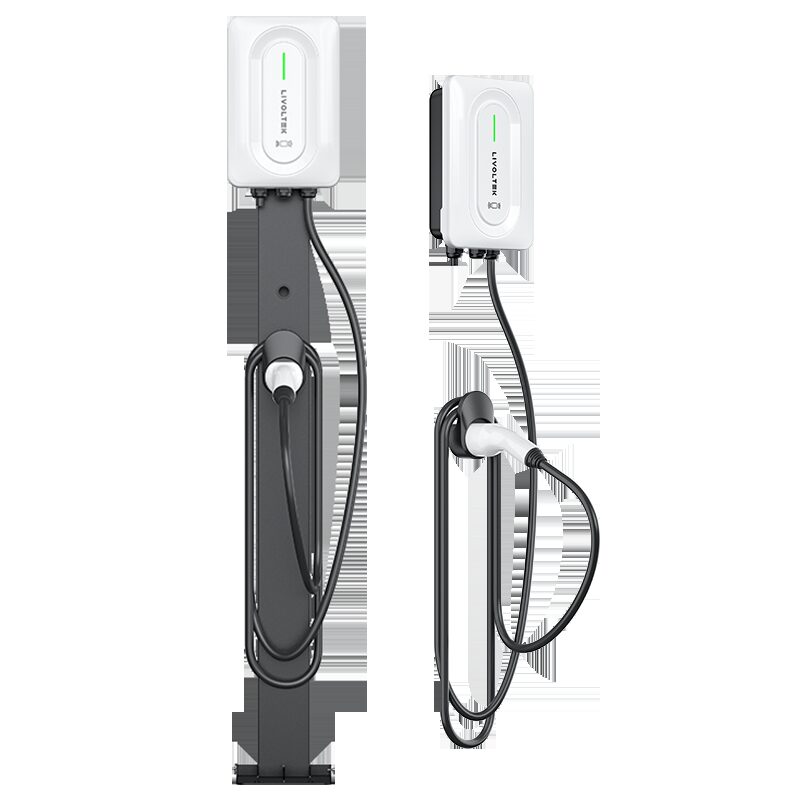
Livoltek sells home EV chargers at 7.3 kW single-phase and 11 kW or 22 kW three-phase, plus dual-output units listed at 2 x 7.3 kW and 2 x 22 kW1. The ROBOT Home AC Charger is the domestic wallbox at the centre of the range, and the company states it can be connected to all existing photovoltaic systems, allowing for 100% use of renewable energy for vehicle charging1.
Availability in the UK is the weak point. The ACE-S Home single-phase charger has been discontinued, phased out according to the distributor listing2. A 7.3 kW untethered single-phase unit showed six in stock at the time of reading, while the same page described the product as awaiting stock arrival and due in soon, so the two statements do not sit comfortably together2. The 22 kW three-phase tethered version was on backorder, and the untethered version showed three units in stock2.
Prices are distributor-quoted rather than published by the maker. The 22 kW tethered unit was listed at £504.87 excluding VAT, shown alongside £605.842. A separate untethered 22 kW listing appears at £470.47 excluding VAT and £564.56 including VAT, and the two figures are not reconciled2. For a household, the practical position is that a Livoltek charger keeps the car tied to the home supply, and any solar benefit depends on which inverter it is paired with.
What Livoltek makes: home wallboxes and commercial chargers
Livoltek's charger catalogue splits into domestic wallboxes and larger commercial units. The home side is the ROBOT Home AC Charger, listed at 7.3 kW single-phase and 11 kW or 22 kW three-phase1. The commercial side runs much higher, with the company's own index giving a total of 82 kW for one configuration, made up of 60 kW DC plus 22 kW AC3.
That split matters when reading any Livoltek specification, because the headline numbers on the index page belong to different products. A householder looking at a 60 kW or 82 kW figure is looking at fleet or destination charging equipment, not something that can be connected to a domestic supply. The home range is the part relevant to a driveway.
The wider market context is crowded. More than 50 manufacturers provide charging units suitable for EV charging at home, so a Livoltek unit competes against a long list of alternatives5. Certification is one way to narrow that list: BSI Kitemark certification for EV chargers covers testing and certification for charge points both for home and commercial use, which is the standard a buyer can check against7.
Power options: 7.3 kW single-phase to 22 kW three-phase
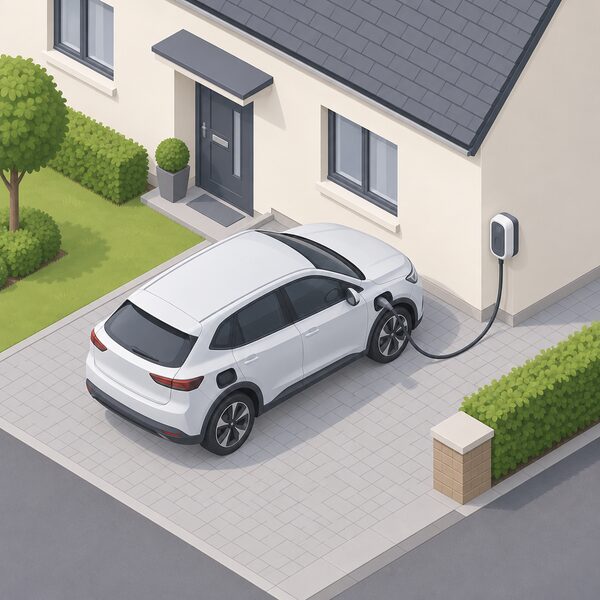
The home range covers the three supply arrangements a UK house is likely to have. The single-phase ROBOT Home AC Charger is rated at 7.3 kW and runs at a nominal voltage of 230 Vac plus or minus 10%1. The three-phase models are listed at 11 kW and 22 kW, with the 11 kW unit rated at 400 Vac plus or minus 10%1.
For context, 7 kW is the standard power rating for a home charger in the UK5, and independent guidance puts the ceiling for domestic charging at up to 22 kW, though most suppliers offer 3 kW or 7 kW as standard8. A three-phase supply is what unlocks the higher figures, and many UK homes do not have one. Where a household does, a 22 kW charger can only deliver 22 kW to a car whose onboard charger accepts it.
The comparison with other makers shows the same pattern. Victron Energy's charging station delivers a maximum of 22 kW AC in three-phase or 7.3 kW in single-phase mode9, which is the identical pairing Livoltek lists. That is not a coincidence: it reflects the physics of a domestic supply rather than a design choice by either maker.
| Model | Supply | Rated power | Rated voltage |
|---|---|---|---|
| ROBOT Home AC Charger R3B21E1E | Single-phase | 7.3 kW1 | 230 Vac ±10%1 |
| ROBOT Home AC Charger R3B03E1E | Three-phase | 11 kW1 | 400 Vac ±10%1 |
| ROBOT Home AC Charger | Three-phase | 22 kW1 | Not stated |
| Dual-output model | Single-phase | 2 x 7.3 kW3 | Not stated |
| Dual-output model | Three-phase | 2 x 22 kW3 | Not stated |
Dual-output models: two cars, one charger
Livoltek lists dual-output home models at 2 x 7.3 kW single-phase and 2 x 22 kW three-phase3. The principle is straightforward: a dual EV charger lets you charge two electric vehicles at the same time10. Where both are plugged in, the units split the electricity between the cars so the home electrical system is not overloaded, a process called load balancing10.
The consequence is that each car charges more slowly than it would alone. Independent guidance on public charging illustrates the arithmetic: a car able to accept 250 kW and another limited to 50 kW sharing a 150 kW device receive 75 kW and 50 kW respectively, a total of 125 kW, and some chargers split power 50:50 between two vehicles11. The same logic applies at domestic scale, where the shared pool is far smaller.
Connector choice is the other decision. Home chargers are available either with a tethered Type 1 or Type 2 cable, which plugs straight into the car, or with a Type 2 socket for use with the vehicle's own charging cable12. Almost all electric cars come from the manufacturer with a cable carrying a charger-side Type 2 connector12, which is why the socket option works for most households. A dual-output unit with one cable and one socket, such as the arrangement Marlec describes for its vecGO DUO, is one way to serve two cars from a single enclosure13.
Solar compatibility: charging from your own PV
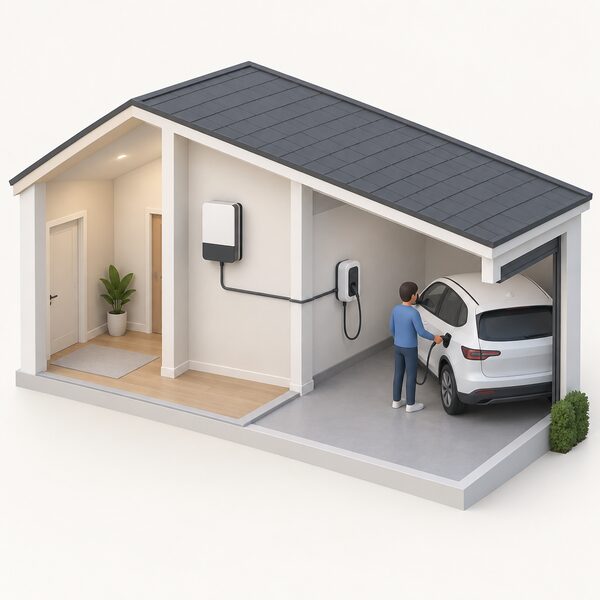
Livoltek's central solar claim is broad: the company states its EV chargers can be connected to all existing photovoltaic systems, allowing for 100% use of renewable energy for vehicle charging1. A separate product page describes a Smart EV Charger Solution as compatible with different brand PV and able to charge a car with 100% renewable energy14.
The limit sits in the detail. Livoltek states that its Smart EV Charger currently communicates only with the Livoltek Hyper 5000 inverter4. That restricts solar-linked operation to one inverter pairing, which is a much narrower position than the general compatibility claim. The two statements point in different directions, and the documents do not resolve the difference.
There is also a distinction that applies to every brand. Standard EV chargers draw electricity from the home supply without distinguishing between solar-generated power and grid electricity10. A charger only prioritises solar when it is set to do so, and OVO's guidance makes the same point for its own units: solar compatibility is only available when the charger is set to the correct setting for solar charging15. Independent guidance confirms the general benefit, that charging an EV with renewable energy such as solar panels significantly reduces carbon footprint16, but the mechanism is a setting and a compatible inverter, not an automatic property of the hardware.
Livoltek's own learning centre sets out how the pieces fit together, including a maximum PV oversizing of 150% of rated power, so a 5 kW hybrid inverter can connect 7.5 kW of solar panels at maximum4. Single-phase inverters support 182 series photovoltaic panels and three-phase support 210 series panels4. More on the general approach is at charging an EV from solar panels.
The bigger range: MF and MC series and higher power
Above the home wallboxes, Livoltek lists the MF series at 60, 90, 120, 150 and 180 kW, and also at 160, 180, 200 and 240 kW, and at 80, 120, 160, 180, 200 and 240 kW depending on configuration3. These are commercial DC chargers, sized for depots, forecourts and fleet yards rather than driveways.
No separate MC series specification is published, so no comparison between MF and MC can be made from the available figures. Both sit in the commercial bracket, well above anything a domestic supply supports. For scale, rapid and ultra-rapid en-route charging runs at 50 to 350 kW17, and a 500 kW ultra-fast unit can charge two vehicles simultaneously at 250 kW each18. The MF range, listed at 60, 90, 120, 150, 180, 160, 180, 200, 240, 80, 120, 160, 180, 200 and 240 kW ratings, sits inside that commercial band19.
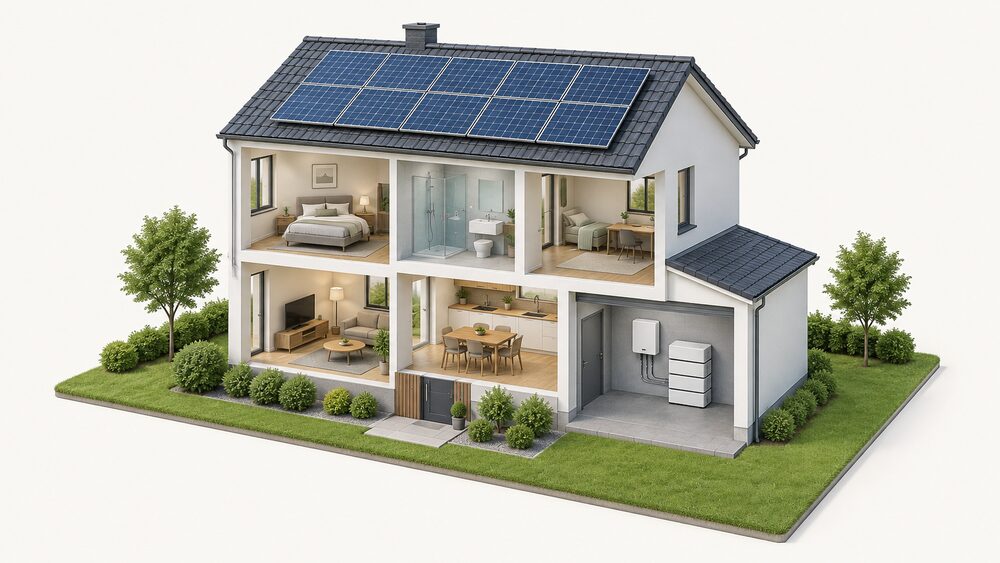
Livoltek also makes the storage side of a solar and charging setup. The BLF-SR5~35 low-voltage battery range uses LFP cells with a single pack capacity of 5.12 kWh and 100 Ah cells, a modular stack design for expansion, and cycle times exceeding 6,00019. The BHF high-voltage system uses prismatic LFP batteries and scales to 30 kWh20. The AES series scales to six modules or 30 kWh with a cycle life of 6,000 cycles and LFP chemistry21.
That matters for independence because a battery is what lets solar generation be stored rather than exported, and then released to the car later. Growatt, a competitor, describes a PV linkage charge mode driven by solar and a capacity range of 7 to 22 kW AC and 20 to 200 kW DC14. The architecture is common across the sector; what differs is whether the charger, inverter and battery come from one maker and therefore communicate.
What a Livoltek charger means for household energy independence
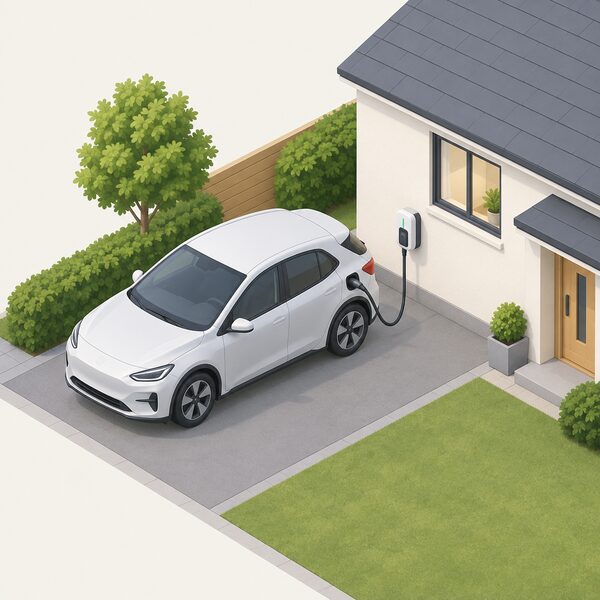
A home charger moves the fuel for a car from a forecourt to the household electricity supply. That is the independence it buys: the car is filled at home, on a supply the household already pays for, rather than at a public chargepoint with its own pricing. Where solar and a battery are part of the setup, some of that electricity can come from the roof instead of the grid.
The dependence that remains is substantial. The car still draws from the grid whenever solar output is short, and the household still buys that electricity from a supplier. Solar-linked operation depends on the inverter pairing, and Livoltek's own statement limits communication to the Hyper 50004. Remote features depend on a network connection: Livoltek advises using 2.4 GHz Wi-Fi to connect the EV charger online, with a network name in English letters and numbers4. That is a dependence on broadband and on the maker's platform.
There is one small point in the maker's favour on the storage side. Livoltek states that as long as the battery is a Livoltek lithium battery, an external breaker is not required4, which simplifies the installation. Against that, the discontinued ACE-S single-phase unit shows how quickly a specific model can leave the catalogue2, and a household that has bought one is left relying on whatever support the maker and distributor continue to provide.
For a household weighing the options, the honest summary is that a Livoltek charger is one route to charging at home, with a solar claim that is broad in the marketing and narrow in the technical documentation. The wider picture is at EV charging and household energy independence, and the general guide to home charging is at EV charging at home in the UK.
Sources22 cited
- ROBOT Home AC Charger 7.3kW 1P / 11-22kW 3P, Livoltek, 2026-09-10
- Livoltek ACE-S Home Single Phase EV Charger 7.3kW, Solar Trade Sales, 2026-09-17
- EV Charger product category, Livoltek, 2026-09-19
- Livoltek Learning Center, Livoltek, 2026-08-12
- Home charging guide, Zapmap, 2025-06-19
- Home charging guide, Zapmap, 2025-06-19
- Powering trust in EV charging with BSI Kitemark certification, BSI, 2026-09-17
- EV charging guide, Uswitch, 2026-09-19
- EV Charging Station, Victron Energy, 2026-09-19
- Dual EV chargers guide, E.ON Next, 2026-09-17
- How long does it take to charge an electric car, Zapmap, 2026-04-15
- Tethered vs untethered, Zapmap, 2026-02-23
- VEVA car charger, Marlec, 2026-09-02
- EV charger solutions, Growatt, 2026-09-17
- Upgrading to a smart EV charger, OVO Energy, 2025-09-01
- Can solar panels charge electric cars, The CPA, 2024-09-27
- Electric vehicle charging, SMMT, 2025-06-25
- EV Charging products, Delta Electronics, 2026-09-17
- Low voltage residential battery BLF-SR5-35, Livoltek, 2026-09-10
- High voltage battery system BHF-S530, Livoltek, 2026-09-10
- AC coupled all in one ESS battery, Livoltek, 2026-09-10
- THOR 60-200DD-P, Growatt, 2026-09-17
 Livoltek Home Batteries and Hybrid SystemsLivoltek sells home batteries and hybrid inverters in the UK, but some models have been discontinued and others are out of stock.