
In this guide
A sonnen home battery is a German-made lithium iron phosphate storage system sold in the UK through certified installation partners. The current residential product is the sonnenBatterie 10, which sonnen describes as compatible with existing photovoltaic systems and scalable by installing multiple storage systems in cascade1. The maker states that more than 150,000 sonnen batteries have been installed worldwide, and that its batteries deliver up to twice as much usable energy as many conventional systems on the basis of 8,500 cycles per installed kilowatt-hour1.
The headline warranty is 10 years on the sonnenBatterie 10, with sonnen stating that it guarantees all components for 10 years or 10,000 charging cycles1. The chemistry is lithium iron phosphate, which sonnen says it has used since the beginning and which it describes as avoiding critical raw materials such as cobalt1.
Ownership is the part a buyer needs to read carefully. Shell put sonnen up for sale in 2023, reportedly seeking a buyer for at least 51% or the whole business, and provided an additional cash injection in 2024 to keep the company operating3. Shell completed the sale of sonnen Group to TIVEN on 24 August 2026, with AURELIUS WaterRise advising TIVEN4. Reporting in 2026 indicated that Tiven planned to restructure sonnen and prepare it for resale3. The warranty is a manufacturer's promise, and the manufacturer has changed hands twice in three years.
sonnen: a German battery maker, now owned by Tiven after the Shell era
sonnen dates its own start to 2010, when it began in Wildpoldsried in the Allgäu region of Germany1. It built a reputation as one of the earlier European entrants to residential storage, and the installed base it now quotes, more than 150,000 batteries worldwide, is the maker's own figure rather than an independently audited count1.
The ownership history is more eventful than most battery brands'. Shell acquired sonnen as part of its push into distributed energy, then put the business up for sale in September 2023, with Handelsblatt reporting a valuation and a search for buyers willing to take at least a 51% stake4. Shell provided an additional cash injection in 2024 to keep Sonnen operating3. The sale to TIVEN completed on 24 August 2026, with AURELIUS WaterRise advising the buyer4, and reporting in 2026 indicated Tiven planned to restructure Sonnen and prepare it for resale3.
For a household, that sequence matters in one specific way: a 10 year warranty is only as good as the entity standing behind it at year seven or year eight. A restructure or a further resale does not automatically void a warranty, but it does mean the household is relying on a company that has been through two ownership changes in three years and whose current owner has publicly signalled an intention to sell it on. That is a different risk profile from a maker held by its founders or by a listed parent with no stated exit plan.
| Event | Date | Detail |
|---|---|---|
| sonnen founded | 2010 | Wildpoldsried, Allgäu, Germany1 |
| Shell puts sonnen up for sale | September 2023 | Buyer sought for at least 51% or the whole business4 |
| Additional cash injection | 2024 | Provided by Shell to keep sonnen operating3 |
| Sale to TIVEN completed | 24 August 2026 | AURELIUS WaterRise advised TIVEN4 |
| Reported plan | 2026 | Restructure sonnen and prepare it for resale3 |
The sonnenBatterie range and what the systems do
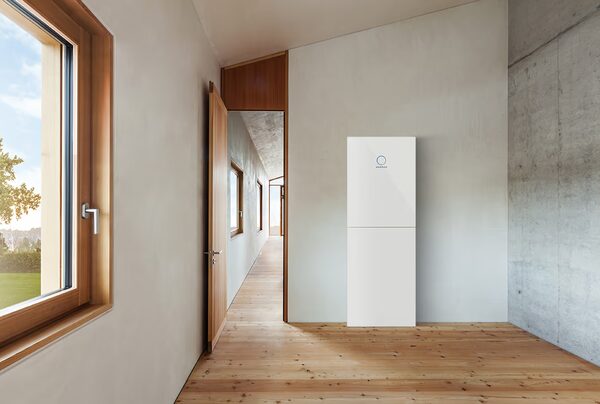
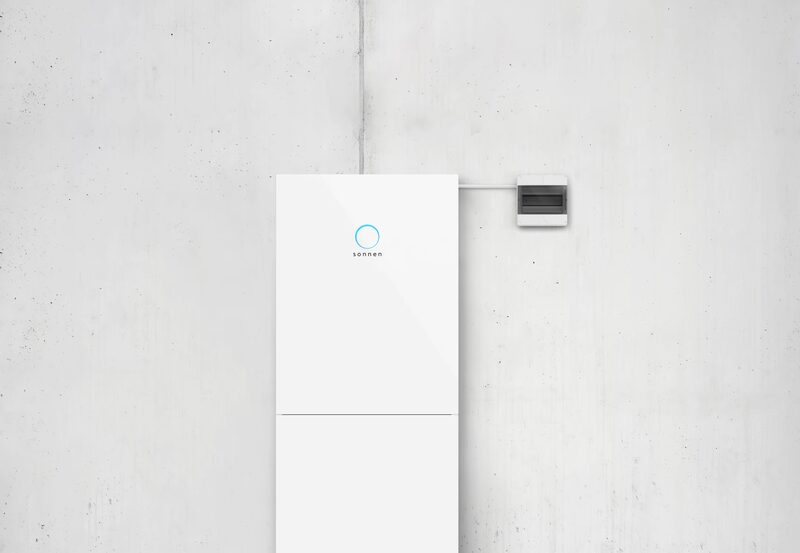
The sonnenBatterie 10 is the residential product sold into the UK market. sonnen describes it as compatible with existing photovoltaic systems, meaning it can be retrofitted to a solar array already in place rather than only sold as part of a new installation2. It is also scalable: sonnen states there is the possibility of installing multiple storage systems in cascade, so capacity can be built up rather than fixed at the outset2. The maker positions it as suitable for various areas of use, from residential to small business2.
Backup is an option rather than a standard feature. Combined with sonnenProtect 4000, sonnen states that the sonnenBatterie 10 provides reliable power even during an outage, with the battery automatically switching to emergency power mode2. The wider sonnenProtect product is described as keeping a home supplied with power even in the event of a blackout when combined with the sonnenBatterie1. Households weighing this should read it alongside the general position on what a battery can and cannot keep running in an outage, covered in battery backup power and EPS.
What the system does for independence is straightforward and bounded. It stores surplus generation from a roof array so it can be used later rather than exported, which is the same function every home battery performs: batteries are a way for homeowners to store excess electricity produced from their solar system5. Independent guidance puts the ceiling on that at up to 70% of a household's annual electricity demand, where the battery stores as much electricity as a household typically uses in a day6. sonnen's own claim is higher, stating that a sonnen battery storage system can help cover up to 80% of a household's energy needs with power generated on its own roof, against around 30% without storage1. The two figures are not measuring the same thing, and the independent one is the safer planning assumption.
What remains is the grid. A sonnen battery does not disconnect a home from the network, and the household still buys whatever the array and battery cannot cover. The system also depends on the manufacturer for monitoring and, where sonnenProtect is fitted, on the maker's hardware for the backup function itself.
LFP cell technology: no cobalt in the chemistry
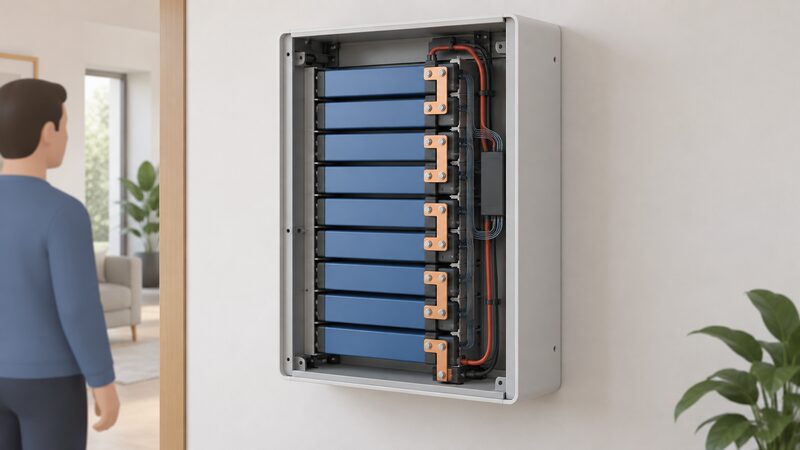
sonnen states that since the very beginning it has relied on lithium iron phosphate, or LFP, technology for its batteries1, and describes that choice as avoiding critical raw materials such as cobalt2. The sonnenBatterie 10 product page names lithium iron phosphate (LiFePO4) as the cell technology2.
LFP is one of the two main lithium chemistries sold into home storage, and the trade-off against nickel manganese cobalt cells is well established: LFP gives up some energy density in exchange for a longer cycle life and greater thermal stability. sonnen's own cycle figures reflect that emphasis. The sonnenBatterie 10 is quoted at a useful life equal to 10,000 charge and discharge cycles2, and the company's broader storage page quotes 8,500 cycles per installed kilowatt-hour1. Those are two different measures and should not be read as a single number.
The cobalt-free claim is a supply chain statement, not a performance one. It says nothing about how much usable energy a given unit holds, how quickly it charges, or how it behaves at low temperature. Households comparing chemistries across brands will find the wider picture in home battery chemistries, and the question of how cycle counts translate into calendar life in home battery cycle life and degradation.
Warranty: 10 years on battery modules and electronic components
sonnen states a 10 year warranty on the sonnenBatterie 102, and separately states that it guarantees all components for 10 years or 10,000 charging cycles1. The two formulations are close but not identical: one is a period, the other is a period with a throughput condition attached. A household that cycles the battery hard, for example on a tariff that charges and discharges daily, will reach the cycle limit before the calendar limit.
Independent guidance is consistent with the headline term. Which? notes that battery systems often come with a 10 year warranty7, and lists a 10 year term against a SolaX battery system in the same comparison7. So a 10 year warranty is not unusual in this market; it is roughly the norm for a premium-priced unit.
What the warranty does not do is remove the ownership risk described above. A manufacturer's warranty is a contractual promise from a company, and sonnen has changed owner twice since 2023, with the current owner reported to be preparing it for resale3. Households should also establish who holds the warranty relationship: the maker's terms run to the end user, but the installation work itself is the installer's responsibility, and the two are separate. The general mechanics of retained capacity, throughput limits and claim conditions are set out in home battery warranties.
"we guarantee all components for 10 years or 10,000 charging cycles"
Buying in the UK: certified partners handle survey and installation
sonnen does not sell direct to householders. The company describes the sonnenBatterie 10 as smart, reliable solar battery storage for the home1 and routes sales through certified partners who carry out the survey and the installation. That means the household's contract for the physical work sits with the partner, not with sonnen, and the quality of the installation depends on that partner rather than on the brand on the cabinet.
The UK market around this is well documented. Solar and battery work is carried out by qualified electricians and renewable contractors, and NAPIT publishes a practical guide on solar photovoltaic systems and battery storage aimed at exactly that audience8. Independent consumer guidance covers the potential benefits of installing a battery with solar panels, financing options, and how to pick a reliable installer so the work is carried out to a high standard9. Which? operates a Trusted Traders directory where a household can enter solar panels and select a location to find vetted firms10.
Two practical points follow. First, the installer is the party who will handle a fault call in the first instance, so the partner's own longevity matters as much as the manufacturer's. Second, the electrical and notification side of the job is not optional: the standards governing installation, including the network operator notification process, are covered in battery installation standards and telling the network operator about a home battery. The full sequence from survey to handover is in home battery installation.
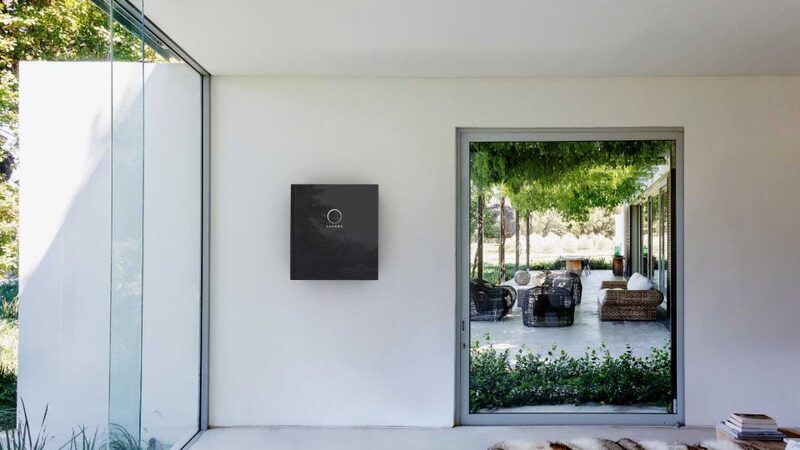
Monitoring and data: daily checks and servers in Germany
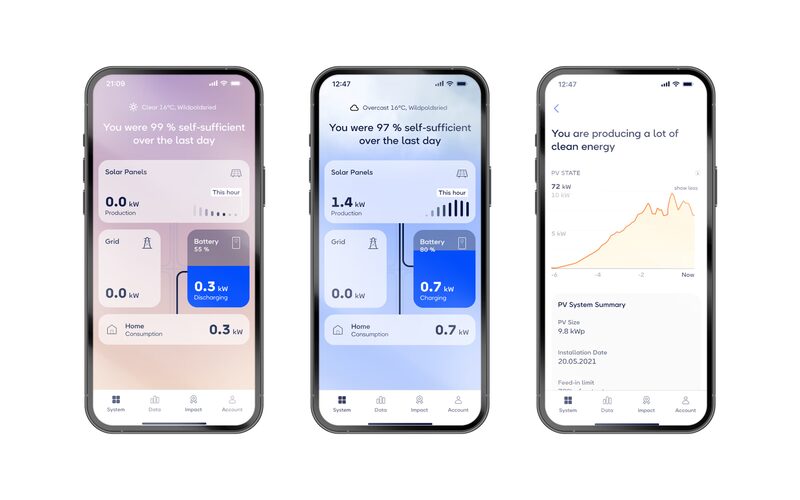
sonnen runs daily monitoring on installed systems, stating that this allows potential issues to be identified at an early stage, with automated battery maintenance helping to ensure consistently reliable performance1. The sonnenBatterie 10 page repeats the same point: daily monitoring of installed systems allows potential issues to be identified at an early stage2.
The data sits in Germany. sonnen states that all data is stored on servers in Germany and protected in line with the highest security standards2, and repeats the same location and protection statement on its storage page1. For a UK household this is a straightforward statement about where the telemetry goes, and it is a more specific answer than most manufacturers give.
The dependence this creates is worth naming plainly. Daily monitoring is a manufacturer-side service: it works because sonnen's servers receive data from the unit and because someone at sonnen looks at it. If the household's broadband drops, or if the service changes under a new owner, the remote layer is what is affected. Local operation of the battery continues regardless, but the diagnostic and maintenance layer does not. The wider picture on what stays local and what does not is in monitoring a home battery.
Virtual power plants: what aggregating home batteries means for owners
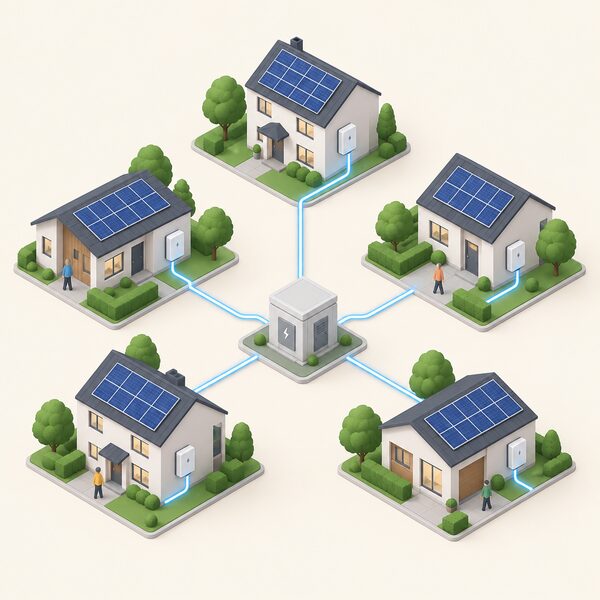
A virtual power plant is a network of small-scale, distributed energy resources such as solar panels, batteries and electric vehicles that work together to provide electricity like a traditional power plant11. The concept matters to sonnen owners because sonnen's history is bound up with it: the company was one of the residential storage brands that helped establish the model in Europe, and its ownership by Shell was part of a strategy built around aggregated home batteries.
The system-level case is real. Solar Energy UK notes that the combined potential of millions of homes with batteries could help balance supply and demand across the country by releasing stored power onto the grid when needed5. Independent monitoring of homes with batteries alongside solar consistently shows lower total daily grid consumption across three seasons, with winter consumption seeing an increase attributed to a suspected arbitrage pattern12.
For an individual household, the trade is between revenue and control. Joining an aggregation scheme means the operator can discharge the battery at times the household did not choose, which reduces the energy available for the home's own use. The value of that participation depends on the scheme's terms, which vary. The mechanics of flexibility services and what participation involves are set out in virtual power plants, flexibility services and home batteries.
There is also a public-policy dimension. SSEN delivered the first of 20,000 home battery packs to customers who would most benefit from the extra peace of mind, under a scheme launched at the beginning of February 202613. That is a network operator using home storage as a support tool, which is the same logic a virtual power plant applies commercially.
Cost and price reductions on larger residential batteries
sonnen announced price reductions for selected residential battery products on 2 April 2026, including price equivalence for larger sonnenBatterie 10 hybrid systems and a net discount for certain sonnenBatterie 10 systems, with the offer stated to run until the end of June 20263. That is a maker-side promotional move on the larger configurations, and it has now expired.
No published UK installed price for a sonnenBatterie 10 appears in the material available here, so prices are installer-quoted. Households should expect a quote to reflect the battery capacity chosen, whether the unit is being retrofitted to an existing array or fitted alongside a new one, and the electrical work needed at the property. The general cost landscape for home storage in the UK is covered in how much does a home battery cost in the UK.
The economics deserve a plain statement. Independent guidance notes that adding a battery to a solar panel system can increase bill savings, but often not enough to recover the cost of the battery within its expected lifetime, particularly where households already have access to a good export tariff14. The Centre for Alternative Technology goes further, stating that at present a battery may not be worthwhile in a grid-connected house, given that batteries are still quite expensive plus environmental impacts in manufacture and disposal15. Against that, Solar Energy UK puts the saving from fitting a solar and battery array at hundreds of pounds or more every year16. The documents differ on whether the outlay is recovered, and the answer turns on the household's tariff, its consumption pattern and the size of the battery.
Where the sonnen offer sits for a UK household
sonnen's strengths are specific and checkable: LFP chemistry with no cobalt, a 10 year warranty term that matches the market norm, daily monitoring from the maker, and a stated data location in Germany1. The installed base of more than 150,000 units worldwide is the maker's own figure1.
The limits are equally specific. The company has changed owner twice since 2023 and its current owner was reported in 2026 to be preparing it for resale3. Backup requires the optional sonnenProtect hardware rather than being built in1. Remote monitoring depends on sonnen's servers and on a working broadband connection. And the household remains on the grid and on a supplier for everything the array and battery cannot cover, which independent guidance suggests is the majority of annual demand in most homes6.
For a household weighing energy independence, a sonnen battery reduces the share of electricity bought from a supplier and increases the share used on site. It does not remove the connection, the supplier, or the manufacturer from the arrangement. The broader picture of what storage can and cannot deliver is in home batteries and household energy independence, and the full range of systems sold in the UK is covered in home battery storage.
Sources16 cited
- sonnen storage system overview, sonnen
- sonnenBatterie 10 product page, sonnen
- Shell sells Sonnen to Tiven, ESS News, 28 August 2026
- Shell offloads residential battery storage and VPP provider sonnen, Energy-Storage.news
- Batteries in the home, Solar Energy UK, 17 September 2026
- Making the most of your solar PV panels, Centre for Sustainable Energy, August 2026
- Solar panel battery storage, Which?, 14 May 2026
- NAPIT Practical Guide: Solar Photovoltaic Systems and Battery Storage, NAPIT, 17 September 2026
- Consumer protection guidance, Solar Energy UK, 17 September 2026
- How to choose a good solar installer, Low Carbon Hub, 20 October 2025
- Energy glossary, Low Carbon Hub, 5 August 2026
- Grid impacts of heat pumps, EVs and solar revealed, Energy Systems Catapult, 18 August 2025
- SSEN gives 20,000 home battery packs to customers who need the most support, SSEN, 24 February 2026
- Supporting households with low carbon technology combinations, Energy Saving Trust, 15 July 2026
- Solar photovoltaic, Centre for Alternative Technology, 10 March 2026
- Waste not, want not: homes with batteries to cash in from free power offer, Solar Energy UK, 29 June 2026