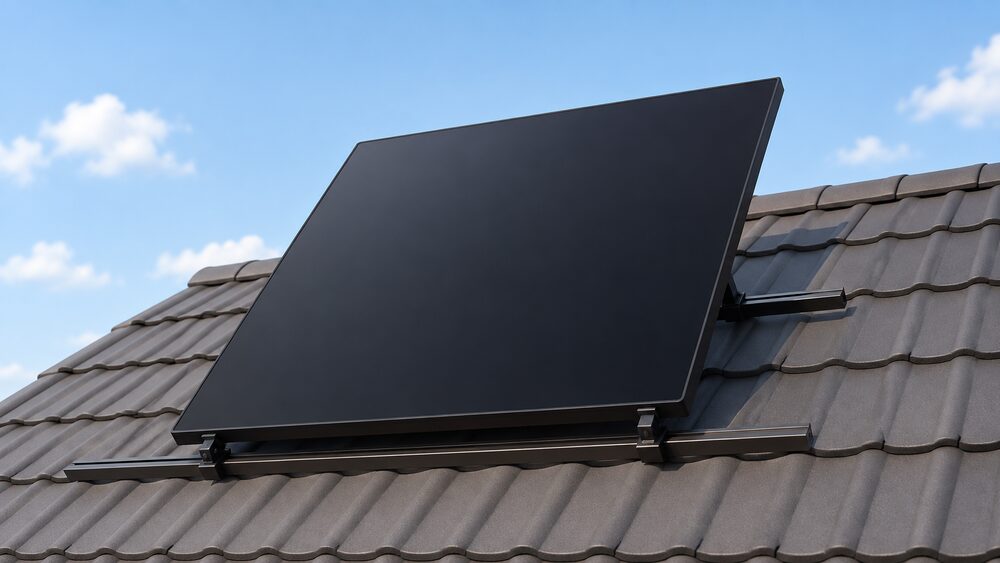
In this guide
AIKO's Neostar is the panel line most often searched for by name among UK householders comparing n-type modules, and the range now spans 465W to 500W across several families. The headline figures are a module efficiency of up to 25.0% on the Neostar 3P54 Mono-Glass and up to 24.8% on the Neostar 3P+54 Dual-Glass, with UK distributor listings putting panels at £89 to £102 plus VAT each1.
The technology behind those numbers is N-Type ABC, or all back contact, in which the cell's electrical contacts sit behind the cell rather than on the front face. AIKO states it was the first to achieve GW-scale mass production of N-type BC cells and modules3. The practical consequences are higher efficiency per square metre, an all-black appearance on many models, and a hail certification the maker describes as a world first4.
What follows sets out the range model by model, the efficiency and power figures attached to each, dimensions and appearance, the hail test, UK pricing and availability, and what MCS certification does and does not tell a householder. The lens throughout is what the panel does for a home's energy independence and what dependence remains.
The Neostar range at a glance
The Neostar line is not one panel but a set of families, and the naming carries the information. The 3P and 3S prefixes denote the generation and the cell platform, the number that follows indicates the cell count and format, and the suffix says whether the module is dual-glass or mono-glass.
The Neostar 3P+54 Dual-Glass runs from 465W to 495W1. The Neostar 3S+54 Dual-Glass runs from 480W to 490W, and the Neostar 3S54 Mono-Glass sits in the same 480W to 490W band6. The Neostar 3P54 Mono-Glass is the widest of the current families at 470W to 500W2. Above these sit the larger formats: the Neostar 2S60 Mono-Glass at 500W to 520W and the Neostar 3S60 Mono-Glass at 530W to 555W9. The Neostar 1U+ is a different scale again, at 655W to 680W, and is not a residential roof module in the usual sense11.
| Family | Power range | Cell type | Glass |
|---|---|---|---|
| Neostar 3P+54 Dual-Glass | 465W to 495W1 | N-Type ABC | Dual-glass |
| Neostar 3S+54 Dual-Glass | 480W to 490W8 | N-Type ABC | Dual-glass |
| Neostar 3S54 Mono-Glass | 480W to 490W6 | N-Type ABC | Mono-glass |
| Neostar 3P54 Mono-Glass | 470W to 500W2 | N-Type ABC | Mono-glass |
| Neostar 2S60 Mono-Glass | 500W to 520W9 | N-Type ABC | Mono-glass |
| Neostar 3S60 Mono-Glass | 530W to 555W10 | N-Type ABC | Mono-glass |
| Neostar 1U+ | 655W to 680W11 | N-Type ABC | Datasheet format |
For a household, the range matters because the choice is usually driven by roof area rather than by preference. A higher-wattage panel of the same physical size delivers more kilowatt-peak from the same roof, which is the whole point of the efficiency race. The types of solar panel sold in the UK page sets out how these families compare with the rest of the market.
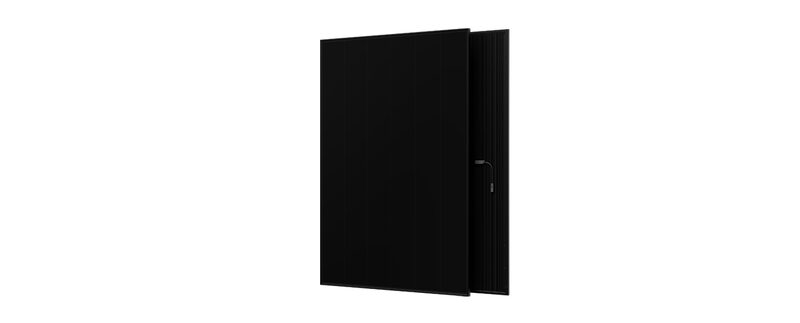
N-Type ABC cell technology and what it delivers
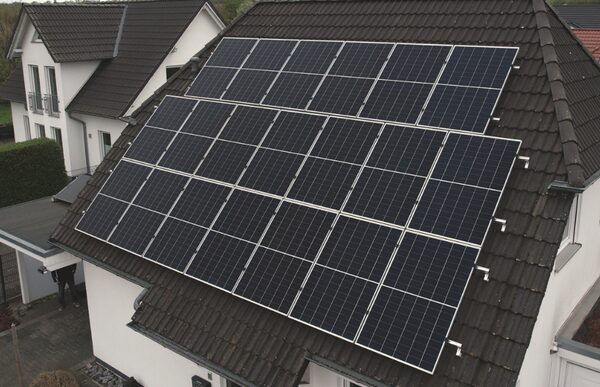
ABC stands for all back contact. The cell's positive and negative contacts are moved to the rear, so nothing shades the front face. AIKO describes this as patented all back contact technology and states it was the first to achieve GW-scale mass production of N-type BC cells and modules3. The Neostar 2P+ and Neostar 1U+ datasheets both list the cell type as N-Type ABC12.
The architecture is not unique to AIKO, but the company's own comparison material sets a 475W ABC module against a 475W TOPCon module of the same nominal output, and the 475W Neostar is described as a 54-cell format using ABC architecture13. The distinction that matters to a householder is that ABC is an n-type platform, and n-type cells generally degrade more slowly and hold efficiency better at high temperature than the older p-type PERC cells. The n-type versus p-type solar cells page explains the difference in more detail.
What ABC delivers in practice is efficiency per square metre. AIKO's guidance for the Neostar 3 gives a power density of 245W per square metre14. That figure is the one that decides how much capacity fits on a given roof, and it is the reason a smaller array of high-efficiency panels can match a larger array of standard ones. The trade-off is cost per watt, which is where the UK distributor prices come in.
The dependence here is on the manufacturer rather than the grid. A panel is a passive component with no firmware, no app and no cloud service, so once it is on the roof it works without any continuing relationship with AIKO. That is a genuine independence advantage over inverter and battery systems, which do carry software and, in some cases, remote monitoring that stops working if the maker's servers do.
Efficiency: up to 25.0% on the Neostar 3P
The efficiency figures published for the Neostar families sit in a narrow band at the top of the residential market. The Neostar 3P54 Mono-Glass is listed at up to 25.0%2, the Neostar 3P+54 Dual-Glass at up to 24.8%1, the Neostar 3S+54 Dual-Glass at up to 24.5%8 and the Neostar 3S+60 Dual-Glass at up to 24.4%15. The Neostar 1U+ datasheet gives 24.3% for the AIKO-A680-MAH78Dw11.
The Neostar 3S+54 Dual-Glass is listed at up to 24.5% on one AIKO product page and at up to 23.8% on another, and the Neostar 3S54 Mono-Glass is listed at up to 24.8% in one place and up to 23.8% in another. Both figures are published by the maker and the disagreement is unresolved, so a householder reading a datasheet should check which revision it is.
Independent commentary adds a third set of numbers. A Spirit Energy review dated June 2025 gives the Neostar 3P 485W at 24.3% efficiency and the Neostar 3S 475W at 23.8%, and states that the Neostar 3's module efficiency goes up to 25% in the top-tier 500W model16. Those figures are lower than the maker's headline for the same families, which is typical: review figures tend to be tied to a specific model rather than to the best case in a range.
| Model | Efficiency | Source type |
|---|---|---|
| Neostar 3P54 Mono-Glass | up to 25.0%2 | Maker product page |
| Neostar 3P+54 Dual-Glass | up to 24.8%1 | Maker product page |
| Neostar 3S+54 Dual-Glass | up to 24.5%8 | Maker product page |
| Neostar 3S+60 Dual-Glass | up to 24.4%15 | Maker product page |
| Neostar 1U+ | 24.3%11 | Maker datasheet |
| Neostar 3P 485W | 24.3%16 | Independent review, June 2025 |
| Neostar 3S 475W | 23.8%16 | Independent review, June 2025 |
Efficiency at module level is not the same as system yield. Shading, orientation, inverter matching and cable losses all reduce what reaches the meter, and the reading a solar panel datasheet page explains how to interpret the standard test conditions behind these figures.
Power output by model: 465W to 500W
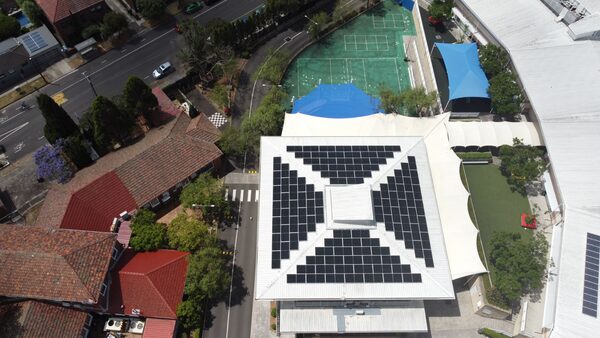
The current Neostar 3 families cover 465W to 500W, and the spread within each family reflects the binning of cells into power classes rather than different physical modules. The Neostar 3P+54 Dual-Glass spans 465W to 495W1, the Neostar 3P54 Mono-Glass spans 470W to 500W2, and the Neostar 3S+54 and 3S54 families both span 480W to 490W6.
AIKO's own guidance for the Neostar 3 series narrows this to what is actually sold in the UK. It gives the 3P as a 470W to 500W range with the top UK-available model currently at 485W, and the 3S as a 460W to 490W range with the top UK-available model currently at 475W16. That is a useful correction to the headline ranges: the highest wattages in a family are not always the ones a UK buyer can order.
The 2024 note on the Neostar 2 gives a 470W top model at 23.5% efficiency and a 455W all-black model at 22.8%17. Those are the previous generation and sit below the current Neostar 3 figures, which is the normal pattern of annual improvement.
For system sizing, the arithmetic is straightforward. Six 485W panels give 2.91 kWp and twelve give 5.82 kWp, both figures published by a UK supplier for a Neostar 3S package18. A householder working out how many panels fit should start from roof area and the what size solar system does a home need page, then check whether the higher-wattage models in a family are actually available.
Dimensions, colour and appearance
The Neostar 2P+ datasheet gives dimensions of 1757 x 1134 x 30mm12. A distributor listing for a Neostar 2P ABC Black Frame 470Wp panel gives the same module in centimetres and a weight of 21.5kg19. AIKO's guidance for the Neostar 3 gives 1762 x 1132 x 30mm14, so the current generation is a few millimetres taller and narrower than the 2P.
Appearance varies by model and is worth checking rather than assuming. AIKO's guidance describes the Neostar 3 series as All-Black14, and a distributor listing describes a Neostar 3P 485Wp panel as Black Frame20. The Neostar 2 range is mixed: the 455W model is all-black, while the 470W top model is not all-black17. Several Neostar models are dual-glass, which affects both the look and the rear-face construction21.

The 30mm depth is standard for a framed module and matters for mounting hardware and for roof-integrated alternatives. The bifacial and glass-glass solar panels page covers what dual-glass construction changes in practice.
Hail resistance: first to pass the Swiss Hail VKF HW4 test
AIKO states that its Neostar panels were the first in the world to pass the Swiss Hail VKF HW4 test at the independent test laboratory TUV Rheinland4. A separate AIKO announcement describes the same achievement as the world's first Swiss Hail VKF HW4 certification for its high-efficiency ABC solar modules5.
The detail behind the claim is specific. The tests were conducted in strict accordance with VKF standards, across 16 impact points, and all insulation voltage and damp leakage tests passed5. The hailstones used in the test were imported from Austria5. AIKO states that it has adopted the Swiss Hail VKF HW4 standard for its residential panel testing protocols4.
"AIKO Neostar panels were the first in the world to pass this test at independent test lab TUV Rheinland"
The significance for a UK household is limited but real. Hail damage is not a common cause of panel failure in Britain, but the test is a harder impact standard than the basic IEC hail test, and it speaks to the mechanical robustness of the front glass. The Neostar 2S60 Mono-Glass page also cites micro-crack resistance and a front grid free design as measures intended to reduce module failure9. The solar panel standards and testing page sets out how the IEC tests compare.
Prices at UK distributors: £89 to £102 plus VAT
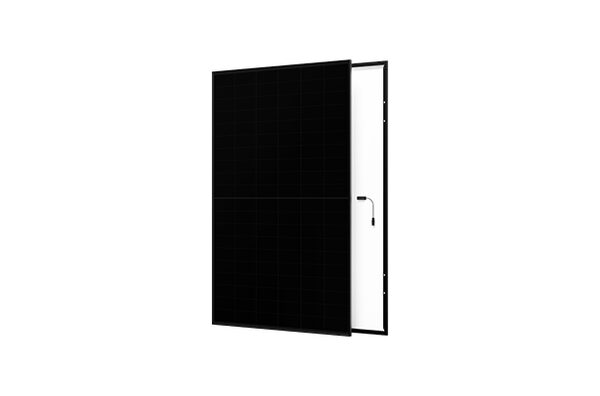
UK distributor listings put Neostar panels at £89 to £102 plus VAT each, with the lower figure attached to a 2S+ 465W panel and the higher to a 3P+ 490W Gen 3 panel6. Those are per-panel prices for the module alone and exclude mounting, cabling, inverter and installation labour.
The listings disagree with each other, and the disagreements are unresolved. The same 2S+ 465W panel appears at £89.00 plus VAT and at £92.00 plus VAT. The 3P+ 490W Gen 3 appears at £102.00 plus VAT and at £112.00 plus VAT. A 3S+ 480W dual-glass all-black panel appears at £110.39 and at £91.99. A 2S+ 510W Gen 2 appears at £82.00 plus VAT and at £87.00 plus VAT. Where two figures exist for the same model, both are given here.
For whole-system context, independent guidance published in September 2026 puts solar panel prices at around £4,600 to £8,000 depending on panel quality and system size23. A separate independent figure from April 2026 values solar panels at £9,000 to £12,00024. Those two ranges do not describe the same thing and should not be compared directly. An energy supplier's own solar buying page is a further route to a quote25.
UK availability, MCS certification and what it means
AIKO's guidance lists the Neostar 3 as available for residential and commercial use14. The AIKO MCS certificate states an expiry date of 23 November 20287.
MCS is a UK Government-backed quality assurance scheme that certifies renewable products and installers, and it is the UK's quality mark for renewable energy technologies such as solar panels and heat pumps26. Certification ensures compliance with UK regulations and is a requirement for accessing many UK government incentives, and it gives access to robust protections28. MCS covers installations of small-scale renewables in homes and small businesses throughout the UK29.
What this means for a householder is narrower than it first appears. MCS product certification applies to the panel as a product; it does not certify the installer who fits it, and it does not by itself guarantee a particular standard of workmanship. The MCS certification for solar PV installations page explains how product and installer certification differ. A certificate with a 2028 expiry date indicates the product was certified when the certificate was issued, and a householder checking a quote can ask to see the current certificate.
On independence, the position is straightforward. A Neostar panel is a passive component: it has no firmware, no app and no cloud dependency, so once installed it generates without any continuing relationship with AIKO. What remains is the grid connection, the inverter, and the fact that a UK household still imports most of its electricity at night and in winter. The solar panels and household energy independence page sets out where those limits fall.
Sources29 cited
- NEOSTAR 3P+54 Dual-Glass product page, AIKO, 2026
- NEOSTAR 3P54 Mono-Glass product page, AIKO, 2026
- Technology breakthroughs, AIKO, 2026
- AIKO sets the new standard in hail resistance for solar panels, AIKO, 2024
- ABC solar modules achieve VKF certification, AIKO, 2024
- AIKO Gen 3 topic page, AIKO, 2026
- AIKO MCS certificate, Solar Trade Sales, 2028
- NEOSTAR 3S+54 Dual-Glass product page, AIKO, 2026
- NEOSTAR 2S60 Mono-Glass product page, AIKO, 2026
- NEOSTAR 3S60 Mono-Glass product page, AIKO, 2026
- Neostar 1U+ datasheet, AIKO, 2025
- Neostar 2P+ datasheet, AIKO, 2024
- 475W TOPCon vs 475W ABC, AIKO, 2024
- Best solar panels, Spirit Energy, 2026
- NEOSTAR 3S+60 Dual-Glass product page, AIKO, 2026
- AIKO's Neostar 3: the new benchmark in residential solar panels, Spirit Energy, 2025
- AIKO Neostar 3: 30% efficiency, Spirit Energy, 2024
- AIKO NEOSTAR 3S Mono-Glass 485W panel, E.ON Next, 2026
- AIKO Neostar 2P ABC Black Frame 470Wp panel, Robin Sun, 2026
- Robin Sun Performance, Robin Sun, 2026
- Robin Sun Performance Roof, Robin Sun, 2026
- Robin Sun Performance Balcony, Robin Sun, 2026
- Solar panels guide, Uswitch, 2026
- The Warm Homes Plan: what it means for homeowners, NICEIC, 2026
- Heat pump installation: a step by step guide, Energy Saving Trust, 2026
- Why MCS certification matters, MCS Certified, 2026
- Solar photovoltaic (PV), MCS Certified, 2026
- Certifying your product, MCS Certified, 2026
- Plug-in solar consumer guide, Electrical Safety First, 2026
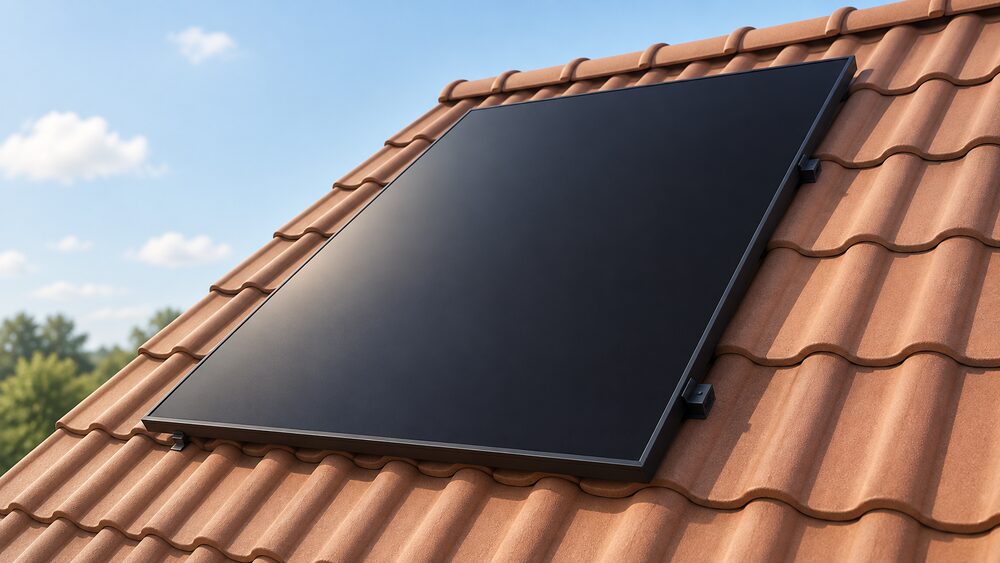 AIKO solar panelsAIKO's ABC panels promise more power from the same roof space, so what do they actually produce in real UK conditions?
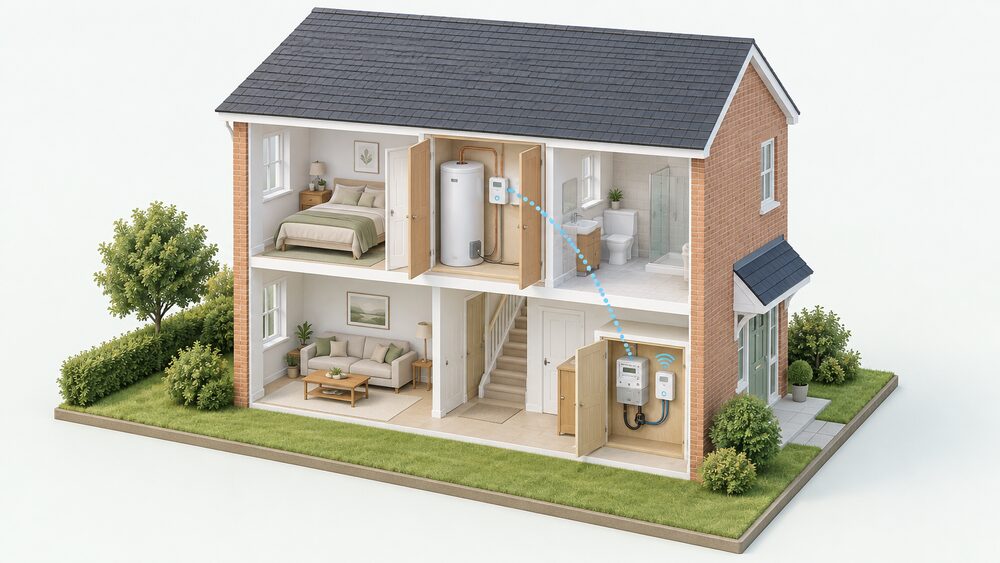 Solar iBoost+Your solar panels often make more electricity than you can use.