In this guide
The Trina Vertex S+ is a residential and commercial solar module built on N-type i-TOPCon cells, sold in the UK in a range running from 425W to 450W1. The best documented module in that range is the 450W dual glass panel, which delivers 450W of output at 22.5% module efficiency, or 225 W/m², in a black-framed format measuring 1762 by 1134 by 30mm1.
Its warranty position is the headline commercial fact: 25 years of product warranty and 30 years of power warranty, with degradation stated at no more than 1% in the first year and 0.4% a year thereafter1. Independent review coverage of the brand records the same 25 year product term and a power output warranty of 25 years at 89.4%2.
Availability is the qualification. The 450W module appears as a clearance line, and a trade listing dated 17 September 2026 records the Trina TSM-450W NEG9R.28 N-Type Solar Panel Black Frame 450W as discontinued. A household specifying this exact wattage is buying a run-out product, not a current one.
The Vertex S+ range: 425W to 450W in two glass formats
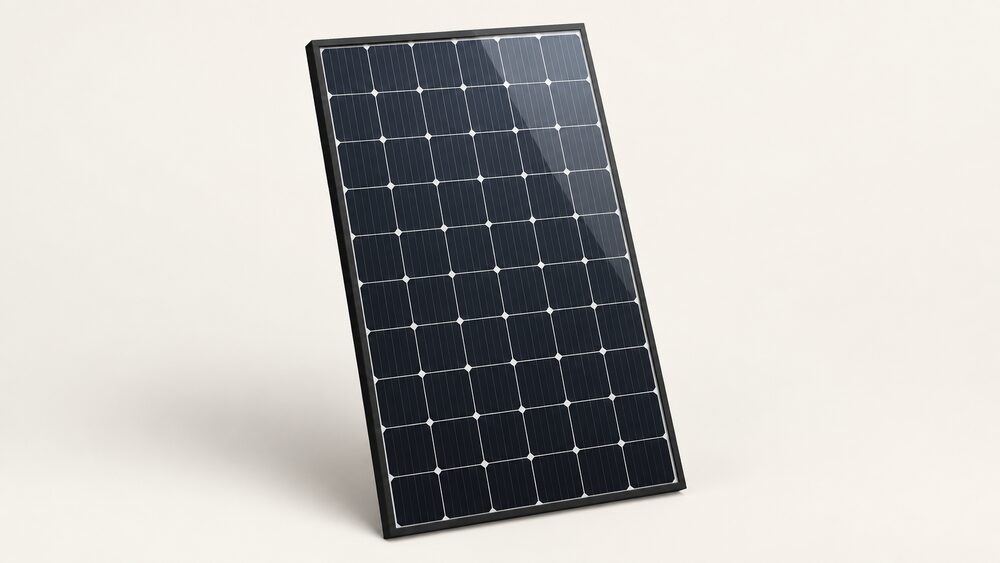
The Vertex S+ line is positioned by the maker as a stylish panel for commercial or residential applications, and the published power range for the family runs from 425W to 450W1. Within that, the 450W module is the one with a full published specification: 144 half-cut cells arranged in a 6 by 24 layout, a black frame, and a dual glass construction with 1.6mm strengthened glass on both the front and the rear1.
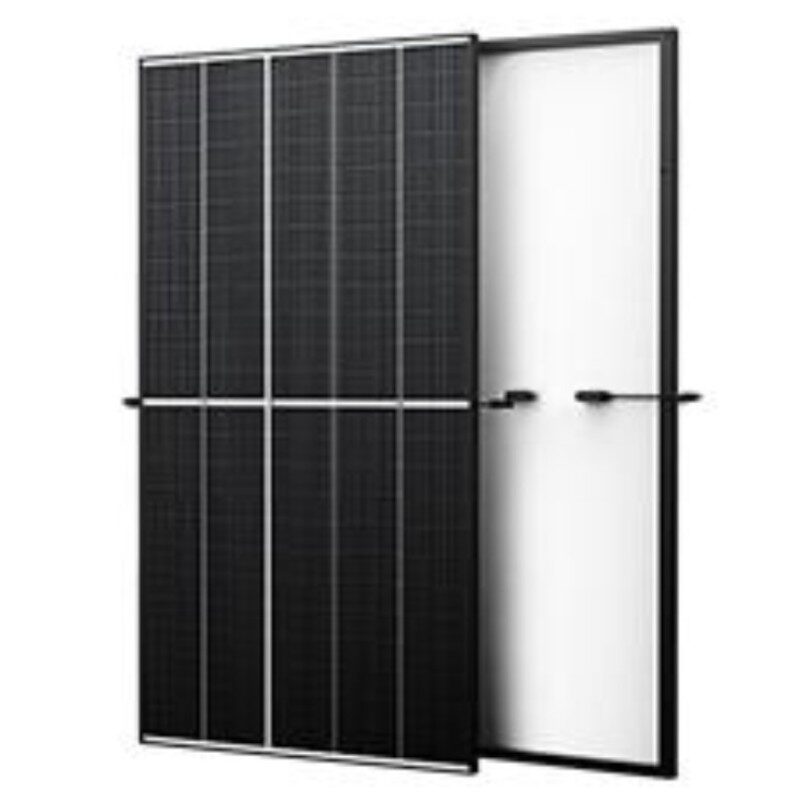
That dual glass build is the defining physical characteristic. Where a conventional module uses a polymer backsheet behind the cells, this one uses a second sheet of glass, and the maker lists a white backsheet behind the glass on the 450W variant1. The practical consequences of glass on both faces are covered in more detail in bifacial and glass-glass solar panels, but the short version is that the construction trades weight for durability and, in some formats, allows light to be collected from the rear.
The cell technology is N-type i-TOPCon, half-cut and monofacial in this variant1. N-type cells are the subject of solar cell technology, and the comparison with older P-type PERC cells sits in n-type vs p-type solar cells. The connector is a TS4 type, compatible with MC4 EVO2, which matters at the point of string assembly rather than at the point of purchase1.
Mechanically, the module is rated to a maximum system voltage of 1,500V DC, with an open circuit voltage of 52.9V, and the maker reports extended load testing at 5,400 pascals of snow load and 4,000 pascals of wind load1. Those load figures are the ones a mounting designer works from, and they are set out alongside the roof loading rules in building regulations and roof loading.
Specifications of the 450W panel
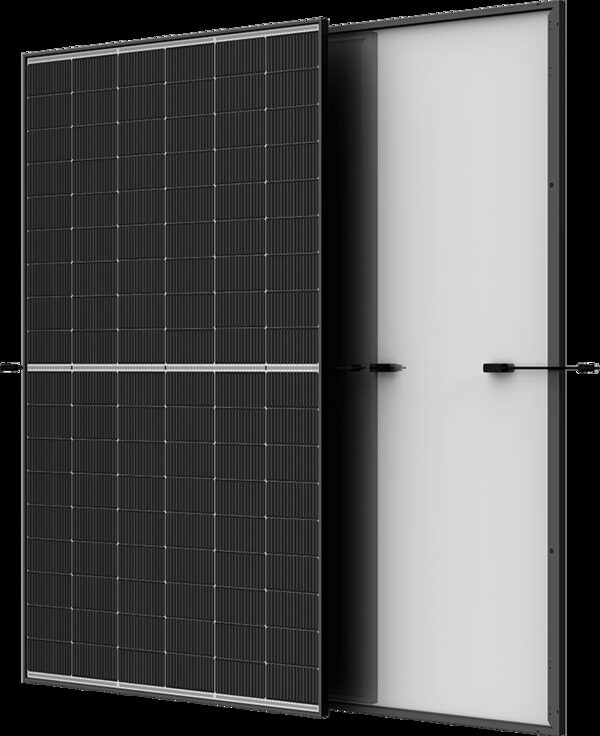
The 450W module is the reference point for the range because it is the variant with a complete published datasheet. Its headline numbers are 450W of output power and 22.5% module efficiency, which the maker expresses as 225 W/m²1. That density figure is the one worth holding on to when comparing roof area against output, and the method behind it is explained in reading a solar panel datasheet.
| Specification | Vertex S+ 450W |
|---|---|
| Rated power | 450W1 |
| Module efficiency | 22.5%1 |
| Power density | 225 W/m²1 |
| Cells | 144 half cells (6 x 24)1 |
| Cell technology | N-type i-TOPCon, half-cut, monofacial1 |
| Front glass | 1.6mm strengthened glass1 |
| Rear glass | 1.6mm strengthened glass1 |
| Backsheet | White1 |
| Frame | Black1 |
| Dimensions | 1762 x 1134 x 30mm1 |
| Open circuit voltage | 52.9V1 |
| Maximum system voltage | 1,500V DC1 |
| Connector | TS4, MC4 EVO2 compatible1 |
| Load rating | 5,400 Pa snow, 4,000 Pa wind1 |
| MCS number | BABT8804-123-450W1 |
The dimensions matter more than they look. At 1762mm by 1134mm the module is a large-format panel, and a roof that takes a given number of older 60-cell modules will take fewer of these. Sizing against actual roof area is covered in what size solar system does a home need and in roof orientation, pitch and shading.
The 52.9V open circuit voltage is the figure a string designer uses to work out how many modules fit within an inverter's input window, and the 1,500V DC maximum system voltage is the ceiling for the array as a whole1. Both are design inputs rather than household decisions, but they explain why a change of module model mid-project is not a like-for-like swap.
Warranty and degradation: 25 years product, 30 years power
Trina's warranty structure on the 450W module is 25 years of product warranty and 30 years of power warranty1. The Vertex series degradation terms are stated as no more than 1% in the first year and 0.4% a year thereafter3, and the 450W datasheet repeats an annual degradation figure of 0.40%1. Independent review coverage of the brand records a 25 year product warranty and a power output warranty of 25 years at 89.4%2.
Those two sets of figures do not line up neatly, and the difference is worth understanding rather than resolving. A 30 year power warranty with 0.4% annual degradation after a 1% first year loss is a different promise from a 25 year power warranty at 89.4%.
"25-Year Product Warranty; 30-Year Power Warranty"
What degradation means in practice is a slow reduction in output, not a failure. Independent guidance puts degradation after 25 years at anything between 12.5% and 75% across solar panels generally, a range wide enough to be almost useless as a prediction for one roof4. The same guidance notes that a solar system can be expected to last 25 years5. The maker's 0.4% figure is a warranty floor: it is the rate below which the manufacturer promises to compensate, not a measurement of what a particular installation will do. The wider subject is covered in solar panel warranties, degradation and lifespan.
MCS listing and what it means for UK installation
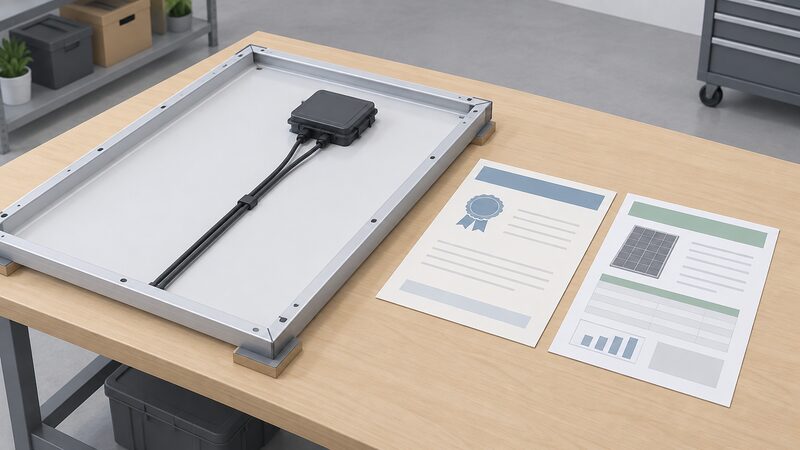
The 450W module carries MCS number BABT8804-123-450W1. That number is a product certification reference, and it is worth being precise about what it does and does not cover, because the two halves of MCS are frequently conflated.
MCS sets and maintains technical standards for installations and products, certifies installers and products against those standards, issues MCS certificates for completed eligible installations, and assists certification bodies in reviewing and addressing cases and consumer issues relating to installers or products6. Product certification ensures compliance with UK regulations7. Separately, MCS certifies solar PV installers8, and MCS certified contractors are defined as installation companies that are MCS certified9.
So a certified module and a certified installer are two different things, and a household needs both. The scheme covers installations of small-scale renewables, from solar panels to heat pumps to small wind turbines, in homes and small businesses throughout the UK10, and there are over 4,000 MCS certified solar installers operating across the UK10. The MCS Installation Database provides coverage of certified generation, storage and electrified heating installations across the UK, with over 2.2 million installation assets registered11.
The scheme is not static. MCS has been strengthening post-installation checks12, and a redeveloped installer scheme is described as set to transform the consumer protection landscape in the UK13. Complaints handled through the scheme include delayed installation among the issues raised14. The full picture of what certification covers is in MCS certification for solar PV installations.
Price and what a Vertex S+ panel costs in the UK
There is no published UK price for a Vertex S+ module, and no figure in the available material covers this product. Prices at this level are quoted by the merchant or the installer, and they move with stock, wattage and delivery terms.
The UK price points that do exist cover other products. A 400W panel is quoted at £346, and a 30W Spectra PERC Shingle panel at £73, both in guidance published in October 202415. Those are not Vertex S+ figures and should not be read as a range for this module. For the wider cost picture, including installation, scaffolding and inverter, see how much do solar panels cost in the UK and solar panel savings and payback periods.
Two practical points follow from the absence of a list price. First, a clearance listing on a discontinued line is a stock position rather than a market price, and it will vary between merchants and over time. Second, the cost of the modules is usually a minority of a fitted system, so a household comparing quotes is comparing installation, mounting, inverter and certification work as much as panel price.
Where a household is buying modules without an installer, the plug-in route is a different product category with its own rules. Freestanding and portable panels are available to buy in the UK already, but they are only legal for off-grid use16. That restriction is set out in plug-in solar kits in the UK and plug-in solar vs installed solar.
Trina the company: Tier 1 status and what it covers
Trina Solar was reported as retaining Tier 1 status for PV modules and energy storage systems on S&P Global's 2026 Cleantech Companies List, in a report dated August 2026. The company's project activity in the same period includes supplying Vertex N modules to large utility-scale installations, including 184,328 Vertex N 695W modules to the 126 MW Sarimay Solar PV power plant in Uzbekistan, described as fully commissioned in September 2026, and a supply agreement for Vertex N G3 modules across five solar projects in Germany announced in September 2026.
Tier 1 is a bankability classification. It is used by financiers, insurers and large buyers to judge whether a manufacturer is likely to be around and able to support a project over its life, and it is assessed on criteria that include the scale of bank-funded projects rather than the quality of any individual residential module. It is not a performance rating, not a warranty rating, and not a statement about the panel on a particular roof.
For a household, the useful reading of Tier 1 status is narrow: it is a signal about the manufacturer's scale and financial standing, which bears on whether a 25 or 30 year warranty is likely to be honoured decades from now. It says nothing about efficiency, degradation in a specific installation, or how well the module will perform on a shaded or east-facing roof. Those are matters for the datasheet and the site survey, covered in solar panel types sold in the UK and in the wider Trina Solar panels range overview.
Packing and logistics: 36 panels per pallet, 936 per container
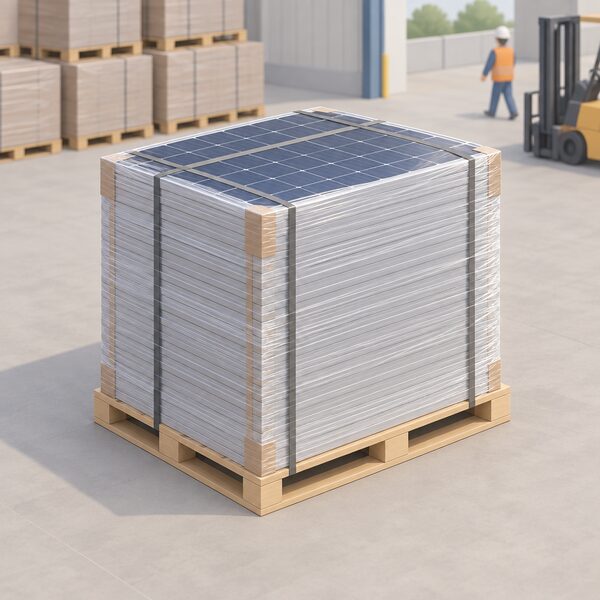
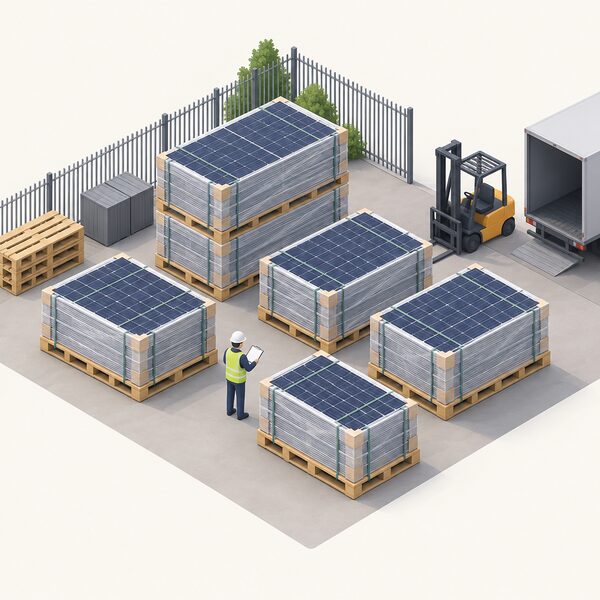
The 450W module is listed at 36 panels per pallet and 936 panels per container1. A separate maker page records a residential installation using 27 Vertex S+ modules3, which is a useful reminder that the pallet figure is a distribution unit rather than a system size.
These numbers matter to a household in one indirect way. Modules at this scale are shipped and stored in bulk, and merchants who break a pallet to sell single panels often do so on collection-only terms or with delivery priced separately. A 36 panel pallet is a commercial quantity, and a typical domestic array of 10 to 15 panels is a fraction of it.
The container figure of 936 panels also explains the shape of the supply chain. Stock arrives in large consignments, so availability of a specific wattage tends to be a question of what a merchant is holding rather than what can be ordered individually. On a discontinued line, that stock is finite.
Where the Vertex S+ fits, and what it leaves unresolved
The Vertex S+ 450W is a high-density N-type module with a strong published warranty position and a dual glass build, and it is a discontinued line in the UK. Those two facts sit together and neither cancels the other: the specification and the warranty terms remain as published for modules already in stock or already installed, while the supply of new units is a run-out matter.
For a household's energy independence, the module itself is one component in a chain. A solar array reduces the amount of electricity bought from a supplier, and the degree to which it does so depends on the inverter, the presence or absence of a battery, the export arrangement and the household's own pattern of use. The module's contribution is its output per square metre and its degradation rate over time, both of which are published here. What it does not change is the grid connection: a grid-tied array remains connected, and the household remains a customer of a supplier for whatever the array does not cover. The wider picture is in solar panels and household energy independence and in the pillar guide, solar PV for UK homes.
Two things remain genuinely unresolved in the published material. The warranty term and threshold differ between the maker's own pages and independent review coverage, with 30 years at 0.4% annual degradation on one side and 25 years at 89.4% on the other1. And the 465W variant named in common searches has no published specification or price in the material available, so nothing can be said about it beyond the range figure of 425W to 450W for the family1.
Sources16 cited
- Trina Solar Vertex S+ 450W dual glass panel listing, Alternergy, 2026
- Trina Solar solar panels review, Which?, 2026
- Trina Solar EU module pages, Trina Solar, 2026
- How long do solar panels last?, Uswitch, 2026
- Solar power facts, Energy Saving Trust, 2026
- MCS roles and responsibilities, Ofgem, 2026
- Certifying your product, MCS, 2026
- Solar panel myths debunked, Which?, 2026
- MCS data dashboard glossary, MCS, 2026
- Tomlinson Longstaff: powering the rooftop revolution in the North East, MCS, 2026
- MCS co-leads project on visibility of distributed energy assets, MCS, 2025
- Making heat pumps mainstream in the UK, Low Carbon Hub, 2025
- Ian Rippin to step down as MCS CEO, MCS, 2026
- Complaints handling, MCS, 2026
- The ultimate guide to caravan solar panels, Marlec, 2024
- Plug-in solar panels vs rooftop systems, Which?, 2026
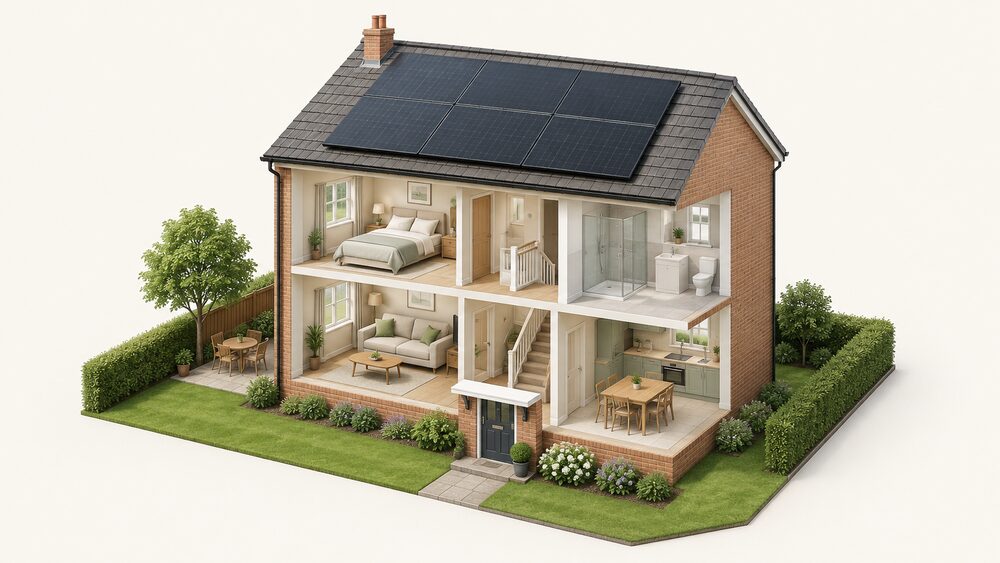 Trina Solar panels and home storageTrina Solar panels are a popular choice for UK homes, but are they any good, and how do they compare on price and performance?
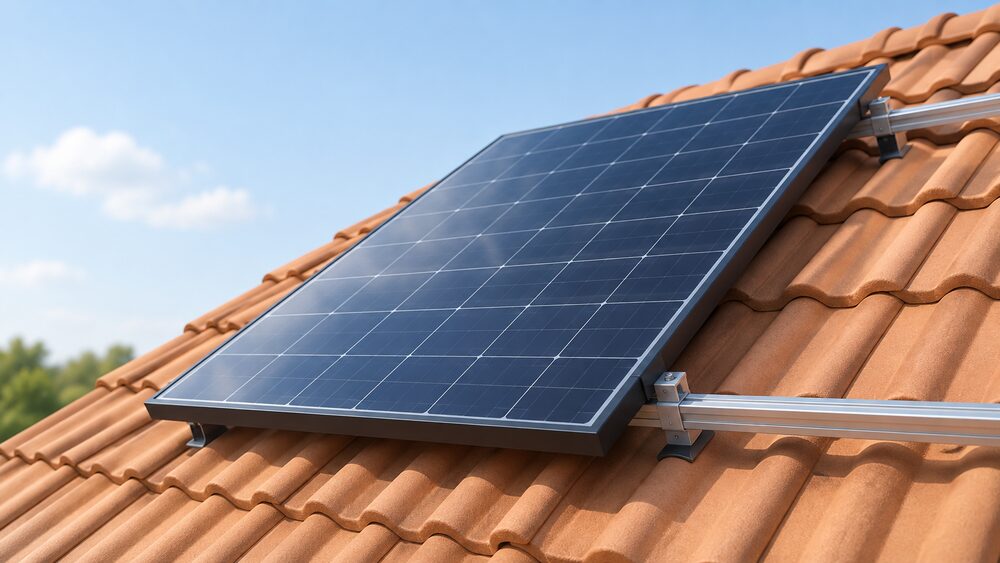 Trina Solar panelsMajor panel maker whose Vertex series is common in UK homes.