
In this answer
Short answer
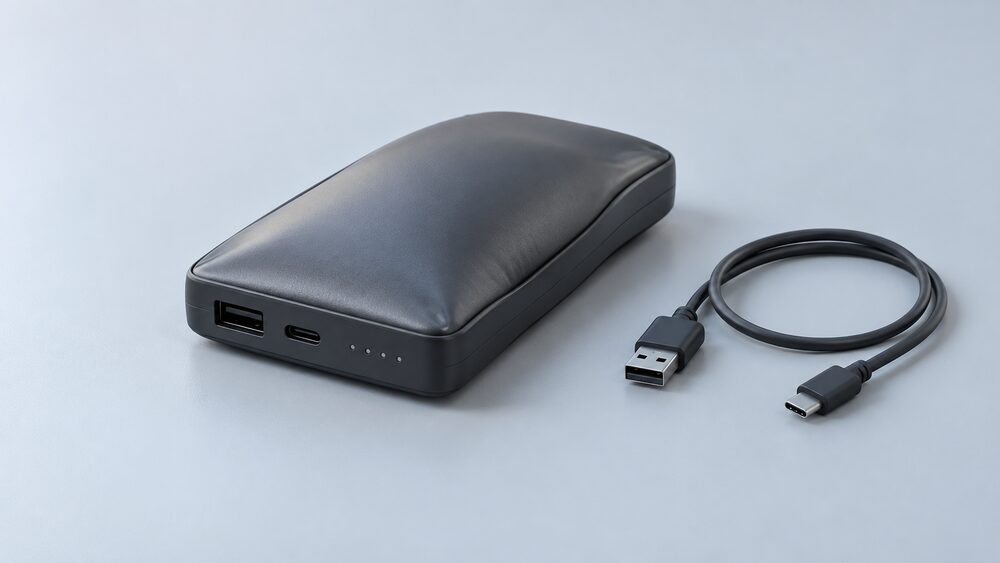
A swollen power bank is a lithium battery that has begun to fail. The swelling is gas building up inside the cell, and it means the battery is no longer safe to charge, carry in a bag or leave in a living room. The action is the same whatever the brand: stop using it immediately, disconnect it and keep it safely away from your living area1.
It cannot be repaired. Guidance for faulty appliances is to unplug the item and contact the retailer, the manufacturer or a qualified repair technician, as appropriate, but a battery that has visibly swollen is a replacement, not a repair job2. It must not go in household rubbish or normal recycling, and it should not go into an ordinary shop battery bin either. The route that the safety bodies point to is a local household waste disposal site that accepts this type of battery, checked in advance3.
The wider point for a household is that a power bank is a small piece of energy independence, and a failing one is a small piece of risk. Almost all electrical items with a plug or a battery can be recycled, so the material is recoverable, but only through the right channel4.
Why a swollen power bank is dangerous
The hazard in a failing lithium cell is fire. Product safety notices for lithium batteries and their chargers describe a serious risk of fire where the plug and fuse do not comply with the relevant British Standard, with the plug capable of exploding from the wall6. A swollen cell is a different mechanism but the same family of risk: the energy stored in the battery is released in the wrong place, and once a cell goes into thermal runaway it is difficult to stop.
The pattern in UK recall notices is consistent. An upright fan heater was recalled because the plastic cover becomes malleable during use, allowing access to live parts through the vents, a risk of electric shock7. Wolseley Centre Brand fan heaters were recalled over a risk that the plug or fuse may overheat, possibly presenting a fire hazard8. A ground source heat pump was recalled for fire and electric shock because two cables were electrically overloaded and because of badly connected wires9. A Sigenergy SigenStor Energy Controller with quick connect AC plug presented a risk of burns as the plug may overheat where it has been installed incorrectly10.
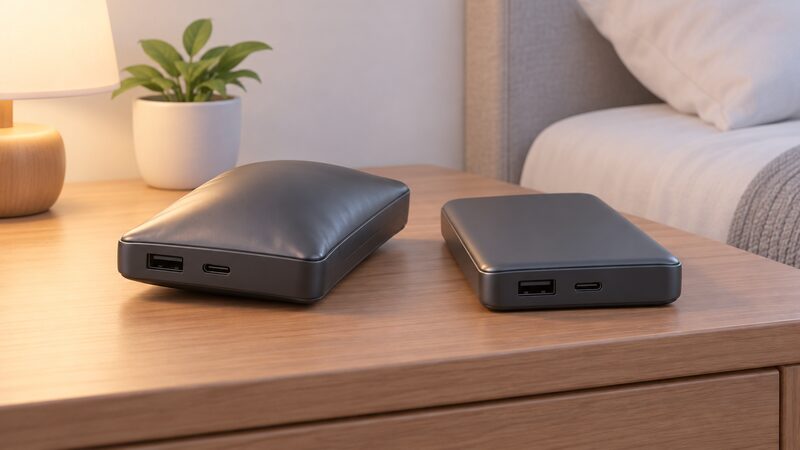
None of those are power banks, and that is the point: the failure modes that trigger a recall, overheating, overloaded conductors, compromised insulation, are the same ones a swollen battery presents in miniature. A power bank sits on a bedside table, in a rucksack or on a car seat. That is why the response is immediate rather than eventual.
Stop using it: immediate steps before disposal
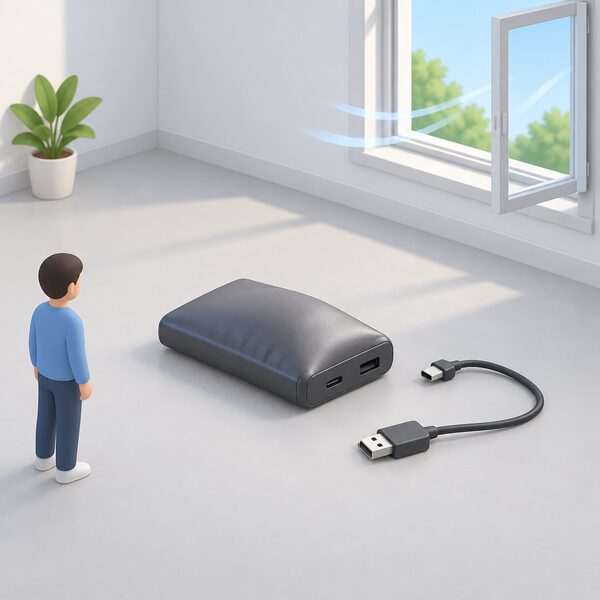
The first move is to take it out of use. Recall notices for affected products use the same wording: stop using it immediately11. For a product still connected to the mains, the instruction is to stop using it immediately and remove it from the mains power supply8. For a battery, the equivalent is to stop using it immediately, disconnect it and keep the battery safely away from your living area1.
Do not attempt to repair it. The safety guidance on propane and butane cylinders is blunt about this class of intervention: do not try to repair or replace the valves yourself12. The same principle applies to a sealed lithium pack. There is no householder-safe way to open a swollen cell, and puncturing it is the fastest route to a fire.
If the power bank has been charging and is warm, unplug it and let it cool away from anything combustible. Do not put it in a fridge or freezer, do not immerse it in water, and do not tape over vents. If there is any smell, ventilate the room. The carbon monoxide guidance for fuel-burning appliances sets out the general principle for a suspected hazardous release: open doors and windows immediately to ventilate the area, switch off the appliance, leave the building and do not re-enter until it is safe to do so13. A battery is not a CO source, but the ventilate-and-withdraw response is the right instinct for any suspected release in a confined space.
Where to dispose of a swollen power bank in the UK
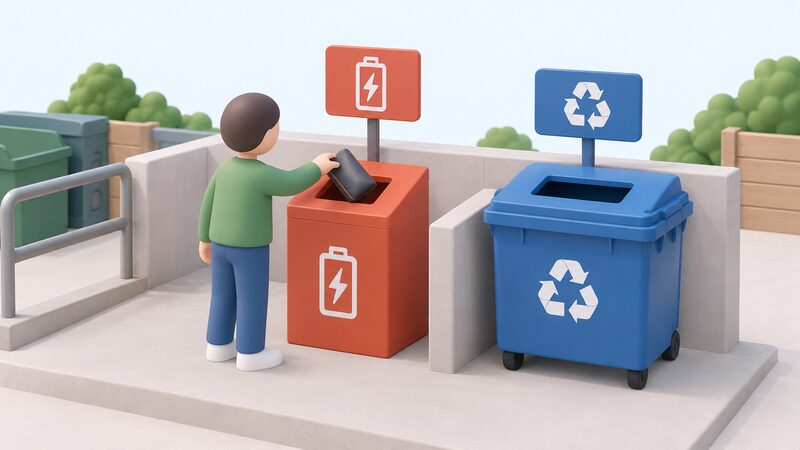
The disposal route is a local household waste disposal site, and the check comes first. Recall guidance for affected batteries advises owners to dispose of batteries safely via their local household waste disposal site3. The same guidance for a recalled radiator fan tells owners to dispose of it safely via their local household waste disposal site, checking first whether the centre accepts this type of battery14.
That check matters because sites differ. Many councils run schemes to collect batteries and appliances fitted with batteries separately from the normal recycling stream5. If you have rechargeable batteries, or cordless appliances with rechargeable batteries, take them to a local recycling centre or check the local council's website5. The council website is the authoritative list for your area, and it will say whether a site takes damaged or swollen lithium cells specifically, or only intact domestic batteries.
For a power bank that is part of a larger backup setup, the same logic applies to the rest of the kit. Old electric blankets should not be disposed of with general domestic waste and should be taken to a recycling facility which accepts electric and electronic appliances, as per the WEEE Directive15. That is the standard route for anything with a plug or a battery.
Why you must not put it in household or kerbside waste
Batteries do not belong in the bin. The guidance is explicit: do not put any batteries, appliances, or appliances with batteries, even AA or AAA ones, in the general waste or normal recycling5. If you have an appliance with an image of a wheelie bin with a cross on it, do not put it in your general household rubbish16.
The reason is that a battery in a waste stream is a fire waiting for a trigger. Compaction in a refuse lorry, or a puncture in a sorting facility, can short a cell and start a fire that spreads through mixed waste. That is why the WEEE symbol exists and why separate collection is the rule rather than a courtesy.
The same principle runs through other household fuels and appliances. Do not store any combustible materials on the hearth17. Do not pour or throw water into your stove, as it floods the house with smoke and the steam could scald you18. In smoke control areas you are not allowed to release smoke from a chimney, which means you cannot burn wood in normal stoves; you must use a DEFRA-exempt stove or burn smokeless fuel such as anthracite coal19. Each of these is a rule about keeping a hazardous material inside its proper channel. A swollen battery in kerbside waste is the same category of mistake.
Transporting it safely to a collection point
Keep the journey short and the battery isolated. The owner action for a recalled e-bike battery is to stop using it immediately, disconnect it and keep the battery safely away from your living area1. For transport, that means not in the passenger footwell, not in a warm boot for hours, and not loose among metal objects that could bridge the terminals.
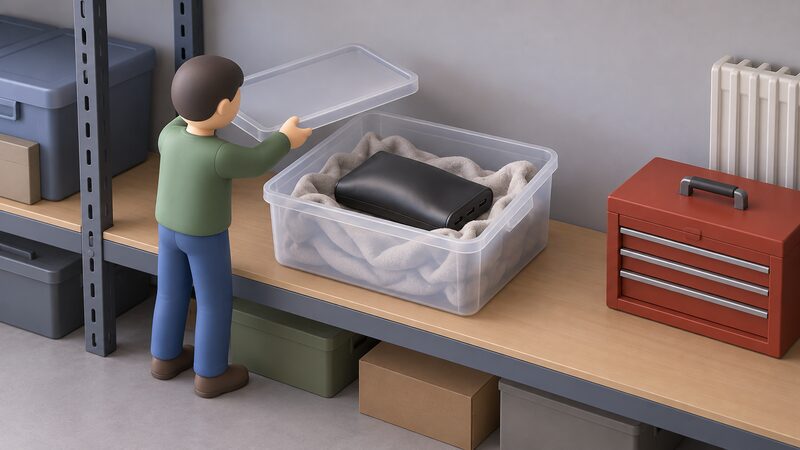
Pack it so it cannot move or be crushed. The storage guidance for electric blankets is to loosely fold and store in a cool dry place15, and the same principle of loose packing in a cool, dry place applies here: nothing tight, nothing that presses on the swollen casing, nothing that could puncture it.
If the battery is part of a larger item, the disposal requirement for a domestic heating oil tank is a useful model for how the UK handles hazardous household waste: the old tank should be emptied and removed using a licensed waste carrier that will dispose of the tank at a hazardous waste site20. A swollen power bank is not a tank, but the principle of a licensed, staffed disposal point rather than a general collection is the same.
Do not post it. A damaged lithium cell is not safe in normal postal or courier networks, and the guidance for a recalled lithium battery charger is to stop using it immediately and contact the retailer for further advice6. Contact the retailer or the council, and take it in person.
What happens to it after recycling
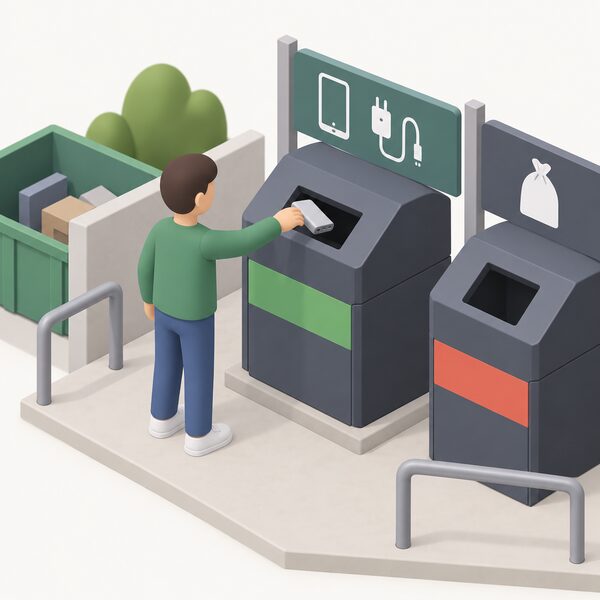
A power bank handed in at a WEEE-accepting site enters the electrical waste stream rather than landfill. Almost all electrical items with a plug or a battery can be recycled4, and the test is simple: an item can be recycled if it has a plug, uses a charger, uses batteries, or carries the WEEE logo5. A power bank meets several of those at once.
What is recovered is the material, not the energy. Electrical storage batteries store energy in the form of chemical energy which is then converted back to electrical energy when the battery is discharged21, and once the cell is spent or failed, that chemistry is broken down and the metals recovered. The cell itself does not come back.
For a household, the disposal is the end of one small piece of independence and the start of another. A power bank that fails is a reminder that the stored energy in a home is finite and needs replacing on a schedule, not just when it stops working. The same is true of larger backup kit: after a power cut, equipment should not be damaged and will be ready to use again once power is restored22, but that assumes the equipment was sound to begin with. A swollen cell is the signal that it was not.
If the power bank was part of a wider backup setup, the rest of the system is worth checking at the same time. Guidance on lithium battery safety and recalls covers the recall and fire-risk picture, and power bank recalls lists UK safety notices for specific models. For the wider context of what stored energy does for a household, see backup power and energy independence.
Sources22 cited
- Is your e-bike battery safe?, Electrical Safety First, 2026-09-17
- Demand flexibility: running appliances at cheaper times, Electrical Safety First, 2026-09-19
- BOOW LiFePO4 leisure battery sold via Amazon, Electrical Safety First, 2026-09-17
- 10 ways to go green with electricity, Electrical Safety First, 2026-09-19
- Recycling electricals and batteries, Electrical Safety First, 2026-09-17
- szYB-60W-29.4V2A lithium battery charger, Electrical Safety First, 2026-09-17
- Upright fan heater, Electrical Safety First, 2026-09-17
- Wolseley Centre Brand fan heaters, Electrical Safety First, 2026-09-17
- Ground source heat pump, Electrical Safety First, 2026-09-17
- Product safety report: Sigenergy SigenStor Energy Controller with quick connect AC plug, GOV.UK, 2026-04-23
- E.ON power adaptors, Electrical Safety First, 2026-09-17
- What's the difference between propane and butane, Liquid Gas UK, 2026-09-20
- Guide to carbon monoxide safety, OFTEC, 2026-09-20
- Valiant radiator fan sold via Amazon, eBay, Temu, B&Q, Debenhams, The Range and TikTok Shop, Electrical Safety First, 2025-11-07
- Electric blankets, Electrical Safety First, 2026-09-19
- Home appliances, Energy Saving Trust, 2026-05-20
- Log storage, HETAS, 2026
- How to put out your log burner, HETAS, 2026
- Wood burning stoves: fines and regulations, Which?, 2026-04-14
- Tank care and security, UKIFDA, 2026-02-18
- VAT energy saving materials and grant funded heating supplies, GOV.UK, 2026-09-17
- Planned power cuts, SSEN, 2026-09-19
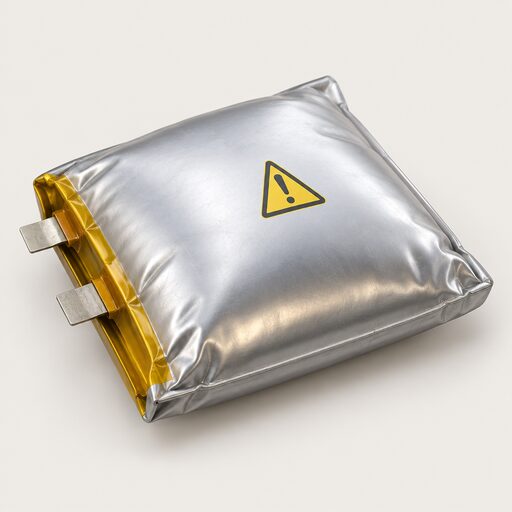 Lithium Battery SafetyLithium batteries power phones, e-bikes, scooters and home storage, and any of them can catch fire.
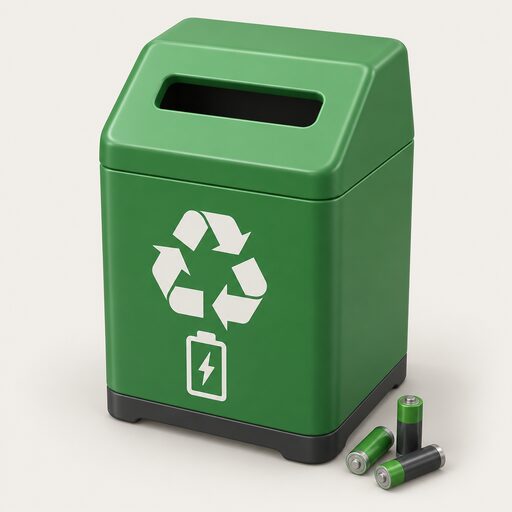 Recycling Old ElectricalsOld batteries and broken electricals can cause fires in bin lorries and at recycling plants, so where should they actually go?
 Panel RecyclingWhat actually happens to a solar panel when it stops working, and what can a household do with one?
 Recycling and DisposalWhat happens to a domestic storage battery at end of life, who takes it back, the transport and handling rules for damaged lithium units, and the difference between recycling, refurbishment and second-life reuse.
 Portable Power StationsWhat can a portable power station actually keep going in a power cut, and for how long?
 Siting and LocationWhere can a home battery actually go?