In this guide
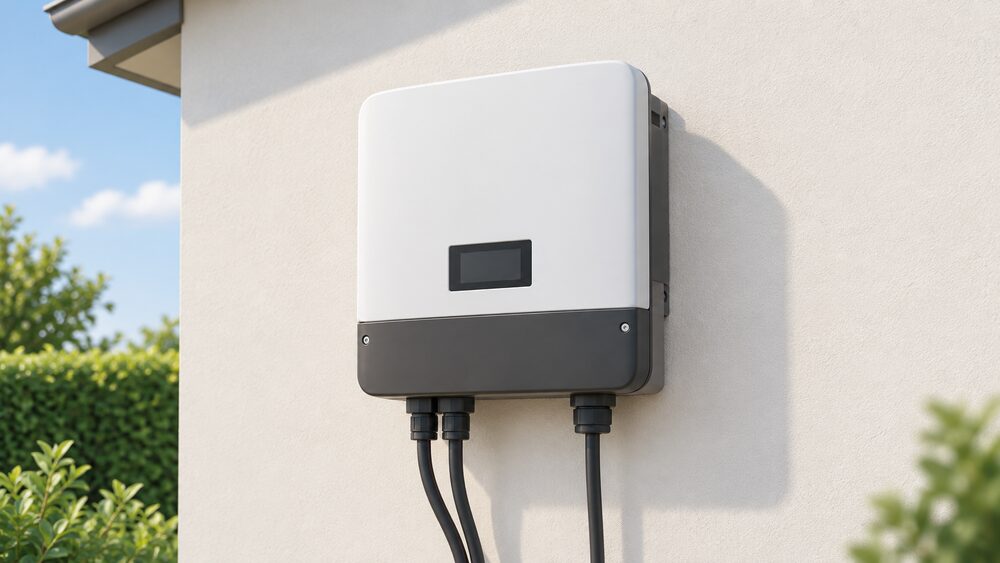
SMA is a German inverter manufacturer, and the Sunny Boy is the name most UK householders associate with the brand. The current domestic line is the Sunny Boy Smart Energy, a single-phase hybrid inverter that combines solar generation and battery use in one unit, listed in four models and in power classes of 3.6 kW, 4 kW, 5 kW, 6 kW, 8 kW and 9.9 kW1. The standard Sunny Boy range covers 3.0 kW to 6.0 kW in single phase, and the Sunny Tripower families take over above that, from 5.0 kW to 15.0 kW for three-phase homes and up to 60 kW for larger properties3.
The feature SMA promotes hardest is ShadeFix, a software-based shade management system built into Sunny Boy and Sunny Tripower inverters. It is activated automatically during commissioning, needs no additional components, and is included at no extra cost5. SMA describes it as a patented, integrated inverter capability that optimises energy production even when shading occurs6.
For a household, the practical question is what the inverter does for energy independence and what dependence it leaves in place. A Sunny Boy keeps a home on the grid and on a supplier, with an electrical dependence for operation and, on the hybrid models, a dependence on a battery maker's approved list. The Sunny Island X battery inverter, by contrast, is built for larger systems and off-grid work, in 30kW and 50kW ratings7.
SMA Sunny Boy: what the range covers
The Sunny Boy name covers two distinct products in the current UK line-up. The first is the standard Sunny Boy string inverter, a single-phase unit spanning 3.0 kW to 6.0 kW, which SMA describes as offering ease and comfort for system operators and installers3. It carries an IP65 rating for outdoor installation and includes an integrated DC isolator, which SMA says saves installation time and cost compared with other brands4. Connection is via Sunclix on the solar side and a standard connector on the AC side9.
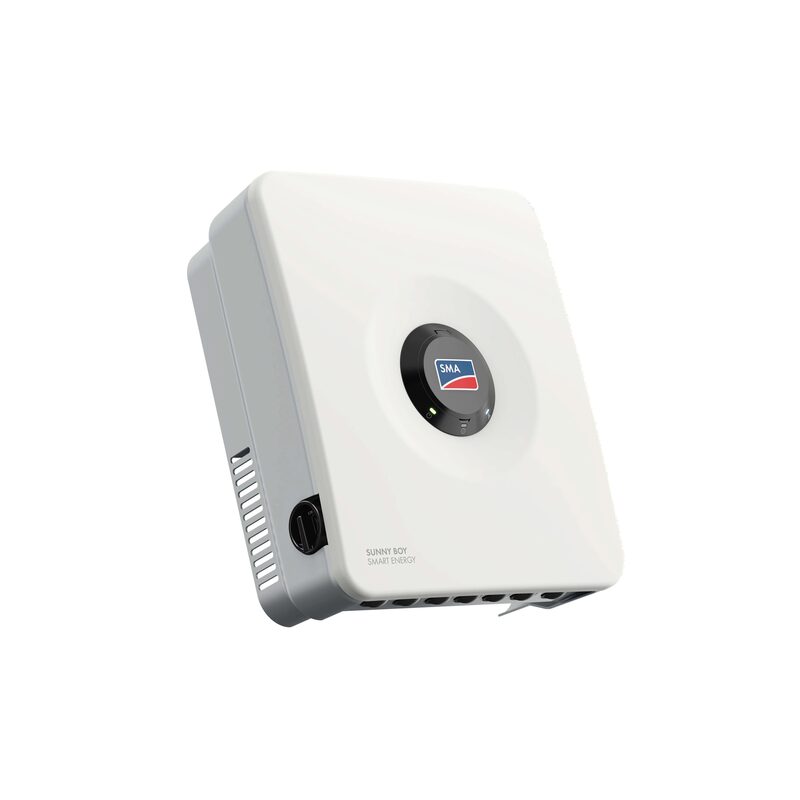
The second is the Sunny Boy Smart Energy, a single-phase hybrid inverter that SMA calls a two-in-one solution for the generation and flexible use of solar power at home2. It is listed in four models and in power classes of 3.6 kW, 4 kW, 5 kW, 6 kW, 8 kW and 9.9 kW1. It is compatible with high-voltage batteries from major manufacturers, including the SMA Home Storage battery and BYD HVS and HVM batteries, and it has SMA ArcFix arc fault protection integrated1. It also carries IP65 protection1.
Above the Sunny Boy sits the Sunny Tripower family. The Sunny Tripower Hybrid X runs from 5.0 kW to 15.0 kW and is aimed at three-phase properties, with a battery DC current of 50 A10. The larger Sunny Tripower Hybrid X 20, 25 and 30 covers 20.0 kW to 30.0 kW for larger single-family homes and smaller commercial applications11. The Sunny Tripower X 12 to 25 kW three-phase inverters are described as a system solution for commercial and large home PV systems, and the Sunny Tripower X 60 reaches up to 60 kW with five independent MPP trackers and an integrated system manager12.
| Product | Type | Power range | Notes |
|---|---|---|---|
| Sunny Boy | String, single phase | 3.0 kW to 6.0 kW3 | IP65, integrated DC isolator4 |
| Sunny Boy Smart Energy | Hybrid, single phase | 3.6 kW to 9.9 kW1 | Four models, ArcFix1 |
| Sunny Tripower Hybrid X | Hybrid, three phase | 5.0 kW to 15.0 kW10 | 50 A max battery DC current10 |
| Sunny Tripower Hybrid X 20/25/30 | Hybrid, three phase | 20.0 kW to 30.0 kW11 | Larger homes, small commercial11 |
| Sunny Tripower X | String, three phase | 12 kW to 25 kW12 | System manager for up to 5 inverters12 |
| Sunny Tripower X 60 | String, three phase | up to 60 kW12 | Five MPP trackers12 |
ShadeFix: how SMA handles shading
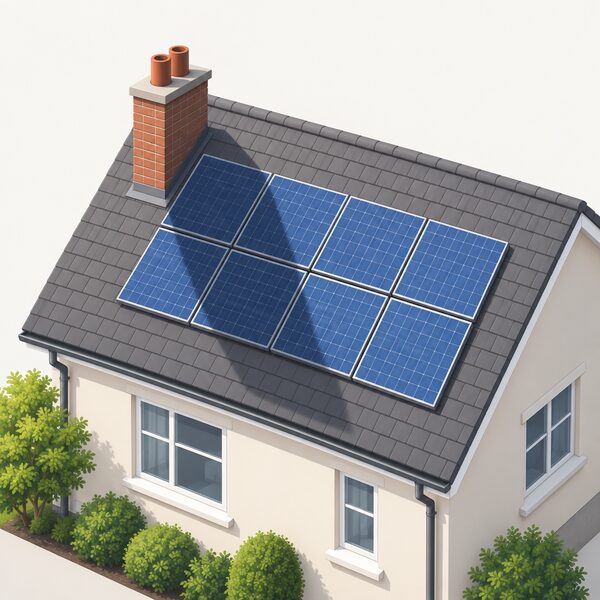
ShadeFix is SMA's answer to the problem that shade on one part of an array drags down the output of the whole string. Rather than fitting module-level electronics, the inverter itself continuously searches for the operating point with the highest output during shading conditions5. SMA describes it as a software-based solution already integrated into Sunny Boy and Sunny Tripower inverters, and as a patented, integrated inverter capability that optimises PV system energy production in every situation, even when shading occurs5.
The technique is not new. SMA states that ShadeFix is based on its earlier shade management system OptiTrac Global Peak, and that it is an integral part of the inverter's operation management, included in the acquired scope of services of Sunny Boy and Sunny Tripower inverters5. Because it is software rather than hardware, SMA notes that the low component count improves recyclability and sustainability, and that it works without adding any further components to the system or the PV modules5.
SMA is explicit about the shading levels it is designed for. The company states that the feature is commonly used in systems with light to medium shading5. That is a narrower claim than "any shading", and it matters when a roof has a persistent obstruction such as a chimney or a mature tree.
Independent guidance on shading is more cautious than any manufacturer's feature list. Which? advises that a roof with 20% shading or less is best13. Bromley Council's official guidance states plainly that if a roof is heavily shaded, solar panels may not be the most suitable option14. The Energy Saving Trust recommends a south-facing roof with little or no shading15, and Smart Energy GB notes that shading on solar panels usually comes from trees, chimneys and nearby buildings16. ShadeFix addresses the losses from partial shading; it does not make a heavily shaded roof a good site. Roof suitability is covered in more detail in orientation, shading and roof suitability.
"SMA ShadeFix is a software-based solution and is already integrated into SMA Sunny Boy and Sunny Tripower inverters."
ShadeFix in practice: integrated and activated automatically during commissioning
The practical appeal of ShadeFix is that it requires nothing of the householder or the installer beyond the standard commissioning process. SMA states that the feature is already integrated into Sunny Boy and Sunny Tripower inverters and activated automatically during commissioning, and that it is activated by default in current SMA solar inverters5. No further settings are necessary5.
There is one wrinkle worth knowing. SMA notes that the parameter name may not yet be shown in the user interface, but that the feature is fully available5. In other words, an installer looking for a ShadeFix toggle may not find one, because there is nothing to toggle. SMA also states that additional installation effort is not required, as with conventional power optimisers, and that the optimisation is integrated into SMA inverters at no extra cost5.
That last point is the commercial difference between ShadeFix and the alternative approach. Module-level power optimisers are separate hardware devices fitted behind or alongside panels, and they add cost and connections to a system. ShadeFix is a firmware capability of the inverter, so the shade management arrives with the inverter rather than as an extra line on a quote. The trade-off is that it operates at string level rather than module level, which is why SMA frames it around light to medium shading rather than severe, localised obstruction.
For a household, this shapes what to expect. On a roof with a chimney shadow crossing part of the array for an hour or two a day, ShadeFix is working from the moment the system is commissioned, with no maintenance obligation and no extra components to fail. On a roof where a neighbouring building shades half the array for most of the winter, the software cannot recover what is not being generated, and the site assessment matters more than the inverter's feature set. The wider comparison between these two approaches is set out in power optimisers.
Sunny Island X: the 30kW and 50kW power range
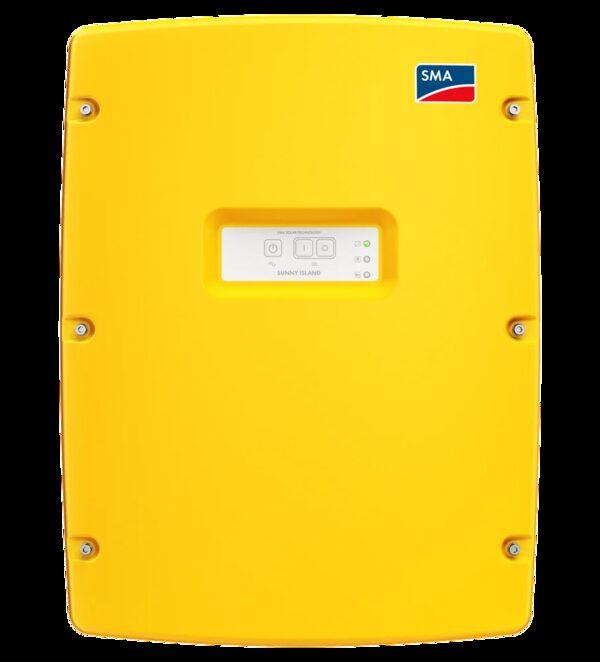
The Sunny Island X is a different class of product from the Sunny Boy. It is a battery inverter, offered in two power ratings: 30kW and 50kW7. The 30kW rating applies to the SI-30-20 and SI-30-LCD-20 models, and the 50kW rating to the SI-50-20 and SI-50-LCD-20 models7. SMA describes the pair as its next generation of battery inverters7.
The design intent is scale and flexibility rather than single-home supply. SMA lists modular scalability of AC power and battery capacity in both on-grid and off-grid installations, and integrated energy management in on-grid installations without battery backup7. The unit is compatible with numerous approved batteries thanks to an integrated DC-to-DC converter, and it carries an IP65 rating7. Backup compatibility is listed as yes7.
The supporting hardware shows the intended scale. The SMA Backup 100 and Backup 300 are described as a backup and off-grid box for Sunny Island X or Sunny Tripower Storage X 30/50kW inverters, with integration of public grid TN-C-S supplies or diesel generators17. The Sunny Island X Connection Box is an AC distribution cabinet that acts as the hub in large off-grid systems and in grid-connected backup systems using Sunny Island X inverters18. The Sunny Island MultiCluster Boxes allow island and hybrid systems from 30 up to 300 kW19.
The older Sunny Island 6.0H and 8.0H sit at the domestic end of the same family, with rated power outputs of 6kW or 8kW for 30 minutes, compatibility with many well-known brands of lithium-ion battery and all lead-acid batteries, and support for a wide range of on-grid and off-grid applications20. SMA states that systems up to 300kW are possible with that platform20. For a household, the 30kW and 50kW Sunny Island X ratings are far above normal domestic demand; they belong to estate-scale, farm or small commercial installations, and to off-grid systems where the inverter must carry the whole load. Domestic battery storage is covered in adding battery storage to a solar system.
Where the Sunny Boy fits in a household energy independence setup
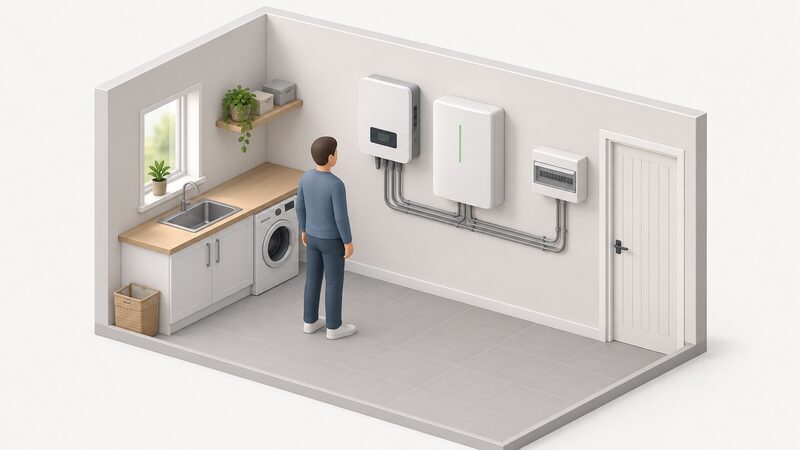
The Sunny Boy Smart Energy is the model that speaks most directly to household independence, because it is a PV and battery inverter in one unit4. SMA's own package listing describes the Sunny Boy Smart Energy hybrid PV and battery storage kit as making it easy to increase energy independence21. A typical package contains the Sunny Boy Smart Energy inverter, an SMA Home Storage 6.56 kWh lithium battery, and an SMA Home Manager with a CT clamp22. Larger configurations are listed, including a multiple-inverter and multiple-battery package at 18kW and 49.2kWh21.
Backup is the part that changes what independence means in practice. SMA lists backup compatibility as yes across all Sunny Boy Smart Energy models1. Delivering it requires the SMA Backup 1P, a single-phase automatic switchover switch compatible with the Sunny Boy Smart Energy hybrid inverters, which enables a smooth transition between grid and battery-backup operation8. SMA also states that with a firmware update, additional Sunny Boy inverters can support the household in backup mode in combination with the hybrid unit and SMA Backup, and that PV inputs can now be connected in parallel23.
The dependence that remains is worth stating plainly. The Sunny Boy Smart Energy is listed as an on-grid product8. It works with the grid, exports to it, and draws from it when the battery is empty. Backup capability covers selected circuits through additional switchgear rather than the whole house by default. The battery must come from an approved list, which ties the household to a set of manufacturers SMA has tested. And the inverter conforms with G98 and G99, which means the connection is governed by the distribution network operator's rules4. The wider picture is set out in solar panels and household energy independence and in connecting solar to the grid.
Specifications to check before choosing a model
The specification sheet is where the differences between models actually sit, and a few figures matter more than the rest.
Power class and phase. The Sunny Boy Smart Energy is single phase, in 3.6 kW, 4 kW, 5 kW, 6 kW, 8 kW and 9.9 kW classes1. The standard Sunny Boy is single phase from 3.0 kW to 6.0 kW3. Three-phase homes move to the Sunny Tripower Hybrid X from 5.0 kW to 15.0 kW, or the 20 kW to 30 kW versions for larger properties10.
Maximum DC voltage. The Sunny Boy Smart Energy has a maximum VOC of 600 V1. String design has to stay inside that limit, particularly in cold conditions when panel voltage rises.
Oversizing headroom. SMA states that the Sunny Boy Smart Energy allows up to 200% PV system oversizing for higher energy yields1. That is a generous allowance and it changes how an array can be designed against the inverter rating.
Battery compatibility. The hybrid unit works with high-voltage batteries from major manufacturers, including the SMA Home Storage battery and BYD HVS and HVM batteries1. The battery choice is constrained by that approved list.
Protection and enclosure. IP65 across the Sunny Boy range, the Sunny Boy Smart Energy and the Sunny Island X1. SMA ArcFix arc fault protection is integrated in the Sunny Boy Smart Energy23.
Grid conformity. SMA states that its inverters conform with G98 and G994. The applicable standard depends on the size and type of connection.
Shade management. ShadeFix is available in Sunny Boy and Sunny Tripower inverters, and SMA advises checking the inverter manual or technical datasheet for the specific model5.
| Specification | Sunny Boy Smart Energy |
|---|---|
| Models available | 41 |
| Power classes | 3.6 kW, 4 kW, 5 kW, 6 kW, 8 kW, 9.9 kW1 |
| Max VOC | 600 V1 |
| PV oversizing | up to 200%1 |
| IP rating | IP651 |
| Arc fault protection | SMA ArcFix integrated23 |
| Backup compatibility | Yes, with SMA Backup 1P8 |
A note on the brand's history in the UK
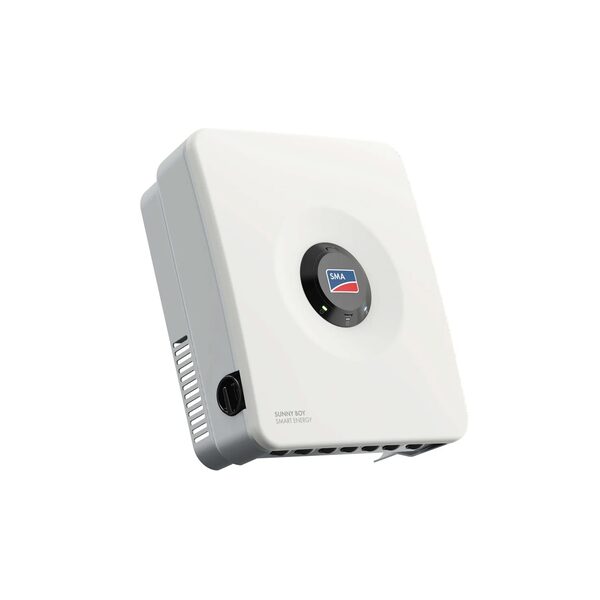
SMA's presence in the UK domestic market is long established. A case study published by the company in October 2016 describes a West Wales Eco Centre PV system feeding an SMA SWR-700 700W Sunny Boy inverter sited in the loft, and states that this made the Sunny Boy inverter the oldest operating domestic PV inverter in the country24. That is a maker's own case study rather than an independent verification, but it illustrates how far back the Sunny Boy name goes in British installations.
The current range is documented through SMA's UK product overview and the technical datasheets for each model2. For households comparing inverter brands, the relevant pages are solar inverters explained, string inverters and hybrid inverters. SMA sits alongside other manufacturers covered on this site, including Fronius and Sungrow.
Sources24 cited
- SMA ShadeFix, SMA UK, 2026-09-17
- SMA product overview, SMA UK, 2026-09-17
- SMA Sunny Boy 3.0 to 6.0, Wind & Sun, 2026-09-20
- SMA Sunny Boy inverters, Wind & Sun, 2026-09-20
- SMA Sunny Boy Smart Energy, Wind & Sun, 2026-09-20
- SMA Sunny Boy storage package, Wind & Sun, 2026-09-20
- SMA Sunny Island X, Wind & Sun, 2026-09-20
- On-grid battery storage inverters, Wind & Sun, 2026-09-20
- SMA Sunny Tripower 30 to 60, Wind & Sun, 2026-09-20
- SMA Sunny Tripower Hybrid X 5 to 15, Wind & Sun, 2026-09-20
- SMA Sunny Tripower Hybrid X 20 to 30, Wind & Sun, 2026-09-20
- Sunny Tripower X 12 to 25 kW, Wind & Sun, 2026-09-20
- SMA Sunny Tripower inverters, Wind & Sun, 2026-09-20
- SMA Sunny Island inverters, Wind & Sun, 2026-09-20
- SMA Backup 1P, Wind & Sun, 2026-09-20
- Backup switchgear, Wind & Sun, 2026-09-20
- SMA Sunny Island 6.0H and 8.0H, Wind & Sun, 2026-09-20
- String inverters, Wind & Sun, 2026-09-20
- Self-consumption battery storage packages, Wind & Sun, 2026-09-20
- The UK's smallest power station, Wind & Sun, 2016-10
- SMA hybrid inverters, SMA, 2026-09-20
- Sunny Boy Smart Energy, SMA, 2026-09-20
- MCS 032 Solar PV Standard, MCS Certified, 2025
- Buying advice for solar panels, Which?, 2026-08-12
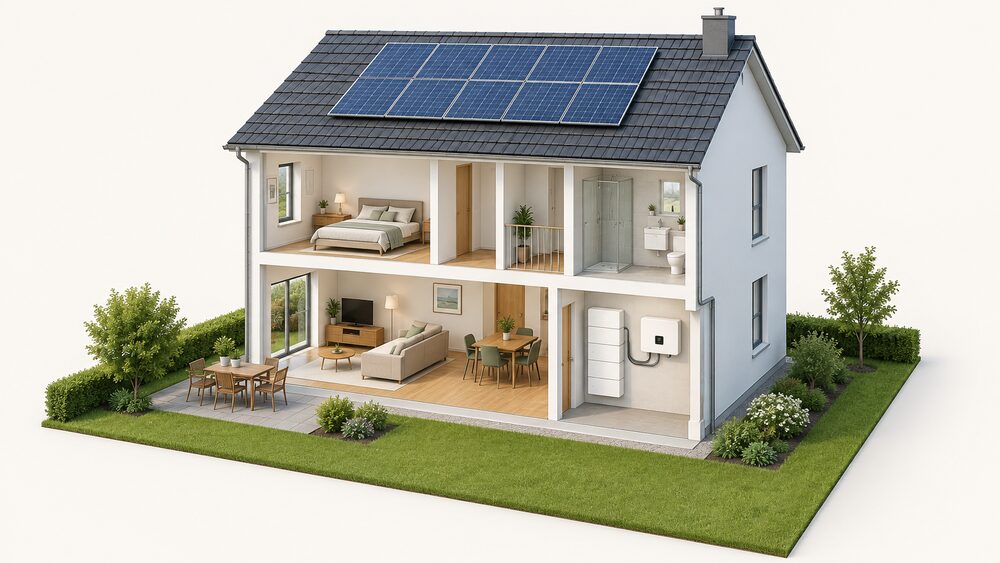 SMA Home Battery Storage and InvertersSMA home batteries only work with SMA's own hybrid inverters, so you cannot add one to a system you already have.
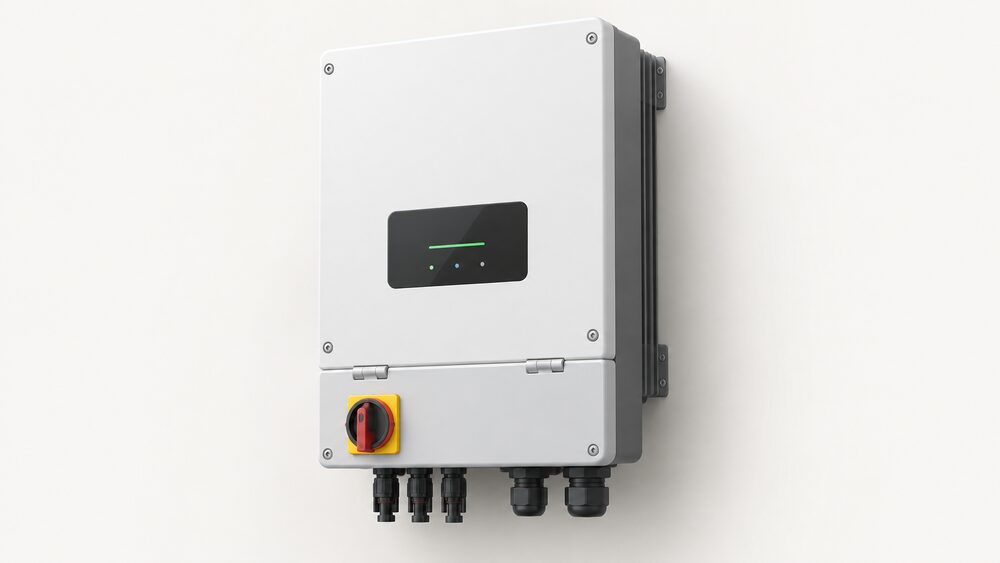 SMA Sunny Boy inverters in the UKLooking at an SMA Sunny Boy for a UK home?