
In this answer
Short answer
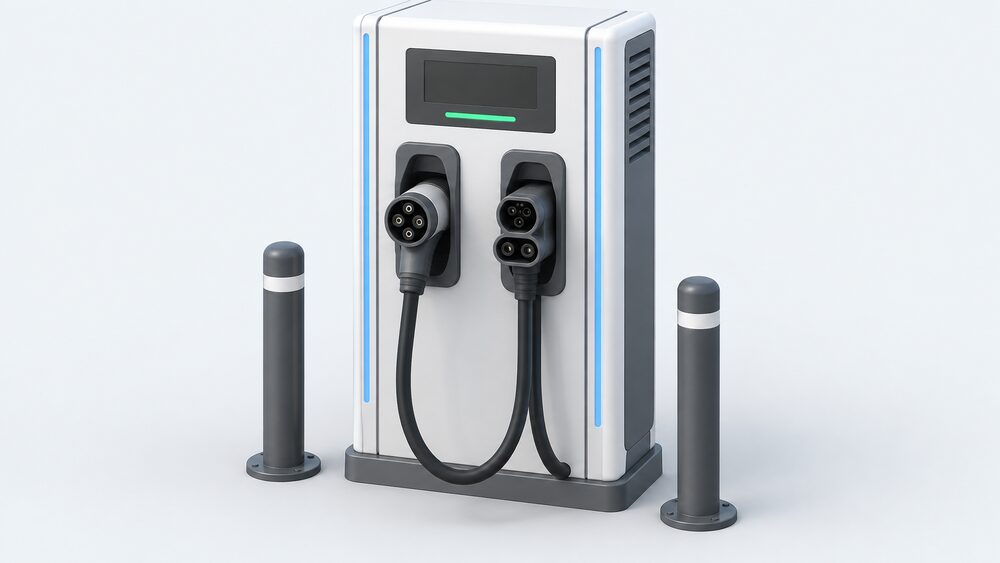
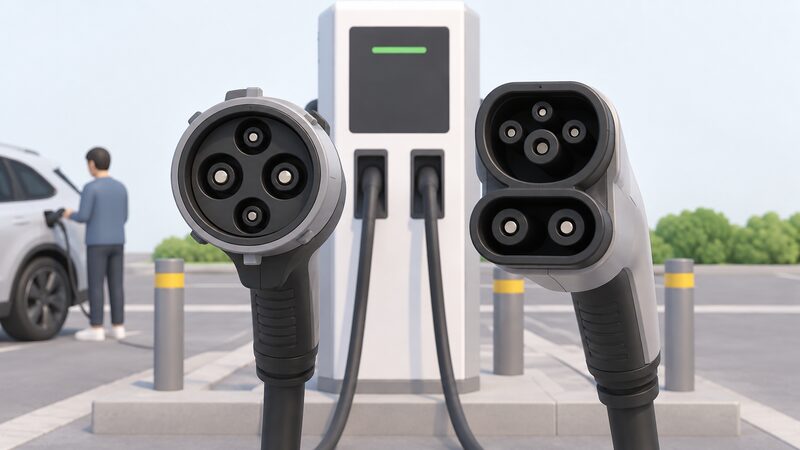
CHAdeMO is a direct current rapid charging connector, a round plug with four pins, used only at rapid charging points and usually found on Asian-brand electric vehicles1. In the UK it is now concentrated in a small group of cars: the first two generations of the Nissan Leaf, the Lexus UX300e, and the Nissan e-NV200 van2. Almost every other electric car on UK roads uses CCS instead.
The practical consequence is simple. A CHAdeMO car can rapid charge only where a CHAdeMO cable is offered, and adapters between CCS and CHAdeMO do not exist3. Many public rapid sites still provide both cables on the same unit, so the connector is not yet a barrier to long journeys, but it is a narrowing one. CHAdeMO is still found on older EV models but is being phased out for CCS or CCS2 as fewer new chargers support it4.
Where CHAdeMO retains a genuine advantage is bidirectional charging. Only CHAdeMO currently has a valid protocol for vehicle-to-grid charging to feed electricity into the public grid5, and the Nissan Leaf and e-NV200 were the first battery electric vehicles to support it6. For a household weighing energy independence, that is the fact that keeps the connector relevant.
CHAdeMO: a DC rapid-charging plug, explained
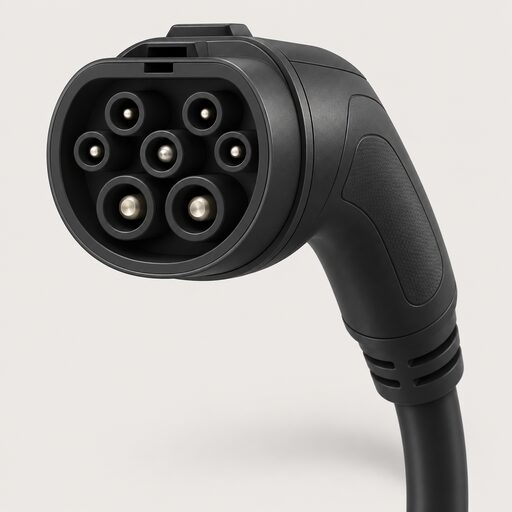
CHAdeMO is a direct current connector, not an alternating current one. It offers rapid DC charging and features a larger connector for high power charging9, which is why it appears only at rapid and ultra-rapid points rather than on the AC units used for home and destination charging. The connector is a round plug with four pins, used only for rapid charging points and usually compatible with Asian-brand EVs1.
The standard's headline capability is broad. CHAdeMO connectors support rapid and ultra-rapid charging with power levels from 25kW up to 400kW, although the most common is 50kW7. The vehicle-side maximum is 100kW10. Those two figures describe different things: the connector standard permits very high power, while the car and the installed charger determine what is actually delivered.
In the UK, the installed base sits at the lower end. There are few CHAdeMO chargers powered at more than 100kW7, and CHAdeMO plugs offer a power output of around 50kW and are generally found in older types of EV rapid chargers9. A driver should therefore expect a 50kW experience in practice, not a 400kW one.
Almost all EVs are able to charge on Type 2 units for fast charging, and either CHAdeMO, CCS and Tesla Type 2 for rapid charging11. That sentence captures the position well: CHAdeMO is one of several rapid options at a public site, not a separate charging system with its own network.
Which cars use CHAdeMO: mostly older and specific EV models
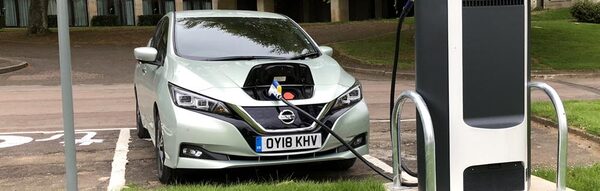
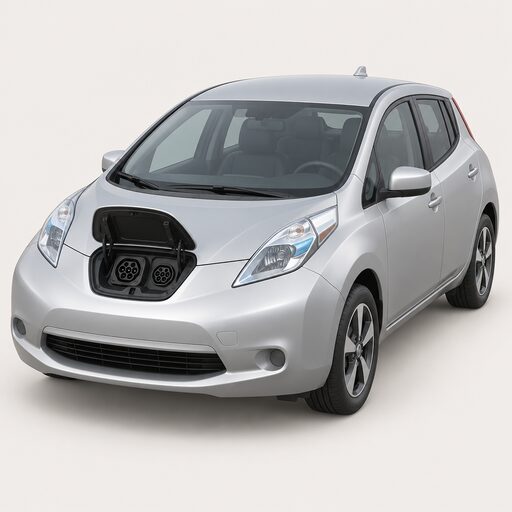
The list is short and getting shorter. CHAdeMO is a rapid charging connector used mainly by some older or specific EV models12, and it is primarily used for rapid DC charging on older Nissan Leaf models7. UK guidance names the outliers directly: most cars in Europe do not have this connector, the exceptions being the first two generations of the Nissan Leaf and the Lexus UX300e2.
The pattern is regional as well as generational. CHAdeMO plugs are compatible with Japanese vehicles, and one reason for their popularity is that they work with Nissan, Mitsubishi and Kia cars9. The standard originated in Japan13, and in the UK it is limited to a few EV brands, mostly Japanese or Korean in origin10.
For a household buying used, the connector question is worth settling before purchase, because it affects both public charging and home charging. Some older cars with CHAdeMO connectors are unlikely to work with Indra's chargers, as older charging connectors are being phased out14. That is a home charger maker stating a compatibility limit on its own products, and it illustrates the wider direction of travel: the connector is being retired at both ends of the charging chain.
| Vehicle | CHAdeMO role | Notes |
|---|---|---|
| Nissan Leaf, first two generations | Rapid charging socket | The common UK example2 |
| Lexus UX300e | Rapid charging socket | Named as an outlier in Europe2 |
| Nissan e-NV200 | Rapid charging and V2G | Supports V2G via CHAdeMO6 |
| Most other European EVs | None | CCS has largely replaced CHAdeMO3 |
Nissan's CHAdeMO heritage: 15 years of electric vehicles
Nissan's association with CHAdeMO runs as long as its electric vehicle programme. The maker states it has been a leader in electric vehicles for 15 years, producing proven quality reliable lithium-ion batteries15, and describes itself as a proven, high-volume maker of reliable lithium-ion batteries over the same period16. That experience is the reason the Leaf became the car most UK drivers associate with the connector.
The Leaf's rapid charging behaviour is well documented. When using a 50kW DC charger, the car can take approximately 43 minutes to charge from 20% to 80%, which is approximately 14 to 116 miles of range8. For rapid charging, the CHAdeMO connector required is tethered to the charging unit17, so the car does not carry its own rapid cable.
For context on how charging speed has moved, a 150kW DC charger is modelled to add 25kWh in 10 minutes, 50kWh in 18 minutes, 75kWh in 27 minutes and 100kWh in 36 minutes, assumed from 20% charged18. A 50kW CHAdeMO charge sits well below that curve, which is the clearest way to express what the connector's age means in practice.
Nissan's newer electric models have moved on. The 2026 Ariya press kit introduces an 11kW bi-directional onboard charger and Vehicle-to-Load functionality19, and the all-electric PIXO city car is to be unveiled on 23 September 202620. Neither is presented as a CHAdeMO vehicle. The heritage belongs to the Leaf generation, and the maker's current line-up points elsewhere.
Why CHAdeMO matters for V2G: Nissan's bidirectional cars
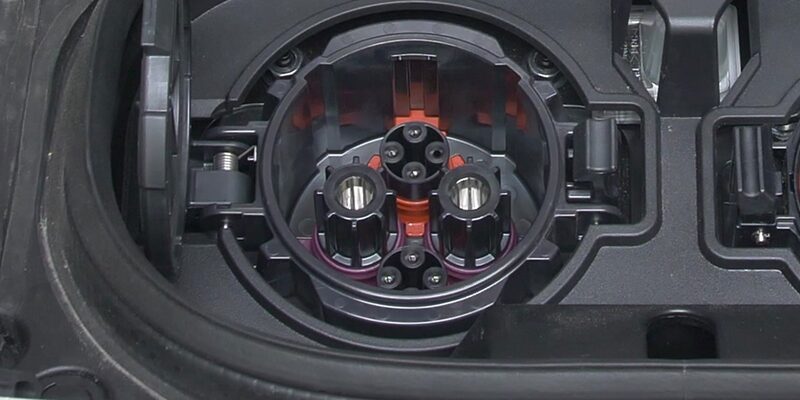
Bidirectional charging lets an EV either draw or supply power to your home or the grid20. Within that field, CHAdeMO holds a position no other connector currently matches: only for this connection is there currently a valid protocol for V2G charging in order to feed electricity into the public grid5.
The vehicles that established this were Nissan's. The Nissan Leaf and e-NV200 were the only battery electric vehicles that supported V2G, and they did so via the CHAdeMO standard6. The Leaf has been able to charge bidirectionally for several years and is described as the pioneer of the technology5.
There are conditions attached, and they matter. The Nissan Leaf is capable of performing V2G charging only on a DC CHAdeMO port with a V2G DC charging station16. A household cannot assume that any bidirectional charger will work with the car; the pairing is specific.
The wider market is moving to alternating current bidirectional charging, which is a different route. V2H-ready products such as the Vestel EVC04, Zaptec Go 2 and Enphase IQ EV Charger can only be used for this type of bidirectional charging when the implementation of local regulatory frameworks is complete and cars supporting bidirectional AC charging exist21. Examples of vehicles in that group include the Hyundai Ioniq 5, Kia Niro EV, MG 4, Renault R5, Volvo EX90 and Polestar 319.
For a CHAdeMO owner, the practical position is that the connector is the older route to home energy flexibility, and it is the one with an established protocol rather than a pending one. More on the wider picture sits in vehicle-to-grid and vehicle-to-home charging.
CHAdeMO versus CCS: what the split means at the charger
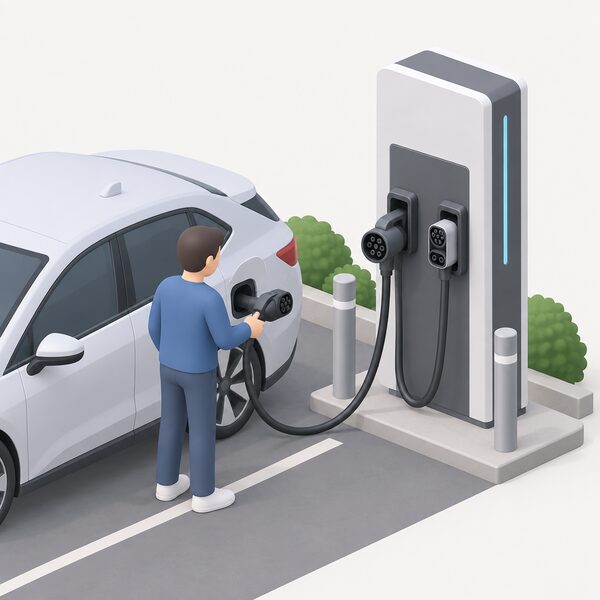
The two connectors do the same job and are not interchangeable. CHAdeMO is less powerful than a CCS connector1, and both the Type 1 and CHAdeMO chargers are becoming increasingly obsolete, with modern EV models mostly operating with a Type 2 or CCS charging plug system22. That is a maker's assessment of the direction of the market, and it matches the official position that CCS has largely replaced CHAdeMO3.
At a public site, the split usually resolves itself. Public rapid chargers over 50kW typically have tethered CCS cables and may also offer CHAdeMO, but adapters between CCS and CHAdeMO do not exist3. Where both cables are present, a CHAdeMO driver charges normally. Where only CCS is present, the car cannot charge at all.
Coverage is better than the phase-out language suggests. MFG EV Power, Osprey Charging and InstaVolt all provide charging with tethered devices via both CHAdeMO and CCS connectors11. Council-operated sites follow the same pattern: the type of charging sockets available at one Welsh council's locations include CHAdeMo at 50kW, CCS at 50kW and Type 2 at 22kW23.
The risk sits with the driver who assumes compatibility. Some EV drivers will require a CHAdeMO or CCS charging adapter if the charging socket is not compatible with their EV13, which is sound general advice but does not help a CHAdeMO car at a CCS-only rapid point, because no such adapter exists. Planning a route around known dual-cable sites is the practical answer. Connector types generally are covered in EV connectors and cables.
What CHAdeMO means for household energy independence
A CHAdeMO car contributes to household energy independence in the same way any electric car does, and adds one capability most others lack. Running electric heat pumps and cars on an ever-growing supply of renewables would boost energy independence24, and switching to electric alternatives led to an 82% reduction in fossil fuel consumption for a household with an electric car and heat pump25. The route to lower import reliance runs primarily through energy efficiency, electric heat pumps and electric vehicles26.
The CHAdeMO-specific contribution is bidirectional capability. Because only CHAdeMO currently has a valid protocol for V2G charging into the public grid5, a Leaf or e-NV200 owner has a route to using the car's battery as a grid-connected asset that most CCS drivers do not yet have. That is a real advantage, and it is also a narrow one, tied to a specific car and a specific DC charging station.
The dependence that remains is worth stating plainly. The car still charges from the grid or from a home supply, the household still buys electricity from a supplier, and the V2G function depends on a charging station and a regulatory framework rather than on the car alone. Home battery storage is a separate purchase that lets a household store energy for later use27, and it does not remove the connection to the network either.
The connector itself is a dependence of a different kind. A CHAdeMO car's public charging options narrow as networks standardise on CCS, and its home charging options are limited by charger makers who state that older CHAdeMO cars are unlikely to work with their products14. The household gains a bidirectional capability and accepts a shrinking connector ecosystem in return. The wider context is set out in EV charging and household energy independence.
Sources27 cited
- EV glossary, Uswitch, 2024-11-26
- How to use electric car charging points, Which?, 2026-05-20
- Electric car charging guide, Carwow, 2025-07-16
- A simple guide to electric car terms, Indra, 2025-09-16
- What is bidirectional charging, Carwow, 2025-05-30
- Commercial viability of V2G, Cenex, 2021-01
- EV connector types, Zapmap, 2026-05-20
- How long does it take to charge an electric car, Zapmap, 2026-04-15
- EV charging connector types, E.ON Next, 2026-09-17
- Guide to electric vehicle infrastructure, BEAMA, 2024-09
- Public chargers, E.ON Next, 2026-09-19
- Types of EV chargers, Hive, 2026-08-05
- Tethered vs untethered, Zapmap, 2026-02-23
- Book your home survey, Indra, 2026-09-07
- Home energy storage, Eaton, 2026-09-17
- Nissan Leaf and e-NV200 V2G compatibility, Nuvve, 2026-09-17
- Nissan Leaf model charging, Zapmap, 2026
- Charging electric vehicles, Energy Saving Trust, 2026-04-23
- V2V bidirectional charging, go-e, 2025-12-17
- Battery storage, Energy Saving Trust, 2026-08-19
- Vehicle-to-home, go-e, 2026-07-15
- A beginner's guide to going electric, Indra, 2026-02-02
- Electric vehicle charging, Isle of Anglesey County Council, 2026-09-20
- Household energy buying British, Energy and Climate Intelligence Unit, 2024-04-15
- UK energy security and clean electrification, Ember, 2024-10-21
- Household energy security in 2030, Energy and Climate Intelligence Unit, 2024-06-21
- Different types of EV chargers, SolaX, 2026-01-08
 EV Connectors and CablesWhich cable fits your car, and will it work at every charge point you pull up to?
 Bidirectional Charging StandardsDoes your electric car and charger actually support sending power back to your home or the grid?
 Cars That Support BidirectionalWhich electric cars in the UK can actually send power back to your home or the grid, and which ones only promise it for later?
 Types of Home EV ChargerWhich home charger suits your car and your driveway?
 EV Charging Speeds and TimesHow long an electric car takes to charge depends on the charger and the car together, so a faster charge point will not always speed things up.
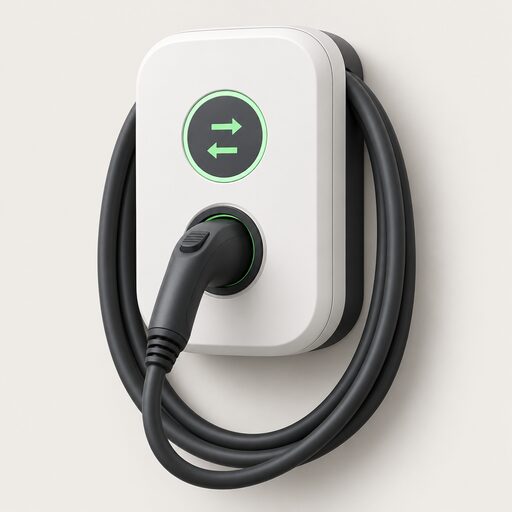 Bidirectional Chargers and CostsA bidirectional charger lets your electric car send power back to your home or the grid, not just take it in.