
In this answer
Short answer
Perovskite solar panels are not yet commercially available, and no source gives a date when they will be. The technology is described as an emerging thin film material with low production costs and higher efficiency than any other single material thin film technology, but with shorter lifetimes than silicon, concerns around lead toxicity, and lead-free versions that are currently less efficient1. That combination, not manufacturing capacity, is what keeps perovskites off UK roofs.
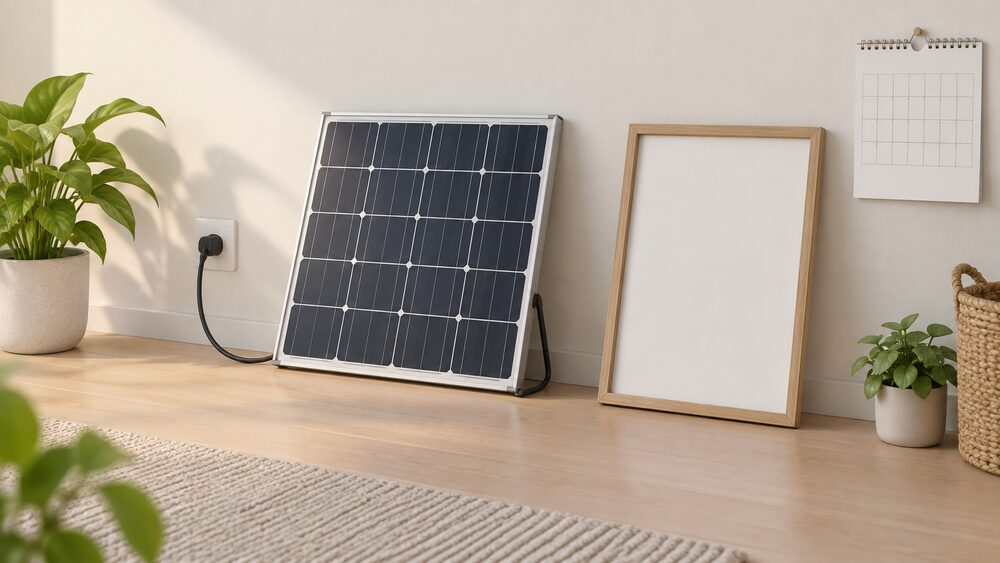
What has changed in the UK market is a different product. Plug-in solar panels became available to buy in the UK on 27 August 2026, and are available in England, Scotland and Wales2. They use conventional silicon cells. They are not perovskite, and they do not answer the perovskite question, but they are the nearest thing to a new solar product a householder can actually buy this year.
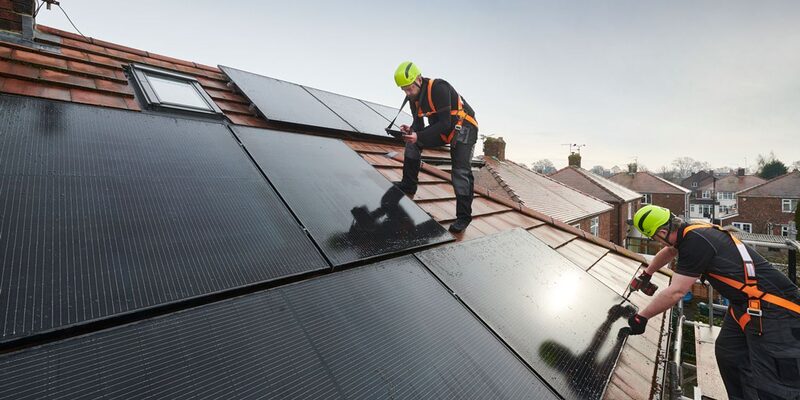
For a household deciding whether to wait, the practical position is this: silicon panels are installable now, typically in one to two days4, there are no dedicated government grants for solar panels in the UK at the moment4, and perovskite has no launch date. Waiting is a choice with a cost that the evidence does not quantify.
Perovskite solar panels: not yet commercially available
The clearest statement in the evidence is that perovskites are yet to be proven in real-world environments and are not yet commercially available1. A separate official guidance document lists perovskite panels simply as not yet on the market5. Two documents, different publishers, same conclusion, and neither attaches a date.
That matters because the question householders actually ask is a deadline question. The honest answer is that no deadline exists in the published material. There is no launch window, no announced manufacturer, and no product specification for a domestic perovskite module. Anyone quoting a year is going beyond what the documents support.
It is worth separating perovskites from other technologies that are also described as not yet available, because the reasons differ. Hydrogen boilers are not currently available in the UK6. CPV panels are not available to households5. Green Deal finance is not yet available for rental properties7. Each of these is blocked by something specific: a supply chain, a market, a policy. Perovskite is blocked by the material itself, which is a harder problem to schedule.
Why the technology is still waiting for the market
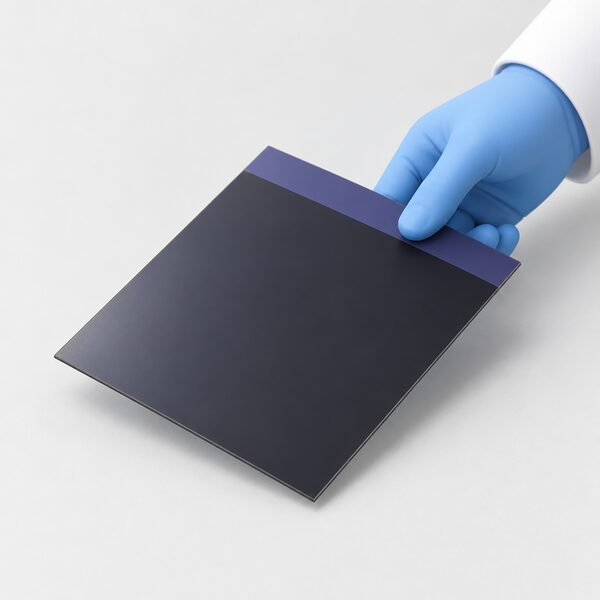
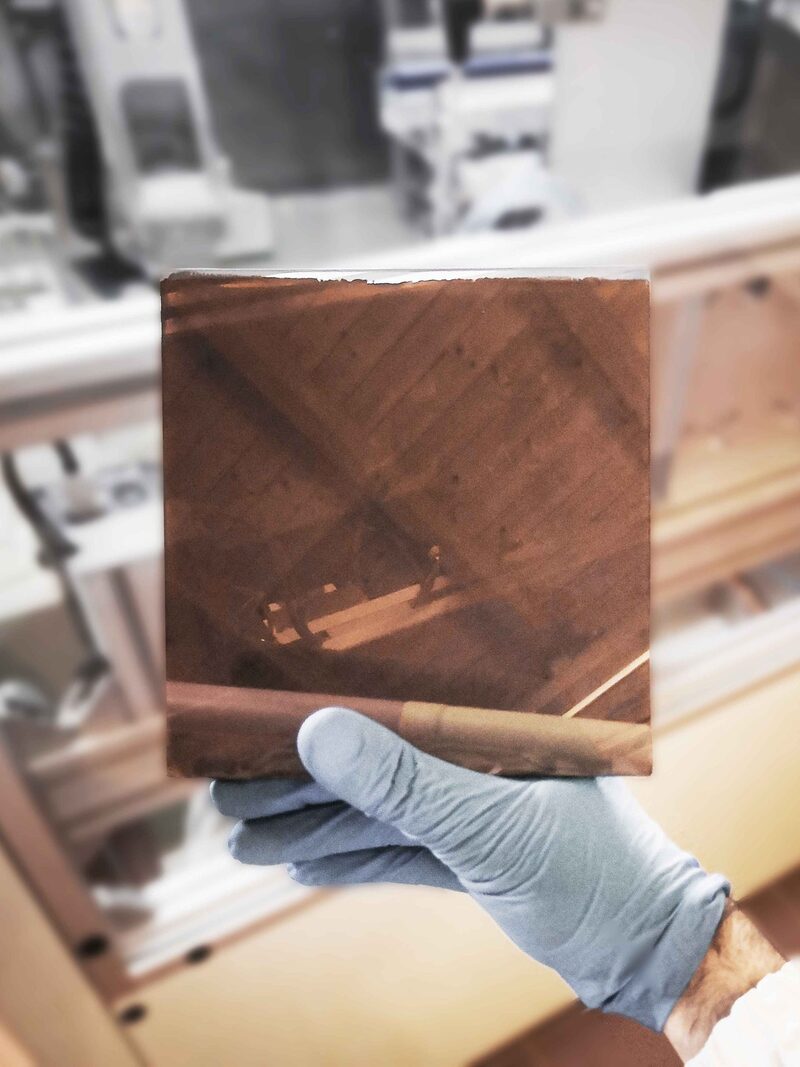
Perovskites are an emerging thin film material with low production costs, and they offer higher efficiency than any other single material thin film technology1. Those are the two attractions. The obstacles are stated just as plainly: shorter lifetimes than silicon, concerns around lead toxicity, and current lead-free perovskites that are less efficient1.
Lifetime is the difficult one for a domestic buyer. A roof panel is expected to sit in weather for years, and a material with a shorter lifetime than silicon is a material with an unresolved durability question. Lead toxicity is a safety and disposal question that sits across manufacture, installation, fire and end of life. Lead-free formulations exist but give up efficiency to get there1.
Funding is a second constraint. There may be gaps for solar companies in areas not already covered by existing public funding mechanisms, such as support for Technology Readiness Level 5 or 6 products or smaller funding requests below £25m8. Early-stage solar development therefore sits in a space that public programmes do not always reach.
The wider policy environment shows the same pattern of unfinished business. The Clean Heat Market Mechanism remains under development with no clear implementation timetable9. A final decision on the amount of solar panels that new homes will typically be expected to include is yet to be made10. Where standards are still being written, products wait.
What "not yet available" means for householders today
Not yet available does not mean nothing is available. It means the specific product is absent while adjacent products are present, and the householder has to know which is which.
Plug-in solar is the live example. Plug-in solar panels have been available to buy in the UK since 27 August 20262, and are available in England, Scotland and Wales from that date for the first time3. They are now available to buy and use across Great Britain11. Government announcements describe them as coming to shops within months and saving people money on their bills12, and as a low-cost panel a family can buy straight from a supermarket and set up on a balcony or in a garden13. Major retailers including Currys, B&Q, Screwfix and Amazon have worked with government on the rollout and will soon have them available in stores and online14, and retailers including Amazon, Argos, Currys and Wickes have committed to stocking them14.
Two cautions sit alongside that. Not every home will currently be suitable for plug-in solar15, and plug-in solar PV units should not be rolled out unless and until the supporting framework is in place, covering clear product standards, robust enforcement, competent installation pathways, appropriate consumer guidance, and a mechanism to protect householders and the distribution network16. Which? recommended that the government take time to ensure safety issues are effectively addressed before these products are made available on the UK market17.
Prices for plug-in solar were not known at the time of writing18. For rooftop systems, prices are installer-quoted.
| Product | UK availability | Basis |
|---|---|---|
| Perovskite panels | Not yet commercially available; not yet on the market1 | Emerging thin film material, durability unresolved1 |
| Plug-in solar panels | Available to buy since 27 August 2026 in England, Scotland and Wales2 | Silicon cells, sold through retailers14 |
| Rooftop silicon systems | Available now, typically one to two days to install4 | Installer-supplied19 |
| Polycrystalline panels | Being phased out in the UK, few installers still offer them1 | Older silicon technology1 |
Should a household wait, or install now?
The evidence does not recommend either course, but it does set out what each involves.
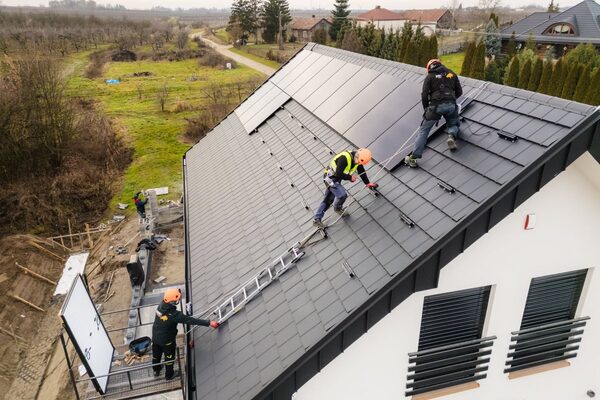
Installing now means a silicon system, fitted by an installer, typically over one to two days4. Solar panels are sold via installers rather than direct to consumers in the UK19, which is why consumer testing bodies find it unlikely they will name individual best buys in the way they do for appliances19. There are no dedicated government grants for solar panels in the UK at the moment, though that might change as details of the Warm Homes Plan emerge4. Free solar panel schemes exist but there are very few available now20.
Waiting means no generation in the meantime, and no date on which the wait ends. Perovskites are not yet commercially available1 and not yet on the market5. Nothing in the evidence suggests a near-term launch.
There are also permission questions that apply to whatever is installed. Renters and flat owners need permission from their landlord or freeholder before installing plug-in solar panels3. To install solar panels on a listed building, listed building consent is needed before work can commence21. Freestanding solar panels are subject to additional restrictions22. None of these change with the cell chemistry.
How perovskite could change household energy independence once it arrives
The case for solar in general is well established, and perovskite would inherit it. Photovoltaic panels could power your home, reduce your bills and may earn you money23. Solar energy involves the use of the sun's free energy to provide electricity using solar photovoltaic panels24. Home solar panels can reduce reliance on the grid, and an Energy Performance Certificate can be improved25. Solar technology can and must support the UK's transition to a NetZero economy26.
What perovskite would add, if the durability and toxicity questions are resolved, is cost and efficiency headroom. Low production costs and higher efficiency than any other single material thin film technology are the two stated advantages1. Cheaper, more efficient panels would lower the barrier to a household generating its own electricity, which is the core of energy independence.
What dependence would remain is unchanged by cell chemistry. A grid connection stays, because generation is intermittent and a household still imports at night and in winter. An installer or retailer stays in the chain, since panels are sold through installers rather than direct to consumers19. Certification stays: solar panels are treated as energy-saving materials in legislation27, and competent installation routes matter, as the joint statement on plug-in solar makes clear16. And the material itself would remain a manufactured product with a supply chain behind it.
"The many benefits of solar technology mean it can and must support the UK's transition to a NetZero economy."
Perovskite compared with silicon, on the evidence
The comparison that matters to a buyer is not laboratory efficiency but what is on the roof and who stands behind it.
| Attribute | Perovskite | Silicon |
|---|---|---|
| UK availability | Not yet commercially available; not yet on the market1 | Available now, sold via installers19 |
| Efficiency | Higher than any other single material thin film technology1 | Established, with polycrystalline being phased out in the UK1 |
| Lifetime | Shorter lifetimes than silicon1 | The reference against which perovskites are measured1 |
| Safety questions | Concerns around lead toxicity; lead-free versions less efficient1 | Not flagged in the same terms in the evidence1 |
| Cost direction | Low production costs claimed1 | Prices expected to remain low due to oversupply of PV components and a drop in demand, though removal of the export tax rebate in China may increase prices28 |
The silicon price outlook is worth noting for anyone weighing a wait. Panel prices are expected to remain low because of oversupply of PV components and a drop in demand, with the removal of the export tax rebate in China as a possible upward pressure28. A household waiting for perovskite to be cheaper is waiting against a backdrop of already low silicon prices.
On installation and certification, the existing framework applies to solar generally. Solar panels can be used in your building29, and are listed among energy-saving materials in legislation27. Certification bodies exist for consumers to check installers30. None of that is perovskite-specific, because there is no perovskite product to certify.
Where the timeline evidence runs out
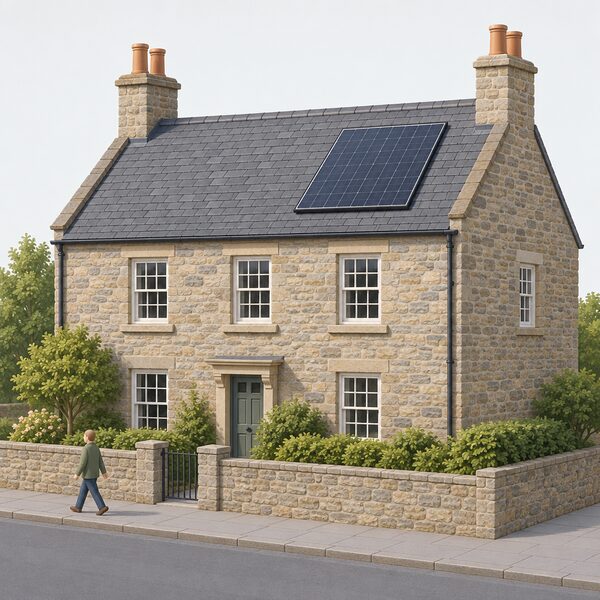
The dated events in the wider record show how long energy technologies take to move from demonstration to market, and how often the schedule slips. The CarbonLight Homes were expected to complete in March 2011, when they would be opened to the public for six months before being sold and monitored31. That is a demonstration timeline, not a product timeline, and it is the shape most emerging home energy technologies follow.
For solar specifically, the deployment picture is active. The Solar PV deployment statistical release for December 2026 has a confirmed release date of 28 January 202732. Installations have hit record highs, with a first regional breakdown published33. Clean power records continue to be broken12. None of that is perovskite, and none of it sets a perovskite date.
The honest summary is that the evidence supports a status, not a schedule. Perovskites are an emerging thin film material with low production costs and high efficiency, held back by shorter lifetimes than silicon and by lead toxicity concerns1. They are not yet commercially available1 and not yet on the market5. A household that needs generation now is looking at silicon, whether rooftop or plug-in. A household that waits is waiting without a date.
Sources33 cited
- Are solar panels worth it?, Which?, 15 May 2026
- Plug-in solar, Electricity North West, 19 September 2026
- Plug-in solar panels, Energy Saving Trust, 17 September 2026
- Solar panel installation, Energy Saving Trust, 7 September 2026
- Clifton Local Listed Building Consent Order guidance, Bristol City Council, February 2025
- DESNZ public attitudes tracker: heat and energy use in the home, winter 2025, DESNZ, 12 March 2026
- Green Deal watching brief, part 2, Parliament, February 2014
- UK Solar Roadmap, DESNZ, June 2025
- Research brief: heat pumps, five key policy areas, CREDS, 12 October 2023
- Parliamentary briefing CBP-10170, House of Commons Library, 24 October 2024
- Simple tips for a greener Easter, Home Energy Scotland, March 2026
- Britain continues to break clean power records, GOV.UK, 28 May 2026
- Heating oil support, Hansard, 16 March 2026
- Households can save as plug-in solar panels come to market, GOV.UK, 26 August 2026
- Responding to the roll-out of plug-in solar panels, Electrical Safety First, 17 September 2026
- Joint statement on plug-in solar panels, ECA and others, 8 June 2026
- DESNZ plug-in solar regulatory amendment and interim product specification: Which? response, Which?, 2 July 2026
- Plug-in solar panels vs rooftop systems, Which?, 27 April 2026
- How we test solar panels, Which?, 12 August 2026
- Free solar panels and solar buyback, Which?, 26 March 2026
- Solar panels guidance, City of York Council, 17 September 2026
- Solar panels, City of York Council, 17 September 2026
- Solar photovoltaic (PV) panels, London Borough of Bromley, 17 September 2026
- Generating your own energy: solar electricity, Welsh Government, September 2018
- How do solar panels work?, Smart Energy GB, 16 March 2026
- Everything under the sun: the facts about solar energy, Solar Energy UK, 17 September 2026
- Energy Act 1994, Schedule 8, Part II, legislation.gov.uk, 17 September 2026
- Parliamentary briefing POST-PN-0771, Parliamentary Office of Science and Technology, 25 June 2026
- Solar panels, East Herts Council, 17 September 2026
- Consumers, MCS Certified, 23 June 2026
- CarbonLight Homes, VELUX, March 2011
- Solar PV deployment: December 2026, DESNZ, 6 January 2026
- First regional solar breakdown as installations hit record highs, GOV.UK
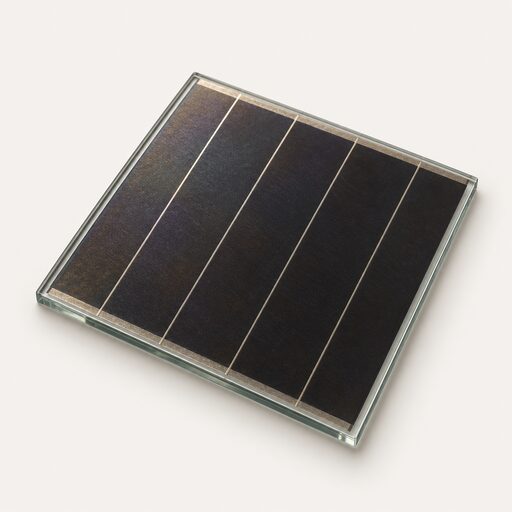 Perovskite Solar CellsPerovskite solar panels are a newer kind of panel that could be cheaper and more efficient than the ones sold today.
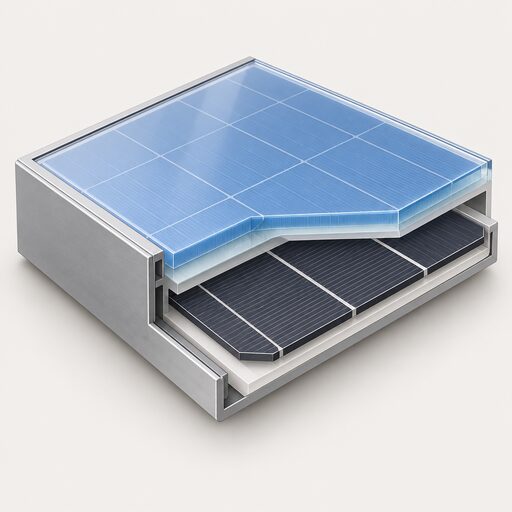 Tandem Perovskite-Silicon PanelsTandem solar panels layer a new material over ordinary silicon so they catch more of the sun's light and make more electricity from the same roof space.
 The Full Solar Panels GuideHow much do solar panels cost, and what could they save you each year?
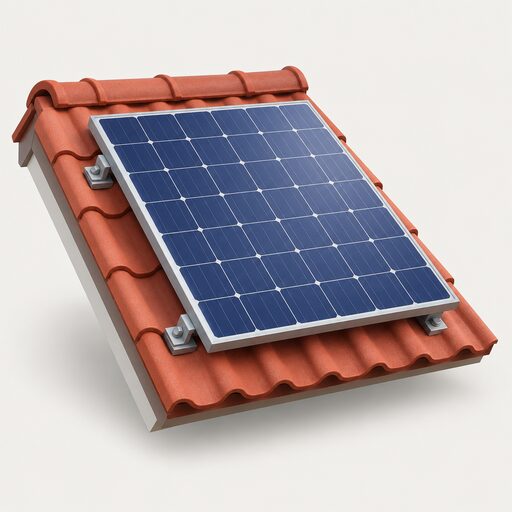 Solar PV Deployment StatisticsHow much solar power does the UK actually have, and how much of it sits on people's roofs?
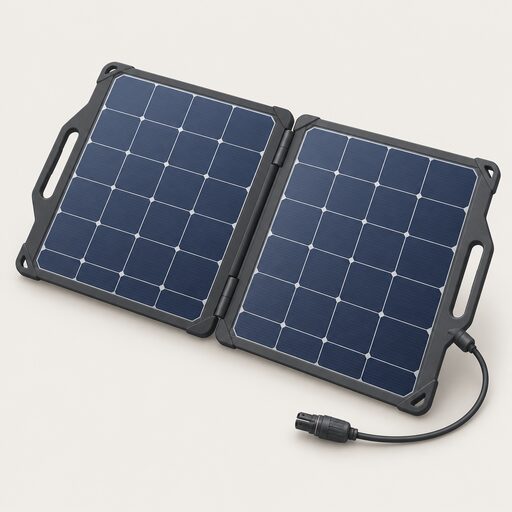 Solar Charging a Power StationCharging a portable power station from solar panels comes down to a few practical questions.
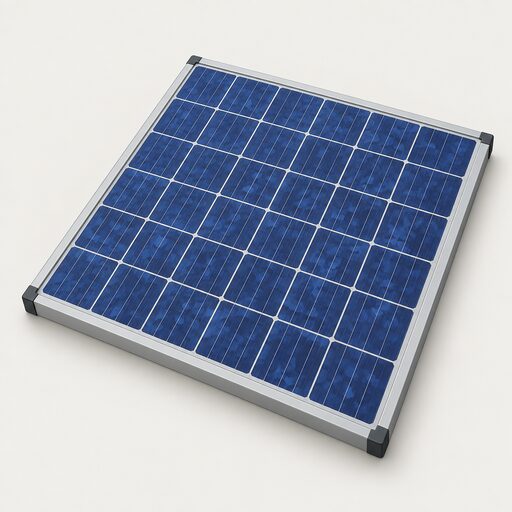 Panel TypesWhich solar panels are best for a UK home, and how much do they cost?