In this guide
REC Alpha Pure is REC's flagship residential panel line, sold in the UK in two families: the Alpha Pure-R and the Alpha Pure-RX. Both use heterojunction (HJT) cell technology, and both are made in Singapore1. The headline difference is density. REC lists the Alpha Pure-R at 22.3% panel efficiency and the Alpha Pure-RX at 22.6%, with the RX reaching 470 W1.
The two families share a warranty structure: a 20 year product warranty and a 25 year performance warranty guaranteeing 92% of power after 25 years, with power in year 1 stated at 98% and warranted annual degradation of 0.25%1. They also share a PMAX temperature coefficient of -0.24% per degree C4.
What separates them in practice is size, weight and strength. The Alpha Pure-R measures 1730 x 1118 x 30 mm and weighs 21.5 kg; the Alpha Pure-RX measures 1728 x 1205 x 30 mm and weighs 22.7 kg, with a front test load of +10000 Pa under six-point clamping and a maximum hail rating of 55 mm at 33.9 m/s4. For a household, the panel is one component of a system that still depends on an inverter, a grid connection and, for most homes, a supplier.
Pure-R and Pure-RX at a glance
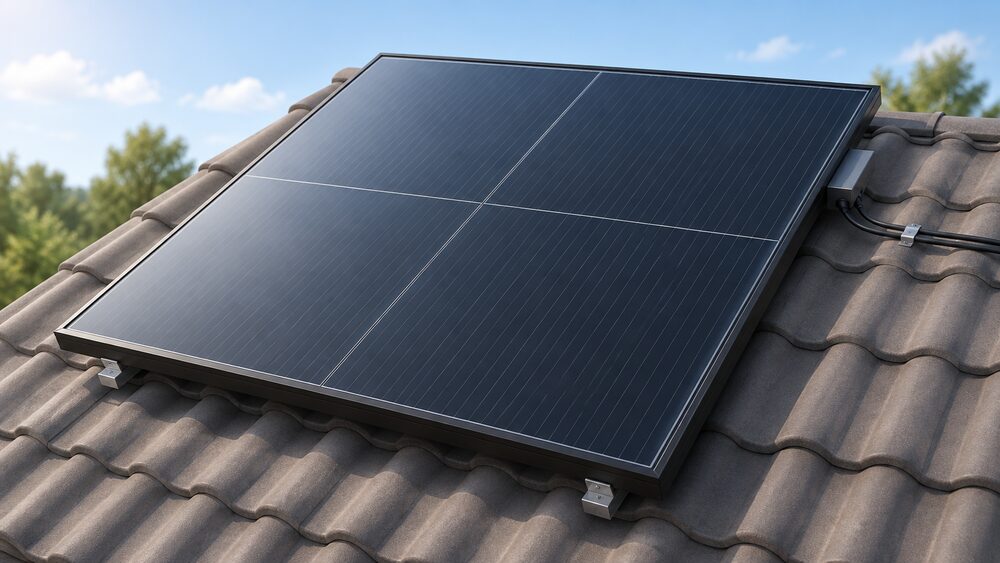
The Alpha Pure-R is the older of the two lines and the one REC introduced with large G12 HJT cells6. It is sold in power classes around 400 to 430 Wp, with the 430 W class listed at 22.3% module efficiency under STC4. Its construction uses an increased number of wires, which REC states greatly improves the flow of electric current and eliminates invasive soldering1. The panel is divided into four sections, which REC says produces more energy in shade1.
The Alpha Pure-RX is the newer, denser module. REC describes it as a high power density panel intended for residential installations, reaching 470 W3. It uses solder-free cells, and the panel is divided into four sections for continued production in shade2. A 2025 REC announcement adds two support bars across the rear and a 30 mm frame, and states the module uses 3.2 mm solar glass9.
| Specification | Alpha Pure-R | Alpha Pure-RX |
|---|---|---|
| Cell technology | Heterojunction (HJT)1 | Heterojunction (HJT)2 |
| Maximum efficiency | 22.3%1 | 22.6%2 |
| Maximum power | 430 W class4 | 470 W3 |
| Dimensions | 1730 x 1118 x 30 mm4 | 1728 x 1205 x 30 mm5 |
| Weight | 21.5 kg4 | 22.7 kg5 |
| Product warranty | 20 years4 | 20 years5 |
| Performance warranty | 25 years4 | 25 years5 |
| Made in | Singapore4 | Singapore5 |
Both are listed as compatible with on-grid and off-grid configurations, which matters for households considering a standalone or backup arrangement rather than a straightforward grid-tied system7. The electrical figures differ slightly between the two: the RX Series lists VOC of 65.1 to 65.3 V, ISC of 8.81 to 8.88 A and IMPP of 8.29 to 8.38 A7. Those numbers determine string length and inverter matching, which is covered in reading a solar panel datasheet.
HJT cell technology: what it is and why it matters
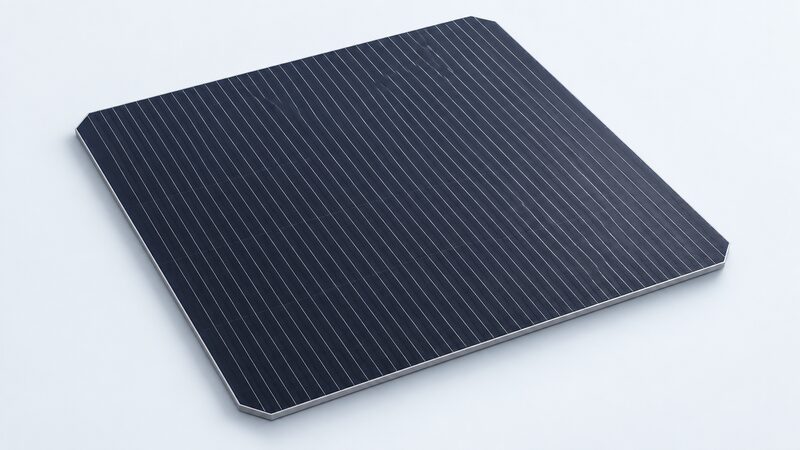
Heterojunction, usually shortened to HJT, is the cell architecture behind both families. REC describes itself as mastering HJT, calling it the solar technology of the future already at REC today, and independent product pages confirm that the company produces high end solar panels using heterojunction cell technology2. The Alpha Pure-R uses large G12 HJT cells6.
The practical claim attached to HJT is low-light performance. One installer's guidance states that the Alpha Pure-RX uses a heterojunction design for excellent low-light performance11. That matters in the UK, where output in cloud and indirect light shapes annual yield more than peak summer conditions do. Independent testing has recorded the REC460AA Pure-RX as a heterojunction module, and the REC420AA Pure-R likewise10.
HJT is one of several cell technologies now sold in the UK alongside PERC and TOPCon, and the differences between them are set out in solar cell technology. What HJT does not change is the fundamental dependence: a panel produces direct current only when light falls on it, and that current has to be converted, used on site or exported. A household buying an HJT module is buying a more efficient conversion of the same sunlight, not a different relationship with the grid.
The construction choices that come with these cells are worth noting. The Alpha Pure-RX uses solder-free cells, and the Alpha Pure-R uses an increased number of wires to eliminate invasive soldering1. Both are described as lead-free and RoHS compliant, and the Alpha Pure-R is listed as RoHS compliant1. That is a materials statement rather than a performance one, but it bears on disposal at end of life.
Power and efficiency: 22.3% versus 22.6%
The efficiency gap between the two families is three tenths of a percentage point. REC lists the Alpha Pure-R at 22.3% panel efficiency and the Alpha Pure-RX at 22.6%1. The RX also appears as 22.6% maximum efficiency on REC's panel overview page, and the Pure-R as 22.3% maximum efficiency on the same page3.
Model-level datasheets give the figures per power class, which is where the detail sits. The Alpha Pure-R 430 W class is listed at 22.3% module efficiency under STC4. On the RX side, the 460 W class is listed at 22.1% and the 450 W class at 21.6%5. Those are lower than the 22.6% headline because the headline refers to the highest power class in the range, not to every module sold.
Independent testing gives a slightly different picture again. One consumer body records a REC panel at 460 W and 22.1%, describing it as the most efficient panel recently tested in that round10. A separate independent listing puts a SolarEdge module at 22.53%12. REC's own guidance states the Alpha Pure-RX delivers 226 W per square metre11.
The range across these sources reflects different test bases and different power classes rather than a dispute about the same module. What a household should take from it is that the number on a quote is class-specific: a 450 W RX module is a 21.6% module, not a 22.6% one. Efficiency also interacts with roof area, which is the subject of what size solar system does a home need.
"Their Alpha Pure-RX uses a heterojunction design for excellent low-light performance"
Physical specifications: dimensions, weight and build
The two families are close in footprint but not identical. The Alpha Pure-R measures 1730 x 1118 x 30 mm and weighs 21.5 kg4. The Alpha Pure-RX measures 1728 x 1205 x 30 mm, an area of 2.08 square metres, and weighs 22.7 kg5. The RX is therefore the wider and heavier module of the two.
Independent listings broadly agree. One records the REC420AA Pure-R at 1730 x 1118 x 30 mm and 21.5 kg, and the REC460AA Pure-RX at 1728 x 1205 x 30 mm and 22.3 kg10. The RX weight differs between sources: 22.7 kg on the maker datasheet and distributor listing, 22.3 kg on the independent page5.
Build details on the RX include an anodised aluminium frame in black, a four-part junction box with four bypass diodes rated IP68, a system voltage of 1000 V, a maximum series fuse rating of 25 A and a maximum reverse current of 25 A5. Fire class is listed as C5. The glass is 0.13 inch solar glass with an anti-reflective surface treatment, and the Pure-R specifies the same treatment in accordance with EN121504.
Cabling and connectors differ between the families. The RX Series uses Stäubli MC4 connectors7. The RX datasheet lists 12 AWG solar cable with 1.50 m positive and 1.50 m negative leads, while a separate REC document describes 4 mm squared solar cable of the same length to EN50618:20145. The Pure-R lists 12 AWG cable at 1.40 m plus 1.40 m to EN50618:20144. The two cable descriptions for the RX are not reconciled in the documents. Connector and isolator practice is covered in solar DC cabling and connectors.
Strength and weather resistance: load ratings and hail testing
The Alpha Pure-RX is the more heavily built of the two. REC lists it as withstanding up to 7000 Pa, and the datasheet gives a front test load of +10000 Pa, equivalent to 1,020 kg per square metre, under six-point clamping2. The Alpha Pure-R Series is also listed at up to 7000 Pa8.
Hail resistance is where the gap is widest. The Alpha Pure-R carries a maximum hail rating of 35 mm at 27.2 m/s4. The Alpha Pure-RX carries 55 mm at 33.9 m/s5. A 2025 REC announcement states the RX demonstrated its strength against 45 mm hailstones at a velocity of 110 km/h in third-party testing according to IEC61215 MQT 17 protocols, and that it can tolerate ten times more kinetic energy per impact than the industry standard baseline9. The datasheet figure of 55 mm and the announcement figure of 45 mm describe different tests, and both are given here as stated.
For context, other makers publish comparable claims: one module range is tested and certified to withstand hail strikes of up to 55 mm, and another is described simply as hail resistant14. Hail resistance, wind and snow load ratings and salt mist corrosion resistance are the factors that determine how a system holds up over decades, particularly on exposed sites16.
The Pure-RX also carries a salt mist corrosion certification, IEC 61701, in its certification list5. That matters for coastal properties. Roof loading and structural questions sit with the installer and building control rather than the panel datasheet, and are covered in building regulations and roof loading.
Warranty and degradation: 20-year product, 92% at 25 years

REC's warranty structure for these panels is a 20 year product warranty and a 25 year performance warranty4. Independent listings record the same: 20 years product and 25 years at 92%10. The performance warranty guarantees 92% of power after 25 years, which REC describes as an industry best7.
The degradation schedule behind that is stated plainly. Power in year 1 is 98% for both families4. After that the warranted annual degradation is 0.25% per year, and the Alpha Pure-RX datasheet repeats the 0.25% annual figure1. REC states the RX will still produce at least 92% of its nameplate power in its 25th year of operation3.
There is a separate, longer package. REC's ProTrust Warranty offers a 25 year warranty for each of product, performance and labour, but it applies only to REC panels installed by an REC Certified Solar Professional and registered by the installer with REC, subject to system size and further conditions1. An independent page describes the same scheme as added protection should a panel need servicing, available only through a certified installer12.
The documents also disagree on the RX product warranty term: one datasheet lists 20 years and another lists 25, and one product page gives 20 years while another gives 253. Both figures are given here as published. Warranty terms across the market are compared in solar panel warranties and degradation.
Pure-R or Pure-RX: which suits which roof
The choice between the two families comes down to roof area, weight tolerance and exposure rather than to a ranking. The RX packs more power into a slightly wider module: 470 W maximum against the Pure-R's 430 W class, at 22.6% against 22.3%1. On a roof where area is the binding constraint, that density is the reason to look at the RX.
Weight is the counter-argument. The RX is 22.7 kg against 21.5 kg for the Pure-R, and it is the wider module of the two4. On a large, unshaded roof the difference is marginal; on a small or structurally constrained roof it is not. Roof orientation, pitch and shading determine yield far more than the three-tenths efficiency gap does, and those are covered in roof orientation, pitch and shading.
Exposure is the other factor. The RX carries the higher hail rating, 55 mm at 33.9 m/s against 35 mm at 27.2 m/s, and the higher front test load under six-point clamping4. For a site prone to large hail or high wind loading, that is a material difference. Both families are listed as suitable for on-grid and off-grid configurations, so neither is restricted to a grid-tied installation7.
Shade tolerance is shared rather than differentiated: both panels are divided into four sections, which REC says produces more energy in shade1. That is a module-level feature, not a substitute for good string design. Where shade is persistent, module-level electronics change the picture, and the options are set out in power optimisers and microinverters.
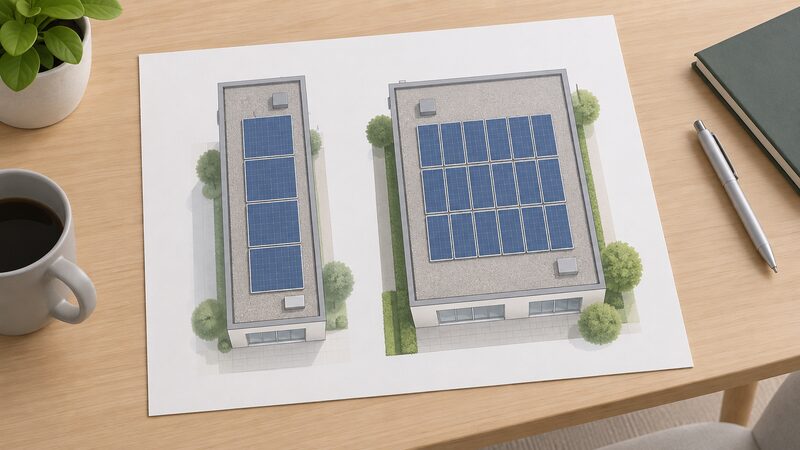
Cost and what owning them means for energy independence
There is no manufacturer list price for a REC Alpha Pure panel in the UK. One distributor lists the Alpha Pure-RX Series from £126.62, which is a module price rather than a supplied and fitted figure7. Installed cost depends on system size, mounting, inverter, scaffolding and labour, and is quoted by the installer after a survey. For wider context on what a full system costs, see how much do solar panels cost in the UK.
Running costs are modest. Cleaning runs at around £4 to £15 per panel and depends on how easy the panels are to access and how dirty they are17. Maintenance and inspection practice is covered in solar panel maintenance and cleaning.
On independence, the position is straightforward and worth stating plainly. A REC Alpha Pure panel generates electricity on the roof, which reduces the amount of power a household buys. It does not remove the grid connection, the inverter, the metering or the supplier. Export payments, the smart meter and the connection itself all sit outside the panel. The wider picture is set out in solar panels and household energy independence.
Two further dependencies are worth naming. The panels are made in Singapore, so the supply chain, spares and any warranty claim run through an overseas manufacturer and its UK distribution1. And the ProTrust terms depend on using an REC Certified Solar Professional, which ties the longest cover to a continuing installer relationship rather than to the product alone1.
For households weighing a smaller, non-exporting route, entry-level single-panel plug-in kits are not officially priced for the UK yet, with Europe-based estimates putting them somewhere around £200 to £30018. That is a different proposition from a roof array, and it is covered in plug-in solar kits.
Sources18 cited
- REC Alpha Pure-R product page, REC Group, 2026
- REC Alpha Pure-RX product page, REC Group, 2026
- REC solar panels overview, REC Group, 2026
- REC Alpha Pure-R datasheet, REC Group, 2025
- REC Alpha Pure-RX datasheet (UL DC), REC Group, 2026
- REC Intersolar 2024 press release, REC Group, 2024
- REC Alpha Pure-RX Series, Wind & Sun, 2026
- REC Alpha Pure-R Series, Wind & Sun, 2026
- REC Alpha Pure-RX announcement, REC Group, 2025
- REC solar panels review, Which?, 2026
- Best solar panels, Spirit Energy, 2026
- REC solar panels brand review, Which?, 2026
- REC Alpha Pure-RX product specifications, REC Group, 2026
- REC Alpha Pure-RX (US) product page, REC Group, 2026
- REC Alpha Pro M datasheet, REC Group, 2024
- Solar panel myths debunked, Which?, 2026
- Plug-in solar explained, Low Carbon Hub, 2026
- REC Alpha Pure-RX datasheet (CEC 475), REC Group, 2026
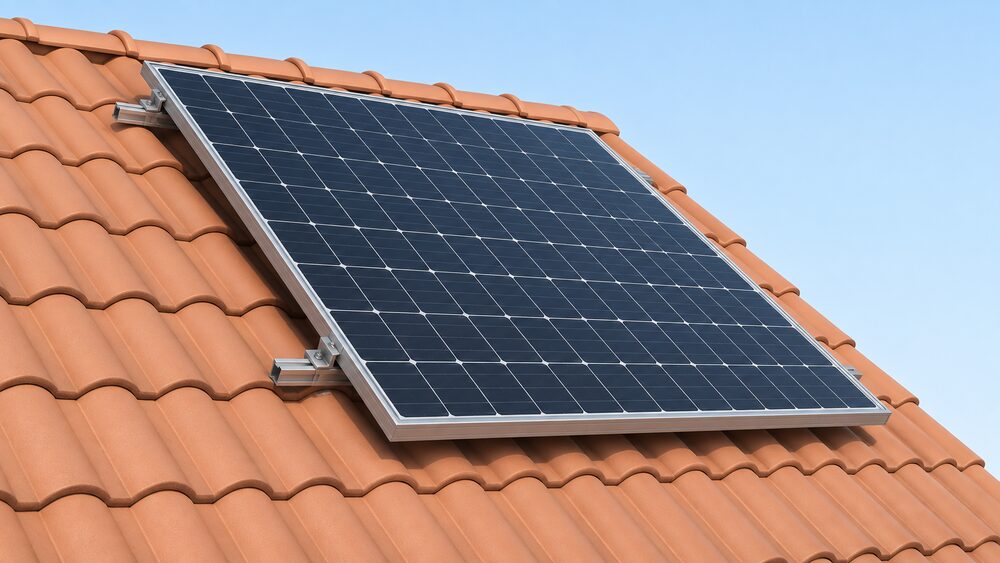 REC solar panelsREC panels cost more than most, so are they worth it?