In this guide
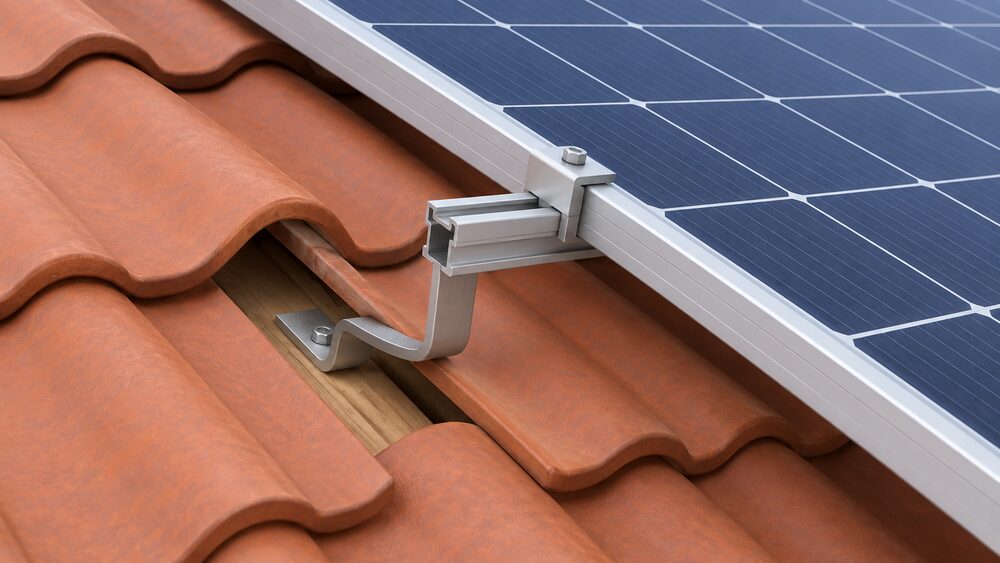
K2 Systems is a German mounting manufacturer whose UK business is the rails, roof hooks and clamps that hold solar modules to a roof. Its pitched roof range is built around four rail families, the BasicRail, MiniRail MK2, MultiRail and SolidRail systems, with a separate Dome 6 and Dome Zero family for other roof types1. The company states that for tiled roofs "there is a suitable solution for every type of tile"1.
The warranty position is the part a household should read first. Products sold under the K2 brand carry a twelve (12) year warranty from the date of commissioning, and that period "extends the warranty period for the end customer to 20 years" where the mounting system has been verifiably planned in K2 Base with static verification and documentation in the K2 Docu App3. The terms are Version 9, dated 16 September 20253.
What K2 mounting does for a household's energy independence is structural rather than electrical. It is the part that keeps a generating asset on the roof for two decades, and it is the part most exposed to wind, rain and thermal movement. It does not reduce dependence on the grid, a supplier or an inverter brand, and it carries no fuel or generation of its own.
What K2 Systems makes: rails, sets and the components around them
The RailUp Set is described as an optional addition for the K2 BasicRail and MultiRail system, and it lists the K2 BasicRail System, K2 MiniRail MK2 System and K2 MultiRail System among its mounting systems2. The BasicRail 22 is the rail itself, and it lists the K2 BasicRail System, K2 Dome 6 System, K2 Dome Zero System and K2 MultiAngle System as the systems it serves6.
The MiniRail MK2 Set is a rail product with a mounting rail width of 85.4 mm7. The Add On mounting adapter is a smaller part with a specific job: it "enables grid or shared-rail installation without additional rails or clamps"8. That matters on a roof where the array is laid out in a grid and the installer wants to avoid a second layer of rail.
The Dome FixPro S is a different approach again, using long-side module clamping and requiring "a suitable mounting base"9. Long-side clamping grips the module along its longer edge rather than the short end, which changes how loads are transferred into the rail.
| Product | What it is | Key figure |
|---|---|---|
| RailUp Set | Optional addition for BasicRail and MultiRail | Serves three rail systems2 |
| BasicRail 22 | Rail, product number 2003460 | Serves four mounting systems6 |
| MiniRail MK2 Set | Rail set | 85.4 mm rail width7 |
| Add On | Mounting adapter | Grid or shared-rail without extra rails or clamps8 |
| Dome FixPro S | Long-side clamping | Requires a suitable mounting base9 |
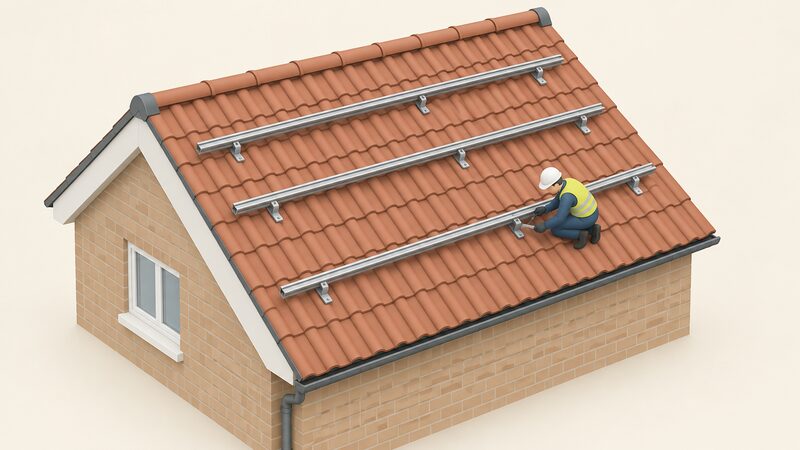
Tile roof mounting in practice: hooks for pan tile, shingle and slate
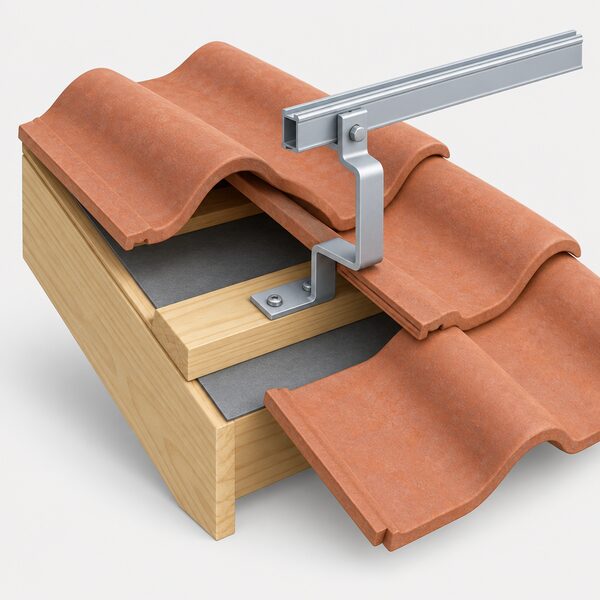
On a tiled roof the rail does not touch the roof. Roof hooks bridge from the rafters or battens out over the tile, and K2 publishes a hook for each covering. The Roof Hook H38mm is for "clay brick roofs with pan tile roofing", and the H47mm hook carries the same description5. The Roof Hook Shingle 40mm is for "clay brick roofs with flat tile roofing"11. The Roof Hook Variable 1, made for the SolidRail system, is also for clay brick roofs with pan tile roofing12.
Slate gets its own part. The K2 Roof Hook for slate is described as "for fastening of K2 System parts on slate roofs"13. Slate is a brittle, layered covering and the hook detail differs from a pan tile, which is why the two are not interchangeable.
The SolidRail System is described more broadly as suitable for almost all types of roofing1. That is the maker's own claim about its own range, and it sits alongside the component-level statements above rather than replacing them.
Independent guidance on roof-mounted collectors notes that "it is common to position and fix collectors above roof tiles", with some systems integrated into the roof instead14. Above-tile mounting is the norm for retrofit solar in the UK, and it is what the K2 hook range is designed for.
What a K2 mounting system weighs on the roof
The individual components are light. The Roof Hook H47mm weighs 0.6536 kg, the slate hook 0.6511 kg, the H38mm pan tile hook 0.8211 kg, the Variable 1 hook 0.7123 kg and the Shingle 40mm hook 0.6963 kg5. Those are single-part weights, and a full array multiplies them across every hook, rail length and clamp on the roof.
The reason weight matters is that a roof is also a thermal envelope. Guidance on loft conversions states that the roof must achieve a U-value of 0.15 W/m2 K15. The 2023 Future Homes and Buildings Standards consultation sets out a tighter option at a roof U-value of 0.11 W/m2 K16. Neither figure is a structural limit, but both show that roofs are specified to a performance standard, and adding a mounted array changes the loads and the ventilation path through the covering.
In practice the load question is answered by the installer's structural assessment and the K2 Base static verification, which is also the route to the 20 year warranty term3. A household should expect the mounting design, not the panel datasheet, to be the document that records how the array is fixed.
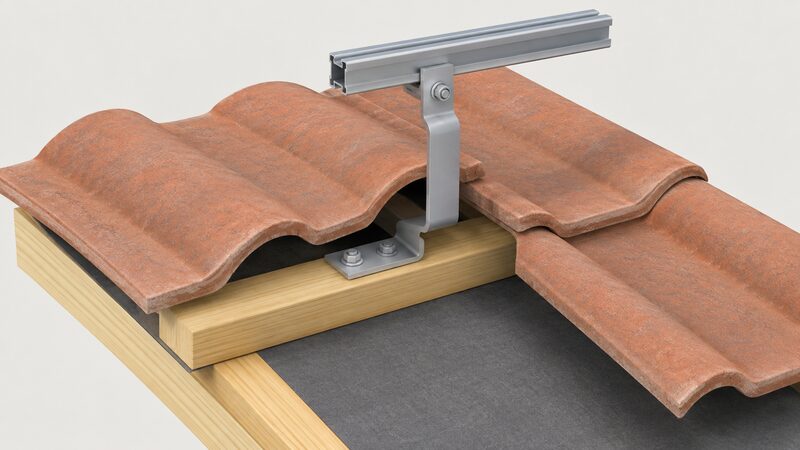
Clamps: the DomeClamp 30-50 mm and what changed
The DomeClamp Middle Clamp 30-50 mm is a universal middle clamp set for fastening solar modules, listed under pitched roof mounting, made from aluminium and EPDM, and compatible with the K2 Dome 6 System and the K2 MiniRail System17. It covers module frame heights of 30 to 50 mm and is also available in a box of 20 units17. The black anodised version carries the same 30 to 50 mm frame range, is described as for fastening solar modules on the K2 Dome 6 System, uses aluminium black anodised and EPDM, and carries a 12 year warranty18.
The DomeClamp End Clamp 30-50 mm is the matching end part, listed under pitched roof mounting, made from aluminium and stainless steel, and described as a universal end clamp set for fastening solar modules on the K2 Dome 6 System19.
There has been a part number change. The black anodised middle clamp is item 2002609, and it is stated to have been replaced by item 200455818. That is a component-level substitution rather than a change to the clamp's function, but it matters when an installer is matching new clamps to an existing array or ordering a spare.
| Clamp | Frame height | Material | Warranty |
|---|---|---|---|
| DomeClamp Middle Clamp 30-50 mm | 30 to 50 mm17 | Aluminium, EPDM17 | Not stated |
| DomeClamp Middle Clamp 30-50 mm, black anodised | 30 to 50 mm18 | Aluminium black anodised, EPDM18 | 12 years18 |
| DomeClamp End Clamp 30-50 mm | Not stated19 | Aluminium, stainless steel19 | Not stated |
| K2 Clamp EC 25-40, black anodised | 25 to 40 mm20 | Not stated | Not stated |
The K2 Clamp EC 25-40 is the narrower option, for fixing solar modules with frame heights of 25 to 40 mm, and it lists ten compatible mounting systems including BasicRail, GreenRoof Vento, MiniRail MK2, MultiAngle, MultiRail, SingleRail, SolidRail, TiltUp Vento, Universal KL-Clamp and WallPV20. The K2 Clamp MC 25-40 mm covers the same 25 to 40 mm frame height6.
Certification: which K2 systems are MCS listed

MCS certification is what makes a mounting system eligible under UK grant and export schemes, and K2 holds it at system level rather than product level. The listing records the K2 CrossRail 36 system as MCS IK0182/01, the K2 SolidRail system as MCS IK0182/02, the K2 SpeedRail 22 system as MCS IK0182/03 and the K2 MiniRail system as MCS IK0182/044.
The standard behind that listing has widened. MCS 012 v3.0 "included the expansion of scope to include non-mechanically attached mounting systems, in addition to mechanically attached mounting systems", designed for installation on flat roofs of 10 degrees or less21. That is a change to what the standard covers rather than to any K2 product, and it matters for flat roof arrays where ballast rather than fixings holds the system down.
For a household, the practical point is that the mounting system should appear on the MCS listing under the same certificate as the rest of the installation. A mounting system outside the listing can affect scheme eligibility even where the panels and inverter are certified.
Warranty: Version 9 of the K2 terms and what it covers
The K2 warranty runs for twelve (12) years from the date of commissioning for products sold under the K2 brand, and the 20 year term applies where the mounting system has been verifiably planned in K2 Base with static verification and documentation in the K2 Docu App3. The document identifies itself as Version 9, dated 16 September 2025, and names K2 Systems GmbH at Haldenstraße 1, 71272 Renningen, Germany as the warrantor3.
The exclusions are specific. K2 excludes parts "that are exclusively a mounting aid and have no effect on the function of the products"3. It also excludes defects arising "as a result of failure to observe the applicable rules based on the latest technology, the applicable standards and building regulations, static calculation information or assembly instructions", and defects "due to improper maintenance, in particular a repair or modification made by third parties not expressly authorised by us"3.
Costs are split. K2 states that it accepts no costs "for the removal of a defective component, the return transport to us or the authorised seller as well as the delivery and reinstallation"3. So the part may be covered while the scaffolding, labour and access are not.
Compatibility with inverters and monitoring
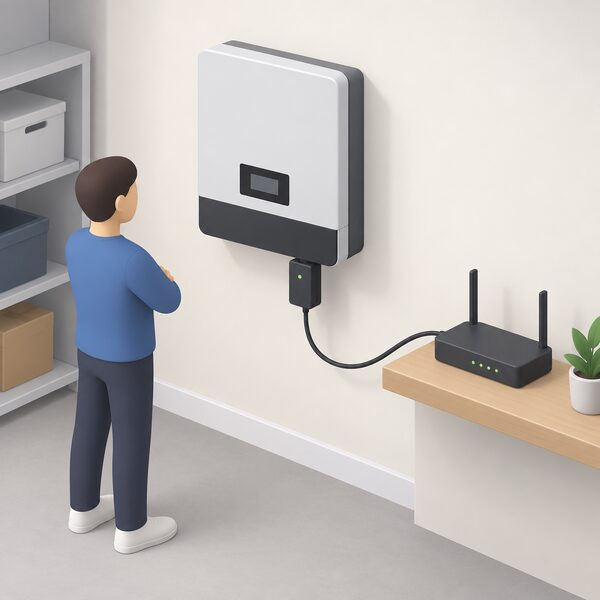
There is no mechanical compatibility question between a mounting system and an inverter, and K2 publishes no such list. The connection that exists is at design level. The Everest (K2)+ interface, used in K2 Base 3.0, now includes connections to GoodWe and Archelios Pro, which means a designer working in K2's planning tool can pull through those products rather than entering them by hand.
On the monitoring side, the GoodWe Smart Dongle EZLink 3000 "connects compatible inverters to GoodWe's Smart Energy Management System (SEMS) for reliable data monitoring"22. That is a GoodWe product, not a K2 one, and it is bought separately from the mounting.
The distinction matters for a household weighing independence. Mounting hardware is passive and has no firmware, no app and no cloud account. Monitoring does: it depends on a dongle, a home broadband connection and the inverter maker's platform. A system can be fully functional on the roof with no monitoring at all, and the mounting side of it will not change if a monitoring platform is withdrawn.
K2 mounting on UK installations: Worcestershire and Surrey
K2 mounting reaches UK households through installer schemes and grant-funded work rather than direct sale. In Worcestershire, the Warm Homes Local Grant is delivered by Acton Energy and states that "the Grant will pay for a range of energy efficiency measures including insulation and heating upgrades"23. The Home Upgrade Grant, Phase 2, is funding for local authorities to improve the energy performance and heating systems of off gas grid homes in England24. Which magazine notes that the Home Upgrade Grant 2 provides energy efficiency upgrades including solar panels and low-carbon heating25.
That is the route by which a mounting system arrives on a roof in Worcestershire or Surrey: specified by an installer, funded in part by a scheme, and recorded in a design file. The mounting itself is not the funded measure; the solar array is, and the mounting is the part that makes the array installable.
The wider case for the work is set out by the Energy and Climate Intelligence Unit, which states that "if the Government wants to boost energy independence, insulating homes and running electric heat pumps and cars on an ev" would do so26. Solar mounting sits inside that picture as the enabling hardware rather than as a measure in its own right.
What K2 mounting means for household energy independence
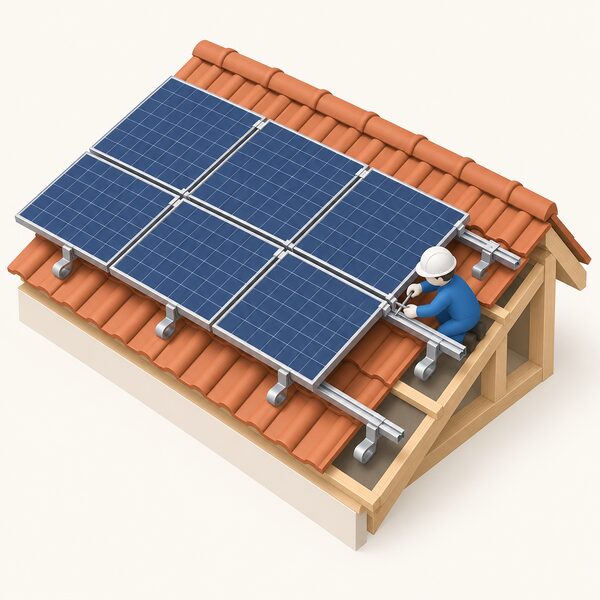
A mounting system is the least discussed and most structural part of a home solar installation. It is what converts a roof into a generating surface, and it is what determines whether the array is still there, and still warrantied, in year fifteen.
What it delivers is durability and a documented design. The twelve year warranty, extendable to 20 years where the system is planned in K2 Base with static verification and K2 Docu App documentation, is a longer term than most inverters carry3. The MCS listing at system level, covering CrossRail 36, SolidRail, SpeedRail 22 and MiniRail, ties the hardware to the certification that UK schemes recognise4.
What dependence remains is worth stating plainly. The mounting is a German-designed product from K2 Systems GmbH, sold through UK distributors, and the warranty claim route runs through the original installer's quotation and the K2 Base project report3. If the installer has gone, the paperwork is harder to assemble. The extended 20 year term depends on a design file that only exists if the installer created it at the time.
Beyond that, the mounting adds no new dependence. It has no app, no cloud account and no firmware. It does not tie a household to a supplier, a tariff or an inverter brand. The electrical independence of the system rests on the panels, the inverter and the battery; the mounting's contribution is to keep the first of those in place for the life of the warranty, and to do so under a documented static calculation rather than an assumption.
Sources26 cited
- Tiled roof mounting solutions, K2 Systems, 2026
- RailUp Set, K2 Systems, 2026
- Warranty terms and conditions, Version 9, K2 Systems, 16 September 2025
- Affected Solar Mounting Product Listing, MCS Certified, October 2025
- K2 Roof Hook H38mm (Pan Tile), Alternergy, 2026
- BasicRail 22, K2 Systems, 2026
- K2 MiniRail MK2 Set, Alternergy, 2026
- K2 Add On, Alternergy, 2026
- K2 Dome FixPro S, Alternergy, 2026
- K2 Roof Hook H47mm (Pan Tile), Alternergy, 2026
- K2 Roof Hook Shingle 40mm, Alternergy, 2026
- K2 Roof Hook Variable 1 (Pan Tile, for SolidRail system), Alternergy, 2026
- K2 Roof Hook, Slate, Alternergy, 2026
- Your home guide to solar water heating, OFTEC, 20 September 2026
- Loft conversions, insulation and ventilation, Centre for Sustainable Energy, August 2026
- The Future Homes and Buildings Standards 2023 consultation, UK Government, 2023
- K2 DomeClamp Middle Clamp 30-50 mm, Alternergy, 2026
- K2 DomeClamp Middle Clamp 30-50 mm, black anodised, Alternergy, 2026
- K2 DomeClamp End Clamp 30-50 mm, Alternergy, 2026
- K2 Clamp EC 25-40, black anodised, K2 Systems, 2026
- MCS provides an update for solar PV flat roof mounting systems, MCS Certified, 23 October 2025
- GoodWe Smart Dongle EZLink 3000, Alternergy, 2026
- Worcestershire Warm Homes Local Grant, Acton Energy, 6 July 2026
- Home Upgrade Grant: Phase 2, UK Government, 29 September 2022
- Four ways to make solar panels more cost effective, Which?, 14 October 2024
- Household energy: buying British, Energy and Climate Intelligence Unit, 15 April 2024