
In this comparison
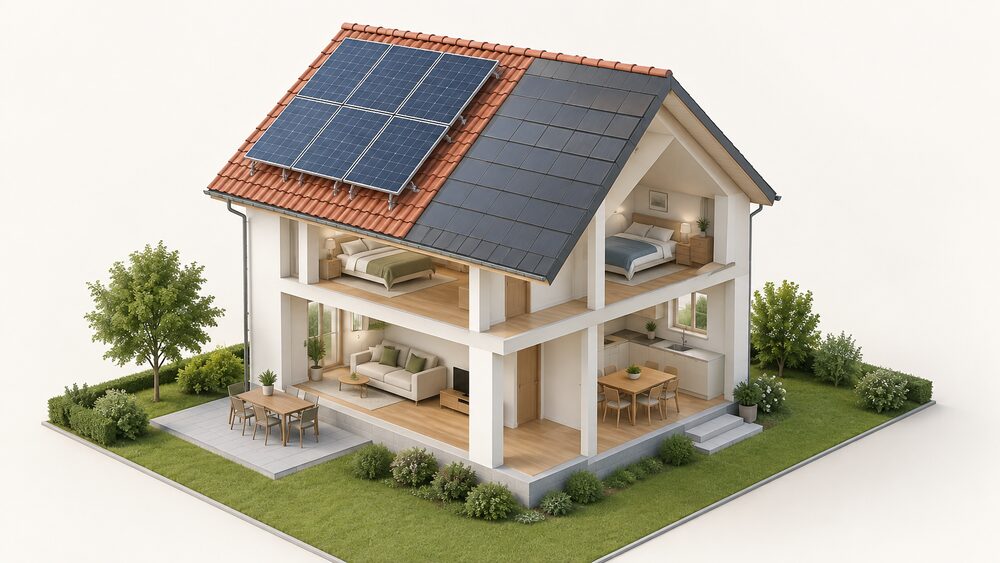
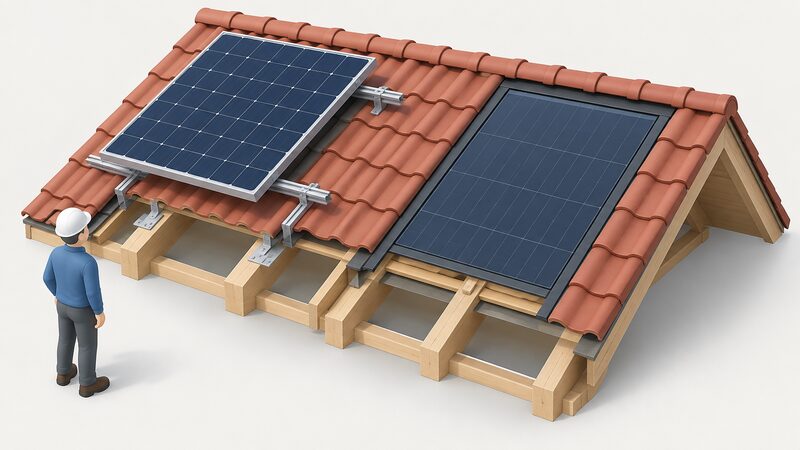
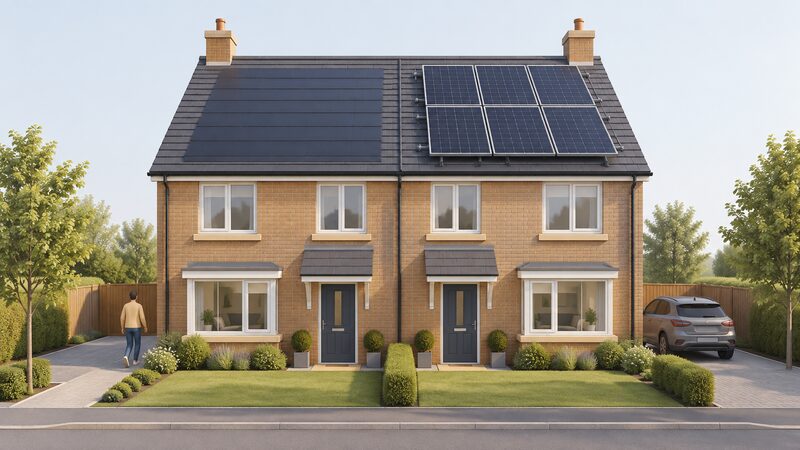
Roof-integrated and on-roof solar do the same job by different means. On-roof mounting fixes panels above the roof covering on a frame, and it is by far the most common option for domestic installations1. Roof-integrated systems replace the covering itself, with solar tiles fitted to the roof instead of normal tiles so the installation does not affect the look of the roof2.
The performance gap is smaller than most buyers expect. A government consultation on the Future Homes and Buildings Standards reported a 3% difference in annual generation between on-roof and in-roof systems3. The cost gap is larger: solar roof tiles are normally about 1.5 times the cost of a solar panel installation2, and panels on top of the roof are described as the cheapest option while tiles are the most expensive for the equivalent system4.
The choice therefore turns on roof condition, roof covering and appearance rather than on output. Integration is an option for tiled roofs, offering potential savings if the tiles are near the end of their life anyway5. Where the roof is sound and staying as it is, on-roof mounting keeps the two layers separate and the work simpler.
Roof-integrated vs on-roof: the short answer
The two mounting styles differ in where the weatherproof layer sits. On-roof systems screw roof anchors directly onto the roof rafters and connect bars to those anchors to create a frame, with the panels sitting above the covering8. Integrated systems put the solar product into the roof plane itself, so the panel or tile is part of the weather envelope rather than an addition to it.
That single difference drives everything else. Because the covering is replaced rather than overlaid, integration is a roofing job as well as an electrical one. A professional roofer can carry out the installation of integrated tiles, but a solar electricity professional is required to wire them together9. On-roof work still needs a competent roofer for the anchors, but the covering stays in place.
Generation is close. The 3% annual difference reported in the Future Homes and Buildings Standards consultation is the most useful single figure for comparing like with like, because it compares on-roof and in-roof systems rather than panels and tiles3. Solar roof tiles are a distinct product and are less efficient per area than solar panels, typically producing only 80% of the electricity for the same surface2. An independent guide reaches the same conclusion in different words: tiles are not as efficient as solar panels and will produce less electricity from the same surface coverage9.
For a household, the practical question is what the roof is doing anyway. If it is being replaced, integration folds a roofing cost into a solar cost. If it is not, on-roof mounting leaves the covering untouched and keeps the cheapest route to the same generation4.
What each mounting style actually is
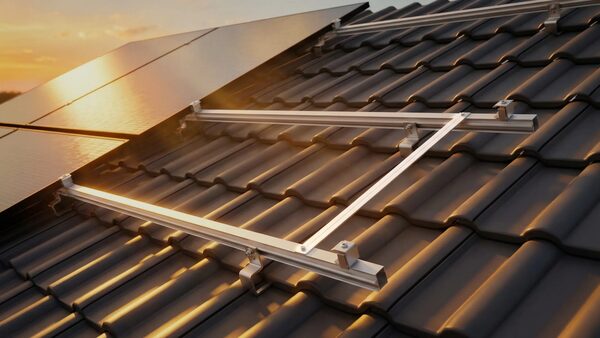
On-roof mounting is a mechanical assembly. Roof anchors are screwed directly onto the roof rafters, and bars are connected to the anchors to create a frame that carries the panels8. The covering stays intact underneath, and the panels sit on top of it. This is the arrangement behind the great majority of domestic installations1.
Integrated mounting removes the distinction between covering and generator. Solar roof tiles, also called solar slates or solar shingles, are fitted to the roof instead of normal tiles2. They are built into the structure of the roof itself, which is what allows them to blend in as much as possible9. The same principle applies to in-roof panel systems, where a framed panel replaces a section of covering rather than sitting above it.
The mounting hardware market reflects both approaches. Flat roof systems have their own standards, and the MCS 012 v3.0 scope was expanded to include non-mechanically attached mounting systems alongside mechanically attached systems designed for installation on flat roofs of 10 degrees or less10. Pitched roof work, whether on-roof or integrated, follows the same principle of fixing into the structure.
Two consequences follow from the construction difference. First, integrated systems leave no gaps for birds or rodents to get into, because there is no void between panel and covering11. Second, they can be complex to retrofit11. The roof has to be opened up, and the covering around the array has to be made good.
"These can be complex to retrofit but are built into the roof, leaving no gaps for birds or rodents to get into."
Efficiency: on-roof edges ahead, but only slightly
The headline comparison is the 3% difference in annual generation between on-roof and in-roof systems reported in the Future Homes and Buildings Standards consultation3. That figure compares mounting positions for the same kind of generating product, and it is the fairest single number available for the choice this page covers.
Solar roof tiles are a separate case. They are less efficient per area than solar panels, typically producing only 80% of the electricity for the same surface2. An earlier independent guide puts it as tiles not being as efficient as panels and producing less electricity from the same surface coverage9. The reason is geometric: a tile has to look like a tile, which constrains the cell area and the packing density compared with a framed module.
Orientation and pitch matter more than mounting style. An east or west facing roof produces 15% less energy, and a north facing roof around 30% less7. South facing roofs typically perform best, though north facing roofs can still benefit5. A 3% mounting penalty is small beside a 15% or 30% orientation penalty.
Roof area is the other constraint. The size of the roof may dictate the type or number of solar PV panels that can be installed12. Because tiles deliver less output per square metre, a roof that is marginal for on-roof panels may be more marginal still for tiles, and a larger array may be needed to reach the same annual generation.
For a household, the honest reading is that mounting style is a second-order decision on output. The first-order decisions are orientation, shading and available area, which are covered in roof orientation, pitch and shading.
Cost: integration carries a higher upfront price
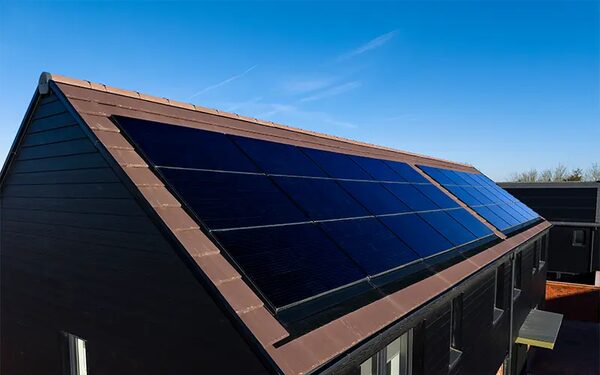
Solar roof tiles are normally about 1.5 times the cost of a solar panel installation2. An older independent guide puts tiles at approximately double the price of solar panels9. The two figures disagree, and the newer one is the better guide to current pricing, but both point the same way.
The direction of travel is consistent across sources. Panels on top of the roof are the cheapest option, while tiles are the most expensive for the equivalent system4. Cost depends on size, how easy it is to access the roof, and whether panels or tiles are preferred5. Whether a system uses panels or tiles, and whether it is roof mounted or ground mounted, are both named as variables affecting the overall price8.
| Option | Relative cost | Source |
|---|---|---|
| Panels on top of the roof | Cheapest for the equivalent system | Home Energy Scotland4 |
| Solar roof tiles | Normally about 1.5 times a panel installation | Energy Saving Trust2 |
| Solar roof tiles | Approximately double the price of panels | HIESS9 |
| Rooftop solar on a new build | May be 10% cheaper | Solar Energy UK via POST3 |
Two factors can narrow the gap. Integrated systems are an option for tiled roofs, offering potential savings if the tiles are near the end of their life anyway5, because the roofing cost would be incurred regardless. And the cost of rooftop solar installation may be 10% cheaper for new builds, according to Solar Energy UK3, which is where much integrated work happens.
Against that, the risk profile differs. The risk of damage to roofs is 20 times higher with roof-integrated systems than with roof-mounted systems, according to a government literature review on fire in solar PV systems6. That finding dates from 2017 and concerns roof damage during and after installation, but it is the only comparative risk figure available and it belongs in any honest cost discussion.
Prices for both routes are installer quoted, and no published UK price list applies across the market. The wider cost picture, including what drives quotes, sits in how much do solar panels cost in the UK.
Roof covering compatibility: what integration works with
Integrated systems are an option for tiled roofs5. Solar tiles and slates can integrate with new and existing roofs and are compatible with a wide range of roof tiles and slates4. That breadth is the point of the product: the array has to marry into whatever covering surrounds it.
The hard limit is timing. Integrated photovoltaic tiles can be installed as part of a new build property or as a roof replacement, but not into an existing roof9. This is the single most important compatibility rule on the page. A household with a sound roof and no plans to replace it is not a candidate for integrated tiles, whatever the appearance appeal.
Where a roof is being renovated, the position changes. Existing panels could be refitted to a renovated roof instead2, which keeps the on-roof array and takes the opportunity to renew the covering beneath it. That route avoids the retrofit complexity of integration while still ending with a new roof.
Building regulations apply to roof work either way. If a solar panel is installed on a roof, building regulations will normally apply13. Where solar products form a roof covering, that is, where they are roof-integrated, a fire classification is required so that compliance with Building Regulations, specifically Regulation B4 on external fire spread, can be demonstrated14. Products that cannot meet that requirement cannot be integrated into roofs in compliance with the Building Regulations14.
Flat roofs are a separate case. Solar panels can be installed on both pitched and flat roofs, and on a flat roof the panels need to be tilted and spaced to avoid shading15. Flat roof mounting is not an integration question in the same sense, and the standards for it are covered in solar panel mounting systems.
Ventilation and temperature: why airflow matters
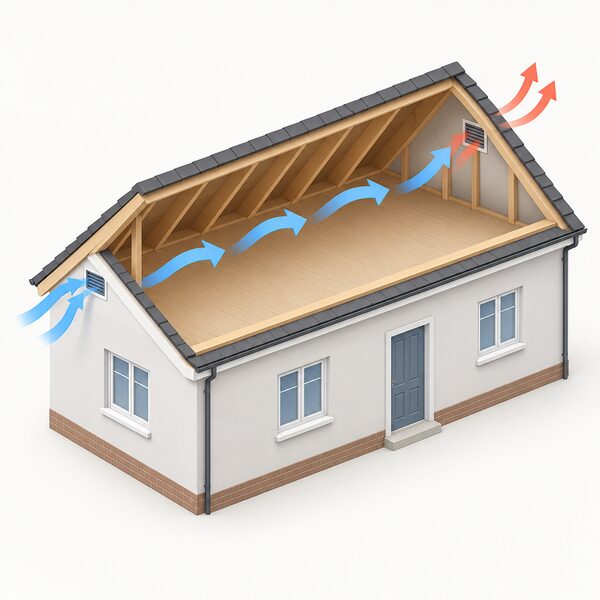
Roof ventilation is a building regulation matter before it is a solar matter. When ventilating a roof, air should be able to enter at one end and travel through to the other end where it can exit16. That continuous path is what keeps a roof void dry.
Introducing an opening into a roof covering does not remove the requirement. Ventilation of the existing roof void has to be considered, as air must still be allowed to flow from one void to another18. An integrated array changes the covering over part of the roof, so the airflow path has to be preserved around and through the altered section.
The temperature question is usually framed as panels overheating through reduced airflow. The published evidence here concerns the roof void rather than the modules. Insulating at ceiling level results in a colder attic space above, meaning an increased risk of condensation and pipe freezing19. That is the opposite problem to overheating, and it shows how sensitive roof voids are to changes in how they are ventilated and insulated.
Insulation itself is a separate layer with its own logic. Inverted roof insulation goes above the weather membrane, protecting it from heat and cold that can shorten its life and that of the roof deck20. Insulation keeps homes cool in summer and warm in winter and means less energy is wasted through draughty windows, walls and roofs21. Room-in-roof insulation involves fitting insulation to provide a continuous thermal envelope around the room space22.
For a household, the practical point is that an integrated array is not a standalone change. It interacts with the roof void, the insulation and the ventilation path, and those interactions are what a competent designer has to resolve. The general retrofit context is set out in retrofit explained.
Which suits which home
The clearest split is by roof condition. A household with a sound roof that is not being replaced is served by on-roof mounting: it is the most common domestic option1, the cheapest for the equivalent system4, and it leaves the covering undisturbed. A household replacing a roof, or building new, is the natural candidate for integration, where the roofing cost is being incurred anyway5.
Appearance is the other driver. Solar roof tiles are fitted instead of normal tiles so the installation does not affect the look of the roof2, and they are built into the roof structure to blend in as much as possible9. Where a roof is prominent or the covering is being matched, that matters. Where it is not, on-roof panels deliver more output per square metre at lower cost.
Roof geometry constrains both. The size of the roof may dictate the type or number of panels that can be installed12. South facing works best, east or west will work well, and north facing roofs can still benefit5. Skylights or roof vents may make it harder to install solar panels and increase the installation costs, and a steep roof might slowly build up dirt on the panels5.
Some settings impose their own rules. Under one local listed building consent order, solar panels should be installed on the inverted slopes of a butterfly roof, or a flat roof at a minimum of two storeys or six metres above street level23. That is a site-specific condition rather than a general rule, but it shows how far local heritage controls can shape what is permitted. The wider constraints are covered in solar panels in a conservation area and listed building consent for solar panels.
For energy independence, the mounting choice changes little. Either route generates on the household's own roof and reduces the electricity drawn from a supplier, and either route remains grid-connected, dependent on a certified installer for the electrical work12 and on the roof itself for the resource. What integration adds is a longer-lived roof under the array; what it removes is the option to treat the covering and the generator as separate layers when either needs work.
Sources23 cited
- Solar panel installation, maintenance and repair, NICEIC, 2026-09-17
- Solar roof tiles, Energy Saving Trust, 2026-08-13
- The Future Homes and Buildings Standards 2023 consultation, Solar Energy UK, 2024-04
- Solar panels, Home Energy Scotland, 2026-09-20
- What makes a good solar PV roof?, Renewables First, 2026-04-08
- Batteries in the home, Solar Energy UK, 2026-09-17
- Buying advice for solar panels, Which?, 2026-08-12
- UK Solar PV Strategy, Part 2, Department of Energy and Climate Change, 2014-04
- Proposed Local Listed Building Consent Order, Southwark Council, 2026-03-17
- Solar roof tiles, HIESS, 2018-12-04
- Solar panel problems and how to solve them, Which?, 2026-03-26
- Renewables and electrics, NICEIC, 2026-09-17
- Solar panels guidance, Islington Council, 2026-09-17
- An update on solar PV module fire classifications, MCS, 2024-10-24
- Solar heating, MCS, 2026-08-17
- Building regulations: roof, Welsh Government, 2026-09-17
- Building regulations: new roofs, Planning Portal, 2026
- Building regulations: rooflights, Planning Portal, 2026
- Guide to the conversion of traditional buildings, Scottish Government, 2026-08-10
- Roof insulation, Which?, 2026-05-05
- How fuel poverty is still an issue during the summer, End Fuel Poverty Coalition, 2025-08-31
- Typical insulation measures, Energy Saving Trust, 2025-03-31
- Solar panels, London Borough of Hammersmith and Fulham, 2026-09-17
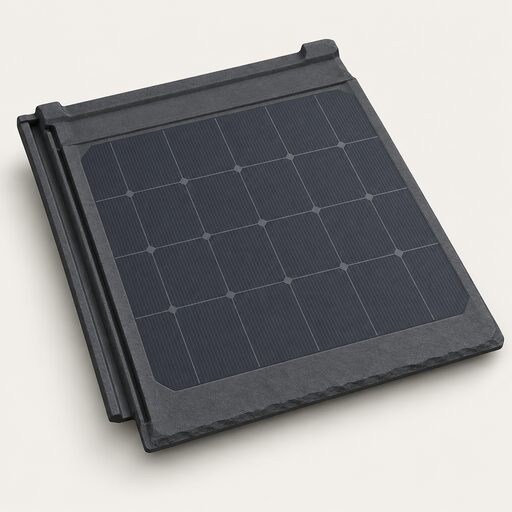 Roof-Integrated SolarSolar tiles replace your roof covering instead of sitting on top of it, so the finished roof looks like a roof.
 Solar Mounting SystemsWill your roof take the extra weight of solar panels, and will it still keep the rain out afterwards?
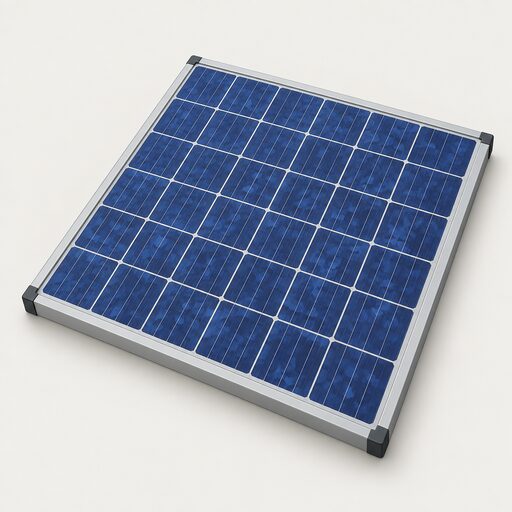 Panel TypesWhich solar panels are best for a UK home, and how much do they cost?
 Solar Panel CostsA typical UK home pays somewhere between four and eleven thousand pounds for solar panels fitted, with most landing in the middle.
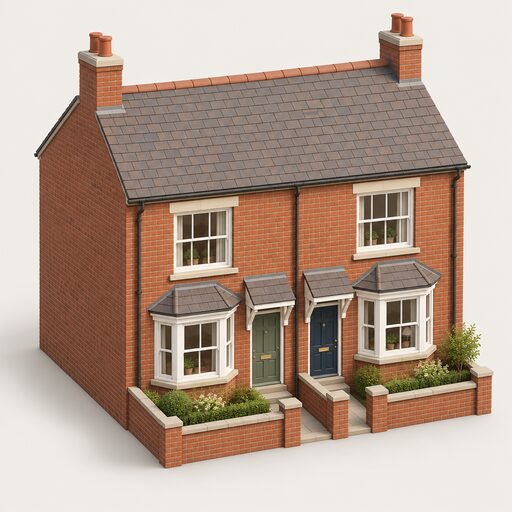 Panels by Home TypeCan your house have solar panels, and how many will fit?
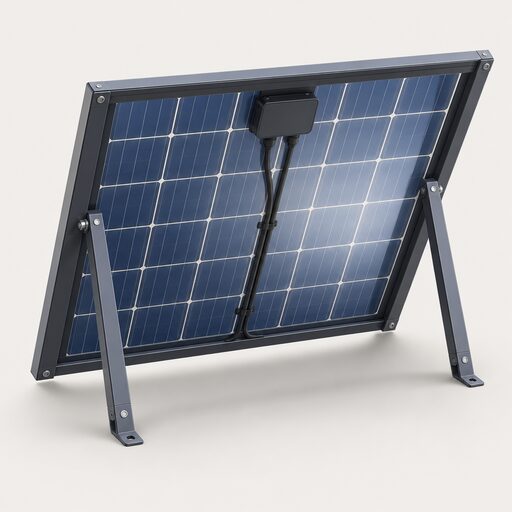 Bifacial and Glass-Glass PanelsBifacial panels make electricity from both sides, but the extra comes from light bouncing back off what is behind them.