

In this guide
Carrier is a residential heating and cooling manufacturer whose current heat pump literature is published under the Puron Advance refrigerant name. The company's residential lines include the Infinity, Performance and Crossover families, a geothermal range, and a cold climate heat pump, with consumer brochures for those products dated between 29 May and 4 August 20261. Carrier Global Corporation is listed on the New York Stock Exchange under the ticker CARR, and it is a parent group: Viessmann Climate Solutions UK is described as a part of Carrier Global Corporation5.
For a UK household, the practical position is narrower than the product list suggests. Carrier's residential heat pump pages and brochures are published for the United States market, and no UK price, UK installer network or UK certification listing for a Carrier residential heat pump is published. What is published is the company structure, the product families, the refrigerant position, the warranty document and the literature. Those are the things a householder can check.
The wider context is that a heat pump is a versatile system capable of providing heating, cooling and hot water for homes, commercial buildings and industrial applications, and that most heat pumps use an electrically driven compressor6. Carrier's residential range sits inside that definition. What follows sets out who the company is, what it publishes, and where the dependence on a manufacturer, a grid connection and a servicing regime remains.
Who Carrier is: an independent, publicly traded manufacturer
Carrier Global Corporation is a publicly traded company in its own right, listed on the New York Stock Exchange under the ticker CARR5. That listing is the clearest single fact about the company's status: it is not a division of another heating group, it is the group. The same source records that Viessmann Climate Solutions UK is a part of Carrier Global Corporation, which places a well known European heating brand inside the same ownership structure as Carrier's own residential lines5.
That ownership shape matters to a household for two reasons. The first is that brand competition is not always what it appears: two products marketed against each other can sit under one parent, and the commercial decisions about which line is pushed in which market are made in one place. The second is that a parent group's financial position is not the same as a product warranty. A stock exchange listing says nothing about whether a particular heat pump will be supported in ten years, and it is not a guarantee of anything at the level of an individual installation.
Carrier's residential heat pump pages are published for the United States market. The literature dates run through 2026, which indicates an active product line, but the documents themselves are US consumer brochures. A UK householder reading them is reading a specification and a warranty written for a different market, with different electrical standards, different refrigerant rules and a different installer base. Where a UK buyer needs a UK certification listing, an MCS registered installer or a UK warranty term, this page cannot supply it, and the absence is itself the finding.
The wider manufacturer landscape, including which groups own which brands, is set out in who owns which energy brand and in the heat pump manufacturers guide.
The range: Infinity, Performance and Crossover heat pump lines

Carrier's residential heat pump range is published as a set of named families, each with its own consumer literature. The Infinity Heat Pumps with Puron Advance brochure is dated 29 May 20261. The Performance Series Variable-Speed Heat Pump brochure is dated 27 July 20262. The Crossover Brochure featuring Puron Advance is dated 12 June 2026, and appears on two Crossover product pages3. A separate Carrier Dual Fuel System 101 educational brochure is dated 29 May 20268.
| Family | Published literature | Date |
|---|---|---|
| Infinity heat pumps | Infinity Heat Pumps with Puron Advance brochure1 | 29 May 2026 |
| Performance series | Performance Series Variable-Speed Heat Pump brochure2 | 27 July 2026 |
| Crossover solutions | Crossover Brochure featuring Puron Advance3 | 12 June 2026 |
| Cold climate | Cold Climate Heat Pump Brochure1 | 9 June 2026 |
| Dual fuel | Dual Fuel System 101 educational brochure8 | 29 May 2026 |
| Domestic hot water air-to-water | DHW A2W Heat Pump System Brochure10 | 9 June 2026 |
| Geothermal | Geothermal Comfort Systems with Puron Advance brochure4 | 4 August 2026 |
The naming tells a householder something about how the range is organised. Infinity sits at the top of the published literature set, Performance is described as variable-speed, and Crossover is presented as a distinct solutions category rather than a single appliance. Variable capacity control heat pumps of the invertor type adapt their capacity to the heat load, which is the operating principle behind a variable-speed unit7. That is a general description of the technology, not a Carrier specification.
What the range does not carry in this material is a UK output range, a UK efficiency figure or a UK price. Official guidance sets out output bands for air-to-air products above 12 kW and up to 1000 kW for air heating, cooling products, high temperature process chillers and fan coil units, but that is a regulatory classification rather than a Carrier model listing13. A householder comparing Carrier against a UK marketed brand is comparing a US specification sheet against a UK one, and the two are not directly comparable.
Cold climate and dual fuel systems: what they are for
Cold climate operation and dual fuel operation are two different answers to the same problem: what happens when the outdoor temperature drops and a heat pump's output falls. Carrier publishes a Cold Climate Heat Pump Brochure dated 9 June 2026, and a Dual Fuel System 101 educational brochure dated 29 May 20261. The dual fuel document is educational rather than a product specification, which suggests it is written to explain the concept to a householder rather than to sell a particular model.
The concept is well established in independent guidance. A hybrid heat pump system can be configured to run the boiler as a top up system when the heat pump cannot supply the required heat in cold weather or for hot water, based on tariff costs14. There are two kinds of hybrid system: bivalent systems, where a heat pump works alongside another heat source, and packaged systems, where the heat pump and boiler are a single unit14. In a bivalent arrangement the heat pump alone can be used in milder weather and the boiler can take over, or even run in parallel to the heat pump, in the winter when the building's heat load is at its maximum7.
"the heat pump alone can be used in milder weather and the boiler can take over, or even run in parallel to the heat pump"
Cadent's hybrid heating programme describes the same behaviour from the control side: the hybrid system automatically switches from the heat pump to the boiler in colder weather15. That automatic switch is the point of the arrangement. It removes the householder from the decision, and it also means the gas boiler remains in the system, with the gas supply and the gas standing charge that go with it.
There is a metering consequence. Heat pump systems that combine a heat pump with a fossil fuel system such as a gas boiler within the same product will require metering, which matters for anyone expecting to claim a renewable heat incentive payment on a bivalent installation16. A household running a dual fuel system is not off gas, and the independence it gains is partial: it can choose which fuel carries the load on a given day, but it remains connected to both networks.
Geothermal and air-to-water options in the Carrier line

Carrier publishes a geothermal range under the Geothermal Comfort Systems with Puron Advance name, with brochures dated 4 August 2026 across three product pages4. Geothermal, or ground source, is one of the recognised heat pump types: types of heat pumps include open and closed source heat pumps underground, air source and water source17. Official deployment statistics count all types of heat pumps including air source heat pumps and ground source heat pumps, so a ground source unit sits inside the same statistical category as an air source one18.
Carrier also publishes a domestic hot water air-to-water system brochure, the DHW A2W Heat Pump System Brochure, dated 9 June 202610. Air-to-water is the configuration most UK households encounter, because it feeds a wet central heating system and a hot water cylinder. The emitter question is the one that decides whether cooling is available as well as heating: heat pump convectors and underfloor heating are the emitter types needed to make the most of cooling via an air-to-water heat pump system19.
That is a useful limit to state plainly. An air-to-water heat pump can provide cooling in principle, but only where the emitters can deliver it, and standard radiators sized for a boiler generally cannot. Air-to-air systems take a different route: they are load compensated rather than weather compensated, with each internal head monitoring its room temperature directly20. Air-to-air heat pumps can provide heat in winter and cooling in summer, and can provide cooling in the summer if needed21.
For a household thinking about independence, the geothermal option is the one that changes the most. A ground source unit draws on the ground rather than the air, which stabilises output across the year, but it requires ground works and it remains an electrically driven appliance. The electricity supply, not the heat source, is the dependence that stays.
Refrigerant: Puron Advance across the current range
Carrier's current residential literature is published under the Puron Advance name across the Infinity, Performance, Crossover and geothermal families1. Puron Advance is Carrier's own branding for the refrigerant used in those products. The published brochures carry the name in their titles, which is the clearest available statement of what the current range uses.
The wider refrigerant picture is set by regulation rather than by branding. Official consultation material on fluorinated gas regulation notes that the majority of hydronic monobloc heat pumps may use R290, which is propane23. That is a different refrigerant family from the one Carrier brands, and it reflects the direction European hydronic products have taken under the F-gas phasedown. A householder comparing a Carrier unit against a European monobloc is comparing two different refrigerant approaches, with different installation rules and different servicing requirements.
Refrigerant choice has practical consequences that are worth understanding before a purchase. A unit delivered pre-filled with refrigerant avoids a site-based charging step, which is how at least one European split air source heat pump is supplied24. Where a system is not pre-filled, the installer has to charge it on site, which adds a step and a competence requirement. The Carrier literature does not state a pre-fill position in the material available here, so that is a question for the supplier.
The regulatory direction is one way. The F-gas phasedown reduces the quantity of high global warming potential refrigerant that can be placed on the market over time, and manufacturers have been moving their ranges accordingly. Carrier's use of a single branded refrigerant name across four product families is consistent with that direction, but the branding is a manufacturer's claim about its own product, not an independent measurement.
Warranty: the limited warranty for heat pump condensers

Carrier publishes a Limited Warranty for Air Conditioner & Heat Pump Condensers, dated 31 August 20268. A separate limited warranty card in French is dated 9 September 20261. The document is the starting point for any warranty question, and it is the only warranty material in this set.
Two general conditions bear on any heat pump warranty, Carrier's included. The first is servicing: an annual service is often a condition of a heat pump warranty, so a missed service can affect cover26. The second is commissioning. Heat pumps and any dedicated ancillary products, such as integrated hot water cylinders, should be commissioned in accordance with both the manufacturer's instructions and the appropriate system design parameters13. Approved Document L repeats the same requirement for heat pumps and dedicated ancillary products such as integrated hot water storage vessels27. A commissioning record that does not match the manufacturer's instructions is a weak point in any later claim.
There is also a design requirement that touches warranty disputes. Heat losses from hot water storage vessels are limited under the building regulations for heat pump installation work27. Where a cylinder is undersized or poorly insulated, the system runs harder than the design intended, and that is the kind of thing an assessor looks at when a claim is contested.
Registration and record keeping are covered in more detail in registering a warranty and keeping it valid and in the manufacturer warranties guide.
Literature and documentation: what Carrier publishes for householders
Carrier's published consumer literature for the residential range runs to at least seven documents dated between 29 May and 4 August 2026, covering Infinity, Performance, Crossover, cold climate, dual fuel, domestic hot water air-to-water and geothermal1. Each is attached to a product page, so the current version for a given model sits with that model rather than in a single central library.
That publication pattern is worth noting because it is not universal. In the UK new build context, the direction of travel has been towards fixed operational and maintenance information: the government has chosen to proceed with the proposal to fix operational and maintenance information to heat pumps in a physical document, visible and accessible to occupants, with the Home User Guide as a secondary reference point28. That is a requirement for heat pumps in new homes, and it reflects a recognition that a householder needs the operating information in the building rather than in a download.
Independent guidance for the UK market is available alongside manufacturer literature. The Future Homes Hub published Heat Pumps: Hints and Tips for Architects and Architectural Technologists on 29 January 2026, aimed at the design stage rather than at the householder29. The Heat Pump KEYMARK is a voluntary certification mark that supports the quality and performance of heat pumps on the European market, granted by independent Certification Bodies with testing carried out by registered Test Centres, and it can apply to all heat pumps, combination heat pumps and hot water heaters30. A Carrier residential unit sold into the UK would need to be checked against the applicable UK listing rather than assumed to hold one.
Official statistics on heat pumps used in central heating in England and Wales carry a next release date of to be announced, so the most recent published position is the one already on the record31. Support is also available for installers and manufacturers to expand supply chains in the UK32.
Where the range has limits
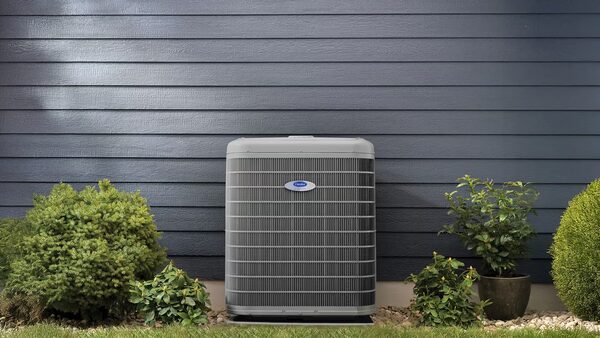
The limits on Carrier's residential heat pump range, as far as this material goes, are about market rather than about engineering. The product literature is US published, the warranty document is US published, and there is no UK price, no UK installer network and no UK certification listing in the available material. A UK householder cannot treat a Carrier residential heat pump as a straightforward off-the-shelf purchase in the way a UK marketed brand can be.
There are also installation-side requirements that apply to any heat pump in the UK, Carrier's included. Every time an installer or customer installs an electric vehicle charge point or heat pump to an existing property, they must inform their network operator accordingly26. That notification is a legal step, not an administrative one, and it applies at existing properties. Heat pumps and any dedicated ancillary products such as integrated hot water storage vessels should be commissioned in accordance with both the manufacturer's instructions and the appropriate system design parameters13.
On performance, official guidance sets a minimum coefficient of performance of 3.0 for space heating for heat pumps other than electrically driven air-to-air heat pumps with an output of 12kW or less33. That is a regulatory threshold, not a Carrier figure, and it is the kind of number a householder should be asking for in a specification. The Home Energy Model methodology applies a global minimum temperature difference of 5 K throughout its calculation method, which is a modelling convention rather than a product specification7.
Coastal siting is a further practical limit. Heat pumps with additional corrosion protection are available for coastal areas, so a household near the sea should establish whether the specified unit carries that protection34. Nothing in the Carrier material available here states a coastal variant.
What Carrier heat pumps mean for household energy independence
A Carrier residential heat pump, like any heat pump, changes where a household's heat comes from. Instead of burning gas on site, it moves heat using an electrically driven compressor, and most heat pumps use an electrically driven compressor7. That shifts the household's dependence from the gas network to the electricity network, and it does not remove dependence: the grid connection, the electricity supplier and the meter all remain.
The independence a heat pump offers is real but partial. A household with its own generation, such as solar panels and a battery, can supply some of the electricity the heat pump uses, which reduces the amount drawn from the grid. Without that generation, a heat pump concentrates the household's energy spend into one fuel rather than two, which simplifies the position but does not make it self-sufficient.
Carrier's specific position adds two further dependencies. The first is the manufacturer: the warranty document, the literature and the product support all run through Carrier, and a US published warranty is a weaker instrument for a UK household than a UK one. The second is the servicing regime, since an annual service is often a condition of a heat pump warranty26. A household that wants the cover to hold has to keep a service relationship going.
Dual fuel arrangements add a third. A hybrid system that switches to a boiler in colder weather keeps the gas connection live, along with the standing charge, and a bivalent system combining a heat pump with a fossil fuel boiler within the same product requires metering15. That is a deliberate trade: reliability in cold weather in exchange for retaining the gas supply.
The wider question of what a manufacturer's structure means for a household's position is covered in manufacturers and household energy independence, and the manufacturers guide sets out the full UK brand landscape.

Sources34 cited
- Infinity Heat Pumps with Puron Advance, Carrier, 2026
- Performance Series Variable-Speed Heat Pump, Carrier, 2026
- Crossover Brochure featuring Puron Advance, Carrier, 2026
- Geothermal Comfort Systems with Puron Advance, Carrier, 2026
- Viessmann enhances installer support, CIPHE, 2025
- Heat pump questions answered, Energy Saving Trust, 2026
- Your Home Guide to Heat Pumps, OFTEC, 2026
- Limited Warranty for Air Conditioner & Heat Pump Condensers, Carrier, 2026
- Carrier Crossover solutions, Carrier, 2026
- DHW A2W Heat Pump System Brochure, Carrier, 2026
- Carrier geothermal heat pump range, Carrier, 2026
- Carrier geothermal heat pump range, Carrier, 2026
- Future Homes and Buildings Standards consultation response, HM Government, 2026
- Hybrid heat pumps, Energy Saving Trust, 2026
- Hybrid heating frequently asked questions, Cadent Gas, 2026
- Renewable Heat Incentive guidance, RECC, 2026
- Heat pumps, REA, 2026
- Heat pumps used in central heating, England and Wales, Office for National Statistics, 2025
- How a heat pump can cool your home, Which?, 2026
- Air-to-air heat pumps: a low carbon solution for UK homes, Nesta, 2026
- NAPIT welcomes government announcement on extra technologies, NAPIT, 2025
- House of the future, Energy Saving Trust, 2026
- HFC phasedown reform de minimis assessment, Defra, 2025
- Vaillant aroTHERM Split air source heat pump, Quiet Mark, 2026
- Carrier heat pump condenser warranty page, Carrier, 2026
- Is now a good time to get a heat pump, Energy Saving Trust, 2025
- Approved Document L, Volume 1: Dwellings, HM Government, 2026
- Heat pump deployment statistics, Department for Energy Security and Net Zero, 2024
- How to ensure a successful transition to heat pumps for households at risk of fuel poverty, HM Government, 2026
- Heat Pump KEYMARK, EHPA, 2026
- New architect-focused heat pump design guide launched, Future Homes Hub, 2026
- Heat pump grants, HM Government, 2026
- Approved Document L, Conservation of fuel and power, Volume 1: Dwellings, HM Government, 2023
- The suitability of clean heating options for challenging dwelling types, ClimateXChange, 2024