

In this guide
Lightwave is a UK smart home brand whose heating side is built around a small set of devices rather than a single thermostat: a Smart Heating Switch that takes over the boiler or an electric heater, a Honeywell Home Wireless Thermostat sold under the Lightwave name, and a Smart Motion Sensor for occupancy-based control. The thermostat is listed at £139.95 including tax, the Smart Heating Switch at £99.95, and the Smart Motion Sensor at £79.951.
The important qualification is the hub. Lightwave states that the Link Plus hub is required for app and voice control, and that the Honeywell Home Wireless Thermostat can be paired directly to that hub and used as the call for heat trigger4. Without it, the devices still switch and still hold a set temperature, but the phone app, the schedules set from away and the voice commands do not exist.
For a household thinking about energy independence, Lightwave is a controls purchase, not a generation or storage purchase. It changes when the boiler or heater runs and how finely that running is timed. It does not change the fuel, the grid connection or the supplier, and it adds a dependence on a home broadband connection and a manufacturer's cloud service for the features most people buy it for.
What Lightwave offers for smart heating
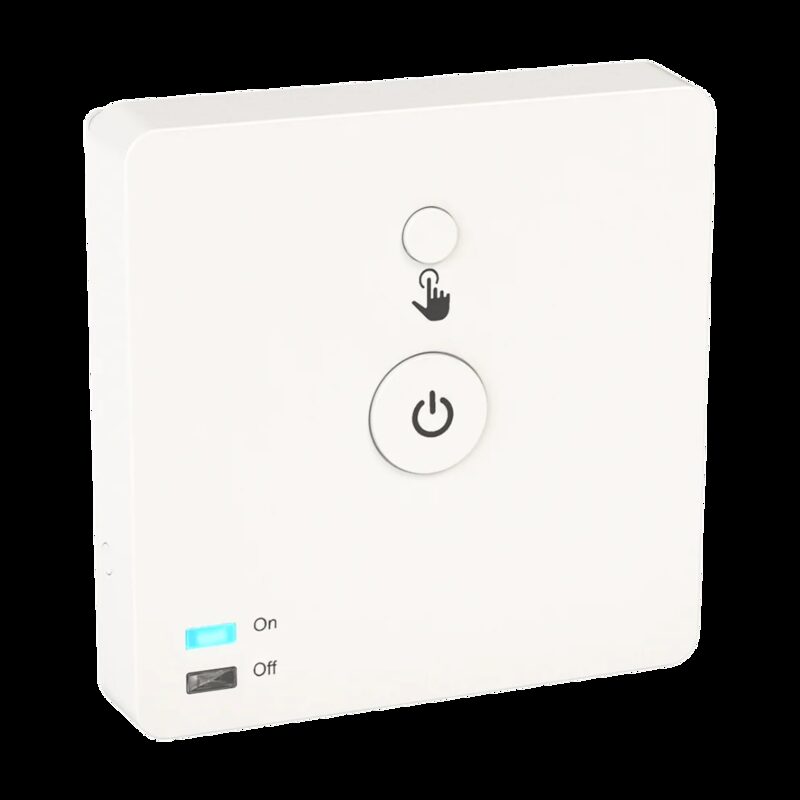
Lightwave's heating range is deliberately modular. The centre of it is the Smart Heating Switch, which the maker describes as most commonly applied to gain smart control of boilers, panel heaters, hot water cylinders, towel rails or electric radiators3. That is a wider brief than a conventional thermostat, because the same switch can take over a gas boiler's call for heat or an individual electric heater, and it carries output terminals for Normally Open, Normally Closed and Common so it can switch most types of system2.
The thermostat side is supplied by Honeywell Home rather than designed in house. The Wireless Thermostat DT3R is sold by Lightwave and integrates with the Lightwave ecosystem, with the Link Plus hub required for app and voice control4. It can control a boiler through the Smart Heating Switch, manage electric heaters through the Smart Socket, optimise underfloor heating through a 3-Gang Smart Relay, and work alongside an HR91 Wireless Radiator Valve, the Smart Motion Sensor, a Wire-Free Smart Switch and a Smart Dimmer4.
The system integrates with Amazon Alexa, Google Home, Home Assistant, SONOS, IFTTT and Samsung SmartThings2. That list matters for anyone already running a smart home, because it means the heating can be pulled into existing routines rather than sitting in its own app.
| Device | Role | Price (inc. tax) |
|---|---|---|
| Honeywell Home Wireless Thermostat DT3R | Room thermostat, white or black | £139.954 |
| Smart Heating Switch (LP92) | Boiler, panel heater, cylinder, towel rail, electric radiator | £99.953 |
| Smart Motion Sensor | Occupancy and ambient light automations | £79.955 |
| Smart Socket with Energy Monitoring (2 gang) | Electric heaters, appliances | £89.958 |
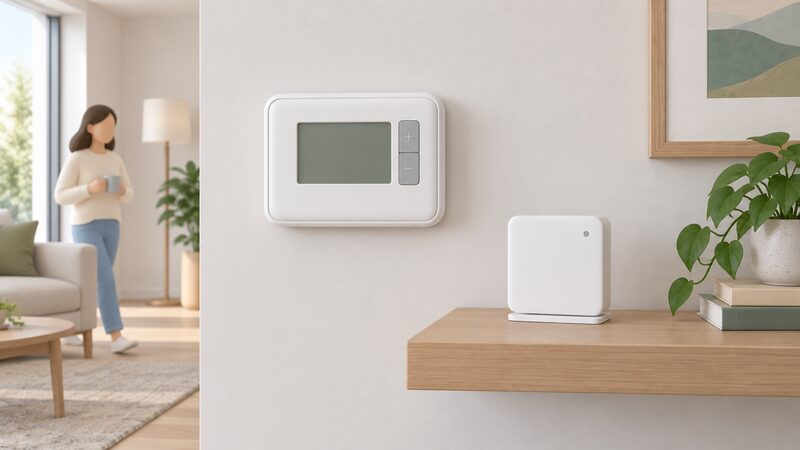
Lightwave Thermostat: price and colour options
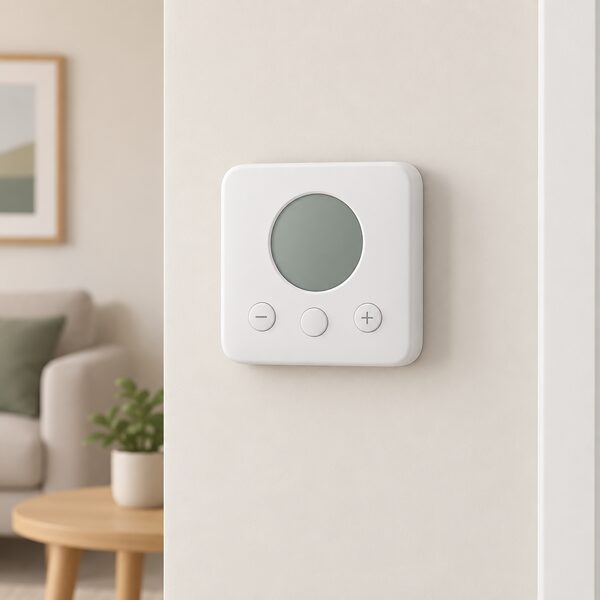
The thermostat Lightwave sells is the Honeywell Home Wireless Thermostat DT3R, listed at £139.95 including tax4. It comes in two finishes: a white version and a black version, both sold under the Lightwave vendor name1. Lightwave's sale page confirms the thermostat is also available in white and that the Honeywell Home unit is also available in black, and shows a £30 saving on the black variant9.
Lightwave also runs periodic promotions on its own heating products. Its smart heating sale page lists a thermostat reduced from £329.85 to £229.90, and a boiler smart control product reduced from £99.95 to £79.959. Those are sale prices at the time of reading, not standing prices, and the £329.85 figure is well above the £139.95 list price of the DT3R, so the two entries appear to refer to different products rather than to a discount on the same item.
For context on the wider market, independent guidance puts most smart thermostats at £100 to £200, with add-ons such as installation pushing the total higher6. Another independent guide puts a smart thermostat for boiler heating controls at around £100 to £25010. The Hive Active Heating thermostat is quoted at just under £100 from the Hive website11, and the Hive Smart Thermostat from £13012. Lightwave's DT3R sits at the upper end of the typical band before any hub is added.
How the system controls heating: thermostat, switches and sensors
The control chain is straightforward. A wireless thermostat sends a signal to a receiver connected to the boiler, which then tells the boiler when to turn the heating on or off, with no direct wired connection between thermostat and boiler13. Lightwave's version of that receiver is the Smart Heating Switch, and the DT3R can be paired directly to the Link Plus hub and used as the call for heat trigger3.
The Smart Heating Switch also carries built-in temperature and humidity sensors, which the maker suggests are ideal for controlling the ventilation of a utility room3. Energy monitoring is built into the device and displayed within the Lightwave app3. That is a useful distinction from a plain thermostat: the switch reports what the circuit is drawing, not just whether it is on.
Independent guidance on what a heating system needs is consistent across sources. Home Energy Scotland lists a time-controlled programmer, at least one room thermostat, thermostatic radiator valves if there are radiators, and a cylinder thermostat if there is a hot water cylinder14. The Energy Saving Trust gives the same core: a programmer, at least one room thermostat and TRVs15. Lightwave's devices can fill the programmer and thermostat roles, and the ecosystem supports zoned heating, timers and schedules, frost protection and voice control2.
What Lightwave does not do is replace the boiler's own safety and interlock arrangements, or the cylinder thermostat on a stored hot water system. Those remain part of the installation. More on how the pieces fit together is at heating controls and heating control wiring.
Occupancy-based heating with the Smart Motion Sensor
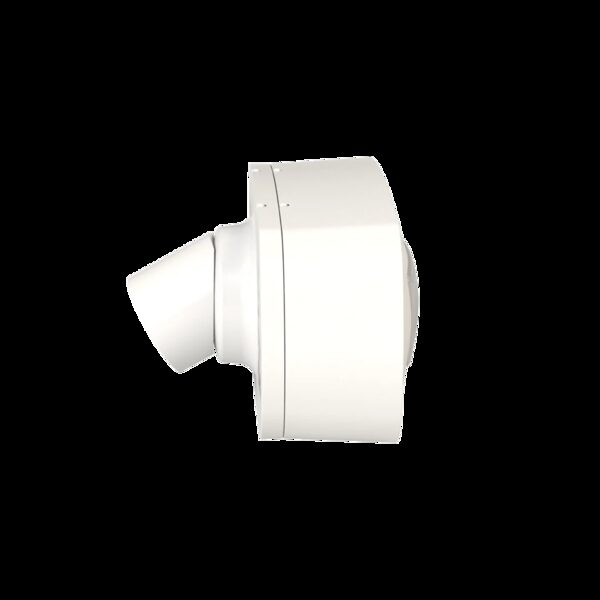
The Smart Motion Sensor is the part of the range that goes beyond scheduling. Lightwave states it can be added to any Lightwave Smart Series system to trigger automations based on motion and ambient light, and it has a built-in ambient light sensor5. The smart heating system can be combined with it for intelligent occupancy-based heating control, and a Wire-Free Smart Switch or Smart Dimmer can also trigger heating2.
In practice that means a room can be heated because someone walked into it, or because it is occupied and dark, rather than because a clock says so. The same logic extends to lighting and appliances: combined with the Smart Motion Sensor, lamps and appliances can perform based on whether a room is occupied or not8.
It is worth being precise about what this is not. The DT3R thermostat itself has no motion sensor, and independent guidance on a comparable wireless thermostat notes no GPS tracking and no motion sensor among its features6. Occupancy sensing in the Lightwave system comes from the separate sensor, not from the thermostat.
"This device can be added to any Lightwave Smart Series system to trigger automations based on motion and ambient light"
Occupancy control is most useful in rooms that are used intermittently, such as a study, a utility room or a spare bedroom, and least useful in a room that is occupied most of the day. It also depends on the hub and the app for the automation rules, so it is a cloud-dependent feature rather than a local one.
Where Lightwave sits in the wider smart home range
Lightwave is not only a heating company. The same ecosystem includes the Smart Socket with Energy Monitoring, which supports voice control through Siri (Apple HomeKit), Google Home and Amazon Alexa8, and the Wire-Free Smart Switch and Smart Dimmer that can trigger heating alongside lighting2. The Smart Socket is listed at £89.95 including tax in the stainless steel finish8.
That breadth is the argument for buying into the system rather than a single thermostat: one app, one hub and one set of automations across heating, lighting and appliances. It is also the argument against, because the value of the heating devices is partly tied to buying more of the range.
The wider market context is that smart thermostats generally connect to Wi-Fi so heating and hot water can be controlled through a phone, tablet or desktop16, and most link to a phone or respond to a smart speaker17. Smart thermostats commonly offer remote control through an app, learning, geofencing, energy insights and integration with Alexa, Google Assistant and Siri18. Lightwave's integration list covers Alexa, Google Home, Home Assistant, SONOS, IFTTT and Samsung SmartThings2, which is broader than most single-brand thermostats.
For households comparing systems, the relevant pages are smart thermostats, Honeywell Home controls and smart home protocols.
UK availability and real-world installations
Lightwave sells direct from its own site, and the products are UK-facing: prices are quoted with tax included, and the range is built around UK boiler and heating conventions such as the call for heat trigger and TRVs3. There is no published installer network equivalent to the boiler makers' registered-installer schemes in the material available, so installation is a matter for a qualified electrician or heating engineer depending on what is being switched.
The most visible UK installation is at Edgbaston Cricket Ground, where the Lightwave energy management system went live in January 202519. Lightwave runs an Edgbaston Go Green competition that opened at 09:00 on 11 September 2026, with a starter kit worth over £1,000 as the prize19. The company also publishes a case study of Fi and Neil McGee, who were handed the keys to a 1930s semi-detached renovation property in 2016 and began renovating it with Lightwave smart technology20.
Those are commercial and domestic examples rather than an installed base figure, and no independent installation count is available. For a household, the practical question is whether the electrics and the boiler will accept the switch, which is a site-specific judgement.
What owning Lightwave means for household energy independence
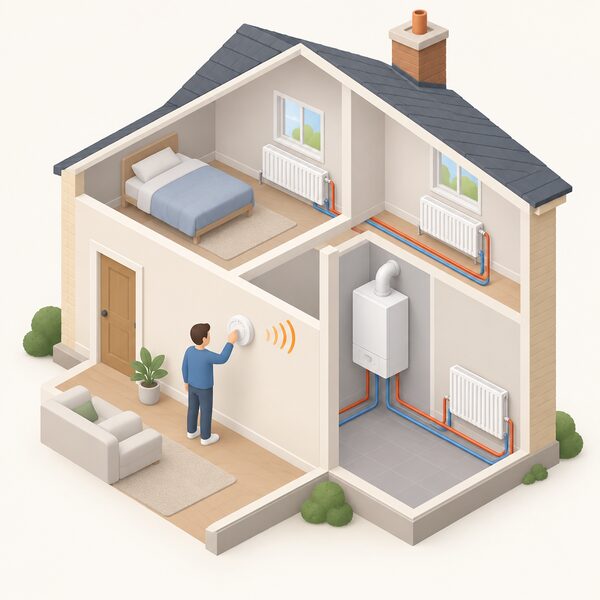
The honest position is that Lightwave improves control and leaves dependence intact. It does not generate electricity, store heat or disconnect a home from the grid. What it does is let a household decide more precisely when a boiler or an electric heater runs, and give it visibility of what a circuit is drawing through the built-in energy monitoring3.
The dependencies it adds are specific. App and voice control require the Link Plus hub4. Remote scheduling, energy monitoring in the app and any automation built on the motion sensor depend on a home broadband connection and Lightwave's service. The warranty position depends on a continuing membership: devices carry a two year warranty, extendable to lifetime with Lightwave PLUS membership, and Lightwave replaced its previous five year extended warranty member benefit with the Membership Lifetime Warranty on 1 December 20234.
There is also a limit that applies to smart thermostats generally rather than to Lightwave alone: independent guidance notes that they can be expensive and carry an installation cost, and that having one means tracking heating only, so electricity and gas usage are not visible in the same place16. Lightwave partly answers that with the energy monitoring socket and switch, but the gas side still depends on the boiler and the meter.
For a household weighing this up, the useful framing is that Lightwave is a control layer over an existing heating system. It sits alongside the wider question of heating controls and energy independence and the cloud dependence covered in smart heating control security and data.
Sources21 cited
- Smart Heating collection, Lightwave, 2026
- Smart Heating, Lightwave, 2026
- L92 Smart Switch, Lightwave, 2026
- Honeywell Home Wireless Thermostat DT3R White, Lightwave, 2026
- Smart Motion Sensor, Lightwave, 2026
- What are smart thermostats, Uswitch, 2026
- Honeywell Home Wireless Thermostat DT3R Black, Lightwave, 2026
- Smart Socket, Lightwave, 2026
- Lightwave Smart Heating Sale, Lightwave, 2026
- Boiler prices, Which?, 2025
- tado vs Hive, Energy Helpline, 2026
- How to buy the best smart thermostat, Which?, 2026
- What is a smart thermostat, Smart Energy GB, 2026
- Thermostats and heating controls, Home Energy Scotland, 2026
- Thermostats and heating controls, Energy Saving Trust, 2026
- Ultimate energy saving tips guide, Smart Energy GB, 2026
- Smart homes and lower carbon footprint, Energy Saving Trust, 2026
- Heating thermostat, tado°, 2026
- The Edgbaston Go Green collection, Lightwave, 2026
- Fifi McGee case study, Lightwave, 2016
- Lightwave PLUS service description, Lightwave, 2023