
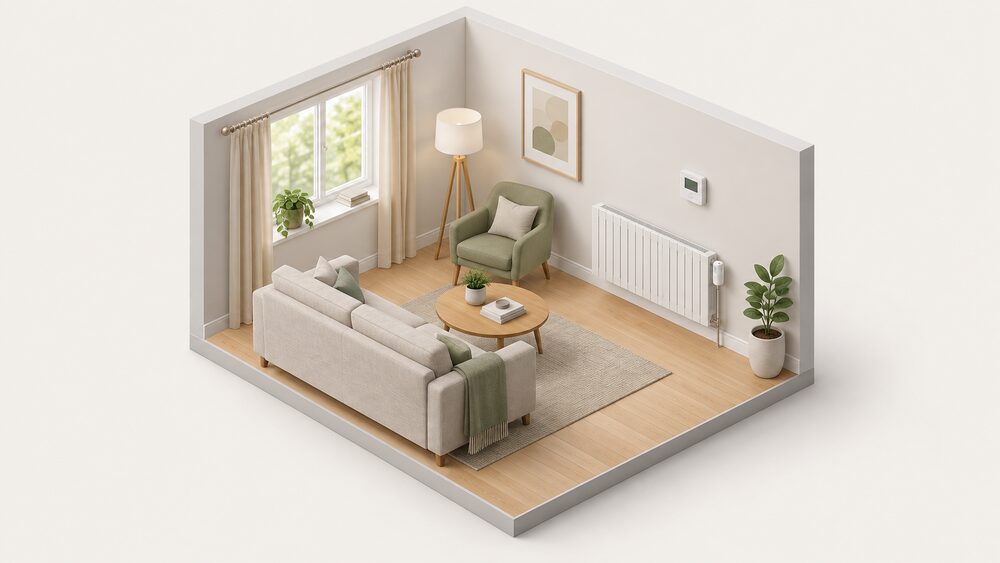
In this guide
Honeywell Home is one of the best-known names in household heating controls, and in the UK the thermostats and radiator valves sold under it are distributed through Lightwave. The range covers a wireless programmable thermostat, a wireless radiator valve and the wider Lightwave smart heating ecosystem, with app and voice control available once the Lightwave Link Plus hub is added1.
The headline price is the Honeywell Home thermostat at £49.95, reduced from £79.95 in a sale running to 20 September 20262. The wireless thermostat in black is listed at a regular £139.95 including tax, and the HR91 wireless radiator valve at £79.95 including tax3. Colour options run to white and black variants across the thermostat and valve range1.
What the controls do for a household is straightforward: they set and maintain a temperature and switch heating off when nobody is home, which is the core of any controls-led saving6. What they do not do is take a home off the gas grid or off a supplier. The dependence that remains is on a boiler, on gas, on mains electricity for the boiler and hub, and, for the app features, on a broadband connection and the manufacturer's cloud service.
Honeywell Home thermostats: what the range covers
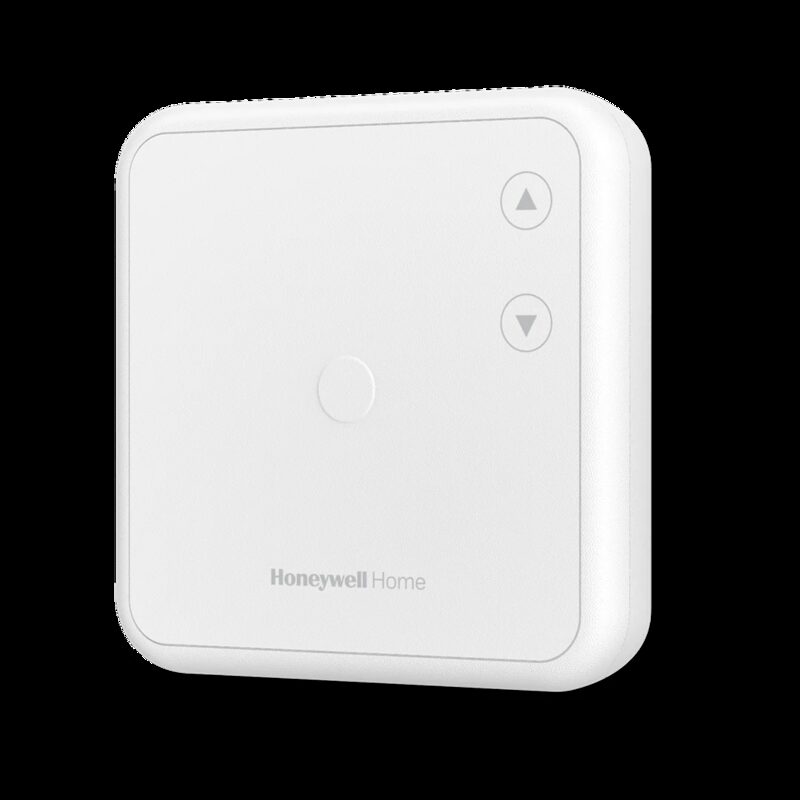
The UK-facing Honeywell Home controls sold through Lightwave fall into three groups: the DT3R wireless thermostat, the HR91 wireless radiator valve, and the wider Lightwave smart heating range that the Honeywell Home products plug into1. The DT3R is the central heating control. It is battery-powered and can be mounted anywhere without complex wiring, which removes the need to run a cable to a hallway or living room wall position3.
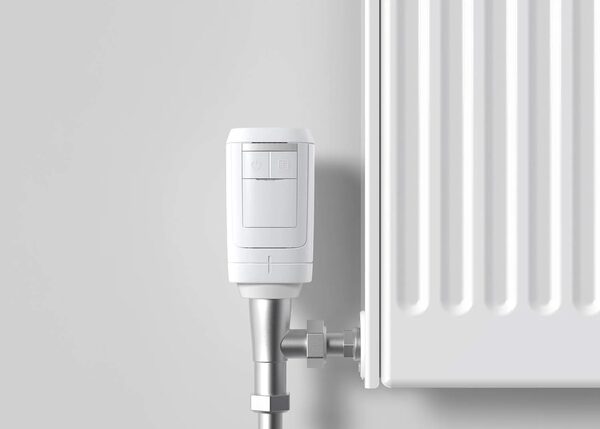
The HR91 is the radiator-level device. It regulates the temperature in an individual room, and Lightwave states that installing multiple DT3 wireless thermostats with an HR91 on each radiator can save 32% on annual heating bills, a maker claim tied to that specific configuration rather than to a single thermostat5. That figure should be read as the manufacturer's own estimate for a full multi-zone setup, not as a general expectation.
The DT3R is not limited to a boiler. It can control a boiler through a Smart Heating Switch, manage electric heaters through a Smart Socket, or run underfloor heating through a 3-Gang Smart Relay, and it also pairs with the HR91 valve, a Smart Motion Sensor, a Wire-Free Smart Switch and a Smart Dimmer3. That breadth matters for homes with mixed heating, where a gas boiler serves part of the house and electric or underfloor heating serves another.
Honeywell Home controls are also described as designed to work with both boiler and heat pump systems, and Resideo, which owns the brand, presented its smart heating controls and zoning demonstrations at InstallerSHOW 20268. The practical point for a household is that the range is a control layer, not a heat source: it sits on top of whatever boiler, heat pump or electric heater is already installed.
Wired and wireless models: which suits which home
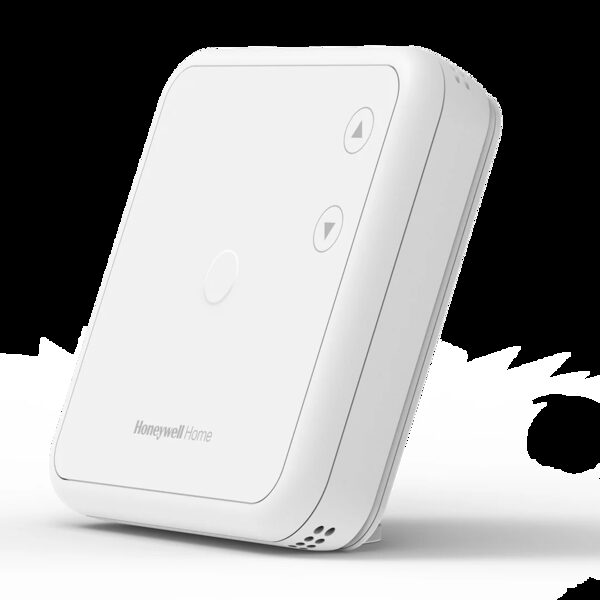
The Honeywell Home controls covered here are wireless. The DT3R is battery-powered and can be mounted anywhere, with no complex wiring needed, which suits a home where the existing thermostat sits in a poor position, such as a hallway that stays cold, or where a renovation makes chasing new cable impractical3.
Wireless is not automatically the better choice. A non-programmable wireless thermostat is described in maker guidance as the oldest, the cheapest and the least advanced and efficient type of wireless thermostat9. The distinction that matters is not wired versus wireless but what the control can do: whether it modulates the boiler, whether it supports scheduling, and whether it can be split into zones.
On that measure, the Honeywell Home range sits at different points. BEAMA's compatibility list, last updated in October 2020, records the Honeywell Home T6R-HW wireless programmable thermostat with hot water control and the T6R wireless programmable thermostat as ErP Class V, meaning a thermostat with load compensation and boiler communication7. The T4R wireless programmable thermostat is also listed as ErP Class V, while the T3R wireless programmable thermostat and the Sundial RF² Pack 1 wireless enabled timer and thermostat are listed with on/off load compensation only7.
That difference is the one a household will feel. A Class V control with load compensation and boiler communication can tell the boiler to modulate rather than simply switch on and off, which is the mechanism behind much of the efficiency gain from modern controls. An on/off control still schedules and still saves by not heating an empty house, but it cannot ask the boiler to run at a lower output. More on the classes is at ErP control classes, and the wiring implications are covered in heating control wiring.
Price: £49.95, reduced from £79.95
The Honeywell Home thermostat is listed at £49.95, reduced from £79.95, in a sale running to 20 September 20262. The black variant carries a stated saving of £302. The wireless thermostat in black is listed at a regular £139.95 including tax, and the HR91 wireless radiator valve at £79.95 including tax3.
Those are retail prices for the controls alone. They do not include installation, and the published pages do not state a fitted price. For context on what other controls cost, the Habi wireless smart thermostat is listed at £62, the Homely smart thermostat at £439.20, and the Lightwave thermostat at £229.90 reduced from £329.852. A Lightwave boiler smart control product is listed at £79.95 reduced from £99.952.
| Product | Listed price | Notes |
|---|---|---|
| Honeywell Home thermostat | £49.95, reduced from £79.952 | Sale to 20 September 2026 |
| Honeywell Home Wireless Thermostat (black) | £139.95 including tax3 | Regular price |
| Honeywell Home HR91 Wireless Radiator Valve | £79.95 including tax5 | Regular price |
| Lightwave boiler smart control | £79.95, reduced from £99.952 | Sale price |
| Habi Wireless Smart Thermostat | £6210 | Independent listing |
| Homely Smart Thermostat | £439.2011 | Maker price |
Prices are retail, not installed, and are dated to the sale period ending 20 September 2026. Where a household wants a fitted price, it is installer-quoted, and the wider cost picture is set out at heating controls cost.
Colours and finishes: white and black variants
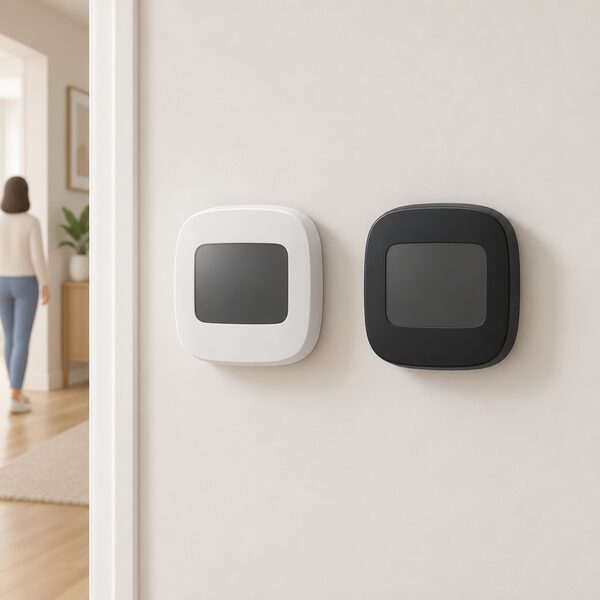
The Honeywell Home range is sold in white and black. The wireless thermostat is listed in both a white and a black version, and the black thermostat carries a stated £30 saving in the current sale1. The HR91 wireless radiator valve is listed at £79.95 including tax5.
Colour is not only cosmetic in a controls range, because the thermostat is a visible object on a wall. A black unit suits a darker wall or a modern interior, and a white unit blends with a light hallway. The published pages do not state any functional difference between the colour variants, and the specification, hub requirement and compatibility are the same across them3.
For comparison, colour options elsewhere in the controls market are wider. The Homematic IP Glass wall thermostat is offered in white and black, the Homematic IP Wall Thermostat with Humidity Sensor in white and anthracite, and the wired version in anthracite and white. The Lightwave thermostat is also available in white, with black and white variants offered2. A household choosing on finish alone will find more choice outside the Honeywell Home range, but within it the two options cover most interiors.
Scheduling and what it saves in practice
Scheduling is the mechanism by which any thermostat saves energy, and the principle is simple: keep the home warm for the hours it is occupied and switch the heating off when it is not6. Home Energy Scotland puts it plainly, that room thermostats and heating controls allow a household to set and maintain a temperature and make sure the home is warm for the times of day people are there, and switched off to save electricity when they are not6.
The size of the saving is where the evidence gets thinner. A study by tado, a smart heating provider, found that its users saved an average of 22% on their energy bills through scheduling features12. That is a maker's own study of its own users, so it describes that user group rather than a general household. On the simpler measure of turning a thermostat down, Smart Energy GB reports that turning the thermostat down by 1°C could save money each year on energy bills, with the amount varying by location and energy price13.
The Honeywell Home DT3R and HR91 support timers and schedules, zoned heating, frost protection and voice control when integrated within the Lightwave ecosystem1. The published Honeywell Home pages do not set out a step-by-step scheduling procedure. Comparable controls ship with a preset schedule altered in a timed heating schedules menu, as Ideal's Halo does14. The practical expectation is that a household sets a schedule once, adjusts it seasonally, and relies on the thermostat to hold the temperature rather than on manual intervention. More on this is at heating schedules and setback and do heating controls save money.
Smart controls and zoning: the wider picture
Zoning is the step beyond a single thermostat. The NICEIC describes zoning as allowing control of the temperature of individual rooms, with smart, programmable thermostats keeping a home heated on a schedule to help minimise bills15. That is the same principle as a single thermostat applied room by room, and it is where the HR91 radiator valve comes in.
The Honeywell Home thermostats and radiator valves are integrated within the Lightwave ecosystem for zoned heating, timers and schedules, frost protection and voice control1. The DT3R integrates with Alexa or Google Home, and the Lightwave Link Plus hub is required for app and voice control3. The wider Lightwave range supports multi-zone heating, and the Drayton Wiser Thermostat Kit 1, for comparison, offers buildable multi-zoning and is suitable for combi boilers via OpenTherm or relay switching16.
Smart thermostats more generally are described as devices that can be programmed or remotely controlled to manage a home's temperature, and they control heating and help manage how central heating is set and adjusted18. Honeywell evohome, a separate Honeywell zoning system, incorporates hot water control and remote control via smartphones or tablets20. The distinction for a household is between a single smart thermostat, which schedules one zone, and a zoned system, which schedules several. The latter costs more in hardware and installation but matches heating to occupancy room by room. More is at heating zoning and smart TRVs.
What owning a Honeywell Home thermostat means for energy independence
A Honeywell Home thermostat is a control layer, and its contribution to energy independence is indirect. It reduces the energy a household uses by not heating empty rooms and by holding a set temperature, which lowers the bill and the gas drawn from the grid. It does not change the fuel, the boiler or the supplier. The home remains on mains gas, on a gas supplier and on mains electricity for the boiler, the pump and the controls.
The dependence the range adds is digital. The DT3R and HR91 require the Lightwave Link Plus hub for app and voice control, so remote scheduling, energy monitoring and Alexa or Google Home integration depend on a home broadband connection, the hub and the manufacturer's service3. Local control at the thermostat continues without any of that, which is the important distinction: the heating still works if the internet or the cloud service is unavailable, but the remote features do not.
There is also a data limit worth stating. Smart thermostats such as Hive and Nest are described as having limitations: they can be expensive and carry an installation cost, and having one means tracking only the heating, so a household cannot keep an eye on electricity and gas usage through it21. On switching, the thermostat helps control how much energy is used but will not be a barrier to switching an energy deal20. The wider picture of local control against cloud dependence is at heating controls and energy independence, and the security and data questions are at smart heating control security and data.
Faults, compatibility and support
Fault diagnosis for a heating control starts with ruling out the boiler. Common causes of a boiler not working include no power supply, no gas supply, no water supply, low or high pressure, a frozen condensate pipe, a faulty thermostat, no pilot light, and faulty or broken controls such as a diverter valve16. A thermostat that appears to have failed is often a boiler fault, and a boiler fault is often a control fault.
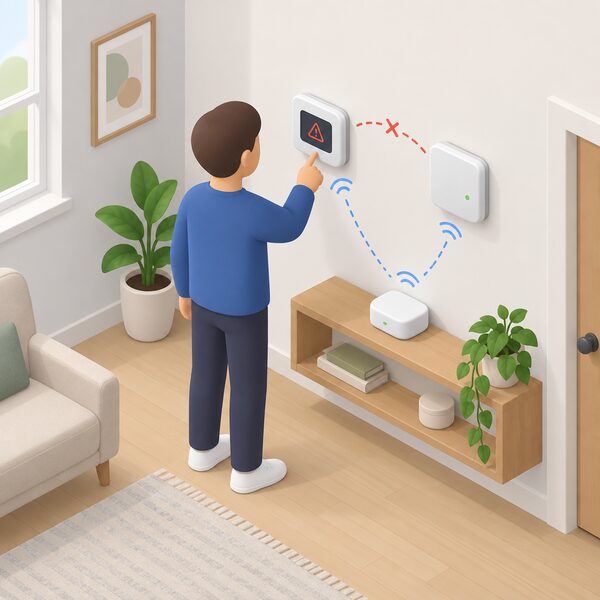
Where the fault is in the control, loss of connection is the usual cause. The Ideal Halo wireless thermostat uses fault code CF01 to indicate that the thermostat has lost connection with its smart interface, with advice to ensure the interface has power and to follow the distance and location guidance in the user guide14. The published Honeywell Home pages do not list a code table, so a Honeywell Home fault is best diagnosed by checking the hub, the receiver and the pairing rather than by looking up a code.
On compatibility, Honeywell Home smart heating controls are described as designed to work with both boiler and heat pump systems8. The DT3R controls a boiler through a Smart Heating Switch and can also manage electric heaters and underfloor heating3. For comparison, the Drayton Wiser Thermostat Kit 1 is stated as suitable for combi boilers via OpenTherm or relay switching, and can interface with heat pumps to control heating according to heat demand17. A wireless thermostat more generally works with home radiators, an individual or collective heating and hot water boiler, or a central heating system running on gas, wood, oil and so on9. Whether a specific Honeywell Home control suits a particular combi depends on the boiler's switching arrangement, and more is at smart thermostat boiler compatibility.
Sources21 cited
- Smart heating range, Lightwave, 2026
- Smart heating sale, Lightwave, 2026
- Honeywell Home Wireless Thermostat DT3R (White), Lightwave, 2026
- Honeywell Home Wireless Thermostat DT3R (Black), Lightwave, 2026
- Honeywell Home HR91 Wireless Radiator Valve, Lightwave, 2026
- Make winter feel like summer, Home Energy Scotland, 2026
- Advanced room thermostats, BEAMA, 2020
- Smart heating, zoning and training take centre stage at InstallerSHOW 2026, CIPHE, 2026
- Wireless thermostat, Netatmo, 2026
- How to buy the best smart thermostat, Which?, 2026
- Homely Smart Thermostat, Trianco, 2026
- The best way to run your central heating to save money, ivie, 2026
- Turning down thermostats, Smart Energy GB, 2026
- Halo, Ideal Heating, 2026
- Underfloor heating system, NICEIC, 2026
- What to do if your boiler breaks down at Christmas, Which?, 2025
- Wiser Thermostat Kit 1 2nd Generation, Drayton, 2026
- What is a smart thermostat, Smart Energy GB, 2026
- How a smart thermostat can save you money this winter, ivie, 2025
- What are smart thermostats, Uswitch, 2026
- Ultimate energy saving tips guide, Smart Energy GB, 2026
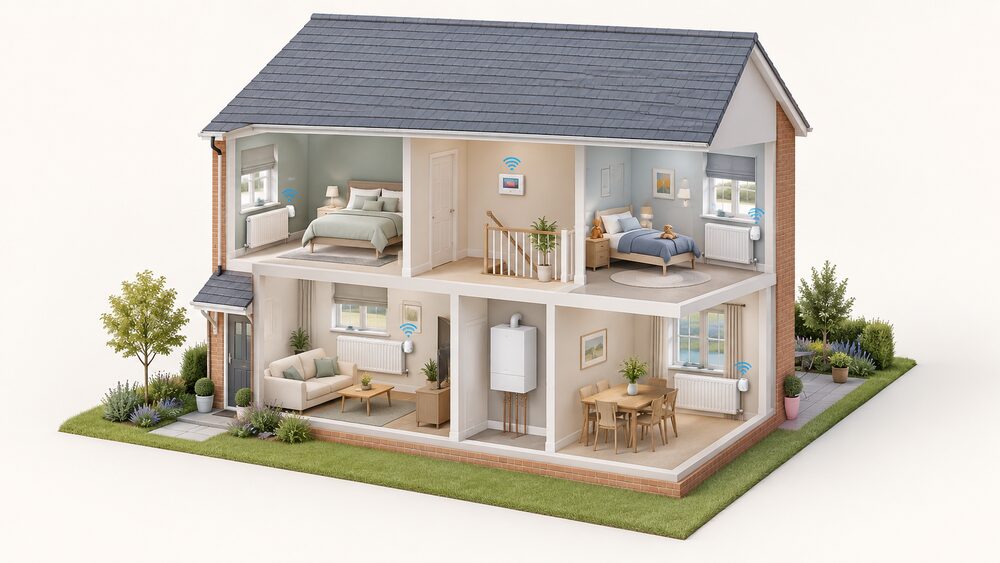 Honeywell Home evohome Zoning SystemHoneywell Home evohome lets you heat different rooms at different times instead of one temperature for the whole house.