
In this guide
Homematic IP is a German-developed smart home system whose heating side is built from battery-powered radiator thermostats, wall thermostats and motorised floor heating controllers, all talking to each other over a wireless protocol rather than through a boiler connection. The radiator thermostat basic replaces the head on an existing thermostatic radiator valve and supports stand-alone push-to-pair operation, so a single radiator can be scheduled without any hub at all1. Add the Access Point and the free app and the same devices join a system the maker describes as supporting up to 20 Homematic IP wireless devices2.
The system's selling point for a household is that a good part of it keeps working when the internet does not. The wall thermostat with humidity sensor keeps saved heating profiles, temperature measurement and automatic temperature reductions when windows are open running without an internet connection or access point3. The Home Control Unit goes further, with an offline mode that works independently of the Homematic IP Cloud and stores and executes all control commands and automation routines locally4.
What it does not do is control a boiler directly. These are zone and room controls that sit on radiators, underfloor manifolds and electric heaters, and the boiler keeps whatever room thermostat, programmer or interlock it already has. That distinction shapes everything below, from what a starter set contains to what the household still depends on.
What Homematic IP is, and where the system comes from
Homematic IP is developed in Germany and VDE-certified, with the maker stating that the certification confirms tested protection mechanisms against unauthorised access for IT security in residential and commercial properties5. The Home Control Unit page records that the VDE has certified the smart home system for the seventh time in a row in the areas of protocol, IT and data security4. Server locations are in Germany, and the maker describes a systematic avoidance of personal data as part of the privacy position5.
The heating side of the system is a set of wireless devices rather than a boiler control. Radiator thermostats are described as replacing existing radiator thermostats with electronic wireless versions6. The wall thermostat with humidity sensor connects by wireless link to Homematic IP radiator thermostats or a floor heating controller, and the maker states it controls both classic radiators and modern underfloor heating3. A separate tutorial covers control of electric heating systems with an actuator and a wall thermostat6.
That architecture matters for a UK household because it means the system is additive. It does not replace the boiler interlock, the programmer or the cylinder thermostat, and it does not modulate a boiler. It gives per-room control on top of whatever heat source exists, which is why the maker's own heat pump page lists underfloor heating controllers and wall thermostats as useful for temperature control rather than as the heat pump's own controls7. For the wider picture of what room-by-room control does and does not change, heating controls sets out the full UK position.
The range: radiator thermostats, wall thermostats and floor heating controllers
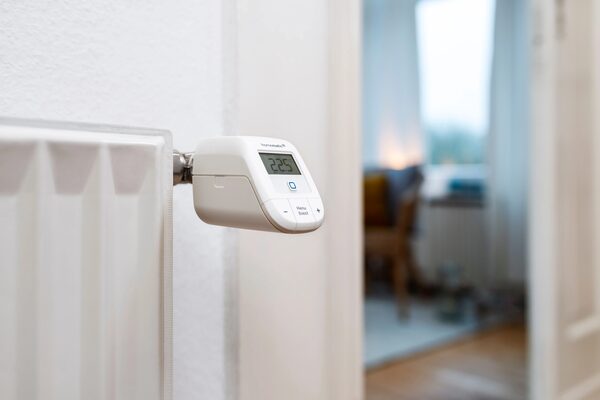
The range splits into three jobs. Radiator thermostats sit on the valve and control one radiator each. Wall thermostats measure a room and send commands to radiator thermostats, floor heating controllers or switching actuators. Floor heating controllers drive motorised valve actuators on a manifold, one channel per heating circuit.
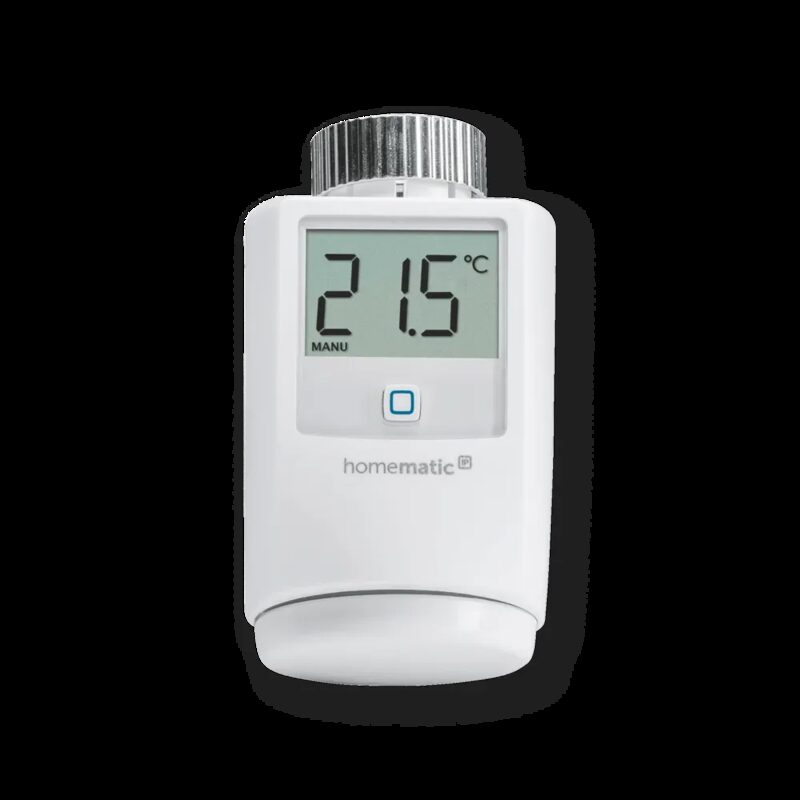
On the radiator side, the maker lists the radiator thermostat basic, the radiator thermostat Evo, the radiator thermostat compact plus and a UK-specific radiator thermostat. All are wireless and all carry an IP20 rating1. The basic model supports stand-alone push-to-pair operation with manual adjustment directly on the device, and in that mode can be combined with up to eight window and door contacts and a wall thermostat1. Its typical open-area RF range is given as 250 m1.
The wall thermostats come in several forms: the wall thermostat with humidity sensor in white and anthracite, a version with switching output for brand switches at 230 V, a wired wall thermostat with humidity sensor, and two glass wall thermostats, one of which adds a CO2 sensor3. The glass models can control 230 V actuators for underfloor heating and can also be combined with radiator thermostats, underfloor heating controllers and switching actuators for electric heating15.
| Device | Type | Key published detail |
|---|---|---|
| Radiator thermostat basic | Radiator TRV head | Stand-alone push-to-pair, up to 8 window contacts, 250 m open-area RF range1 |
| Radiator thermostat Evo | Radiator TRV head | Wireless, IP208 |
| Radiator thermostat compact plus | Radiator TRV head | Wireless, IP209 |
| Radiator Thermostat (UK) | Radiator TRV head | Product reference 151038A0, IP2010 |
| Wall thermostat with humidity sensor | Wall thermostat | Wireless link to radiator thermostats or floor heating controller3 |
| Glass wall thermostat | Wall thermostat | Controls 230 V underfloor actuators, IP2015 |
| Glass wall thermostat with CO2 sensor | Wall thermostat | Controls 230 V underfloor actuators, IP2016 |
| Floor heating controller, 8 channels | Manifold controller | 230 V/50 Hz, IP20, up to 8 heating circuits17 |
| Floor heating controller, 12 channels | Manifold controller | IP20, 0 to 50 °C operating temperature18 |
| Wired underfloor heating controller, 6 channels | Manifold controller | Needs wired and central access points18 |
The floor heating controllers are the part of the range with the most variation in what they need. The eight-channel motorised unit gives precise temperature control for up to eight heating circuits and can be used for heating and cooling, also directly with a wall thermostat via push-to-pair without an access point or internet17. The twelve-channel motorised controller receives temperature data from wall thermostats and, with stepless motor-regulated valve drives, automatically adjusts flow rate to reach setpoint temperatures in each room19. For a fuller treatment of manifolds and wiring, underfloor heating controls covers the UK conventions.
Starter sets: what is in the box and what else is needed
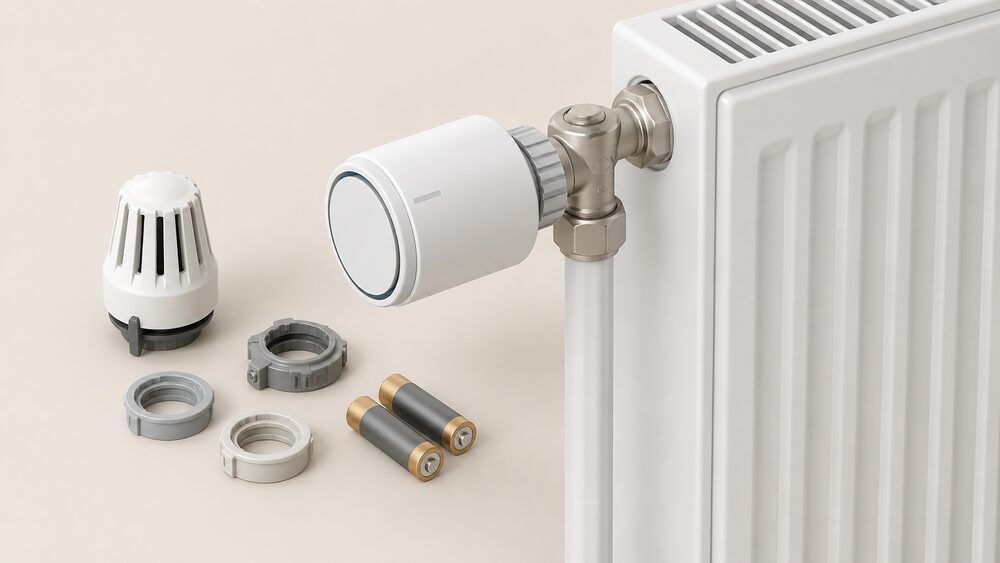
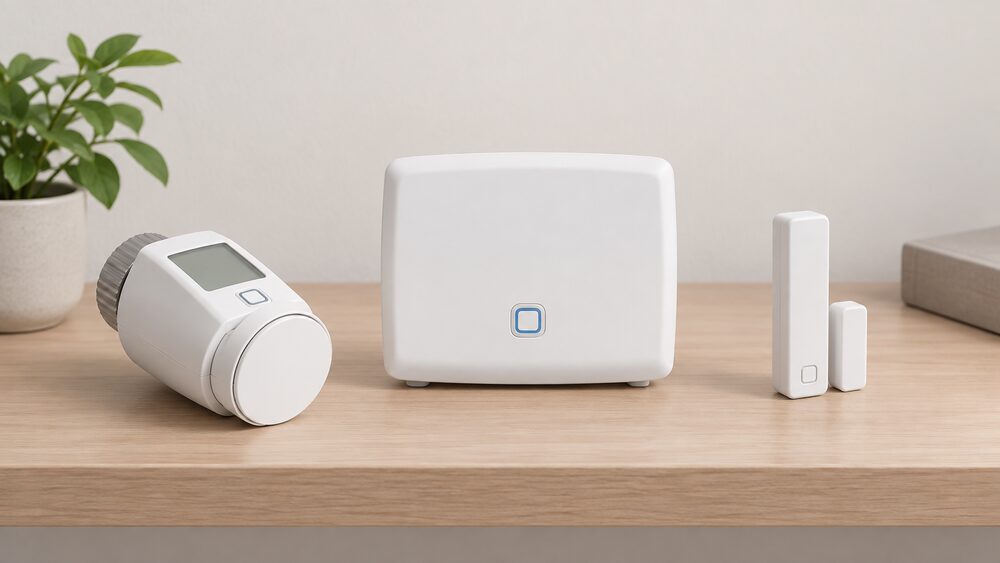
Two starter sets cover most first purchases. The Heating Starter Set basic contains the Access Point basic, which serves as the control centre, and a Radiator Thermostat basic, plus adapters and batteries2. The Starter Set Heating contains an access point and two radiator thermostats, providing individual temperature curves with up to three heating profiles20.
The basic set is the entry point: the maker describes it as a starter set for easy entry into a small smart home with up to 20 Homematic IP wireless devices, with installation that does not require a specialist, the thermostat screwing onto the existing radiator valve with adapters supplied to fit almost all common valve types2. It carries product reference 160955A0, and the included radiator thermostat is listed at 153412A22. The Starter Set Heating carries reference 156537A0A20.
What else a household needs depends on the job. For radiator-only control, the set plus extra radiator thermostats covers a house. For underfloor heating, a floor heating controller and a wall thermostat are needed, and the twelve-channel motorised controller needs the access point in addition to the actuator18. For electric heating, the maker's tutorial covers connecting a wall thermostat with a switching actuator6. The pluggable switch, anthracite, switches electric heating on and off when paired with the wall thermostat and a window or door contact21.
How the controls work day to day
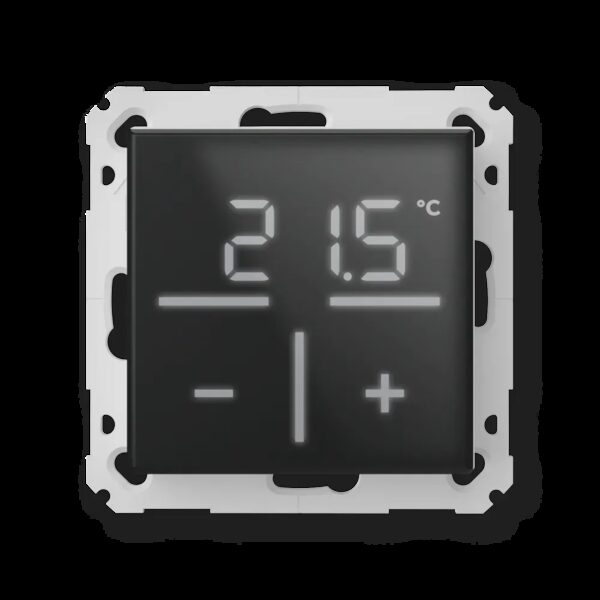
Scheduling is the core function. The radiator thermostat basic offers up to three adjustable heating profiles and 13 changes per day1. The wall thermostat with humidity sensor offers three heating and three cooling schedules with up to 13 changes per day3, and the eight-channel floor heating controller offers up to six profiles with 13 temperature changes per day, with heating and cooling profiles set through the free app17.
Window-open detection works two ways. With a window and door contact fitted, the room temperature is automatically lowered during ventilation when the contact is connected to Homematic IP radiator thermostats, with an individually definable lowering temperature and automatic restoration of the comfort temperature on closing22. Without a contact, detection is triggered by a sudden drop in temperature in the room, whereupon the thermostat reduces output2. The maker's tutorial states plainly that wireless window contacts detect when windows are opened and closed and automatically adjust the room temperature6.
Voice control runs through Amazon Alexa or Google Assistant across the radiator thermostat basic, the radiator thermostat Evo, the radiator thermostat compact plus, the glass wall thermostat, the glass wall thermostat with CO2 sensor, the wall thermostat with humidity sensor and the wired wall thermostat with humidity sensor1. On the Home Control Unit, voice assistants such as Amazon Alexa and Google Assistant work in online mode4.
The app itself handles setup guidance, rooms, groups, automations, secure access while on the go, push notifications and the display of measurements such as temperatures and status indicators5. It is free, available free of charge for both Android and iOS2. Independent guidance notes that most smart heating controls link to a phone and can be controlled via smartphone, tablet or laptop, or by telling a smart speaker what is wanted23, and that a smart thermostat connects to Wi-Fi, which allows it to form part of a more connected home heating system24.
Connectivity: what runs with and without the internet
This is the section that decides how independent a Homematic IP installation really is, and the answer differs by device.
The wall thermostat with humidity sensor keeps saved heating profiles, temperature measurement and all automatic temperature reductions when windows are open running without an internet connection or access point3. The radiator thermostat basic supports stand-alone push-to-pair operation with manual adjustment on the device1. The eight-channel floor heating controller can run directly with a wall thermostat via push-to-pair without an access point or internet17. The twelve-channel motorised controller needs a wall thermostat for stand-alone operation, and in that mode the actuator does not need an access point or an app18.
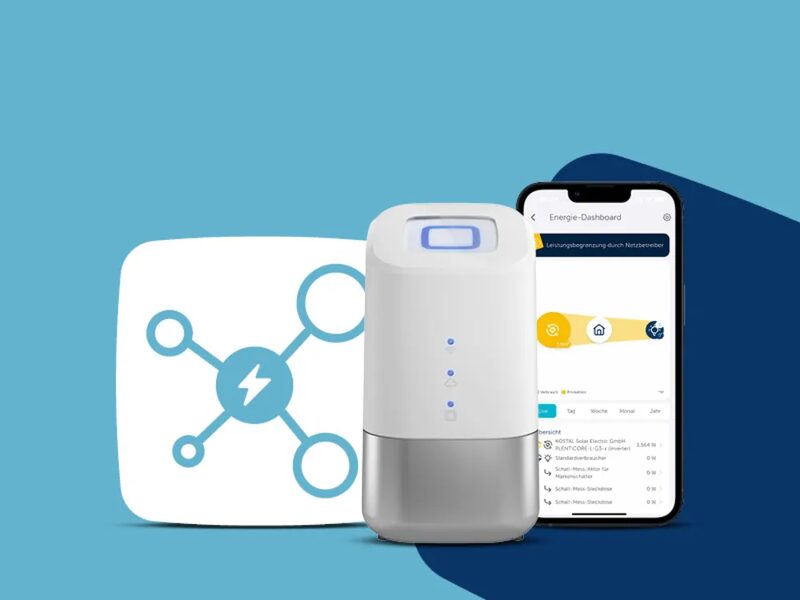
The Home Control Unit is the strongest local option. It has an online mode via the Homematic IP Cloud and an offline mode that works independently of the cloud without an internet connection, with all control commands and automation routines stored and executed locally4. In offline mode it needs no registration or user account, and settings, measurement data and automations are saved locally25.
Against that, the Access Point basic requires an active internet connection via Wi-Fi to ensure communication between the Homematic IP devices and the app2. The radiator thermostat in the Starter Set Heating requires the Homematic IP Access Point with the free smartphone app and free cloud service, or third-party solutions from partners, to enable operation20. The wired six-channel underfloor controller needs both the wired and central access points18.
The practical position is that local control at the device and at a wired programmer continues without broadband, while app scheduling from away, energy monitoring and remote diagnostics depend on a home broadband connection, the maker's cloud and the app. That is the same shape of dependence described across heating controls and energy independence.
Security, data and certification
The maker's security position rests on three claims: development in Germany, VDE certification, and server locations in Germany with what it describes as the systematic avoidance of personal data5. The VDE certification is stated to confirm tested protection mechanisms against unauthorised access for reliable IT security in residential and commercial properties5. The Home Control Unit pages record that the VDE has certified the smart home system for the seventh time in a row in the areas of protocol, IT and data security25.
On data, the radiator thermostat basic page states that no personal data is collected except for the IP address1. The Home Control Unit records that no registration or user account is necessary, with the server located in Germany25. In offline mode, all settings, measurement data and automations are saved locally25.
The encryption detail is thinner in the published material than the certification claims. The maker's pages describe VDE-certified protocol, IT and data security rather than naming a specific cipher on the heating product pages, so a household reading the marketing should treat the certification as the verifiable statement and the encryption specification as something to confirm with the maker before relying on it. The broader questions of what smart heating controls send and where are covered in smart heating control security and data.
Electric heating and smart meter integration
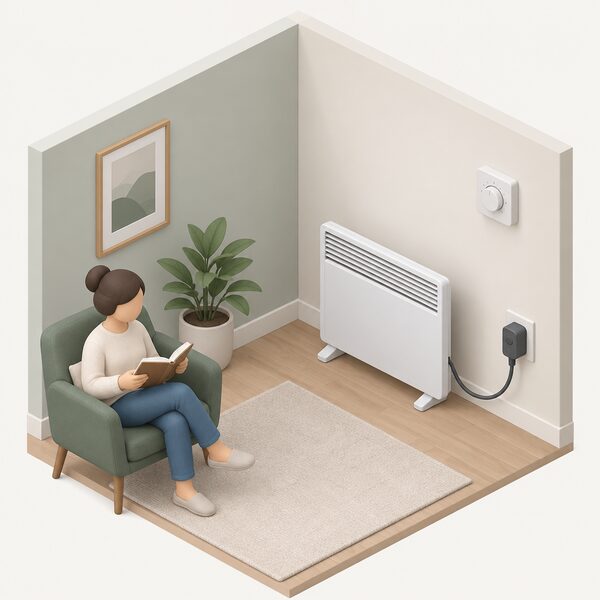
Beyond radiators and underfloor heating, the system reaches electric heating and metering. The maker's tutorial covers connecting a wall thermostat with a switching actuator to control electric heating systems6. The pluggable switch, anthracite, switches the electric heating on and off with precision when paired with the wall thermostat and a window or door contact, with the wall thermostat continuously measuring room temperature and sending values to the pluggable switch21. The pluggable switch and meter adds wireless connection and an IP20 rating26.
The smart meter interface is a separate device, wireless and IP20 rated27. Official Welsh Government guidance notes that smart meters are independent of smart heating controls, but that combining the two can enhance the ability to manage a home's heating and energy use remotely28. That is the accurate framing: the interface lets the system read what a smart meter reports, and it does not replace the meter or the supplier relationship.
The temperature and humidity sensors extend the system's reach into monitoring. The indoor sensor with display measures indoor temperature and humidity, shows values on the device display, controls radiator thermostats or underfloor heating actuators, and gives ventilation recommendations in the app29. The version without a display carries the same compatibility with radiator thermostats, underfloor heating actuators and switch actuators for electric radiators30. The wired and wireless ranges can be combined with each other14.
For homes on electric radiators or panel heaters rather than gas, electric heating controls sets out how switching actuators and room thermostats are used in UK practice.
What owning Homematic IP means for energy independence
The honest summary is that Homematic IP gives a household strong local control over rooms and weak control over the heat source. Radiator thermostats, wall thermostats and the eight-channel floor controller can all run without an access point or internet, and the Home Control Unit stores and executes automations locally1. That is a genuine independence gain: schedules, window-open reductions and per-room temperatures keep working through a broadband outage.
What remains dependent is the boiler or heat pump itself, which the system does not control, and the gas or electricity supply behind it. The Access Point basic needs an active Wi-Fi internet connection to link devices to the app2, and the cloud service that pairs with it is the maker's. Remote scheduling, energy monitoring and remote diagnostics run through that cloud and the app. The longest guarantee and the firmware path also sit with the manufacturer, as the September 2026 cloud certificate notice shows22.
The maker's headline saving claim is up to 33% in heating energy for a system of wall thermostat, radiator thermostat and window or door contact, and the same figure appears on the wall thermostat page with the qualification that it depends on user behaviour, building conditions and heating system3. That is a maker's figure, not an independent measurement, and it should be read as such. Independent bodies describe the general mechanism rather than a number: the Energy Saving Trust notes that most smart heating controls link to a phone and can be controlled remotely23, and Smart Energy GB notes that a smart thermostat connects to Wi-Fi and forms part of a more connected home heating system24.
For a household weighing the system, the questions to settle are which rooms need control, whether the boiler or heat pump has its own modulating controls that the Homematic IP layer will sit alongside, and how much of the setup needs to keep working without broadband. The smart TRVs and smart thermostats pages cover the alternatives, and heating controls cost covers what the wider category typically involves.
Sources30 cited
- Radiator thermostat basic, Homematic IP, 2026
- Heating Starter Set basic, Homematic IP, 2026
- Wall Thermostat with humidity sensor 3, Homematic IP, 2026
- Home Control Unit, Homematic IP, 2026
- What is Homematic IP, Homematic IP, 2026
- Advanced climate control, Homematic IP, 2026
- NIBE heat pumps, Homematic IP, 2026
- Radiator thermostat Evo, Homematic IP, 2026
- Radiator thermostat compact plus, Homematic IP, 2026
- Radiator Thermostat (UK), Homematic IP, 2026
- Wall Thermostat with Humidity Sensor, anthracite, Homematic IP, 2026
- Wall thermostat with switching output for brand switches, 230 V, Homematic IP, 2026
- Wired Wall Thermostat with Humidity Sensor, Homematic IP, 2026
- Window and door contact, optical, Homematic IP, 2026
- Glass wall thermostat, Homematic IP, 2026
- Glass wall thermostat with CO2 sensor, Homematic IP, 2026
- Floor Heating Controller, 8 channels, motorised, Homematic IP, 2026
- Floor heating controller, 12 channels, motorised, Homematic IP, 2026
- Hydraulic balancing, Homematic IP, 2026
- Starter Set Heating, Homematic IP, 2026
- Pluggable Switch, anthracite, Homematic IP, 2026
- Basic climate control, Homematic IP, 2026
- Smart homes and lower carbon footprint, Energy Saving Trust, 2026-01-21
- What is a smart thermostat, Smart Energy GB, 2026-08-19
- Home Control Unit, anthracite, Homematic IP, 2026
- Pluggable Switch and Meter, Homematic IP, 2026
- Interface for smart meters, Homematic IP, 2026
- Smart meters, Welsh Government, 2026
- Temperature and humidity sensor with display, indoor, anthracite, Homematic IP, 2026
- Temperature and humidity sensor, indoor, anthracite, Homematic IP, 2026
 Home Assistant for Home Energy MonitoringCan Home Assistant show what your smart meter and solar panels are doing in one place?
 Homematic IPConsumer smart-home system with cameras, doorbells and central control units householders buy and own.
 Homematic IP CCU3 Central Control UnitDoes your Homematic IP setup keep working when the internet goes down?