In this guide
Deye is a Chinese inverter manufacturer whose SUN series hybrid inverters are sold into UK homes, mostly through installers rather than retail channels. The company behind the brand is Ningbo Deye Inverter Technology Co., Ltd, with a company address at No.26, Yongjiang Road, Beilun, Ningbo, 315806, China, and a service email at service@deye.com.cn1. Deye Technology Group states it was established in 19902.
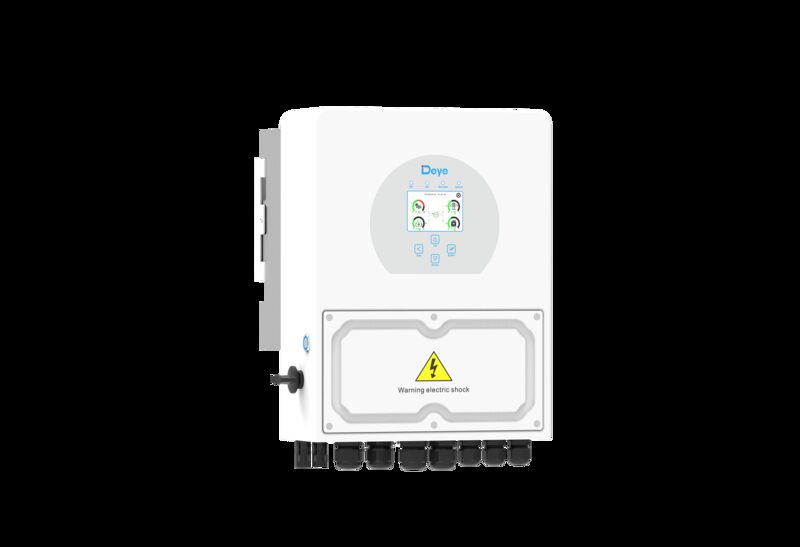
The residential offer is a hybrid inverter: a single unit that manages solar generation, battery charging and discharge, and the supply of power to the home. The SUN single-phase hybrid range is published at 3 to 6kW in the SG04LP1 family, with further single-phase hybrid families listed alongside it and three-phase hybrids at 5 to 12kW3. Deye's own compatibility list names the SUN models that pair with approved batteries, and the warranty runs for 5 years as standard with a 10 year option5.
What follows is the range as the manufacturer publishes it, the certification position for UK grid connection, and the dependencies a household takes on by fitting one.
What Deye makes: inverters and beyond the inverter
Deye's product range is wider than inverters. The company lists solar inverters, variable frequency air conditioner controllers, DC solar water pump controllers and heat pump air conditioners among its products2. For a household, the relevant part is the inverter, but the wider catalogue explains why the brand appears in off-grid and agricultural settings as well as on domestic roofs.
The inverter side splits into string inverters and hybrid inverters. Deye states that its full series of string inverters supports VSG application, and that with a frequency droop feature the string inverter is capable of use in poor grid areas1. In a VSG application, Deye states the string inverter can work with a diesel generator directly without any additional energy management device1. That is a generator-tolerance claim rather than a domestic feature, but it indicates the design intent behind the range.
The hybrid inverters are the models most UK homes would see. Deye's energy storage guidance describes the intended flow: during the day the PV system generates electricity which is provided to the loads initially, then the excess energy charges the battery via the Deye hybrid inverter, and stored energy can be released when loads require it8. That is the standard self-consumption pattern, and it is the reason a hybrid inverter is specified rather than a plain string inverter.
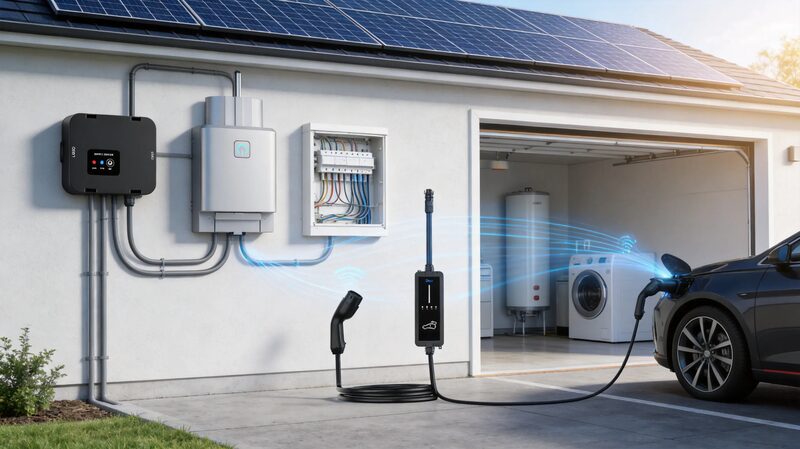
Deye also sells a smart energy management system, and states that all Deye hybrid inverters can be upgraded to support it9. The system includes wireless zero export control9. Alongside it sits the Deye Smart EV Charger, which Deye states can be directly connected to any AC port of the inverter and is controlled by the inverter via LoRa communication10.
The SUN range: single-phase models and sizes for UK homes
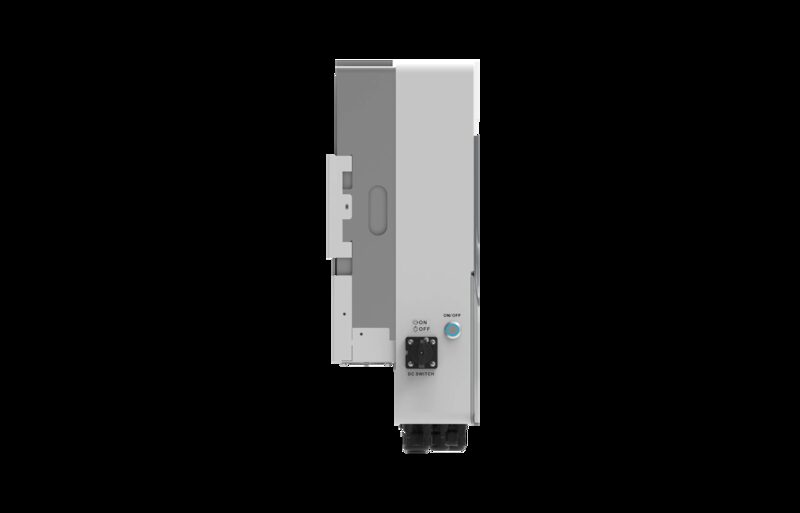
The SUN naming convention carries the output in kilowatts and a family code. Deye's approved battery list names the models in scope: SUN-3.6/5/6/7.6/8K-SG01LP1-EU, SUN-5/6/7.6/8K-SG01LP1-US, SUN-3.6/5/6K-SG03LP1-EU, SUN-3/3.6/5/6K-SG04LP1-EU, SUN-3.6/5/6/7.6/8K-SG05LP1-EU, SUN-5/6/8/10/12K-SG04LP3-EU, SUN-12/14/16K-SG01LP1-EU, SUN-8K-SG02LP2-US and SUN-14/15/16/18/20K-SG05LP3-EU/AU-SM25. The EU suffix marks the European variant; the US suffix marks a different grid standard and is not the UK model.
For a UK house, the single-phase hybrid families are the ones that matter. The SUN-3/3.6/5/6K-SG04LP1-EU is described by Deye as a single phase hybrid inverter of 3 to 6kW with two MPPT trackers and low voltage battery support3. The SUN-3.6/5/6K-SG03LP1-EU is a 3.6kW to 6kW single-phase hybrid with intelligent air cooling, and Deye states it supports multiple batteries in parallel and can AC couple to retrofit an existing solar system4.
| Model family | Type | Output | Notable published features |
|---|---|---|---|
| SUN SG04LP1-EU | Single phase hybrid | 3 to 6kW | 2 MPPT, low-voltage battery supported3 |
| SUN SG06LP1-EU | Single phase hybrid | Not published | Single phase hybrid inverter4 |
| SUN SG05LP1-EU | Single phase hybrid | Not published | Single phase hybrid inverter9 |
| SUN SG01HP3-EU | Three phase hybrid | 5 to 12kW | 2 MPPT, high-voltage battery supported5 |
Above the domestic sizes, Deye's warranty terms note that the company can offer an onsite commission service for big scale plant at inverter capacity 500kW6. That is a commercial service, not a domestic one, and it marks where the residential range ends.
Battery compatibility: which SUN models pair with which storage
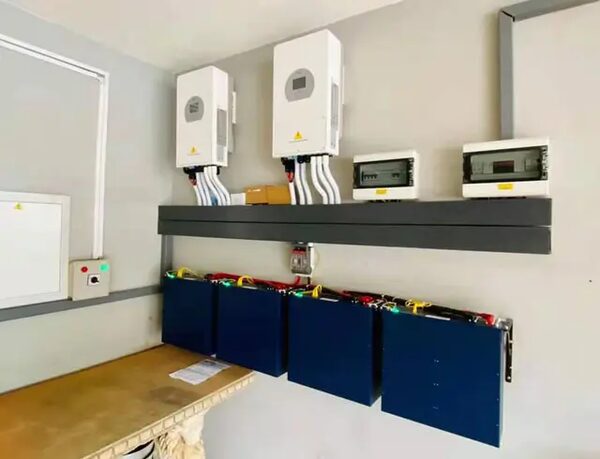
Deye publishes an approved battery list, and the wording is careful. The list states that the named inverter models are compatible with the brand batteries below, and then adds that the purchaser should confirm with the battery supplier if the battery is compatible with the Deye inverter5. That second sentence matters: the compatibility list is a starting point, not a guarantee, and the confirmation sits with the battery supplier rather than the inverter maker.
The list names battery brands and models against the inverter families. ACE is listed with the R48100 model, and SACRED SUN with the SSIF2P15S48100C, FCIFP48100A and SSIFP48100A models5. An earlier version of the same list carries the same purchaser-confirmation wording, so the position has been consistent across revisions11.
On the inverter side, the supported battery chemistry is broad. The SUN-3.6/5/6K-SG03LP1-EU datasheet states lead-acid or lithium-ion, and states that the model supports multiple batteries in parallel4. Parallel support is what allows a household to start with one module and add capacity later, provided the added units are on the approved list and the battery supplier confirms compatibility.
There is a second route to the same hardware. Sunsynk inverters are optimised for use with Sunsynk LiFePO4 batteries and are guaranteed compatible across the entire Sunsynk battery range, and the Sunsynk range covers single-phase systems from 3.6kW to 8kW for residential use, three-phase systems from 8kW to 12kW for larger homes and light commercial premises, and high-voltage commercial inverters from 20kW to 50kW12. The two brands sit in the same market segment, and a household comparing them should read the battery guarantee terms on each side rather than assume they are interchangeable.
Topology and technical basics: what 'non-isolated' means in practice
The SUN-3.6/5/6K-SG03LP1-EU datasheet lists the inverter topology as non-isolated4. In plain terms, a non-isolated inverter has no transformer separating the DC side from the AC side, which is the common design for modern hybrid inverters: it is lighter, cheaper and generally more efficient than a transformer-based unit. The trade-off is that the DC and AC circuits share a reference, so the earthing and residual current arrangement is a design decision for the installer rather than a given.
The wider technical picture is standard. An inverter converts the DC into an alternating current (AC), which is what allows a solar array to feed domestic circuits13. A device called an inverter connects the solar panels or wind turbines to the main wiring in the house14. The inverter is therefore the boundary between the array and the installation, and its certification and settings determine what the grid sees.
Cooling and communications are worth noting because they shape where a unit can be sited. The SUN-3.6/5/6K-SG03LP1-EU uses intelligent air cooling, and the SUN-7.6/8K-SG02LP1-EU-AM2 does the same, with RS485, RS232 and CAN communications4. Air cooling means ventilation clearance matters, and the communications ports are what a monitoring or battery link uses.
One practical point on fault-finding: fault codes are not standardised across brands, models or firmware versions, and the same number can have different meanings on different inverter brands and models15. A fault light alone does not identify the exact problem; the display carries the complete code and message15. Grid voltage mismatch is a recognised cause of solar inverter faults16. Deye's own position is that the frequency droop feature makes its string inverters usable in poor grid areas1.
G99 and certification: what Deye holds for UK grid connection
Grid connection in Great Britain runs on the EREC G98 and G99 standards, and the threshold is the first thing to establish. Apply to connect is for larger installations exceeding 3.68kWp and requires a G99 application7. Below that, a single-premises connection follows the G98 route17.
The G99 Fast Track process has its own conditions. It is available for installations onto a single-phase connection whereby inverter capacity of 3.68kW generation and 3.68kW storage per phase, with total export limited by a G100 device to 3.68kW18. In all cases, any generating units, including electricity storage, connected through this process must use EREC G99 or G98 type tested inverters18. Where a power generating unit was installed before April 27, 2019, EREC G59 or G83 type tested inverters can also be used18.
Northern Ireland runs a separate fast track route. A G99 NI fast track connection application requires a compliance certificate with test results19. That is the document an installer supplies, and it is the reason a certificate listing matters as much as the inverter's headline specification.
Deye's certificate catalogue shows the position moving. On 16 September 2026 Deye added an England G99 certificate for the SUN-(7-10.5)K-G02P1-EU-AM2 single phase string inverter20. On 17 September 2026 it added four Spain certificates for the SUN-(29.9-50)K-SG02HP3-EU-BM4 three phase high voltage hybrid inverter models20. On 18 August 2026 the catalogue listed EN IEC 61851, RED and CB IEC 61851 certificates for the SUN-EVSE(22-11)K01-EU-AC and SUN-EVSE(22-11)K01-DE-AC chargers20.
The EU Declaration of Conformity trail runs back further. Ningbo Deye Inverter Technology Co., Ltd. issued declarations for the listed SUN-G04 models on 27 September 2023, for the listed hybrid inverter models on 1 November 2023, and for the Smart CT on 15 January 202520. Declarations of conformity are the manufacturer's own statements of compliance, and they sit alongside, not instead of, the type test certificates the network operator asks for.
Beyond the inverter: EV chargers, solar air conditioning and water pumps
Deye's catalogue extends past the inverter into appliances that can be run from the same DC or hybrid system. The Deye Smart EV Charger can be directly connected to any AC port of the inverter and is controlled by the inverter via LoRa communication10. That integration means charging can be scheduled against generation and battery state rather than against the grid alone.
The solar air conditioning line is the more unusual part of the range. Zhejiang Deye HVAC Technology Co., Ltd. is described as a China solar air conditioner manufacturer and custom supplier, and Deye Technology Group states it was established in 19902. The company lists a hybrid AC/DC solar air conditioner among its products2. Deye's news page records that its solar air conditioner debuted at IFA 2026 in Berlin, and lists a guide titled How Many Solar Panels Do You Need for a 2 Ton AC in 2026? Complete Guide2.
The DC solar water pump controllers in the catalogue point at agricultural and off-grid use rather than domestic heating2. For a household, the relevant integration question is whether the inverter can coordinate with other loads. Independent guidance notes that home energy management systems can also integrate EV chargers, heat pumps and PV diverters21. Official guidance on energy-saving materials treats smart diverters as including other microgeneration systems such as ground and air source heat pumps22. A diverter's common application is water heating, integrated with electric water heaters or immersion heaters, to divert surplus solar energy directly into the cylinder23.
What owning a Deye inverter means for household energy independence
The independence a Deye hybrid inverter delivers is real but bounded, and the boundaries are worth stating plainly. The unit can run the home from solar and battery, and Deye's modes determine how far that goes. In Zero Export To Load, the hybrid inverter will neither provide power to the home load nor sell power to grid, and will only provide power to the backup load connected8. In Zero Export To CT, the hybrid inverter will not only provide power to the backup load connected but also give power to the home load connected, and an external CT is needed8. In Selling First, the mode allows the hybrid inverter to sell back any excess power produced by the solar panels to the grid8.
The built-in CT in the zero export modes detects power flowing back to the grid and reduces the power of the inverter only to supply the local load and charge the battery8. Where PV and battery power are insufficient, the system takes grid energy as a supplement8. That is the honest description of a grid-tied hybrid: it reduces import and can eliminate it for periods, but it does not remove the connection.
The dependencies that remain are several. The grid connection and the supplier stay in place unless the system is specified as off-grid. The battery is a third-party product, and Deye's own list asks the purchaser to confirm compatibility with the battery supplier5. Service runs through a Chinese address and a Chinese hotline, with a stated response within an hour of a telephone enquiry, and Deye states it does not offer an installation service6. Deye also states it does not offer onsite debugging service for monitoring device6. The warranty is 5 years from installation with a 10 year option, and no more than 5 years, or 10 years optional, and half years from the date of delivery from the Deye factory6.
"The warranty period is 5 Years (10 Years Optional) from the date of installation, and no more than 5 Years (10 Years Optional) and half years from the date of delivery from Deye factory"
The warranty exclusions are broad and worth reading before purchase. Free warranty service is provided for products with a valid warranty, and excluded from warranty are damages due to breaking the product seal or opening the casing without permission from Deye, transport damage, incorrect installation or commissioning, failure to observe the user manual, the installation guide and the maintenance regulations, unauthorised modifications, changes or attempted repairs, incorrect use or inappropriate operation, insufficient ventilation of the device, failure to observe the applicable safety regulations, and force majeure6. Deye takes on the freight cost for products under warranty, while customers take on the custom clearance costs incurred6. OEM products are not applicable with these warranty terms and conditions, and warranty for OEM product should comply with the contract6.
On the wider case for self-generation, the industry body's position is that more homegrown energy means greater energy independence24. A diverter increases self-consumption, reduces electricity bills, and enhances the overall efficiency of the solar power installation23. Those are the mechanisms a Deye hybrid system uses. What it does not do is remove the grid, the battery supplier or the manufacturer from the household's arrangements.
Sources24 cited
- Deye Inverter homepage, Deye
- Hybrid AC/DC solar air conditioner, Deye
- SUN-3/3.6/5/6K-SG04LP1-EU product page, Deye
- SUN-3.6/5/6K-SG03LP1-EU datasheet, Deye
- Deye approved battery list DY-LV48-0109, Deye, 24 July 2025
- Deye Inverter Warranty Terms and Conditions, Deye
- Building regulations and renewables guidance, Bedford Borough Council
- Deye solar energy storage solutions, Deye
- SUN-7.6/12K-SG02LP1-EU-AM2 datasheet, Deye
- Deye Smart EV Charger, Deye
- Deye approved battery list DY-LV48-0076, Deye, 3 January 2024
- Sunsynk inverter range, Sunsynk
- How do I retrofit my home: solar panels, Oxfordshire County Council
- What is domestic distributed generation, UK Power Networks
- Solar inverter fault codes, SolaX Power
- Managing voltage changes in your property, Electricity North West
- G98 Single Premises, Energy Networks Association
- G99 Fast Track process, Electricity North West
- G99 NI fast track installations, NIE Networks
- Declaration of Conformity catalogue, Deye
- Making the most of your solar PV panels, Centre for Sustainable Energy
- VAT energy saving materials manual, HM Revenue & Customs
- What is an energy diverter, myenergi
- Solar Energy Scotland manifesto, Solar Energy UK
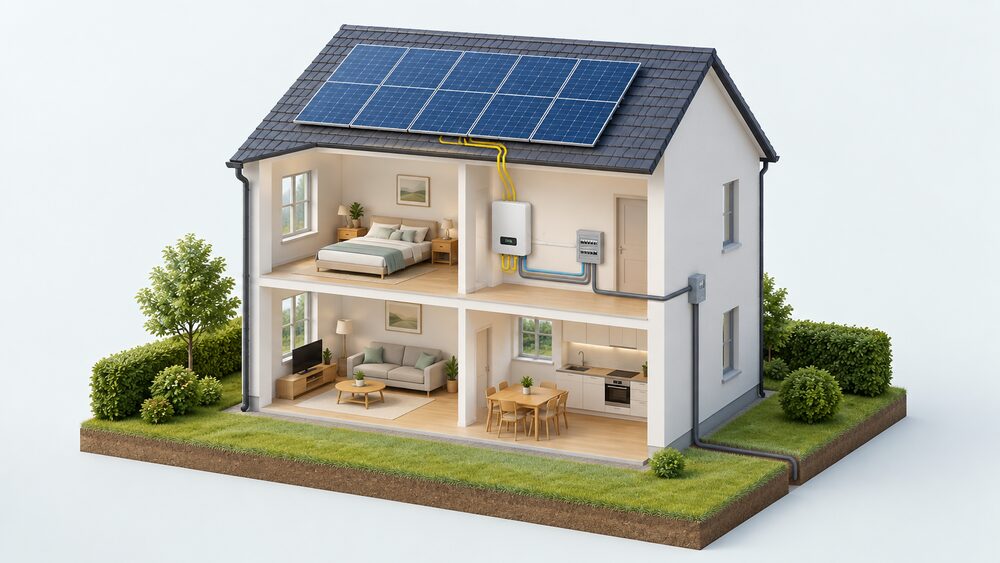 Deye Hybrid Inverters and Battery StorageWhich batteries work with a Deye hybrid inverter, and will yours still be supported years from now?