
In this answer
Short answer
The Market-wide Half-Hourly Settlement Programme is due to migrate all meters by May 2027, and the programme is reported as remaining on track for that date1. That is the deadline answer for every household in Britain, not just for businesses. A third of Britain's electricity metering systems already operate under half-hourly settlement arrangements as of June 2026, so the change is part migration and part completion1.
For a household with solar, a battery or an electric vehicle, the date matters because settlement determines how consumption and export are measured and valued. Settlement currently lags delivery by up to 14 months between delivery and final settlement runs, according to an Ofgem review of wholesale costs in the price cap2. Moving to half-hourly settlement is intended to bring that measurement closer to real time.
The change does not remove a household's dependence on the grid or on a supplier. It changes the accuracy with which the household's timing decisions are recorded. Half-hourly data for any purpose is opt-in only, so consent sits with the consumer3.
The deadline: May 2027
The headline date is May 2027. The programme remains on track to migrate all meters by that point, and the plan includes a three-month contingency window to allow a degree of flexibility if required1. That contingency is not an extension of the deadline; it is built into the schedule finalised during 2023 replanning.
The move is the end point of a long transition. Changes enabling elective half-hourly settlement came into effect in June 2017, which allowed parties to settle half-hourly by choice rather than by default6. Market-wide settlement makes the half-hourly arrangement the default across the market rather than an option. The distinction matters for households: elective settlement meant a supplier or aggregator could offer half-hourly arrangements to those who wanted them, while market-wide settlement changes the baseline for everyone.
Citizens Advice has set out concerns related to the proposed timeline and process for moving to mandatory half-hourly settlement, and has argued that benefits realisation must be a core part of the process now, and in each of the subsequent phases of the project7. Those are process concerns rather than objections to the principle, and they are worth knowing because they explain why the programme is watched closely rather than simply announced.
For a household, the practical reading is that the deadline is fixed but the benefits depend on implementation. A household with a battery that charges overnight and discharges at peak, or an electric vehicle charged when solar output is high, is already making timing decisions. Half-hourly settlement is the mechanism that records those decisions at the resolution at which they happen.
Who it applies to, and the consent rule
Market-wide settlement applies across the market, which includes domestic consumers. The condition that matters most for households is consent. Under the current rules, domestic consumers' half-hourly data can only be accessed for settlement if they have given opt-in consent5. Half-hourly data for any purpose is opt-in only3.
That is a different default from the one applied to microbusinesses. Suppliers can only access half-hourly data from microbusinesses for settlement if those businesses have not opted out5. For domestic consumers the default runs the other way: consent must be given rather than withdrawn.
There is a trials exception. Suppliers can access half-hourly energy consumption data for use in approved trials, with a clear opportunity for the consumer to opt out9. That route is narrower than general settlement access and is tied to approved trial activity.
The business side of the change is broader. Starting May 2027, all businesses, regardless of size or consumption, will be required to have a half-hourly meter10. That is a mandatory requirement on the business estate, and it sits alongside the domestic consent regime rather than replacing it.
For a household, the practical effect is that the meter and the data regime change, but the household retains control over whether half-hourly data is used for settlement. A household that wants its timing decisions reflected in settlement needs to opt in. A household that does not opt in still sits within the market-wide arrangement, but its half-hourly data is not accessed for settlement on the domestic default.
Conditions, exceptions and the 14-month lag
The conditions are mostly about data consent, and the exceptions are mostly about trials and about who holds the data. Half-hourly data for any purpose is opt-in only, which is the controlling condition for domestic consumers3. The trials exception allows suppliers to access half-hourly consumption data for approved trials with a clear opportunity for the consumer to opt out9.
The settlement lag is the condition that explains why the reform is happening at all. There can be up to 14 months between delivery and final settlement runs, which means the system reconciles what was consumed long after the fact2. Half-hourly settlement shortens the gap between what a household did and what the system records.
There is also a distributional question. The Scottish Government's rural affordable warmth work noted that DECC would be involved in progressing work on consumer engagement and distributional effects11. That is a recognition that the costs and benefits of settlement reform do not fall evenly, particularly for rural and off-gas households whose consumption patterns differ from the urban average.
For households with generation or storage, the conditions that matter are the ones attached to export and import measurement. The value of exporting at peak rather than at midday depends on settlement recording the time of export. The same applies to charging a battery or an electric vehicle. Where half-hourly data is not accessed for settlement, that timing information is not used for the purpose.
How the migration works
The mechanism is a programme of migration rather than a single switch. The Market-wide Half-Hourly Settlement Programme is due to go live by May 2027, with a three-month contingency window included in the plan finalised as part of Programme replan activity in 20234. The migration covers all meters, and the programme is reported as on track to complete it by the deadline1.
The sequence runs from elective to mandatory. Elective half-hourly settlement came into effect in June 2017, allowing half-hourly settlement by choice6. Market-wide settlement makes it the default. The programme's own governance has been shaped by the argument that benefits realisation must be a core part of the process now, and in each of the subsequent phases of the project8.
For a household, the practical steps are about consent and about the meter. A smart meter records consumption at half-hourly resolution, and the data regime determines whether that resolution is used for settlement. The household's role is to decide whether to opt in. The supplier's role is to access the data within the rules.
If something goes wrong in the process, the redress routes are the standard energy ones. Energy suppliers have a set time limit in which to resolve most complaints, and that limit is eight weeks12. The Energy Ombudsman gives suppliers eight weeks to resolve an issue unless they send a deadlock letter enabling the consumer to come sooner13. If old and new suppliers take more than 20 working days to agree whether a switch was correct, both owe a payment under the erroneous transfer customer charter14.
What it means for household energy independence

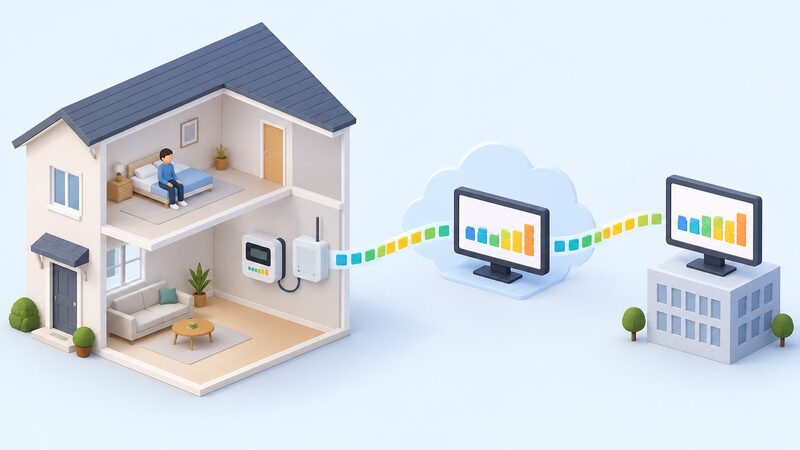
Half-hourly settlement is a measurement reform, not a supply reform. It does not give a household its own generation, storage or network. What it does is make the timing of a household's consumption and export visible to the system at the resolution at which it occurs, which is the precondition for any arrangement that values flexibility.
That matters most for households that have already invested in self-consumption or in a whole-home energy system. A battery that charges overnight and discharges at peak, or an electric vehicle charged when solar output is high, is producing a timing signal. Half-hourly settlement is the mechanism that can record it. Without it, the signal is averaged away.
The dependence that remains is unchanged. The household still relies on the grid for import and on a supplier for billing and settlement. Half-hourly settlement does not create a local market, and it does not remove the need for a connection. What it changes is the accuracy of the record, and therefore the basis on which any future time-based arrangement would rest.
The distributional question is the one to watch. The Scottish Government's rural work flagged consumer engagement and distributional effects as areas where DECC would be involved11. Households with flexible assets stand to gain most from time-accurate settlement; households without them may see no direct benefit. That asymmetry is why the programme's benefits realisation has been argued to be a core part of each phase rather than an afterthought8.
Sources14 cited
- Clean Flexibility Roadmap: July 2026 update, GOV.UK, 2026
- Energy price cap wholesale costs review, Ofgem, 2023
- Data protection and smart meter data, Open Energy, 2026
- Market-wide Half-Hourly Settlement explained, Energy UK, 2024
- Ofgem Consumer First Panel Year 9 Wave 3: half-hourly settlement, Ofgem, 2018
- Upgrading our energy system: smart systems and flexibility plan, Ofgem, 2017
- Citizens Advice response to electricity retail market-wide half-hourly settlement consultation, Citizens Advice, 2016
- Ofgem's open letter on half-hourly settlement: the way forward, Citizens Advice, 2020
- Final proposals and statutory consultation on data privacy, Ofgem, 2014
- Energy meters, Energy Helpline, 2027
- Action plan to deliver affordable warmth in rural Scotland, Scottish Government, 2016
- How to complain about your electricity, gas or energy bill, Which?, 2026
- How we can help: energy suppliers, Energy Ombudsman, 2026
- You've been switched to a new energy supplier without your agreement, Citizens Advice, 2026
 The Full Tariffs GuideWhich energy tariff suits how you live, and will switching really save you money?
 Can a Home Be Self-Sufficient?Can a UK home really run on its own energy all year, or does the grid still do the heavy lifting in winter?
 The Full Statistics GuideHow many homes in the UK have solar panels, heat pumps or batteries?
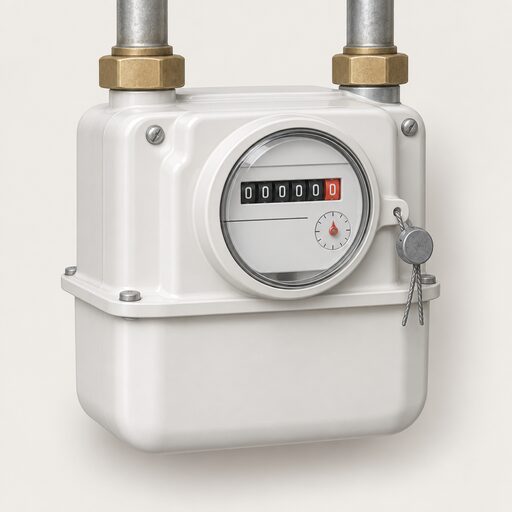 Meter Standards and AccuracyHow UK smart meters are certified for accuracy, how their readings become a bill, what happens when a meter stops communicating, and how a metering or billing dispute is escalated to a supplier and then to the Energy Ombudsman.
 Public Attitudes to Home EnergyWhat do people in the UK really think about heat pumps, solar panels and smart meters?
 New Build Charger RequirementsExplains the requirement for charge points and cable routes in new and materially altered homes, set by Part S in England and equivalent rules elsewhere in the UK.