
In this comparison
For a flat, the choice between an electric boiler and a heat pump comes down to one number: how much electricity each uses to produce the same heat. A heat pump typically produces three to four units of heat for every unit of electricity it consumes, while an electric boiler turns one unit of electricity into one unit of heat1. Direct electric heating is therefore at least three times less efficient than a heat pump, which is why it is described as very expensive to run3.
That efficiency gap matters more in a flat than almost anywhere else, because direct electric heating is already common there. Direct electric systems are more common in flats and new-build homes, and can be very expensive to run1. Electric boilers are best suited to smaller homes that do not have a very high demand for heating and hot water, and they are a similar size and price to gas boilers, but they cost much more to run because of the higher price of electricity1.
The practical question is not whether a heat pump is more efficient, which is settled, but whether one can physically be fitted to a particular flat, and whether the flat is insulated well enough for the saving to appear on the bill. Which? calls it a common misconception that heat pumps cannot be installed in flats, and notes that some flats suit a hydronic heat pump in certain configurations2.
Electric boiler vs heat pump: the core difference in one line
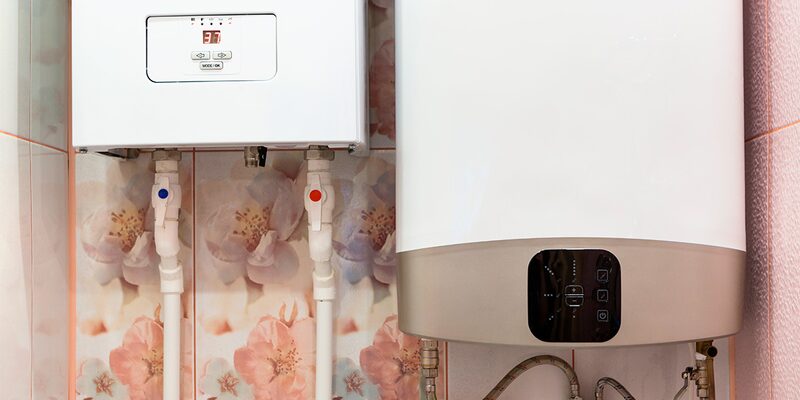
An electric boiler makes heat by passing current through a heating element, so one unit of electricity in gives at most one unit of heat out. A heat pump moves existing heat from the outside air, ground or water into the home, so one unit of electricity in gives several units of heat out. That is the whole comparison in a sentence, and everything else, running costs, carbon, space, follows from it.
The distinction is not the same as the one between boiler types. Heat-only boilers have two extra header tanks to store cold water, usually installed in the loft if there is one, which is why they are unlikely to be suitable for a flat: the header tanks need to be higher than the highest hot tap or radiator1. A combi or a heat pump avoids that problem because neither needs a cold water tank in a roof space.
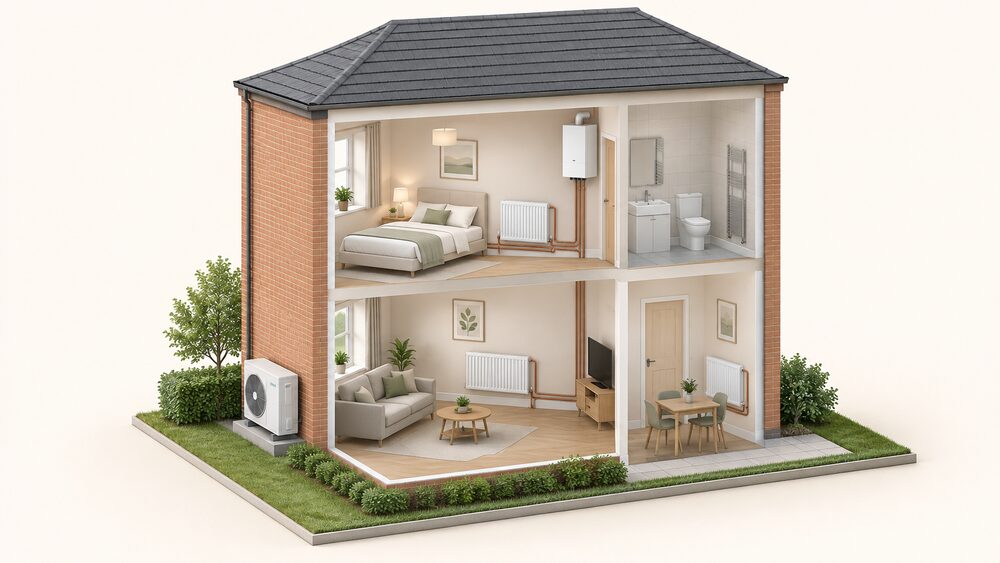
For a flat dweller, the useful framing is this. An electric boiler is a direct replacement for an existing electric system, with the same pipework, radiators and controls, and no outdoor unit. A heat pump is a different way of generating the same heat, and in many cases a gas, oil, LPG, electric or biomass boiler can be swapped out and replaced with one1. The trade is between a simpler installation and a much lower running cost.
Efficiency: a heat pump delivers 3 to 4 times the heat per unit of electricity
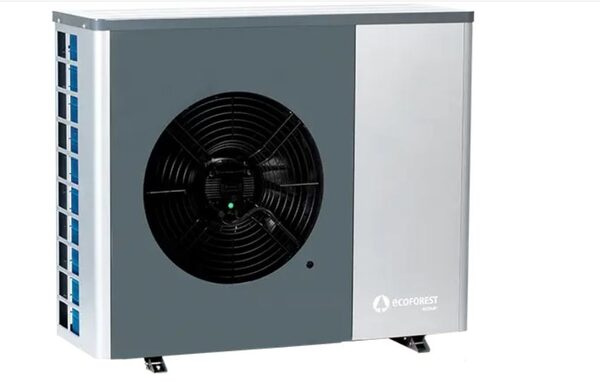
The efficiency figures come from a wide range of official and independent bodies, and they agree closely. The Welsh Government states that heat pumps are three times more energy efficient than traditional boilers8. The Climate Change Committee puts them at around three to four times more efficient than gas boilers, which should lead to lower household energy bills3. Nesta, an independent research body, says heat pumps are usually the most efficient technology for heating homes, using 3 to 4 times less energy to provide the same heat as a boiler9.
Against direct electric heating specifically, the gap is narrower but still decisive. Bristol City Council's Warm Homes Plan states that heat pumps are around three times more efficient than direct electric heating4. Northern Ireland's official guidance says heat pumps can usually deliver three units of heat for every unit of electricity used10, and the Development Bank of Wales gives the same range: for every unit of electricity they use, heat pumps typically produce three to four units of heat11.
The most recent official statistics push the upper end further. The 2025 Energy in Buildings report states that current available heat pump technologies can be up to 3 to 5 times more efficient than a natural gas boiler12. That is a wider range than the older figures, and it reflects newer models running at lower flow temperatures.
"for every unit of electricity they use, heat pumps typically produce three to four units of heat"
What drives the range is the temperature the system runs at and the temperature outside. A heat pump serving well-insulated rooms with large radiators or underfloor heating runs at a low flow temperature and reaches the top of the range. One serving small radiators in a draughty flat runs hotter and lands nearer the bottom. The figures above are typical performance, not a guarantee for a particular flat.
Running costs: why direct electric heating uses three to four times more electricity
The running cost gap follows directly from the efficiency gap, and it is amplified by the way electricity and gas are priced. Electricity costs around four times as much as gas per kWh5. Nesta describes the current position as an electricity unit price almost 4 times higher than gas9. So a technology that uses three to four times less electricity than direct electric heating, and is then compared with gas at a quarter of the unit price, sits in a very different place on the bill.
Direct electric options are singled out in the evidence. Panel heaters, storage heaters and electric boilers are much less efficient, with very high running costs, and they impose extra stress on the grid9. Bristol City Council's plan states that these types of electric heaters are at least three times less efficient than heat pumps, which makes them very expensive4. Which? reaches the same conclusion from the consumer side: heat pumps are much more efficient than traditional electric heating options, which makes them cheaper to run5.
There is a counterweight worth stating plainly. If a home is not well insulated, installing a heat pump may increase energy bills instead, because electricity is more expensive than gas13. That warning comes from Croydon Council's retrofit guidance, and it applies with particular force to flats in older blocks with solid walls and single glazing. The efficiency advantage is real, but it is spent on heat that escapes.
For a typical-sized home, a heat pump currently costs about the same to run as a gas boiler9. That is the benchmark for a flat that already has gas. For a flat on direct electric heating, the comparison is more favourable, because the alternative is the least efficient option on the market.
| System | Heat per unit of electricity | Running cost position |
|---|---|---|
| Heat pump | 3 to 4 units2 | Cheaper than traditional electric heating5 |
| Electric boiler | 1 unit | Much more expensive to run than gas1 |
| Panel or storage heater | 1 unit | Very high running costs9 |
What the 75% saving at COP 4 means for a flat
COP stands for coefficient of performance, the ratio of heat delivered to electricity consumed. A COP of 4 means four units of heat for every unit of electricity. If a direct electric system needs one unit of electricity for a unit of heat, and a heat pump at COP 4 needs a quarter of a unit for the same heat, the electricity drawn falls by three quarters. That is the arithmetic behind the headline saving, and it is why the efficiency figures above are the ones that matter most to a flat dweller's bill.
The saving is on electricity consumed, not on the bill in full, because standing charges, hot water demand and controls all sit alongside it. The Department for Energy Security and Net Zero's methodology for hybrid heat pumps sets out the underlying rule: the ratio of the heat pump COP to the boiler efficiency must be greater than the ratio of the unit costs of the heat pump's energy source and the boiler's energy source14. In plain terms, a heat pump only saves money where its efficiency advantage outweighs the price difference between the fuels.
Carbon follows a similar pattern. Heat pumps offer up to 70% less CO2 over 15 years than a gas boiler, and zero emissions at the point of use15. Ofgem states that heat pump technology currently offers a carbon saving of up to 65% compared with a gas boiler16. For a flat in a block with no gas connection, that is a direct improvement on the emissions of direct electric heating, which carries the carbon intensity of the grid at the moment of use.
Space, noise and installation constraints in flats
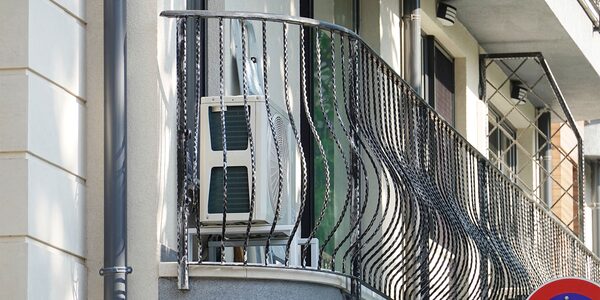
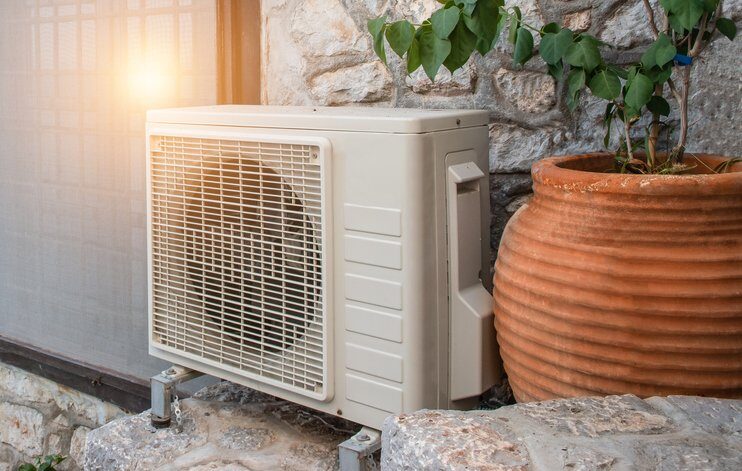
Physical fit is where flats differ most from houses, and the rules reflect it. Permitted development rights allow for air source heat pumps to be installed on detached houses or blocks of flats without planning permission, subject to conditions6. Detached houses can install up to two heat pumps, but a non-detached house or a block of flats can install only one unit17. In a block of, say, twenty flats, that single unit is a shared asset rather than a per-flat installation, which is why communal or district solutions often come up in flats.
Noise is less of an issue than many expect. Heat pumps are located outside and are typically quieter than gas boilers18. The planning conditions that do bite are about position: written evidence to a parliamentary committee cites a one metre distance from property boundaries, and restrictions in conservation areas and on listed buildings19. Those conditions are the practical constraint on where an outdoor unit can go in a dense urban block.
Air-to-air heat pumps are a distinct option for flats. Which? reports that they are particularly well suited to smaller homes and flats and can take up less wall space than traditional radiators2. They heat air directly rather than water, so they do not serve a hot water cylinder, and they can also cool in summer. For a flat with no wet central heating to convert, that removes the pipework question entirely.
Rollout barriers are worth naming. A lack of qualified heat pump installers is a potential barrier, as are constraints imposed by planning rules and the need for electricity infrastructure upgrades20. In a flat, the electrical supply to the building may itself be a limiting factor, and that is a question for a qualified installer rather than something a householder can settle from a specification sheet.
How the price cap affects the comparison
The comparison between an electric boiler and a heat pump is unusually sensitive to the price of electricity, because both run on it. Reducing the price of electricity relative to gas would make heat pumps more competitive20. That is the parliamentary research briefing's assessment, and it explains why the running cost case for a heat pump is stronger in a flat already on direct electric heating than in one with a gas supply.
The unit price ratio is the lever. Nesta puts the electricity unit price at almost 4 times higher than gas9, and Which? states that electricity costs around four times as much as gas per kWh5. A heat pump at COP 4 needs a quarter of the electricity of a direct electric system, so it largely neutralises that ratio against direct electric heating, but it does not neutralise it against gas.
The official modelling shows how finely balanced this can be. A consultation on the Home Energy Model found running costs increasing by as much as 20% in one illustrative case21. An earlier study of hybrid heat pumps found a cost saving of -3 to 120 pounds per year, or 0 to 15%, against a standard electric heat pump22. Those are modelled figures for specific scenarios, not predictions for a particular flat, and they show that the outcome can be marginal or negative depending on the assumptions.
For a flat dweller, the practical reading is this. The price cap sets the unit price of electricity, and the gap between electricity and gas is what determines whether a heat pump beats a gas boiler on running cost. Against an electric boiler, the efficiency gap is large enough that the price cap would have to move a long way before direct electric heating became the cheaper option to run.
Where an electric boiler is still the sensible choice
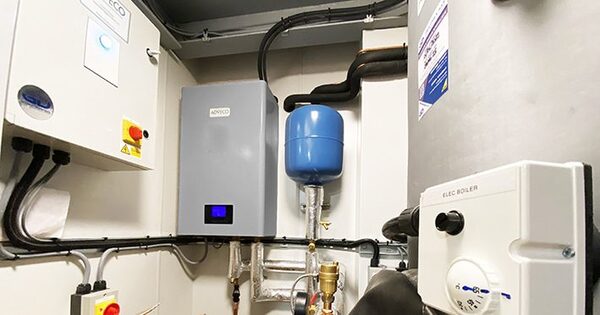
An electric boiler remains a reasonable option in specific circumstances, and the evidence is clear about which. Electric boilers are best suited to smaller homes that do not have a very high demand for heating and hot water1. A small, well-insulated flat with one or two occupants and modest hot water use sits in that category. They are also a similar size and price to gas boilers, so the capital cost is familiar1.
Installation simplicity is the other argument. An electric boiler needs no outdoor unit, no refrigerant pipework and no groundworks, so it avoids the planning conditions and the one metre boundary rule that apply to air source units19. In a listed building, that matters: listed building consent is needed to install any type of heat pump17, and for air source units specifically, listed building consent is usually required even where planning permission is not23. An internal electric boiler sidesteps that entirely, since planning permission is not normally required for boiler or heating work that is all internal24.
The counter-argument is the running cost, and it is not small. Direct electric heating options have very high running costs and impose extra stress on the grid9. Electric boilers are a similar size and price to gas boilers but cost much more to run due to the higher price of electricity1. Electric boilers account for 4% of homes as the main method of heating, winter 20257, so they are a real but minority choice.
Where a heat pump cannot be fitted, or where the flat is a listed building with no viable outdoor position, an electric boiler keeps the heating on with the least disruption. Where a heat pump can be fitted and the flat holds heat reasonably well, the efficiency evidence points the other way. The decision turns on the building, not on the technology.
Permission, grants and the leasehold question
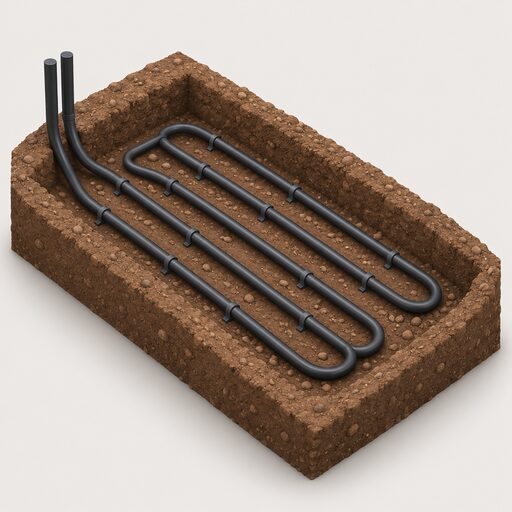
Planning permission is not normally required for the installation or replacement of a boiler or heating system if all the work is internal24. Domestic heat pumps benefit from permitted development rights, so in most cases planning permission is not required, subject to certain limitations and conditions25. Installation of a ground source heat pump within the curtilage of a house or block of flats does not require planning permission, though listed building consent may be required if the property is listed26. In Scotland, permitted development covers the installation, alteration or replacement of a water source heat pump and any associated pipes or apparatus within the curtilage of a dwellinghouse or building containing a flat27.
For leasehold flats, planning is only half the question. The freeholder or management company usually has a say under the lease, and consent for energy work in a leasehold property is a separate process from planning. The permitted development position for a block of flats, one air source unit, means a per-flat installation is not automatically available17.
Grants are available for heat pumps but not for like-for-like electric boiler replacement. The Boiler Upgrade Scheme requires that the heat pump or biomass boiler must provide both space and hot water heating and be capable of meeting the full space heating and hot water heating demands of the property28. Heat pumps can be installed in an eligible self-build, and the property can be on or off the gas grid, in urban or rural locations in England or Wales29. Ofgem administers the scheme16.
Sources29 cited
- The best heating for your home, Which?, 2025
- What it's really like to have a heat pump, Which?, 2025
- The Seventh Carbon Budget, Climate Change Committee, 2025
- Bristol Warm Homes Plan, Bristol City Council, 2025
- Electric central heating, Which?, 2025
- Fact sheet 5: air source heat pumps, Pendle Borough Council, 2026
- Public attitudes tracker: heat and energy use in the home, winter 2025, Department for Energy Security and Net Zero, 2025
- Heat pumps, Welsh Government, 2025
- Domestic heating technology options, Nesta, 2025
- Heat pumps, nidirect, 2025
- Heat pumps: expert guide for homeowners, Development Bank of Wales, 2024
- Heat pumps, GOV.UK, 2026
- Air and ground source heat pumps, Croydon Council, 2026
- Home Energy Model: heat pump methodology, Department for Energy Security and Net Zero, 2026
- Boiler Upgrade Scheme launch, Ofgem, 2026
- Boiler Upgrade Scheme guidance for property owners, Ofgem, 2023
- Planning guidance: heat pumps, Richmond Council, 2026
- Heat pumps explained: experts answer your questions, GOV.UK, 2024
- Boilers, Energy Saving Trust, 2026
- Research briefing: heat pumps, Parliamentary Office of Science and Technology, 2026
- Energy in buildings 2025, Department for Energy Security and Net Zero, 2025
- Written evidence on heat pumps, UK Parliament, 2023
- Air source heat pumps, Westmorland and Furness Council, 2026
- Boilers and heating: planning permission, Planning Portal, 2026
- Planning permission for heat pumps, Welsh Government, 2026
- Heat pumps, New Forest District Council, 2026
- The Town and Country Planning (General Permitted Development) (Scotland) Order 1992, legislation.gov.uk, 2024
- Domestic Hybrid Heat Pumps, Department for Energy Security and Net Zero, 2016
- Boiler Upgrade Scheme guidance, Ofgem, 2023
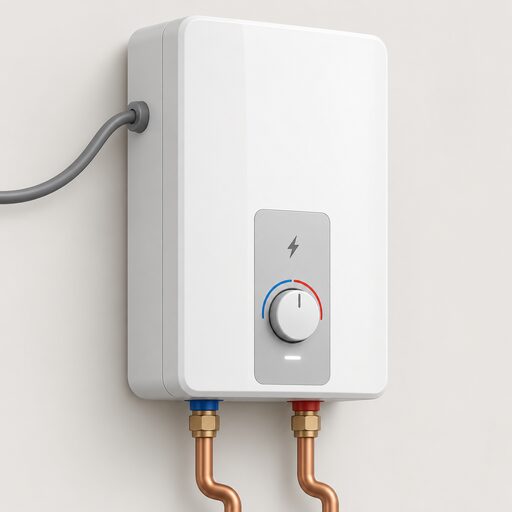 Electric BoilersHow electric flow boilers heat a conventional wet system, what they cost to buy and run, where they suit UK homes, and why point-of-use efficiency near 99% does not translate into cheap heating at the meter.
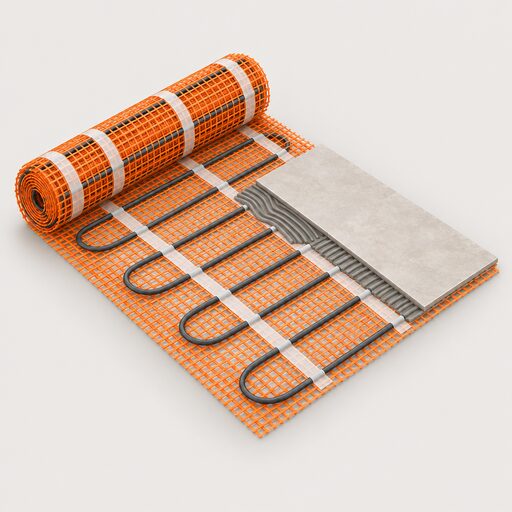 Underfloor Heating SystemsWhich rooms suit electric underfloor heating and which need a wet system?
 Heat Pumps vs BoilersWill a heat pump actually cost less to run than my boiler, and does it heat the house as well?
 Energy IndependenceA heat pump runs your heating on electricity instead of gas or oil, so how much does that really cut what you pay and how exposed you are when fuel prices jump?
 Running Costs by FuelHow the cost of heat compares across mains gas, heating oil, LPG, electricity, solid fuel and heat pumps once efficiency and the price cap are applied.
 Heat Pump Running CostsWhat does a heat pump cost to run each year, and is it cheaper than a gas boiler?