
In this guide
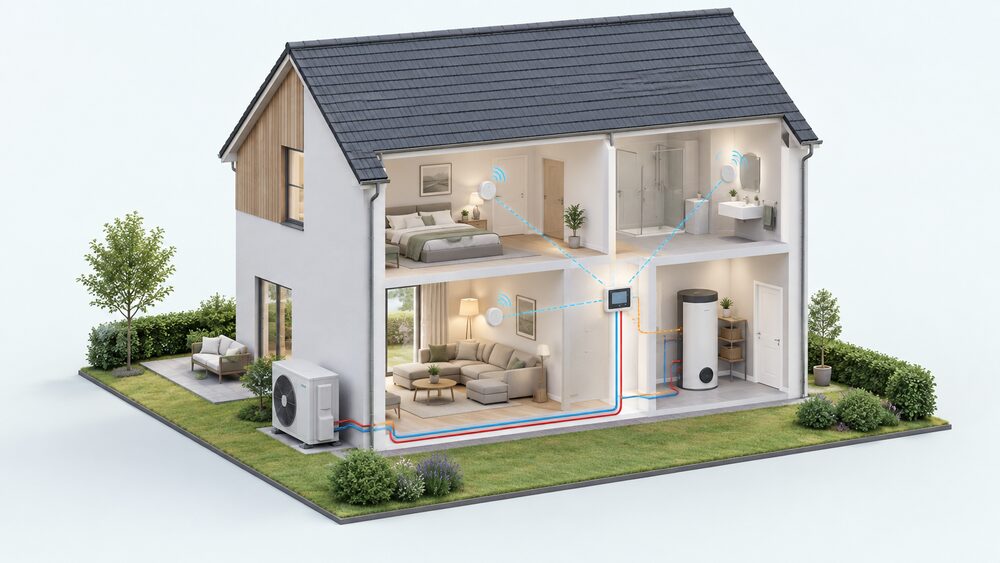
CTC is a Swedish heating manufacturer whose controls are built to run its own heat pumps, water heaters and boilers rather than to sit on a wall as a standalone thermostat. The control layer is CTC SmartControl, a set of wireless sensors that the maker states ensures "heating, hot water and ventilation are optimised", with sensors that "control temperature, humidity and carbon dioxide"1. Above it sits CTC EcoLogic, a control system that "manages both heating and cooling, active and passive, and automatically optimises energy usage"2.
The practical consequence for a UK household is that CTC controls are not a general-purpose upgrade. The SmartControl Gateway and Repeater are listed as compatible with a named set of CTC products only: the GSi 600, EcoLogic M/L/XL, GS 600, EcoZenith i360, EcoZenith i255, EcoHeat 400, EcoZenith i555 Pro, EcoPart i600M and EcoPart 400 Pro/Basic3. A gateway can control up to seven optional wireless accessories1.
The company manufactures at Ljungby in Sweden4. That single fact shapes everything else on this page: parts, documentation and technical support originate outside the UK, and the controls are designed around a Swedish maker's own system architecture rather than around the British boiler market.
CTC at a glance: a Swedish maker since 1923
CTC's manufacturing site is Ljungby, Sweden4. The company's own declarations of conformity, issued for its boilers and water heaters, are dated in Ljungby and signed by named Swedish entities: Bentone AB dated the manufacturer declaration for the CTC 1100 Family 25, 1100 Family 40 and 1100 Miljö on 2 September 1998, Enertech AB issued the conformity declaration for CTC EcoEl on 12 May 2006, and the declaration for the 950 Condens is dated 8 December 20104.
Those dates matter less as history than as evidence of how the company documents its products. Each declaration names the directives and standards the model was tested against, which is the paper trail a UK installer or building control officer would look for. The pattern is consistent across three decades: a Swedish manufacturer certifying its own appliances in Sweden and shipping them into the UK market.
For a household, the significance is supply chain rather than sentiment. A control made in Ljungby and sold in Britain depends on a distribution route, a spare parts channel and a technical support function that all sit outside the UK. That is not unusual in heating, and it is not a defect, but it is the first thing to understand about owning one: the maker is not a British company with a British service network behind it.
The wider UK context is that heating controls are a mature, heavily regulated category. Ofgem's public reporting on the Energy Company Obligation records 514,780 heating control measures delivered under the scheme as of 11 August 20266, and the Northern Ireland Statistics and Research Agency publishes a dedicated central heating table, CT0082, updated to 12 February 20247. Controls are counted, measured and audited at national level. A maker entering that market is entering a documented one.
What CTC SmartControl controls: heating, hot water and ventilation

CTC SmartControl is a family of wireless sensors rather than a single thermostat. The maker states that it "ensures that heating, hot water and ventilation are optimised", and describes the range as "a series of smart wireless sensors that control temperature, humidity and carbon dioxide"1. That is a broader brief than a room thermostat carries: ventilation is part of the control problem, not an afterthought.
The parts divide by function. The Multi-button is "able to control a number of different functions, such as additional hot water"1. The Room/Humidity/CO2 sensor is a "wired sensor that can control ventilation on demand"1. So the range mixes wireless and wired devices, with the ventilation sensor requiring a cable while the rest of the family communicates wirelessly to a gateway.
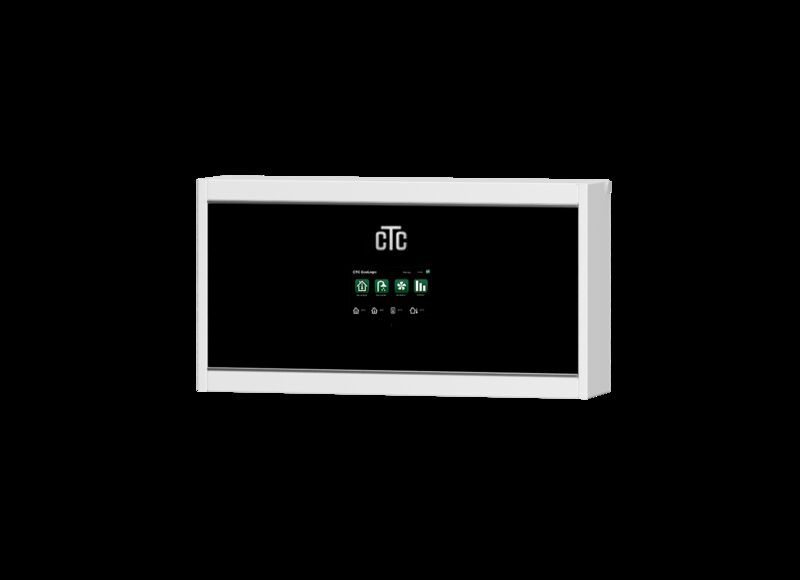
Above SmartControl, CTC EcoLogic takes the system view. The maker states that "the control system manages both heating and cooling, active and passive, and automatically optimises energy usage"2. Active cooling means a heat pump running in reverse; passive cooling means moving heat without running the compressor. A controller that handles both is doing something a conventional boiler programmer cannot.
The EcoLogic range scales by size. The M and L models "can also be upgraded if the heating system needs to expand in the future", and the L version is built "for larger installations, supporting up to ten heat pumps, with functions such as pool control and cooling"2. That is a commercial or large-domestic specification rather than a single-house one.
For a household, the honest reading is that SmartControl is a system control layer, not a smart thermostat in the consumer sense. It has no published third-party ecosystem, no stated voice assistant integration and no subscription terms in the material available. What it does is coordinate the heat pump, the hot water and the ventilation in one building. How that compares with the wider market is set out in smart thermostats and in the pillar guide at heating controls.
The CTC product range: heat pumps, water heaters and boilers
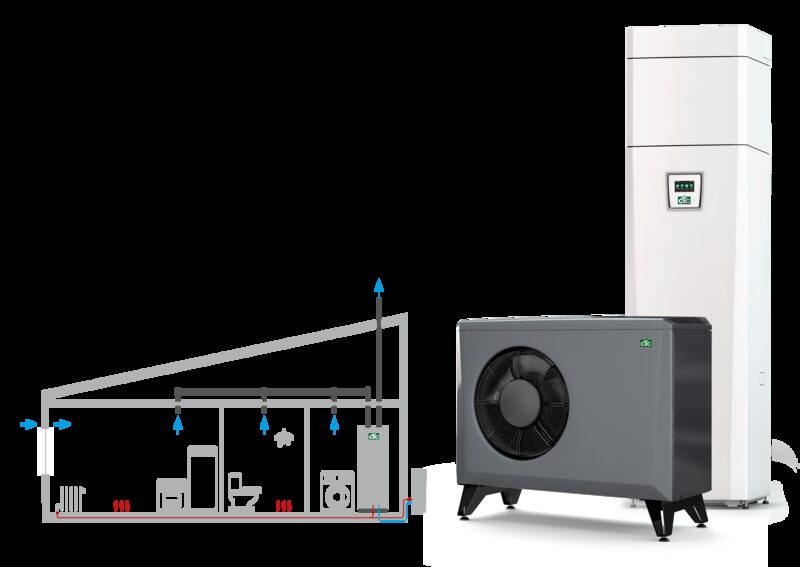
CTC's UK-facing range divides into air-to-water heat pumps, a dedicated domestic hot water heat pump, and the controllers and accessories that tie them together. The air-to-water range is described by the maker as modulating, with the EcoAir C100 offering "on-demand heating and cooling all year round" and the EcoAir 700M listed as a "modulating air-to-water heat pump"8. The CombiAir is described as "an efficient and speed-controlled heat pump"8.
The water heating side is separate. The CTC Water Heater is "een warmtepomp voor de productie van sanitair warm water", a heat pump for producing domestic hot water5. It is a standalone appliance rather than a cylinder fed by the space heating circuit.
Accessories extend the system rather than the controls. CTC states that "pools and other heat sources (such as solar heating) can easily be added" to its air-to-water heat pumps8. The accessory list names installation kits for the EcoHeat 400 and the EcoAir 700M, 600M and 400; a heating cable for the EcoAir range including the C100; ventilation units, the EcoVent 25 and EcoVent 20; a raised base; an EnergyFlex II expansion; and a three-pack current sensor3.
| Product | Type | Key published figure |
|---|---|---|
| CTC EcoAir C100 | Air-to-water heat pump | Heating and cooling, modulating8 |
| CTC EcoAir 700M | Air-to-water heat pump | Modulating8 |
| CTC CombiAir | Air-to-water heat pump | Speed-controlled8 |
| CTC Water Heater | Hot water heat pump | COP 3.155 |
| CTC EcoLogic M/L/XL | System controller | Up to ten heat pumps on L2 |
| CTC SmartControl | Wireless sensor family | Up to seven accessories1 |
The range is coherent: a household buying into CTC buys a heat pump, a controller and a set of sensors designed to work as one. The trade-off is that the accessory list is CTC-specific. A current sensor, a raised base or a ventilation unit is matched to named CTC models, not to a generic standard.
CTC Water Heater: COP of 3.15 and adjustable airflow
The CTC Water Heater is a heat pump that produces domestic hot water, and its datasheet gives a coefficient of performance of 3.155. COP is the ratio of heat delivered to electricity consumed, so a figure of 3.15 means the unit moves roughly three units of heat for each unit of electricity at the tested condition. The datasheet does not state the test condition alongside the figure, so the number should be read as the maker's published rating rather than as a year-round expectation.
Airflow is adjustable. The datasheet gives "regelbare luchthoeveelheid", an adjustable air volume, with a minimum of 200 and a maximum of 300 cubic metres per hour5. The unit is "voorbereid voor kanaalaansluitingen, luchtinlaat en luchtuitlaat", prepared for duct connections, an air inlet and an air outlet5. It operates on outside air from minus 10 to plus 35 degrees Celsius5, and needs a minimum fuse of 13 A, with a 2000 Watt, 230 V heating element5.
Water temperature is adjustable to a maximum of 62 degrees Celsius5. That ceiling matters: it is below the 60 degrees Celsius threshold at which stored hot water is normally held for legionella control, so the unit is designed to feed a system rather than to stand alone as the only source of hot water.
For context on heat pump performance generally, independent guidance gives an air source heat pump a COP of 4.3 at an outside temperature of 15 degrees Celsius9. Official methodology for heat pump performance modelling sets the correction factor for water heating at 110. The documents differ in what they measure and at what condition, which is why a single COP figure should never be read as a whole-system efficiency.
CTC EcoAir C100: heating and cooling from one unit

The EcoAir C100 is the model in the range that does both jobs. CTC describes it as providing "on-demand heating and cooling all year round" and as "a cost-effective, modulating air-to-water heat pump"8. Modulating means the compressor varies its output rather than switching between full power and nothing, which matters for efficiency in a house whose heat demand changes hour to hour.
Cooling is the unusual part. Most UK domestic heat pumps heat only, and cooling is delivered by a separate air conditioning unit if at all. A single unit that does both removes a second appliance, but it also means the control system has to arbitrate between the two modes, which is where EcoLogic comes in: the maker states it "manages both heating and cooling, active and passive"2.
The accessory list supports the C100 specifically. A CTC Heating Cable is listed as compatible with the EcoAir 700M, 600M, 400 and C1003, which suggests the outdoor unit needs condensate or frost protection in UK conditions. That is a practical detail a household should expect to see in an installation quote.
What the material does not give is a published COP for the C100, a sound power figure, or a stated operating range. Those are the numbers a buyer would normally compare, and their absence means the C100 has to be assessed on the installer's design rather than on a headline rating. The wider question of how air source performance is measured and reported is covered in weather compensation and in load compensation and modulation.
Declarations of conformity: CTC 1100, EcoEl and 950 Condens
CTC's conformity paperwork runs across three decades and three product generations. Bentone AB dated the manufacturer declaration for the CTC 1100 Family 25, 1100 Family 40 and 1100 Miljö on 2 September 1998. Enertech AB issued the conformity declaration for CTC EcoEl on 12 May 2006, and the declaration for the 950 Condens is dated 8 December 20104.
A declaration of conformity is the maker's own statement that a product meets the directives and standards named in the document. It is not a test report and not a third-party certificate, but it is the document that underpins a CE mark and, in the UK, the route by which energy-related products reach the market.
The current position on marking is worth stating precisely. Official consultation material records that energy-related products which have the CE Mark "can currently be sold in Great Britain (GB) if they are compliant with GB's ecodesign standards, without the need to also affix a UK Conformity Assessment marking"11. So a CTC appliance carrying CE marking can lawfully be sold in Britain without a separate UKCA mark, provided it meets GB ecodesign requirements.
For a household, the conformity documents are the paper trail behind the appliance. They are also the reason a CTC installation should come with documentation naming the standards applied. Where a heat pump is installed under the Clean Heat Market Mechanism, the installation must be registered on the MCS Installation Database, and that registration is what makes the installation MCS certified12. Building Regulations work by a registered competent person requires a compliance certificate to be given to the building control authority13.
Made in Ljungby, Sweden: what that means for UK owners
Manufacturing at Ljungby in Sweden4 has three practical consequences for a UK owner, and none of them is about quality.
The first is documentation. CTC's technical literature is written in Swedish and translated, and the datasheet for the Water Heater carries Dutch and Swedish field labels alongside the figures5. That is normal for a Scandinavian maker selling across Europe, but it means a UK householder reading a specification sheet is often reading a translation, and the installer is the person who interprets it.
The second is the support chain. There is no UK contact address, phone number or email for CTC in the material available here. The route that exists is through the installer who commissioned the system, since commissioning, registration and warranty work run through the trade. That is a real dependence: the household's access to the maker is mediated by a third party.
The third is that Swedish design and UK installation are not the same thing. Aira, another Swedish-designed heat pump brand sold in the UK, describes its product as "designed and engineered by our in-house team of experts in Sweden and installed by Aira Academy-trained technicians here in the UK"14. That split, design abroad and installation at home, is the normal pattern. It means the installation quality, not the factory, determines how the system performs in a British house.
The wider UK installer market is regulated by competent person schemes: GasSafe for gas boilers and OFTEC for oil boilers15. Heat pump work sits under MCS instead. A household choosing an installer can check independent approval: the Chartered Trading Standards Institute reports that 71% of homeowners would be more likely to install energy-efficiency measures if the trader were independently approved and certified16.
What owning CTC controls means for household energy independence
CTC controls give a household fine control over its own heating, hot water and ventilation, and they keep that control local. The SmartControl sensors and the EcoLogic controller run the system inside the building, on the maker's own hardware, with no published cloud service, no subscription and no stated dependence on a manufacturer's servers1. That is a genuine independence advantage over app-first smart thermostats, and it is the strongest argument for the range.
The dependence that remains is different in kind. A CTC system is tied to CTC: the gateway and repeater work with named CTC products only3, the accessories are matched to named CTC models3, and the technical documentation originates in Sweden4. A household that buys in is not locked into a cloud, but it is locked into a maker's ecosystem for parts and support.
There is also a fuel dependence. A CTC air-to-water heat pump runs on electricity, so the household remains connected to the grid and to an electricity supplier. What changes is the fuel: heat comes from outside air rather than from gas burned in the home, which removes the gas connection and the gas supplier from the equation. That is the substantive shift, and it is the same shift any heat pump makes.
Controls themselves deliver measurable savings when they are set up properly. Independent guidance states that room thermostats and heating controls "allow you to set and maintain the temperature in your home and make sure it's warm for the times of day that you're at home and switched off to save electricity when you're not"17. Official guidance for Northern Ireland puts the saving from turning a thermostat down by one degree Celsius at as much as 10 per cent on heating bills18. The Energy Saving Trust's position is that it is important to "get your heating controls right before you try to change the flow temperature"19, which is the correct order of operations: controls first, then flow temperature.
Smart meters are a separate system that can be combined with heating controls. Welsh Government guidance notes that while smart meters are "independent of smart heating controls, combining the two can enhance your ability to manage your home's heating and energy use remotely"20. Home Energy Scotland frames the same point around comfort, describing controls that keep a home warm for the hours it is occupied and off when it is not21.
Zoning is the other lever. Time and Temperature Zone Control "allows heating times of at least two zones to be programmed independently, as well as having independent temperature control"22. A CTC system with SmartControl sensors in more than one room is doing exactly this, and the principles are set out in heating zoning and in room thermostats.
"room thermostats and heating controls allow you to set and maintain the temperature in your home and make sure it's warm for the times of day that you're at home and switched off to save electricity when you're not"
Where a home has a conservatory or a separately used space, independent guidance is that "heating appliances with their own thermostatic controls will allow you to separately control the conservatory's temperature"23. The same logic applies to any zone a CTC sensor covers. For a household weighing the wider question of local control against cloud dependence, heating controls and energy independence sets out the trade-offs, and smart heating control security and data covers the data side.
Sources24 cited
- CTC SmartControl, CTC, 2026-09-17
- CTC EcoLogic, CTC, 2026-09-17
- CTC Accessories, CTC, 2026-09-17
- Heat Pump Keymark certificate 012-SC0321-18, Heat Pump Keymark, 2023-12-11
- CTC Water Heater datasheet, CTC, 2026-09-17
- ECO public reports and data, Ofgem, 2026-08-11
- CT0082 Central heating, Northern Ireland Statistics and Research Agency, 2024-02-12
- CTC Air-to-water heat pumps, CTC, 2026-09-17
- Air source heat pumps explained, Which?, 2026-04-14
- Heat pump methodology, GOV.UK, 2026-01
- Extended CE marking recognition for ecodesign regulations, GOV.UK, 2025-12-09
- Clean Heat Market Mechanism, MCS Certified, 2026-05-08
- Approved Document L Volume 1: Dwellings, GOV.UK, 2026
- Aira, Which? Trusted Traders, 2026-09-17
- Thermostats and heating controls, Energy Saving Trust, 2026-02-10
- Energy efficiency pledges undermined by lack of consumer confidence, Chartered Trading Standards Institute, 2024-05
- Make winter feel summer, Home Energy Scotland, 2026-09-20
- Central heating controls, nidirect, 2026-09-02
- Should I turn my boiler's flow temperature down?, Energy Saving Trust, 2026-05-20
- Smart meters, Welsh Government, 2026
- Self-build homes sustainability, Planning Portal, 2026
- SAP conventions v12, BRE Group, 2025-05-15
- Conservatories knowledge hub, Glass and Glazing Federation, 2026-09-20
- Conservatories and energy efficiency, Glass and Glazing Federation, 2023-12-22
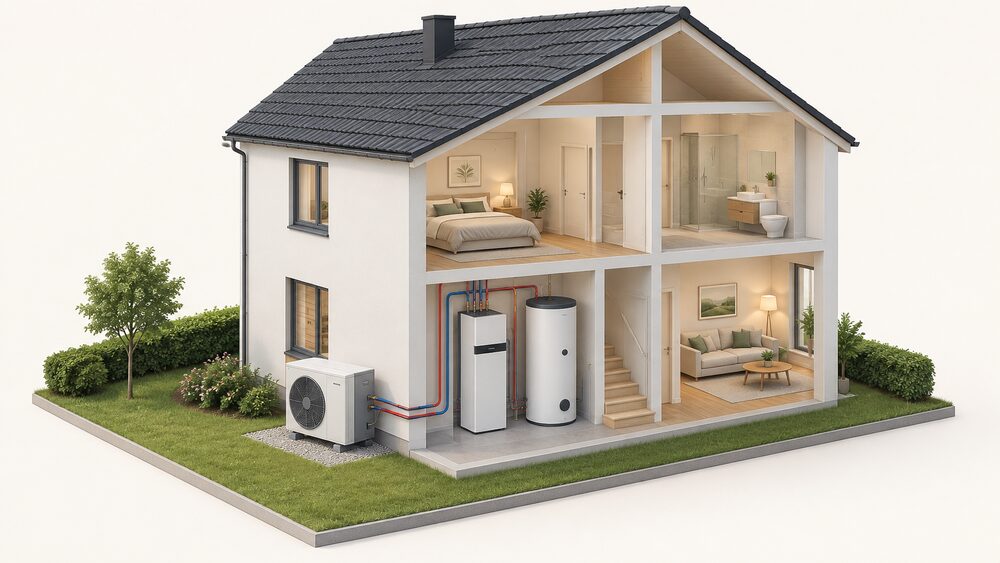 CTC heatingThinking about a CTC heat pump for your home?
 CTC heat pumpsThinking about a CTC heat pump for your home?
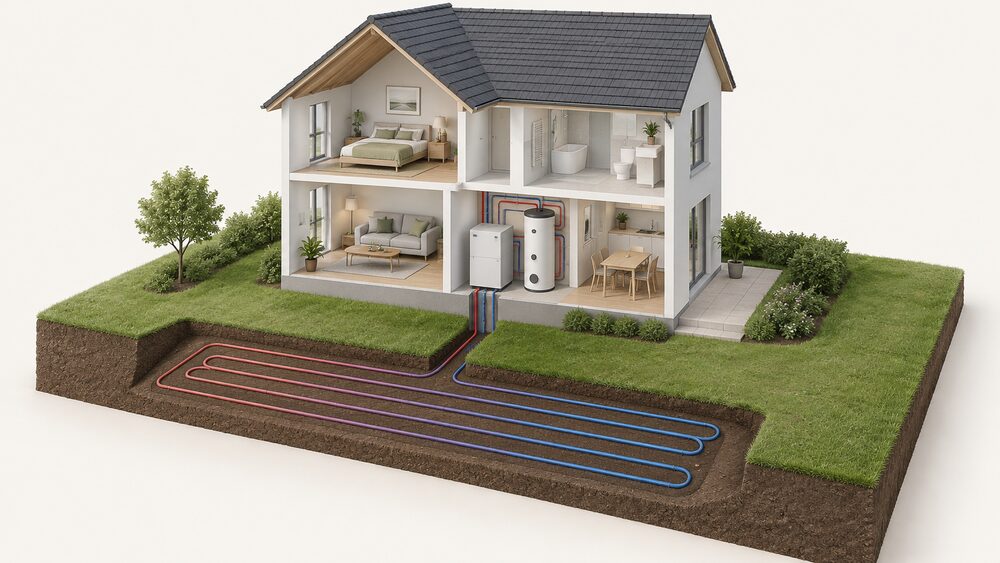 CTC EcoHeat 300 ground source heat pumpOwn a CTC EcoHeat 300 and need the manual or help with a fault?
 CTC solar thermalCan a CTC EcoSol system heat your water, work alongside your existing boiler or cylinder, and keep running costs down?