
In this guide
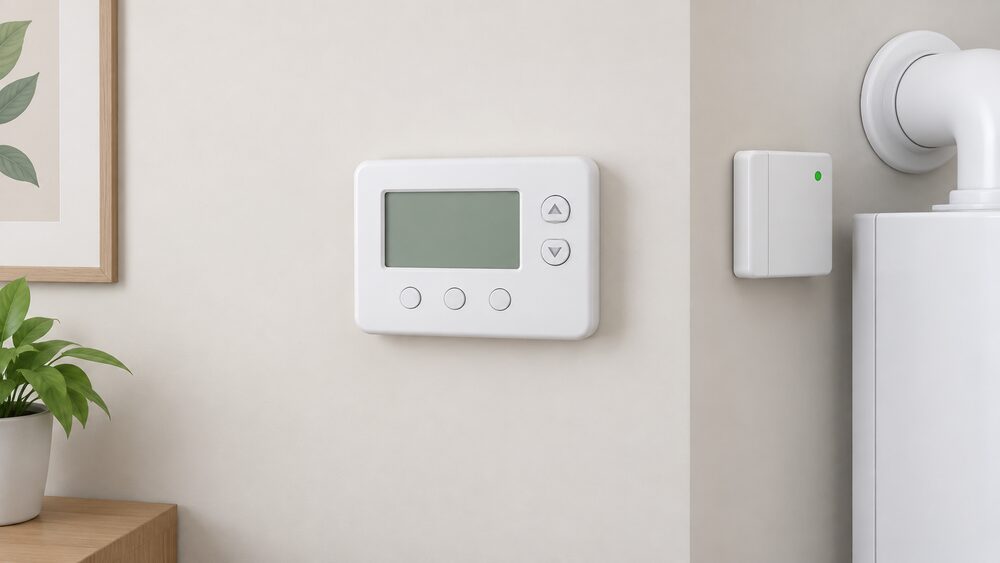
EPH Controls is an Irish controls manufacturer that sells programmable thermostats, radio frequency (RF) receivers, programmers and hot water controls into the UK and Irish markets. Its catalogue is built around wired and wireless zoning: room thermostats, cylinder thermostats, thermal actuators and multi-zone control packs, with product pages and instruction documents dated from 2018 through to 2026.
The company's own site carried a recruitment notice on 24 August 2026, and on 15 September 2026 it published news of an upcoming smart range of three new products for heating installers, described as coming soon1. That matters for anyone buying now: the smart products are announced but not yet listed with specifications, so the range a household can actually specify today is the established thermostat, receiver and hot water line-up.
This page sets out what EPH makes, how the parts fit into S-Plan and X-Plan wiring arrangements, where the documentation lives, and what the controls mean for a household's energy independence. It describes the products and the evidence; it does not recommend a brand, a model or an installer.
What EPH Controls makes: thermostats, receivers and hot water controls
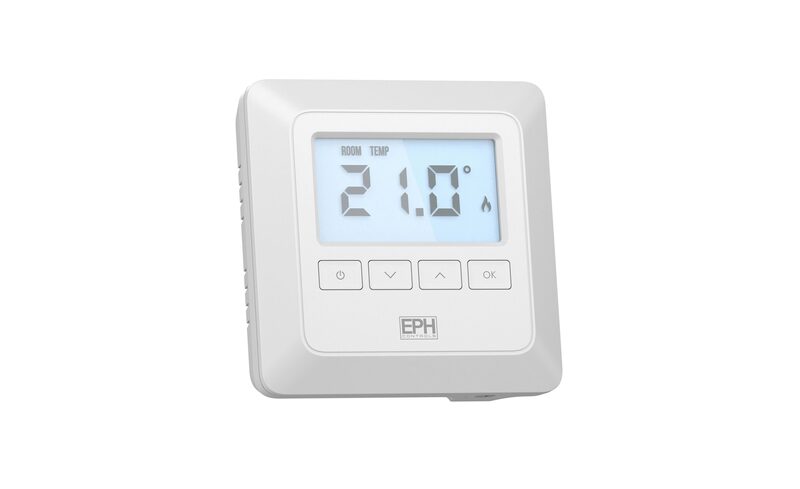
EPH Controls' output divides into three practical groups. The first is room-side control: programmable thermostats that hold a schedule and a setpoint, and the RF receivers that switch the boiler or zone valve in response. The second is hot water control: cylinder thermostats, pipe thermostats and thermal actuators that manage stored hot water and, in some systems, underfloor loops. The third is packaged zoning: multi-zone control packs that bundle a programmer, receivers and thermostats for a defined number of zones.
The company's documentation trail shows how the range has been maintained rather than replaced. The RF1A-OT wireless receiver operating instructions were issued on 4 November 2022 and cover installation, LED indications and RF pairing2. The RFC RF cylinder thermostat operating instructions, the WRP pipe and cylinder thermostat datasheet and the TA2 thermal actuator installation instructions all carry the date 24 April 20265. A maker still issuing fresh sheets for cylinder and actuator products in 2026 is supporting the wired and wireless end of the market, not only the app-driven end.
That is the shape of the offer: controls that a heating engineer wires and pairs, with the schedule held locally on the device. It is a different proposition from a cloud-first smart thermostat, and it is the reason the range turns up in zoning packs and retrofit work rather than in app-led marketing.
The product range at a glance
The catalogue is organised by zone count and by whether the connection is hardwired or RF. The dated product pages give a clear picture of what has been published and when.
| Product | Type | Zones or function | Page date |
|---|---|---|---|
| R37_RF | RF programmer | Three zones4 | 7 November 2019 |
| R47_RF | RF programmer | Four zones3 | 7 November 2019 |
| CR3PRF (white) | Combi zoning RF control pack | Three zones8 | 5 December 2022 |
| CRF3P-312221 RGB | RF heating control pack with hardwired cylinder thermostat | Three zones9 | 5 December 2022 |
| CWP3E | RF programmer pack | Three zones10 | 8 January 2025 |
| CR6P-313201_01 | Combi zoning control pack | Three zones11 | 26 August 2020 |
| EMBERPack6 | EMBER PS three-zone system | Three zones12 | 16 March 2018 |
| RF1A-OT | Wireless receiver | OpenTherm, one zone2 | 4 November 2022 |
| RFC RF | Cylinder thermostat | Hot water cylinder5 | 24 April 2026 |
| WRP / WRP-TP | Pipe and cylinder thermostat | Hot water pipework6 | 24 April 2026 |
| TA2 | Thermal actuator, spring return | Underfloor or zone loop7 | 24 April 2026 |
Two things stand out. The zoning packs cluster around three zones, which is the common shape of a UK house with downstairs, upstairs and a hot water cylinder. And the newest documents are the hot water and actuator sheets, not the room thermostats, which suggests the company's recent development effort has gone into the wet side of the system.
Thermostats and receivers: the core line-up
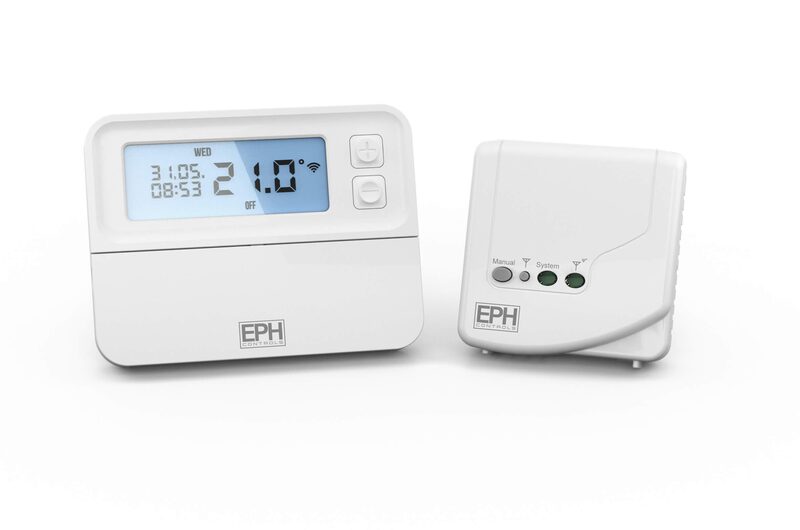
The core of the range is a thermostat that decides, and a receiver that switches. In a hardwired installation the thermostat connects to the boiler or zone valve through a wiring centre. In an RF installation the thermostat talks wirelessly to a receiver mounted near the boiler or valve, and the receiver does the switching.
The RF1A-OT is the clearest example of the second pattern, and it is also the OpenTherm part. Its operating instructions, issued on 4 November 2022, cover installation, LED indications and RF pairing2. OpenTherm is a modulating control protocol rather than a simple on/off connection, and independent guidance notes that future expansion possibilities include connecting OpenTherm controllers to other smart energy systems such as home energy management systems and grid control13. That is a statement about where the protocol can go, not a claim about any one product.
The practical difference between an on/off receiver and an OpenTherm one is how the boiler is asked to fire. An on/off connection tells the boiler to run or stop. A modulating connection passes a flow temperature request, which lets a condensing boiler hold a lower return temperature and condense for longer. The OpenTherm protocol page explains the mechanism; the load compensation and modulation page covers what it does to boiler behaviour.
For a household, the receiver is the part that determines whether the control can modulate the boiler at all. A programmable thermostat paired to a simple switch receiver gives scheduling and zoning but not modulation. The same thermostat paired to an OpenTherm receiver gives both, provided the boiler supports the protocol.
Hot water controls: cylinder thermostats and actuators
Hot water is where EPH's recent documentation is concentrated. The RFC RF cylinder thermostat operating instructions, the WRP and WRP-TP pipe and cylinder thermostat datasheet, and the TA2 thermal actuator installation instructions were all issued on 24 April 20265.
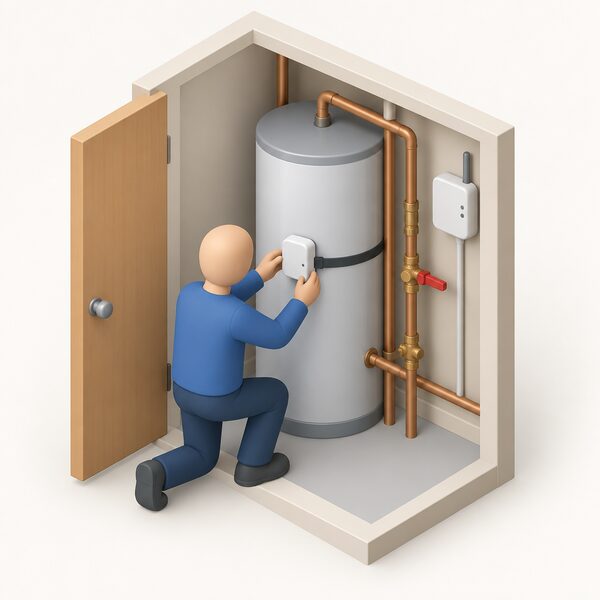
The reason cylinder control matters is straightforward. Independent guidance for homes with a separate hot water cylinder recommends a cylinder thermostat to stop heating water once it reaches the correct temperature, plus time controls or programmers to schedule hot water only when needed14. A cylinder thermostat is therefore not an optional extra on a stored-water system; it is the device that ends the reheat.
The same guidance sets out the wider control set for a wet heating system: a time-controlled programmer, at least one room thermostat, thermostatic radiator valves where there are radiators, and a cylinder thermostat where there is a cylinder14. EPH's range maps onto that list directly, which is why its parts appear in zoning packs rather than as standalone gadgets.
There is a further requirement on heat pump cylinders. Independent guidance for domestic hot water cylinders on air to water heat pumps states that an electronic temperature control must be fitted to the cylinder, with the sensor sited as per the manufacturer's requirement, and that system controls must be able to raise the cylinder temperature for disinfection or pasteurisation purposes15. A cylinder thermostat that cannot command a high-temperature cycle will not satisfy that. The hot water controls page covers the wider picture.
The TA2 thermal actuator is a different kind of part: a spring-return actuator for a manifold or zone loop, used to open and close a circuit rather than to measure temperature7. It belongs with underfloor and zoned wet systems, and the underfloor heating controls page explains how actuators sit alongside manifold wiring centres.
The smart range: what is available and what is coming
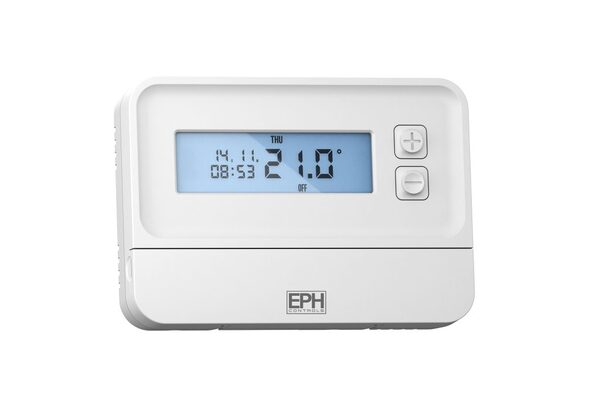
EPH Controls published news on 15 September 2026 of an upcoming smart range of three new products for heating installers, described as coming soon1. As of that announcement there are no published specifications, prices or instruction documents for those products, so nothing about their capability can be stated.
What exists today is the programmable and RF range. That distinction matters commercially: a household specifying controls now is choosing between the established EPH line-up and other makers' smart products, not between EPH's current range and EPH's future one.
For context on what a smart range typically adds, independent reviews of the wider market describe features such as hot water control and remote control via smartphones or tablets16. Those are descriptions of other makers' products, not of EPH's announced range.
The wider smart home market has also moved toward ecosystem expansion, with one brand's customers able to add security, lighting, sensors, plugs and connectivity all controlled through one app17. Whether EPH's coming range follows that pattern is not stated.
Controls in the heating system: S-Plan, X-Plan and where EPH parts fit
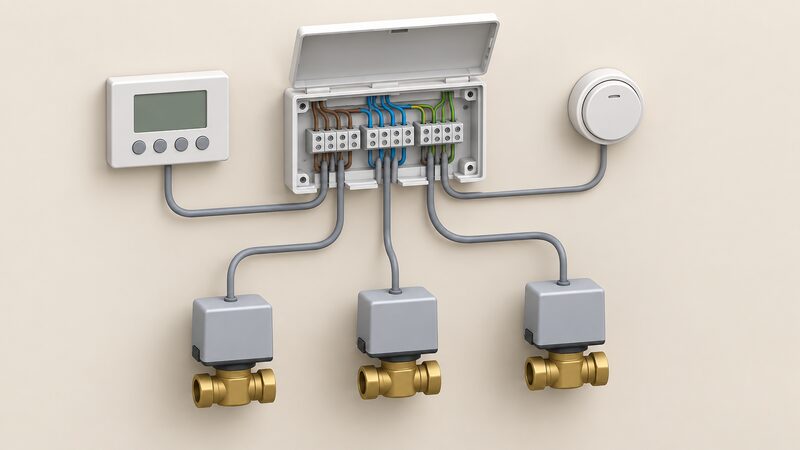
EPH parts sit inside standard UK wiring arrangements rather than defining their own. The two that matter most for a cylinder system are S-Plan and X-Plan, and the difference between them is how many motorised valves the system uses and how hot water priority is handled.
A documented conversion shows the parts in practice. On 31 March 2023, Neil Armstrong of PlumbWise upgraded a Rapid 32 installation at a Garstang property from S-Plan to X-Plan, using a 200L Joule cylinder and an EPH CP4i OpenTherm control18. That is a single installation record rather than a general rule, but it shows the combination: an OpenTherm-capable control, a stored cylinder and a change of wiring plan.
The reason the wiring plan matters is that it determines what the controls can do. In a system with a cylinder, the controls have to schedule hot water separately from heating, and the cylinder thermostat has to be able to end the reheat. Independent guidance for homes with a separate cylinder sets out exactly that: a cylinder thermostat to stop heating water once it reaches the correct temperature, plus time controls or programmers to schedule hot water only when needed14.
The heating controls wiring page sets out S-Plan, Y-Plan, zone valves and wiring centres in detail, and the heating zoning page covers how zones are divided. For a household, the practical point is that the control brand is a smaller decision than the wiring plan: the plan decides how many zones exist and whether hot water is prioritised, and the controls then implement it.
Documentation and support: operating and installation instructions
EPH Controls publishes its documentation on its own site, organised by product section. The pattern is consistent: a product page, and alongside it an operating instruction sheet or a datasheet carrying a date.
The dated documents include the RF1A-OT receiver operating instructions of 4 November 2022, covering installation, LED indications and RF pairing2; the RFC RF cylinder thermostat operating instructions of 24 April 20265; the WRP and WRP-TP pipe and cylinder thermostat datasheet of 24 April 20266; and the TA2 thermal actuator installation instructions of 24 April 20267. Product pages for the zoning packs carry their own dates, from the EMBERPack6 page of 16 March 201812 through to the CWP3E page of 8 January 202510.
Two habits are worth keeping with any controls documentation. The first is that the sheet for the exact model is the authority, because pairing sequences and terminal layouts differ between products even within one family. The second is that instructions should be kept with the installation: independent safety guidance states that operating instructions should be found close by19. That is written about gas appliances, and it applies equally to the controls that operate them.
Documents are issued as PDF downloads20. For a household, the practical consequence is that the paperwork is available without an account, which is a form of independence in itself: the information needed to operate and service the system does not depend on a manufacturer's portal staying open.
What owning EPH controls means for household energy independence
The independence question for any heating control comes down to where the intelligence sits and what the household depends on to keep warm.
EPH's established range keeps the schedule on the device. A programmable thermostat holds its own programme, and an RF receiver switches locally. There is no account requirement in the documents, and the operating instructions are published as downloads2. A household running this equipment depends on the gas or electricity supply, the boiler, and the installer who wired it, but not on a manufacturer's server to run the heating.
The dependencies that remain are the ordinary ones. A wet system still needs a fuel supply and, in most UK homes, a grid connection. A zoned system depends on the valves and actuators continuing to work, which is why the actuator and cylinder documents matter as much as the thermostat ones6. And any control that modulates a boiler depends on the boiler accepting the protocol: OpenTherm only helps where the boiler supports it13.
Where a household wants to go further, the wider controls picture includes home energy management systems that can integrate EV chargers, heat pumps and PV diverters21, and independent advice on making the most of solar photovoltaic panels22. Heating controls also appear as an eligible measure in at least one official home energy efficiency loan pilot23, and the ECO4 scheme requires an EPC rating of D, E, F or G for homeowners who own their house24. Official delivery guidance for ECO4 records the removal of the requirement for properties following district heating connection installations to be left with a full set of functioning heating controls25.
The honest summary is that EPH's current range is a local-control proposition: it gives a household scheduling, zoning and, where the boiler allows, modulating control, without adding a cloud dependency. The smart range announced on 15 September 2026 may change that, but nothing about its architecture has been published1. The heating controls and energy independence page sets out the wider trade-offs between local control and cloud dependence.
Sources25 cited
- EPH Controls, EPH Controls, 2026
- RF1A-OT and RFRP-HW-OT operating instructions, EPH Controls, 4 November 2022
- R47_RF four-zone RF programmer, EPH Controls, 7 November 2019
- R37_RF three-zone RF programmer, EPH Controls, 7 November 2019
- RFC RF cylinder thermostat operating instructions, EPH Controls, 24 April 2026
- WRP and WRP-TP pipe and cylinder thermostat datasheet, EPH Controls, 24 April 2026
- TA2 thermal actuator installation instructions, EPH Controls, 24 April 2026
- CR3PRF white three-zone combi zoning RF control pack, EPH Controls, 5 December 2022
- CRF3P-312221 RGB three-zone RF heating control pack, EPH Controls, 5 December 2022
- CWP3E three-zone RF programmer pack, EPH Controls, 8 January 2025
- CR6P-313201_01 three-zone combi zoning control pack, EPH Controls, 26 August 2020
- EMBERPack6 EMBER PS three-zone system, EPH Controls, 16 March 2018
- What is OpenTherm?, OpenTherm Association, 26 January 2026
- Thermostats and heating controls, Home Energy Scotland, 20 September 2026
- Controls Guide for Air-Water Heat Pump Systems, BEAMA, October 2024
- What are smart thermostats?, Uswitch, 5 February 2026
- tado° vs Hive: which smart thermostat is best, Energy Helpline, 20 September 2026
- X-Plan wired for efficiency in Garstang, Intergas Heating, 31 March 2023
- Safety check for landlords, Liquid Gas UK, 20 September 2026
- Electrical safety guidance for home owners and occupiers, Energy Networks Association, 1 April 2026
- Making the most of your solar PV panels, Centre for Sustainable Energy, August 2026
- Smart heating controls: what they do and why they matter, BEAMA, 7 April 2025
- Home Energy Efficiency Equity Loan pilot: homeowner feedback, Scottish Government, 14 March 2022
- ECO4, Elmhurst Energy, 20 September 2026
- ECO4 delivery guidance v3.2 and measures table, Ofgem, 3 December 2025