
In this guide
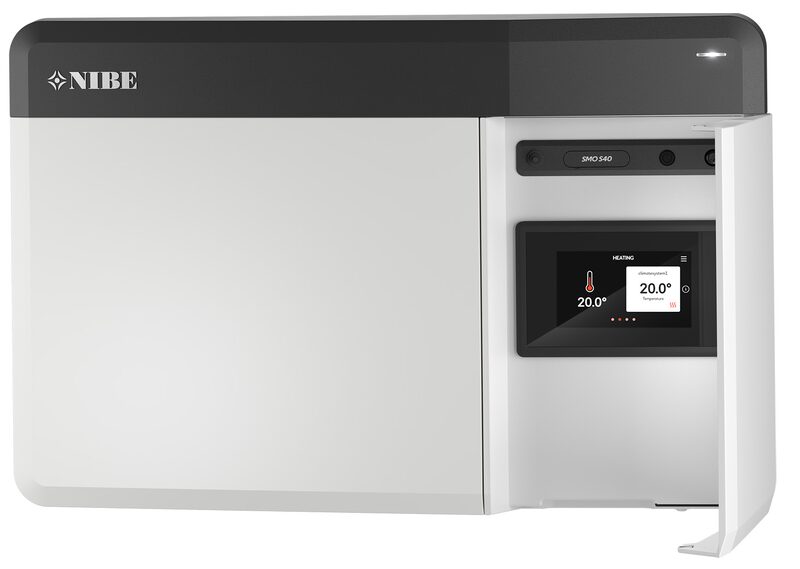
NIBE is a Swedish heat pump manufacturer whose UK presence rests on air to water and ground source heat pumps, and on the control modules that manage them. The control product at the centre of that range is the NIBE SMO S40, a wall-mounted module designed to be combined with NIBE air/water heat pumps and to give optimised control of the climate system1. It carries integrated wifi, measures 540 mm wide, 350 mm high and 110 mm deep, and weighs 5 kg1.
The module is not a thermostat in the ordinary sense. It is the system controller: NIBE states that up to eight NIBE air/water heat pumps can be connected to a control system, and that the module can be connected to components such as a water heater, additional heat sources and other accessories specific to a customised installation1. A separate NIBE RMU S40 room unit carries built in temperature and humidity sensors1.
For a household, the appeal is a heat pump system whose controls are owned and operated on site rather than rented from a third party. The dependence that remains is the electricity grid, an electricity supplier, and, where the wifi and app features are used, a broadband connection and the manufacturer's own infrastructure. This page sets out what the controls offer in the UK, their specifications, the warranty terms, the cost position, the company's status and what the whole arrangement means for a home's energy independence.
What NIBE offers in the UK
NIBE's UK route to market is through accredited installers and through its own product pages rather than through retail shelves. The SMO S40 is designed to be combined with NIBE air/water heat pumps, and the maker describes it as giving optimised control of the climate system1. That phrasing matters: the module is a system controller for a NIBE heat pump installation, not a standalone smart thermostat that can be bolted onto any boiler or any brand of heat pump.
The heat pumps it manages are sold in the UK. The NIBE S735-4 is listed among Quiet Mark certified products available for the UK market, and the listing notes that no outdoor unit is required4. The NIBE S2060 range is also UK-facing, with purchasing routed through NIBE's professional site3. The NIBE S1156 ground source heat pump is available via NIBE's UK pages5. Quiet Mark certification is an independent noise assessment, and its presence on these listings indicates the units were tested for sound output rather than merely described as quiet by the maker.
The S2060 is described as an intelligent, inverter-controlled air source heat pump3. Inverter control means the compressor modulates rather than switching on and off at full output, which is the mechanism that lets a heat pump match a home's heat demand at part load. When combined with a NIBE S-series indoor module featuring built-in Wi-Fi and support for wireless accessories, the S2060 becomes part of a connected system2. That is the point at which the SMO S40 and its relatives sit: between the heat pump, the cylinder, any additional heat source and the household's controls.
Availability is worth checking locally. Quiet Mark's listings state that certified products shown are available for the UK market and may only be available in specific regions4. A householder in one part of the country may find a given model easier to source than one elsewhere, and the installer's own supply arrangements will shape what is actually offered.
Specifications: a system controller, not a thermostat
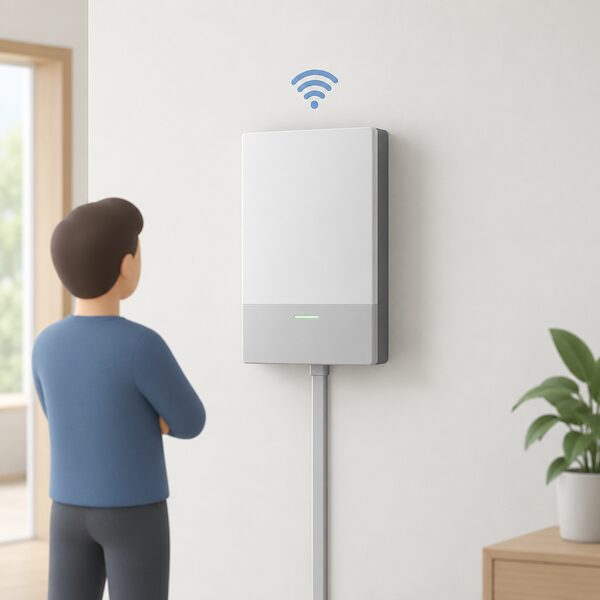
The SMO S40's published dimensions are compact for a system controller: 540 mm wide, 350 mm high and 110 mm deep, with a net weight of 5 kg1. It has integrated wifi, which removes the need for a separate gateway in installations that use the maker's connected features1. The RMU S40 room unit adds built in temperature and humidity sensors, so the system can respond to conditions in a served room rather than only to the return water temperature at the plant1.
| Specification | NIBE SMO S40 |
|---|---|
| Function | Optimised control of the climate system1 |
| Compatibility | Designed to be combined with NIBE air/water heat pumps1 |
| Heat pumps per system | Up to eight NIBE air/water heat pumps1 |
| Connectivity | Integrated wifi1 |
| Width | 540 mm1 |
| Height | 350 mm1 |
| Depth | 110 mm1 |
| Net weight | 5 kg1 |
| Connectable components | Water heater, additional heat sources, other accessories1 |
The eight-heat-pump figure is the specification that separates this class of controller from a domestic thermostat. A single module can coordinate a plant room or a larger property where output is split across multiple units1. For a typical three-bedroom house, that capacity is far beyond what the building needs, and the practical constraint is the heat demand of the property and the installer's design rather than the module's ceiling.
What the published specification does not give is a control class, a modulation protocol or a list of third-party devices the module will talk to. Those details sit with the installer and the system design. A householder comparing this with a mainstream smart thermostat should understand the difference in kind: a smart thermostat replaces a programmer and a room stat on an existing boiler, while the SMO S40 is the controller for a heat pump installation and is specified as part of it. The general principles of how such controls are wired and zoned are set out in heating control wiring and heating zoning.
Warranty: 7 years, conditional on the installer
NIBE's published warranty term for the S2060 range is a 7 year product warranty when installed by a NIBE Pro installer2. The same term appears across the range listings, which suggests it is a scheme-wide condition rather than a model-specific one2.
That conditionality is the substance of the warranty, not a footnote. The term attaches to the installer's accreditation as much as to the appliance. A NIBE heat pump fitted by someone outside the NIBE Pro scheme may not carry the 7 year term, and the householder would need to establish what cover applies in that case. The warranty is also a maker's promise, which means it depends on the manufacturer remaining able and willing to honour it over the full period.
Two further points follow from the way heat pump warranties generally work, and both are visible in the structure of this one. First, the term is tied to commissioning and registration, so the paperwork matters as much as the hardware. Second, a warranty covers manufacturing defects, not performance: it does not guarantee a particular running cost or a particular seasonal efficiency, because those depend on the building, the emitter sizing and how the system is operated. A householder weighing a 7 year term should read it as protection against component failure, not as a promise about bills.
The wider question of how installer accreditation interacts with warranty cover is covered in does DIY thermostat installation affect my warranty, and the general position on product support and app dependence is set out in smart heating control security and data.
Cost: installer-quoted, with no published UK price
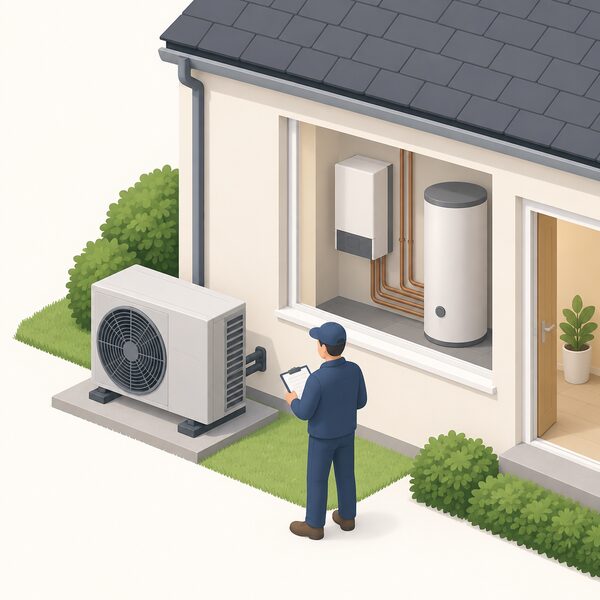
There is no published UK price for the NIBE SMO S40 or for the NIBE heat pumps it controls in the material available. Prices for this class of equipment are installer-quoted, and a quote for a heat pump installation typically bundles the outdoor unit, the indoor module or control module, the hot water cylinder, any additional heat sources, the labour and the commissioning into a single figure.
That bundling is why a standalone price for the control module would be misleading even if one existed. The SMO S40 is specified as part of a system, and its cost is absorbed into the design of that system rather than sold as a discrete retail item1. A householder seeking a figure should expect to receive it after a site visit, when the installer has assessed the property's heat demand, the emitter arrangement and the siting of the plant.
Because no published price exists, no range can be given here. Quoting a figure from another manufacturer's equipment or from a different product category would not describe this system. The honest position is that the cost is whatever a qualified installer quotes for the specific installation, and that comparing quotes is the only reliable way to establish a market rate.
For context on what controls generally cost as a category, how much do heating controls cost covers the wider market. The point to carry across is that a heat pump control module is not a like-for-like purchase against a smart thermostat, and its price is not published in the way a thermostat's is.
Company status and the dependence that remains
Nothing in the available material records NIBE as failed, in administration or otherwise unable to trade. The company continues to publish product pages for the SMO S40 and the S2060 range, and it operates the NIBE Pro installer scheme that underpins its 7 year warranty1. That is the evidence available, and it is not the same as a formal solvency check. A householder committing to a long warranty should confirm the manufacturer's current status independently before signing.
The energy independence picture is mixed, and it is worth stating plainly. A NIBE heat pump runs on electricity rather than gas, so it moves a home off the gas grid and off a gas supplier. That is a real change in the fuel a household depends on. The control module manages the system on site, and the SMO S40's integrated wifi means the connected features do not require a separate gateway1.
What remains is the electricity grid and an electricity supplier, which no heat pump removes. Where the wifi and app features are used, a further dependence is added: a broadband connection and the manufacturer's own servers and software. Local control at the module continues without an internet connection, but remote scheduling, monitoring and diagnostics do not. The general shape of that trade-off is examined in heating controls and energy independence.
"More homegrown energy means greater energy independence"
The wider policy direction points the same way. The Energy Independence Bill, as reported, reforms planning and regulatory frameworks to accelerate offshore wind, hydrogen and smart grid deployment, and introduces measures to speed up grid infrastructure build-out, covering energy affordability, energy security and the transition away from oil and gas7. Flexibility markets for homes and small businesses are part of that shift8. In Northern Ireland, the Northern Ireland Sustainable Energy Programme operates as an energy efficiency programme for domestic and non-domestic customers9. None of this changes the fact that a heat pump household remains a grid customer; it changes what the grid is fed by.
Sources9 cited
- NIBE SMO S40 product page, NIBE, 2026-09-17
- NIBE S2060-10 Heat Pump, Quiet Mark, 2026-09-17
- NIBE S2060-6 Heat Pump, Quiet Mark, 2026-09-17
- NIBE S735-4 Heat Pump, Quiet Mark, 2026-09-17
- NIBE S1156-13 Heat Pump, Quiet Mark, 2026-09-17
- Solar Energy Scotland manifesto, Solar Energy UK, 2026-09-17
- King's Speech outlines three energy bills, End Fuel Poverty Coalition, 2026-05-13
- What is flexibility, Flex Assure, 2026-09-19
- 2024/2025 annual report, Northern Ireland Sustainable Energy Programme, Utility Regulator, 2026-07-03
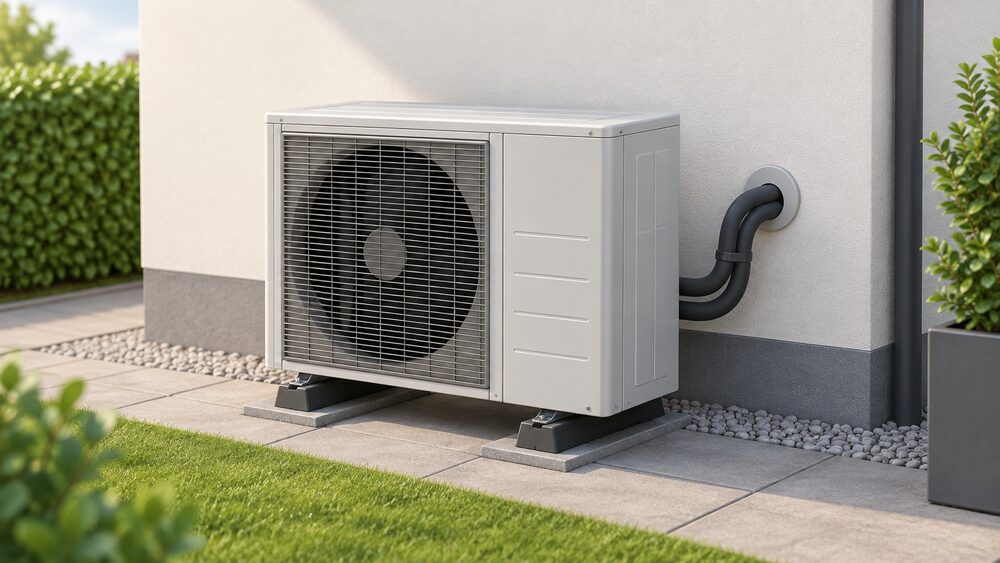 NIBE F2040 air source heat pumpThinking about a NIBE F2040?
 NIBE heat pumps for UK homesThinking about a NIBE heat pump for your home?