
In this guide
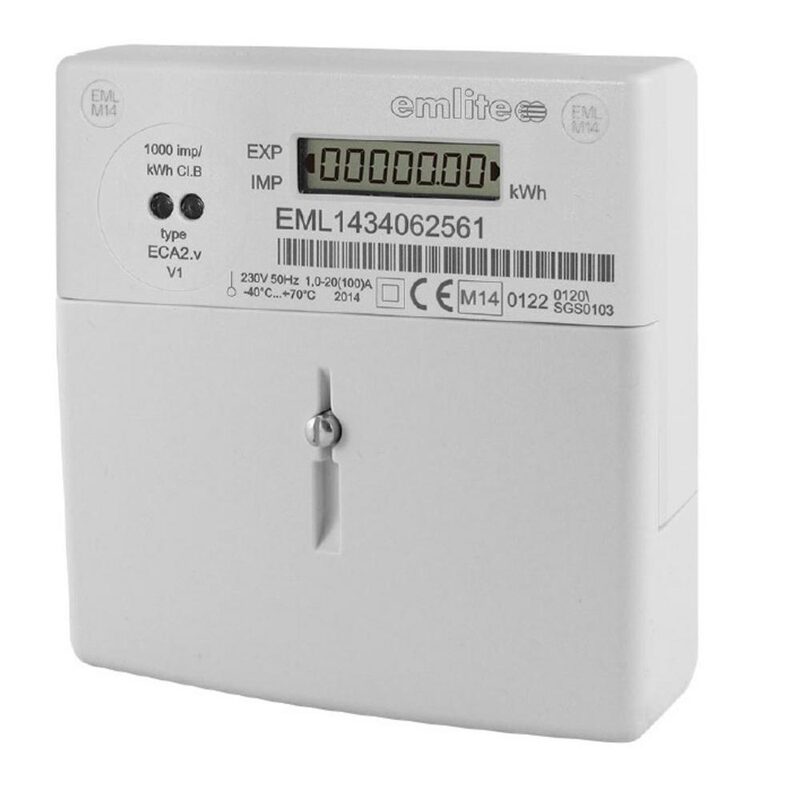
An Emlite meter is a UK-branded electricity meter sold through electrical distributors, and the model most often seen in homes is a single-phase bi-directional generation meter rated at 100A with a 1000 pulse per kWh output and a cover included1. It is not a smart meter. It is a metering device used where a household needs to measure electricity generated and exported separately from what it draws from the grid, which is why it turns up alongside solar, battery and other generation installations rather than in the supplier-led smart meter programme.
The distinction matters because the two metering worlds are governed differently. Domestic electricity meters are classified by profile class: meters with a profile class of 1 or 2 are classified as domestic meters in Great Britain2. Smart meters, by contrast, are the latest type of gas and electricity meter, are provided and fitted by the energy supplier, and come with an in-home display so a household can see and manage its use3. An Emlite generation meter sits in the first category: a meter a household or its installer arranges, not one the supplier brings.
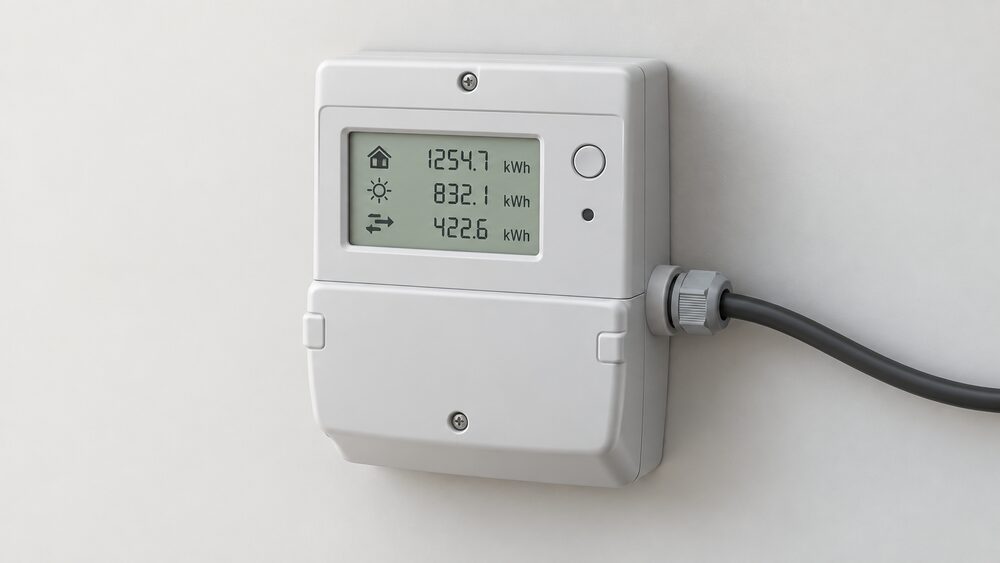
For energy independence, the practical point is that a generation meter is what makes self-generated electricity visible and, in some arrangements, payable. It measures import, export and net values on the meter itself1. What it does not do is remove the household from the grid, from a supplier, or from the national metering framework that decides what gets installed and when.
What Emlite makes: domestic electricity meters
Emlite's presence in the UK market is as a maker of electricity meters rather than of smart metering systems. The product described here is a single-phase bi-directional generation meter, 100A, with a 1000 pulse per kWh output and a cover supplied as part of the unit1. Its defining feature is direction: it registers electricity flowing in both directions and displays import, export and net values as separate readings1. That is what makes it useful where a home generates its own electricity and the household, or the scheme it is paid under, needs to know how much was used on site and how much went out to the network.
The meter carries a commodity code and is sold through a distributor with next day delivery available, and its price is shown only after login1. That pricing arrangement is typical of trade electrical supply: the meter is a component bought by an installer or a technically confident householder, not a consumer product with a shelf price.
It is worth being precise about what "domestic" means in metering. Official statistics classify electricity meters with a profile class of 1 or 2 as domestic meters2. Profile class is a settlement concept: it describes the consumption pattern a meter is expected to see, and it is how the industry separates domestic supply points from others. An Emlite generation meter installed at a house is a domestic meter in that sense, but it is not the meter the supplier uses to bill the household for imported electricity. Those are two different devices doing two different jobs, and a home with generation may have both.
| Attribute | Emlite bi-directional generation meter |
|---|---|
| Phases | Single phase1 |
| Current rating | 100A1 |
| Pulse output | 1000 pulse/kWh1 |
| Direction | Bi-directional, import and export1 |
| Readings displayed | Import, export and net1 |
| Cover | Included1 |
| Sales route | Electrical distributor, next day delivery1 |
| Price | Shown after login1 |
Expected lifespan: no single figure for a domestic meter
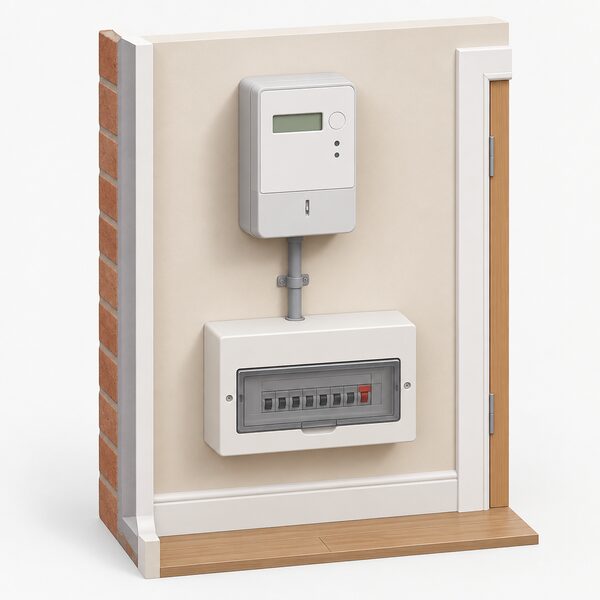
The material here does not give a single regulated lifespan for a domestic electricity meter, and it is worth saying so plainly rather than inventing a figure. What it does give is the definition that fixes a meter's status: profile class 1 or 2 makes it a domestic meter in Great Britain2. Beyond that, a meter's working life in practice is set by the supplier's replacement programme and by the rollout, not by a published expiry date.
The nearest comparable lifespan figures in the material come from other domestic energy equipment, and they show how wide the range is across technologies. Domestic hydropower is described as almost maintenance free with a system life expectancy of up to 50 years8. Electric vehicle batteries carry manufacturer warranties of at least eight years or 100,000 miles9. Smart meters themselves carry a much shorter obligation: energy suppliers are required to maintain smart meters for 12 months after installing them10. Those three figures describe three different things, a generating system, a battery and a service obligation, and none of them is a meter lifespan. They are included here only to show that "how long does it last" has no single answer across home energy equipment.
What a household can reasonably expect is that a meter stays in place for a long period and is replaced when the supplier's programme reaches it, when it faults, or when the property's metering arrangement changes. The rollout deadline of the end of 2030 for remaining domestic premises is the timetable that will determine when most conventional meters are swapped5.
Where Emlite meters fit in the UK smart meter rollout
They sit outside it. The smart meter programme is a supplier-led replacement of analogue gas and electricity meters as part of a national infrastructure upgrade to improve and modernise Great Britain's energy system4. Smart meters are being installed by energy suppliers across England, Scotland and Wales, and every home in those three nations will be offered the opportunity to upgrade before the end of the rollout3. All British energy suppliers must aim to install a smart meter in every home as part of a government programme to replace older energy meters11.
An Emlite generation meter is not part of that replacement. It is an additional meter, installed where a household needs generation and export measured. The rollout's own metering rules recognise this kind of arrangement: where a Feed-in Tariff installation has added storage or electric vehicle charging, the meter must be able to measure the amount of electricity generated or exported from the installation separately from any other source, unless pro-rating is allowable12. That is precisely the function a bi-directional generation meter performs, and it is why these devices remain in demand even as the supplier-facing meter population turns smart.
The scale of the supplier-led programme is large. As of the end of March 2025 there were 39 million smart meters in domestic and non-domestic premises across Great Britain, over two-thirds of all meters7. Small suppliers account for a small share of installations: 3.02% of all smart and advanced meters as of December 20247. The programme is also uneven in what it installs. Within one set of non-domestic standard smart meter installations, nearly nine in 10, at 87.95%, were for electricity7.
Northern Ireland is not covered by the same description. The rollout material here refers to England, Scotland and Wales, and to Great Britain, rather than to the whole United Kingdom3. Households there should treat the metering position as separate.
What a meter's lifespan means for household energy independence
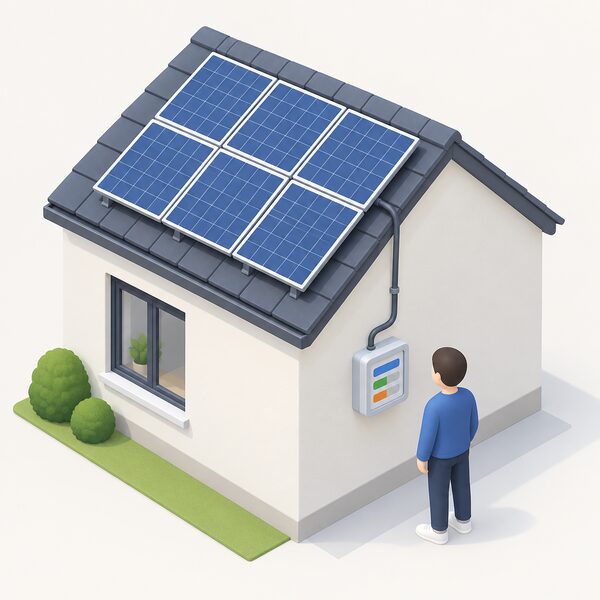
A generation meter is a small piece of hardware with an outsized role in independence, because it is the device that turns self-generation into a measured quantity. Without separate measurement of generation and export, a household cannot demonstrate what it produced, what it used and what it sent out. The Emlite unit does that directly, showing import, export and net values on the meter1.
The independence it supports is partial and specific. It makes on-site generation visible and, where a scheme requires it, verifiable. It does not disconnect the home from the grid, and it does not remove the need for a supplier. The household still buys imported electricity, still relies on the network for times when generation is short, and still depends on the supplier's own meter for billing.
There is a second, quieter dependence: the meter's own readings are only as useful as the arrangements built around them. A smart meter tracks how much power an entire home uses per day, week, month or year, shows it on the in-home display, and sends readings automatically to the energy supplier11. A generation meter does none of that automatically. It displays values locally, and someone has to read them or connect them to a monitoring system. That is the trade: more direct control over generation data, less automation.
The wider direction of travel is toward using meter data for assessment as well as billing. Smart Meter Enabled Thermal Efficiency Ratings are described as a cost-effective approach for assessing energy performance while the home is in use, using smart meters and other low-cost data sources to produce metrics such as the rate of heat loss13. That is a use of the supplier's smart meter, not of a generation meter, and it shows where the value in metering is accumulating.
How the Smart Meter Targets Framework shapes what gets installed
The framework that governed supplier installations ran from 1 January 2022 to 31 December 2025 and has now concluded6. Under it, energy suppliers were required to meet binding annual targets for installing smart and advanced meters6. The four-year obligation set individual minimum annual installation targets, subject to an annual tolerance level, to reach market-wide coverage15. In Year 1 (2022) and Year 2 (2023), mixed portfolio suppliers, those with both domestic and non-domestic premises, had a single annual installation requirement for electricity and gas separately5.
Performance against those targets was mixed. In 2022, 13 large suppliers installed 3.7 million meters against their combined target of nearly five million16. The framework's end point was tied to coverage: the existing targets required suppliers to deliver smart meters to 74.5% of relevant domestic premises in Great Britain5. Separate non-domestic smart metering installation targets have applied to all energy suppliers since 1 January 202418.
What replaces the framework is still taking shape. A consultation issued on 8 August 2025 set out post-2025 obligations, including a requirement to resolve smart meters operating in traditional mode within 90 days, and closed on 3 October 20255. The direction is toward completing the domestic rollout by the end of 20305. Once the rollout is judged complete, responsibility for smart metering passes to Ofgem and the Smart Energy Code governance19.
For a household, the framework's relevance is indirect but real. It determines whether a supplier has an incentive to reach a particular property, how quickly faults are addressed, and when a conventional meter is likely to be replaced. It does not create any obligation to install a generation meter, and it does not make an Emlite meter part of the supplier's programme.
Choosing and owning a meter: what a householder can weigh up
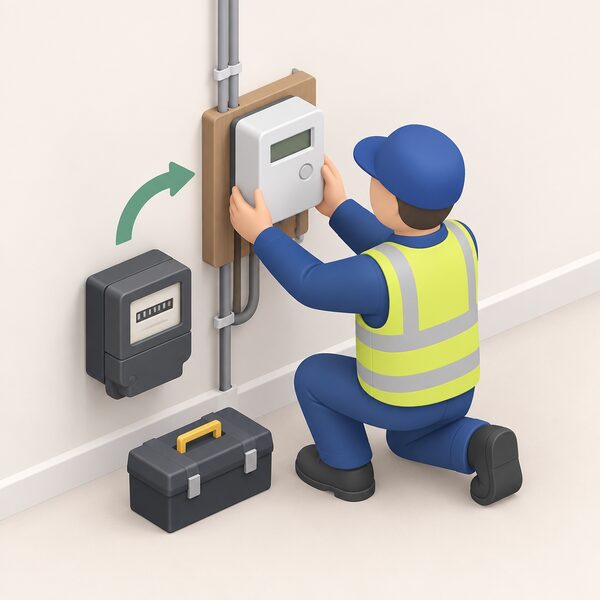
The division of responsibility is the first thing to understand. Unless a consumer has offered to supply an appropriate meter themselves, the energy company must ensure the installation and maintenance of an appropriate meter, and must investigate notified issues at the earliest opportunity, including re-billing based on undisputed readings20. That is the supplier's meter, the one used for billing.
A generation meter is a different proposition. Where a Feed-in Tariff installation has added storage or electric vehicle charging, the meter must be able to measure generation and export separately from any other source unless pro-rating is allowable12. Under the Domestic Renewable Heat Incentive, metering for payment must be fitted as an eligible metering arrangement so the heat generated is properly recorded21. Both rules point the same way: where a scheme pays for output, the metering has to be capable of separating that output from everything else.
On smart meters specifically, the position is permissive rather than compulsory. Independent guidance states it is not compulsory to have a smart meter installed and that a householder can refuse one if the supplier offers it10. Suppliers are required under their licence conditions to take all reasonable steps to install a smart meter where a meter is fitted for the first time or a traditional meter needs replacing due to a fault22. There is currently no requirement for suppliers to install a smart meter on request, though a householder can ask22. Installation is at no extra cost23.
Switching suppliers with a smart meter is possible, but the new supplier might not offer all smart meter services such as remote meter readings, and the meter may need replacing25. First-generation SMETS1 meters do not always allow a change of supplier without losing automatic readings, while SMETS2 meters keep smart functionality across suppliers26. Renters can have a smart meter installed, and the bill payer at the property makes the decision10.
For a household weighing a generation meter, the questions are practical: whether a scheme or an export arrangement requires separate measurement, whether the installer is providing the meter as part of the work, and how the readings will be captured. The Emlite unit answers the measurement question and leaves the rest to the installation.
Sources26 cited
- Emlite 1-ph Bi-Directional generation meter 100A, Alternergy, 2026-09-17
- Domestic electricity consumption indicator, Office for National Statistics, 2025-12-18
- What is a smart meter?, Smart Energy GB, 2026-03-16
- Smart meters: your rights and expectations, GOV.UK, 2025-08-08
- Smart metering policy framework post-2025, GOV.UK, 2025-08-08
- Supplier smart metering installation targets (Welsh), Ofgem, 2026-09-17
- Smart meter statistics, Uswitch, 2024
- Hydropower for the home, Uswitch, 2026-01-06
- EVs: the facts, SMMT, 2026
- Help me decide on a smart meter, Smart Energy GB, 2026-03-16
- Problems with services, Isle of Anglesey County Council, 2025-10
- Feed-in Tariffs, Energy Ombudsman, 2026-09-20
- Are energy monitors the best way to measure your power usage?, Which?, 2026-03-31
- Smart metering policy framework post-2025 consultation, DESNZ, 2025-08
- Design and construct new builds to enable smart meter installations, GOV.UK, 2026-03-24
- Update on the rollout of smart meters report, Public Accounts Committee, 2023
- Smart Meter Guaranteed Standard statutory consultation, Ofgem, 2025-08
- Smart meter rollout research briefing, House of Commons Library, 2023
- Smart Metering 2025 Costs and Benefits Report, DESNZ, 2025
- WHSHF Wave 3 scheme guidance addendum, DESNZ, 2026-06
- Domestic RHI: Guide to metering, Ofgem, 2022-03
- Smart meters, Energy Ombudsman, 2026-09-20
- How to get a smart meter, Smart DCC, 2026
- Supplier smart metering installation targets, Ofgem, 2026-09-17
- Installation of smart meters case study, Energy Ombudsman, 2026-09-20
- How do you know if you have a smart meter?, Smart DCC, 2026