In this guide
Hildebrand Glow is a UK range of consumer access devices, displays and sensors that read your own smart meter and put the data in your hands rather than only in your supplier's. The Glow Delta is described by the maker as its next generation Consumer Access Device, connecting to DCC enrolled smart meters and to low-carbon technology devices with MODBUS connections1. The Glow In-Home Display + CAD combines a display with that access device in one unit1.
The point of the range is ownership of the data. A smart meter already sends readings automatically to your supplier over a secure network2, and every household that gets one is provided with an in-home display3. Glow sits alongside that arrangement: it reads the meter and provides data to the Glow ecosystem or to your own applications1. For a household thinking about solar, a battery or a time-of-use tariff, that is the difference between seeing a monthly bill and seeing what happened at half past six last Tuesday.
Hildebrand Technology Limited is registered in England and Wales under company number 055770504. The company is not only a hardware maker: it also acts as a data processor for flexibility schemes, handling half-hourly consumption and baseline data on behalf of a partner in the Demand Flexibility Service4.
What Hildebrand Glow is and what it does
Glow is best understood as a bridge. The smart meter network exists to move readings from your meter to your supplier, and it does that automatically and wirelessly6. What it does not do by default is hand those readings back to you in a form you can analyse, automate or export. A consumer access device closes that gap by reading the meter locally and passing the data onward.
Hildebrand's own description of the Glow electricity meter is "an advanced smart electricity meter" that "provides data to the Glow ecosystem or your own applications"1. That second half is the important one. The data is not locked to a single app; it can be routed into other systems, which is why the consumer range is described as Home Assistant ready with smart device integration and automation5.
The wider Glow hardware range extends beyond electricity. The Glow Flux uses ultrasonic flow measurement and low-power consumption technology and is described as a reliable, accurate and maintenance-free solution for both heating and cooling systems1. The Glow Aqua is a water meter1, and the Glow Temperature Sensor monitors temperature and humidity levels within homes and buildings1. Taken together, the range is a monitoring platform rather than a single product.
For a household, the practical effect is that the meter stops being a black box. The supplier still receives its readings, and the data still supports billing, new tariff offers where permission has been given, and more accurate demand recording across the system7. Glow adds a parallel channel that the household controls.
The range: displays, hubs and monitoring hardware
The range splits into three rough groups: devices that read the meter, devices that show you the result, and sensors that measure something else entirely.
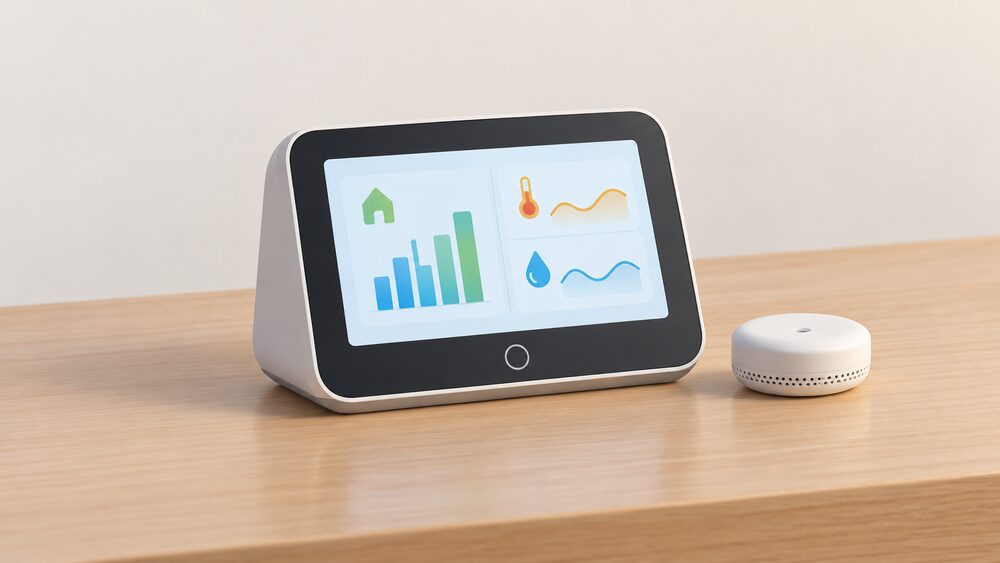
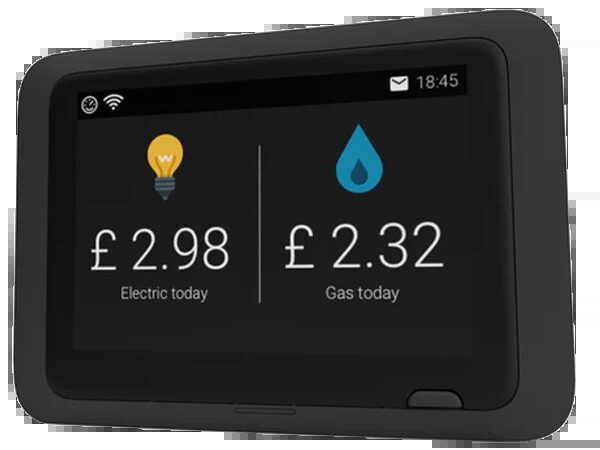
The Glow Delta is the current consumer access device, described as Hildebrand's next generation CAD1. The Glow In-Home Display + CAD is a combined unit, giving a screen and the data access in one product1. The Glow SAPC is described by the maker as the world's first SAPC device, and it communicates additional IoT data back through the GB smart meter network1. That last point distinguishes it from a simple reader: it is a two-way path.
| Device | What it is | What it measures or does |
|---|---|---|
| Glow Delta | Next generation Consumer Access Device1 | Connects to DCC enrolled meters and MODBUS low-carbon technology devices1 |
| Glow In-Home Display + CAD | Consumer Access Device with Display1 | Meter reading plus an on-unit screen1 |
| Glow SAPC | Smart Additional Power Consumption device1 | Communicates additional IoT data back through the GB smart meter network1 |
| Glow Flux | Flow measurement device1 | Ultrasonic flow measurement for heating and cooling systems1 |
| Glow Aqua | Water Meter1 | Water consumption1 |
| Glow Temperature Sensor | Environmental sensor1 | Temperature and humidity within homes and buildings1 |
The consumer software layer adds real-time electricity and gas consumption tracking, cost calculations, export tracking and historical usage analysis and trends5. Those are the four functions most households actually use: what am I using now, what is it costing, what am I sending back, and how does this week compare with last.
How Glow connects to your smart meter and reads your data
The connection path matters, because it determines whether a device will work in a given home. Hildebrand states that the Glow Delta connects to DCC enrolled smart meters and to any low-carbon technology devices with MODBUS connections1. DCC enrolment is the key phrase: it describes a meter that has been brought onto the national smart metering network, which is the normal state for SMETS2 installations and for SMETS1 meters that have since been enrolled.
The Glow electricity meters are described as compatible with GB electricity markets1. That is a Great Britain description, so it covers England, Scotland and Wales. Northern Ireland runs a different metering and support arrangement, and the guidance there points households toward independent advice on solar panels, heat pumps and other efficiency measures rather than to the GB smart meter network8.
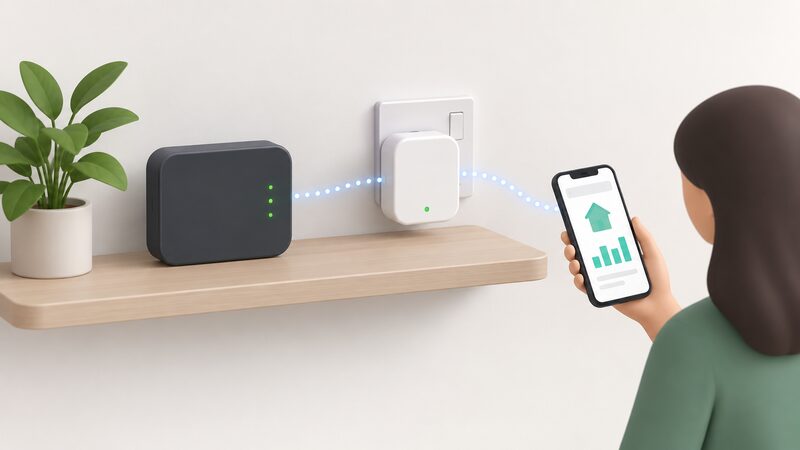
Once connected, the data flows two ways in the sense that matters. The meter continues to send readings to the supplier automatically9, and the Glow device reads the same meter and provides data to the Glow ecosystem or to your own applications1. The Glow SAPC goes further and communicates additional IoT data back through the GB smart meter network1.
What the data shows: consumption, cost and export
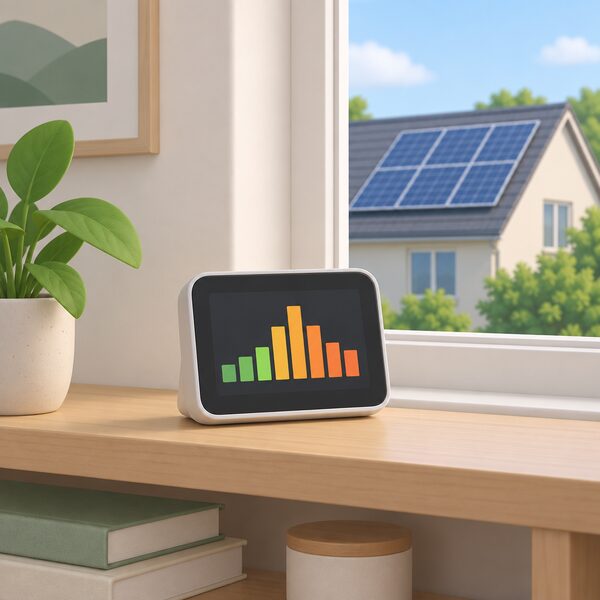
The consumer feature set is real-time electricity and gas consumption tracking, cost calculations, export tracking, and historical usage analysis and trends5. Each answers a different question.
Real-time tracking shows what is drawing power now, which is how a household identifies a device left running. Cost calculations turn that into money, using the tariff the household is on. Historical analysis shows whether a change made any difference, which is the only way to judge a tariff switch or an appliance replacement honestly.
Export tracking is the feature that matters most for anyone with solar. Surplus solar electricity can be sold back to the grid through the Smart Export Guarantee11, and the exported electricity goes back to the National Grid12. Seeing export separately from import is what allows a household to judge whether a battery would capture more of what is currently being given away, or whether a different export tariff would pay better.
There is a wider reason this data has value. New products and services, from plug-in solar to optimisation software, are reshaping how consumers use energy13, and all of them depend on a household being able to see its own half-hourly pattern. The price cap benchmark for a multi-register electricity meter is set at 4,200 kWh a year14, which is a system-wide average rather than a description of any one home. A household's own figure is the one that matters for sizing anything.
Hildebrand's data role extends into flexibility. In the Demand Flexibility Service, a partner shares the household's MPAN number, half-hourly electricity consumption, baseline and reduction data with the National Energy System Operator via Hildebrand4. The same company that sells a household a device to see its data also processes that data for a national scheme, which is worth knowing when deciding what to connect.
Glow and household energy independence: what owning one changes
Owning a Glow device changes one thing clearly and leaves several dependencies untouched.
What it changes is visibility. The household sees its own consumption, cost and export without waiting for a bill or asking a supplier. That is the raw material for every decision about solar, batteries, tariffs and load shifting. Hildebrand's own Glow for homes site offers resources and tools to help people make informed decisions about their home, plan retrofit and consider the impact of having a heat pump5. Independent advice points the same way: homeowners are directed to independent advice on solar panels, heat pumps and other efficiency measures8, and government grants and energy efficiency schemes may be available to help homeowners, tenants and landlords improve their properties15.
What it does not change is the underlying supply. The home remains connected to the grid and to a supplier. The meter still sends readings to that supplier9, and the data still supports billing and, where permission has been given, new tariff offers7. A Glow device does not generate anything, does not store anything and does not reduce a bill by itself. It is an instrument, not a source of energy.
There are smaller dependencies worth naming. The app and any cloud features rely on a working internet connection and on Hildebrand continuing to run the service. The device relies on the smart meter network being up and on the meter being enrolled. And the data itself is only as good as the metering behind it, which is why data quality is treated as a serious matter in the wider industry16.
Where the device earns its place is in the decisions it informs. A household that can see its own export figures is in a position to judge whether a battery would help; one that can see its half-hourly pattern can judge whether a time-of-use tariff suits its routine. The independence is in the information, not in the supply.
Who Hildebrand are and the scale behind the platform
Hildebrand Technology Limited is registered in England and Wales under company number 055770504. The company operates the Glow consumer range and also works as a data processor in national flexibility arrangements.
That second role is substantial. In the Demand Flexibility Service, Uswitch works with Hildebrand Technology Limited as its partner, and the household's MPAN number, half-hourly electricity consumption, baseline and reduction data are shared with the National Energy System Operator via Hildebrand4. The same arrangement appears on the increase side, where MPAN, half-hourly consumption, baseline and increase data are shared with NESO via Hildebrand4. Handling that data requires the company to sit inside the metering and settlement arrangements rather than merely alongside them.
Hildebrand also appears as the lead organisation on a Heat Pump Ready project, with project partners including Build Test Solutions Ltd, NJV Limited, Richard Carmichael Research & Consulting Ltd, Davies and Mckerr Ltd and SE2 Limited17. That places the company in government-funded retrofit and heat pump work as well as in consumer hardware.
The scale of the wider monitoring sector gives context. The Energy Systems Catapult's Living Lab works with thousands of digitally-connected homes to help design, market-test and launch low carbon products18. Chameleon Technology, which makes the ivie service, has delivered over 10 million in-home displays through major energy suppliers19. Hildebrand is a smaller, more specialist operation than those figures describe, and its strength is in data access and integration rather than in mass-market display supply.
Setting up and getting started with a Glow device
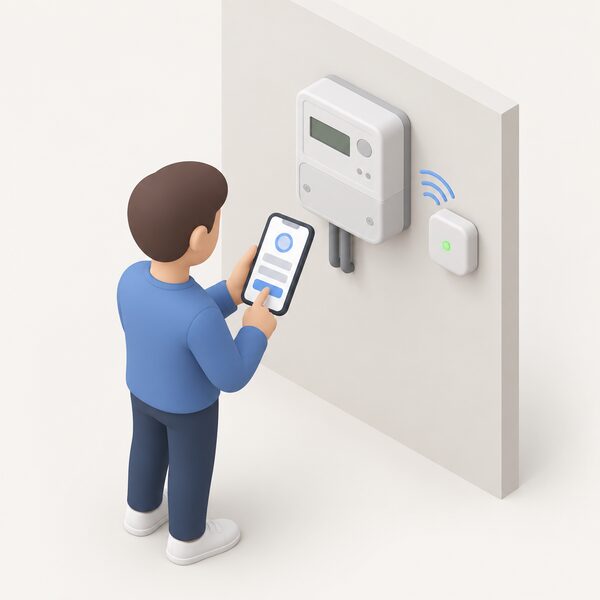
Setup is a matter of pairing the device with the meter and then connecting the app. The Glow Delta connects to DCC enrolled smart meters and to low-carbon technology devices with MODBUS connections1, so the first check is whether the meter is enrolled on the national network. If it is, the device can read it.
The consumer range supports smart device integration and automation and is Home Assistant ready5, which means readings can be routed into a home automation system rather than staying inside one app. For a household already running a hub, that is the difference between a standalone display and a data source that feeds everything else.
If a household already has an in-home display from the supplier, digital user guides exist for most types of in-home display used in the UK20, which helps identify what is already installed before buying anything else. Accessible in-home displays can make measuring energy use easier21, and where a household moves, the in-home display should be left for the next people who will live in the home22.
The practical sequence is: confirm the meter is enrolled, choose the device that matches what you want to see, connect it, and then decide where the data goes. The value accumulates over weeks rather than minutes, because the historical trends are what make a pattern visible.
Where Glow fits against the alternatives
Glow is one option among several for getting at your own smart meter data, and the differences are mostly about where the data ends up.
A supplier-provided in-home display shows real-time consumption and cost but is tied to that supplier's installation and is generally left behind on moving22. A Glow device reads the same meter but routes the data to the Glow ecosystem or to your own applications1, which is a more portable arrangement. For households with solar, the export tracking in the consumer feature set5 is the function that a basic display often lacks.
The wider market is moving toward integration. New products and services, from plug-in solar to optimisation software, are reshaping how consumers use energy13, and most of them assume the household can supply half-hourly data. A device that is Home Assistant ready5 is positioned for that world rather than for a single closed app.
The limits are real. Compatibility is stated for GB electricity markets1, so Northern Ireland households sit outside it. The device depends on the smart meter network and on DCC enrolment. And the data it produces is only useful if a household acts on it, whether by changing a tariff, adding a battery or shifting load. Glow makes the pattern visible; it does not change the pattern.
Sources22 cited
- Glow products, Hildebrand
- How do smart meters save energy?, Smart DCC
- Easy read: what is a smart meter, Smart Energy GB, 2026-03-16
- Power Hours terms, Uswitch, 2026-09-14
- Glow consumer solutions, Hildebrand
- Time-of-use tariffs: all you need to know, Energy Saving Trust, 2026-05-20
- Get help with your smart meter, Ofgem, 2026-09-17
- Support to generate your own electricity, nidirect, 2025-09-22
- Smart meters in Wales, Welsh Government
- Data protection and smart meter data, Open Energy, 2026-09-20
- Smart Export Guarantee, Solar Energy UK, 2026-05-13
- Solar panels, East Herts Council, 2026-09-17
- Supporting the shift, Citizens Advice, 2026-07-29
- Energy price cap levels 1 July to 30 September 2025, Ofgem, 2025-05
- Information for homeowners, Elmhurst Energy, 2026-09-20
- Why data quality matters, MCS Certified
- Heat Pump Ready Programme stream 2 projects, GOV.UK, 2026-05-28
- Our Homes Net Zero Toolkit, Energy Systems Catapult, 2025-07-31
- Understanding your energy usage, ivie, 2023-12-20
- Find the user guide for your smart meter's in-home display, Citizens Advice, 2026-09-17
- Accessibility and support, Smart Energy GB, 2026-03-16
- Moving home: dealing with your energy supply, Citizens Advice, 2026-09-20