In this guide
Eve is a consumer smart home brand built around Apple HomeKit, with a range that now spans plugs, sensors and energy monitoring. Its energy products do one job that a smart meter cannot: they measure a single appliance rather than the whole house. Independent guidance is clear that smart plugs "can provide you with data on how your appliances are using energy in your home", and that a smart meter in-home display "does not automatically break usage down by appliance"1.
The Eve Energy Outdoor plug adds Matter and Thread, and its power metering works on the Apple Home platform through the Eve app for iPhone and iPad and on the Samsung SmartThings platform through SmartThings Energy. Eve states plainly that power metering is "currently not supported for users of the Amazon Alexa and Google Home platforms"3. The plug carries no subscription and no registration, and there is no Eve cloud3.
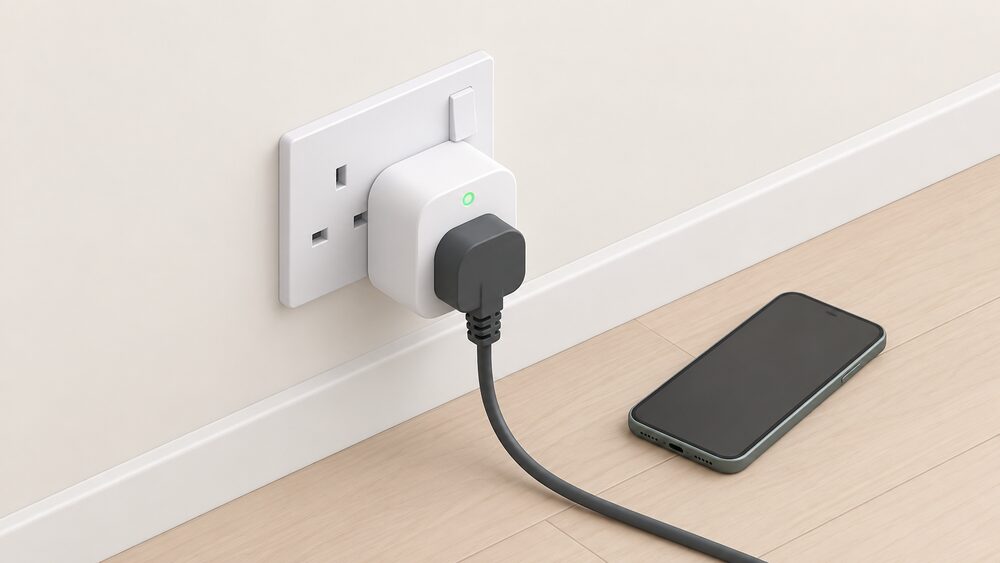
That combination, appliance-level data with no account and no cloud, is the core of what the brand offers a household. What it does not do is remove the home from the grid or from a supplier. A plug measures and switches; the electricity still arrives through the meter, and the wider picture of a home's consumption still comes from the smart meter and its in-home display.
What the Eve range covers: plugs, sensors and energy monitoring
Eve's app is the hub of the range. It controls HomeKit-enabled accessories including switches, thermostats, cameras and locks, and it shows current temperature, humidity, air quality and other sensor measurements in one view5. That makes Eve a general smart home brand first and an energy monitoring brand second, with the energy products sitting inside a wider ecosystem of sensors and controls.
The energy side is narrower than the sensor side. Eve Energy and Eve Energy Outdoor are the metering products, and the app's energy function is described as showing how appliances influence power consumption5. There is no whole-house clamp or circuit-level monitor in the range as described, so Eve does not compete with a consumer access device or a home energy monitor that reads the meter itself.
That distinction matters for what a household can expect. A smart meter records electricity use in near-real time and gas every half hour, and it supports both fuels, while many home energy monitors focus on electricity only6. Eve's plugs sit below that level, measuring what is plugged into them. The two layers answer different questions: the meter answers what the house is using, the plug answers what the appliance is using.
For a household working through a wider monitoring plan, the appliance layer is where standby load becomes visible. Standby consumption is the classic case, and it is the reason a plug with metering earns its place rather than being a convenience switch8. The smart plugs and appliance monitoring page sets out how that layer fits with the rest.
Eve Energy: what the smart plug reports
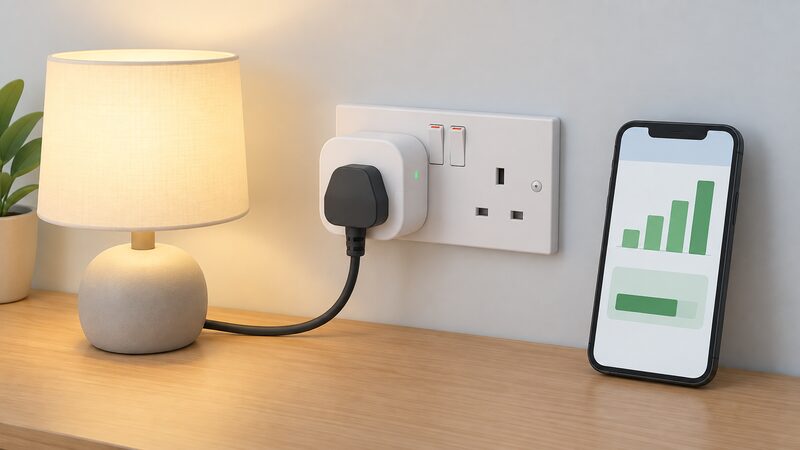
A metering smart plug reports three electrical quantities: current, voltage and energy consumption. Independent guidance describes smart plugs as monitoring "a device's current, voltage, and energy consumption, providing real-time reports on energy consumption via a phone app"4. A second guidance page repeats the same three quantities and the same real-time reporting through a phone app4. Eve's own app description matches the appliance-level framing: it shows how appliances influence power consumption5.
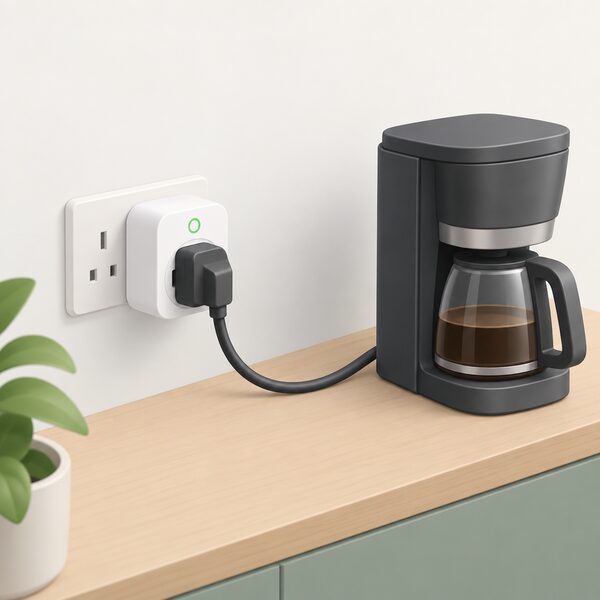
In practice that means a household can see what a single appliance draws while it runs, and what it draws when it is supposedly off. The plug sits between the socket and the appliance, so it captures everything downstream of it, including a device left on standby. That is the measurement a smart meter cannot give, because the meter sees the total for the house and the in-home display presents that total rather than a breakdown2.
The limits are physical. A plug measures one socket, so a household wanting a full appliance picture needs several plugs, and each one occupies a socket. Extension leads can carry multiple devices on one plug, which is useful for a desk or a media stack but blurs the per-appliance reading. Anything hardwired, such as an electric shower or an immersion heater, cannot be measured this way at all.
Power monitoring: real-time readings versus cumulative consumption
There are two different things a household can watch, and they come from different devices. The first is the near-real-time whole-home figure. Smart meters provide near-real-time energy consumption information to households and suppliers, and the in-home display shows how much energy is being used in near real time9. Smart Energy GB describes the display as showing energy use in near real time, and the Data Communications Company describes near real-time data as showing exactly how much energy is being used10.
The second is the appliance-level figure from a plug, which is real-time for that socket only. The two are complementary rather than competing. A smart meter tracks how much power an entire home uses per day, week, month or year and sends readings automatically to the supplier, while a home energy monitor can track electricity use but cannot automatically send meter readings7. Neither replaces the other, and a plug replaces neither.
Cumulative consumption is where the meter wins. Billing is based on actual rather than estimated usage, with energy use recorded automatically in half-hour periods, which is what allows accurate bills and ends the bill shock that estimates produce12. A plug's cumulative figure is per appliance and per plug, and it is only as complete as the number of plugs installed.
Where estimates do still appear, any difference between the estimate and actual use is corrected on the next bill when the automated reading arrives on a different day to bill creation14. That is a meter-level correction, not something a plug can influence. For households wanting their own copy of the meter data rather than an appliance view, consumer access devices covers the options.
Eve Energy Outdoor and monitoring through SmartThings
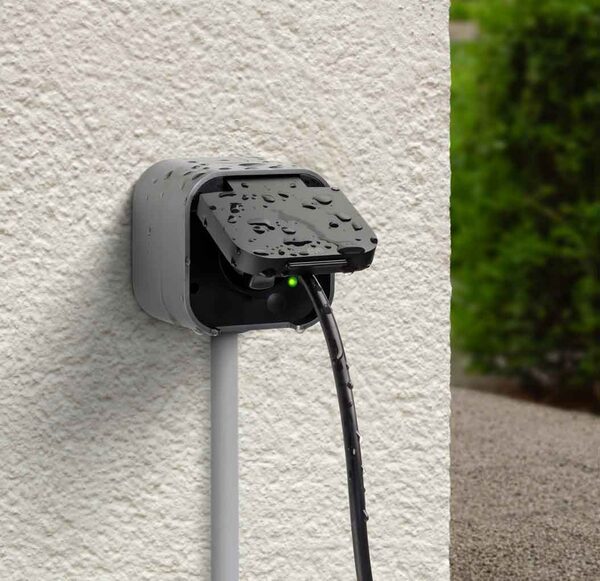
The Eve Energy Outdoor is the more capable of the two metering plugs, and its platform support is the detail that decides whether it is useful in a given home. Eve states that power metering is available on the Apple Home platform through the Eve app for iPhone and iPad and on the Samsung SmartThings platform through SmartThings Energy, and that it is not supported for users of the Amazon Alexa and Google Home platforms3.
The plug connects over Thread and requires a compatible hub with Matter Controller and Thread Border Router functionality3. That is a hardware requirement, not a software setting: without a suitable hub the plug has nothing to route through. The app requirements are an iPhone or iPad with the latest version of iOS or iPadOS, or an Android device running 8.1 or later3.
Eve also describes a second use for the Outdoor model: connecting a balcony solar system to it and monitoring energy generation over time3. That extends the plug from consumption to generation, though it is a small-scale measurement rather than a substitute for proper solar monitoring. For a fuller treatment of generation-side monitoring, solar and battery system monitoring sets out what a system-level view involves.
| Feature | Eve Energy Outdoor |
|---|---|
| Wireless connection | Thread3 |
| Hub requirement | Matter Controller and Thread Border Router3 |
| Metering platforms | Apple Home (Eve app), Samsung SmartThings (SmartThings Energy)3 |
| Metering not supported | Amazon Alexa, Google Home3 |
| Solar monitoring | Balcony solar generation over time3 |
| Account and cloud | No subscription, no registration, no Eve cloud3 |
| App requirement | iOS/iPadOS latest, or Android 8.1 or later3 |
Load balancing: Eve Single Plus and the wider picture
The Eve Single Plus is not an Eve Home product. It is an Alfen electric vehicle charger, built on the Alfen Hardware Platform, and the shared name is a branding coincidence rather than a shared owner15. Its load balancing is an optional feature that works via a P1 DSMR smart meter, a Linky smart meter or an external Modbus TCP/IP energy meter, and the charger can connect directly to a smart meter via P1 or TIC for active load balancing and Smart Charging Network support15.
The distinction matters because the two product lines do not interoperate. A household searching for Eve load balancing is looking at EV charging hardware, not at a smart plug. The charger also carries MID or optional Eichrecht certified energy metering for settlement, two Ethernet ports supporting daisy chaining, and a 3.5 inch IPS colour display at 320 x 240 pixels, 1000 cd/m2 brightness and an 800:1 contrast ratio, described as 2.5 times the brightness of the Pro version15.
Several capabilities are listed as arriving in future firmware releases rather than being available now: fixed IP configuration and enhanced load balancing, integration with energy management systems, solar charging, Eve Connect, vehicle-to-everything and Plug and Charge. Bidirectional charging is described as hardware ready for interoperable V2X based on ISO15118-20, also in future firmware releases, and EMS integration via Modbus TCP/IP is in the same category15.
Load balancing at the appliance level is a different idea again. An energy smart appliance is defined in official guidance as an appliance, such as an electric vehicle charging point or a heat pump, capable of increasing or reducing its electricity demand in response to signals received remotely from a third party16. That is the mechanism behind flexibility schemes, and it is a system-level function rather than something a metering plug performs. The energy smart appliances and automated load control page explains how those signals reach a home.
How Eve compares with other smart plugs for appliance-level monitoring
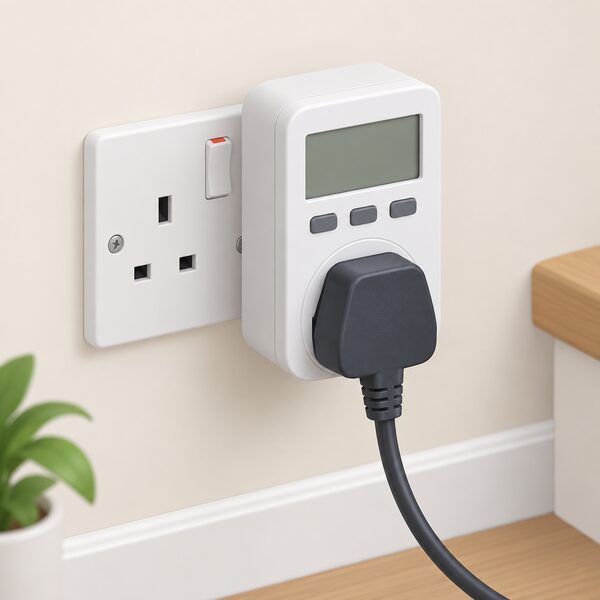
The functions of a metering smart plug are broadly standard across brands. Independent guidance lists four: monitoring energy consumption of individual appliances, turning appliances on or off remotely, setting times for appliances to be turned on or off, and activating appliances through voice recognition4. Eve's differentiators are not in that list but in the platform and privacy choices around it.
The first is ecosystem. Eve's metering works on Apple Home and Samsung SmartThings and not on Amazon Alexa or Google Home3. A household already committed to Alexa or Google therefore loses the metering function, which is the main reason to buy the product. That is a harder constraint than a missing convenience feature.
The second is the absence of an account. Eve states no subscription, no registration and no Eve cloud3. Many connected devices require an account and route data through manufacturer servers, which creates a continuing dependence on that company. Eve's approach removes that particular dependence, though it does not remove the dependence on Apple or Samsung as the platform, or on a home network for remote access.
The third is the measurement itself. A plug-in energy monitor works with any appliance that has a three-pronged UK plug, including kettles, washing machines and electric ovens, and with multiple devices on one extension lead17. That is a general statement about the category rather than about Eve, and it sets the ceiling on what any plug can measure. For a comparison of the wider monitoring field, smart meter vs standalone energy monitor sets out where each device type sits.
Privacy: no cloud, no registration, no tracking
The privacy position is stated by the maker and is unusually clear: no subscription, no registration, no Eve cloud3. For a household thinking about energy independence, that is a real reduction in dependence. The data stays with the platform the household has chosen rather than accumulating in a manufacturer's account system, and there is no recurring payment tied to the device continuing to work.
It is worth being precise about what this does and does not cover. The absence of an Eve cloud removes one link in the chain, not all of them. Apple Home and Samsung SmartThings are platforms with their own data handling, and remote access from outside the home still requires a network connection and the platform's infrastructure. Local control at the device continues without an internet connection, but scheduling from away and any remote diagnostics depend on the platform.
The wider question of what connected devices must do about security is now regulated. The UK's connected device security regime applies to consumer products of this kind, and connected device security rules explains what the PSTI regime requires of manufacturers. For households weighing how much of their energy data sits in someone else's system, app subscriptions and cloud dependence covers the trade-offs across device types.
Eve and ABB: who owns the brand and what it means for owners
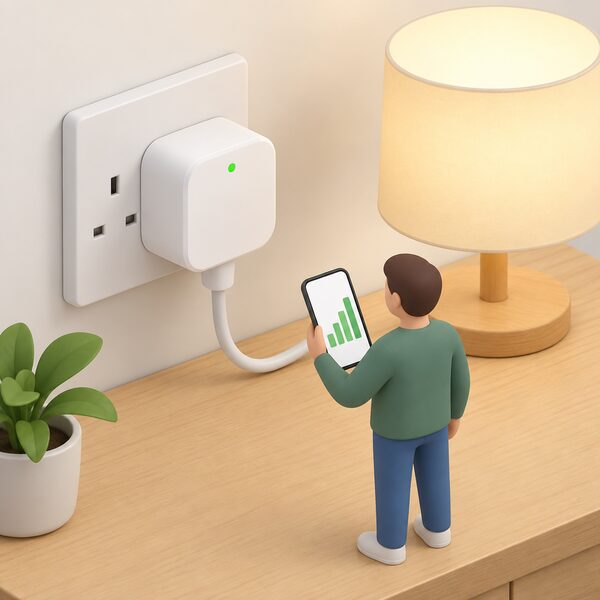
Eve Home is the consumer smart home brand behind the Eve app, Eve Energy and the sensor range. The Eve Single Plus and Eve Double Plus belong to Alfen, a separate company, and are built on the Alfen Hardware Platform15. The name collision is the source of most of the confusion, and it has no bearing on ownership: buying an Eve Energy plug does not connect a household to Alfen, and buying an Alfen charger does not connect them to Eve Home.
The ownership question matters most when a brand changes hands or a company fails, because warranties and cloud services can disappear with it. On the evidence available, Eve's position is stronger than most on that front precisely because there is no cloud service to lose: a plug that needs no account and no subscription keeps working as a local device even if the maker's commercial arrangements change. The platform dependence sits with Apple or Samsung rather than with Eve.
For households thinking about the wider energy picture, the ownership of an energy supplier is a separate question from the ownership of a device maker. Supplier ownership in the UK market includes EDF Energy, majority owned by Électricite de France, which is wholly owned by the French government, and OVO Energy, majority owned by OVO Group (UK)18. Those structures affect who ultimately controls supply, not who makes a plug.
The honest summary for a household is this. Eve's energy products deliver appliance-level measurement with no account, no subscription and no cloud, on two platforms and not on two others. They do not reduce dependence on the grid, on a supplier or on gas, and they do not replace a smart meter or an in-home display. What they add is the one layer of visibility the meter cannot provide, and they add it without creating a new account to maintain.
Sources18 cited
- Smart plugs advice, Centre for Sustainable Energy, 2025-10
- Smart meters vs home energy monitors, Smart Energy GB, 2026-08-17
- Eve Energy Outdoor, Eve Home, 2026
- Getting smarter with energy, Centre for Sustainable Energy, 2026-07
- Eve app, Eve Home, 2026
- What is a smart meter, Smart Energy GB, 2026-08-10
- Are energy monitors the best way to measure your power usage, Which?, 2026-03-31
- Standby power: the hidden costs of vampire devices, NICEIC, 2026-01-28
- Smart meters: your rights and expectations, Department for Energy Security and Net Zero, 2025-08-08
- How do smart meters save energy, Smart DCC, 2026
- Smart facts: cost, Smart Energy GB, 2026-04-07
- Smart meter disadvantages, Smart Energy GB, 2026-03-16
- Troubleshooting smart meter issues, Smart Energy GB, 2026-04-01
- Ultimate energy saving tips guide, Smart Energy GB, 2026-04-24
- Eve Single Plus, Alfen, 2026-09-17
- Energy smart appliances research briefing, House of Commons Library, 2026-09-20
- Smart meters explained, Uswitch, 2026-07-29
- Which energy suppliers are British, Uswitch, 2026-06-26
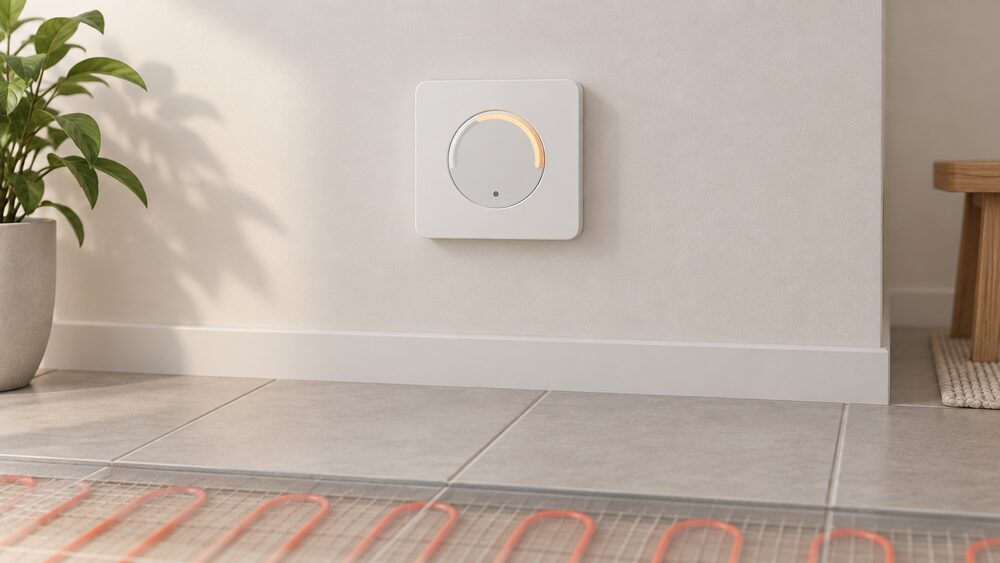 Eve Smart Heating ControlsMatter-friendly smart home maker with heating controls.