In this guide
SONOFF is a direct-to-householder smart home brand built around three things: Wi-Fi and Zigbee plugs and wall sockets, Zigbee and Matter bridges, and power monitoring hardware that ranges from a plug that reports what one appliance draws to a clamp meter that reads a whole circuit. The products are sold mainly through the maker's own regional stores, including a UK storefront, rather than through a UK installer network.
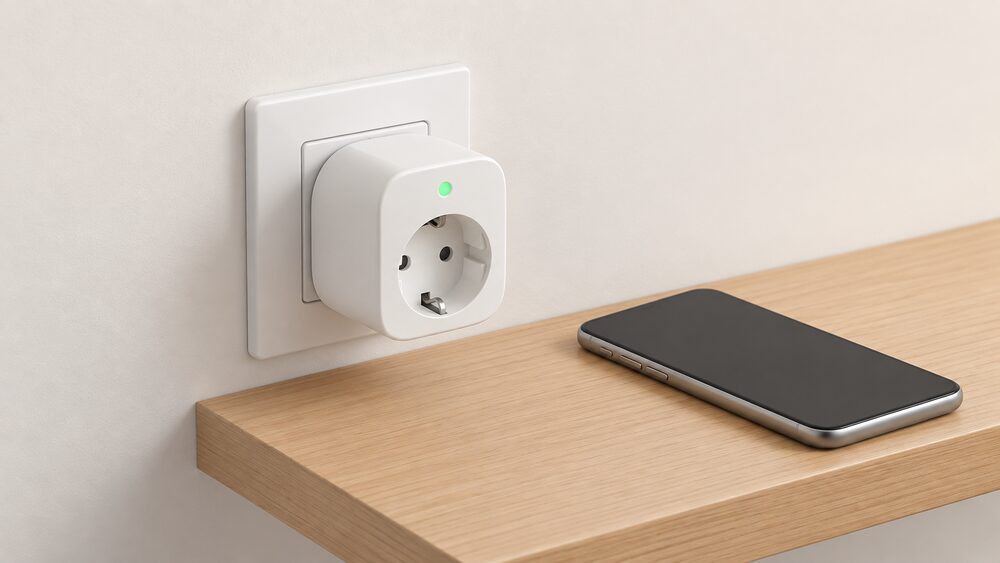
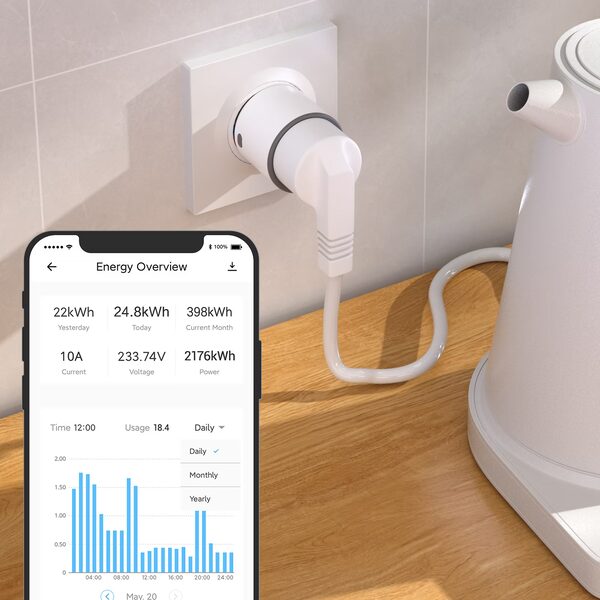
For a household interested in energy independence, the appeal is granular data. A whole-home smart meter tells you what the house used; a SONOFF plug tells you what the fridge, the tumble dryer or the broadband router used, and when. The Orb Socket tracks daily, monthly and semi-annual electricity usage and costs against a customisable rate1, and the S60ZB Zigbee plug reports real-time and historical consumption through the eWeLink app with history by hour, day and month2.
The dependence is real and worth stating plainly. Most SONOFF devices are configured and monitored through the eWeLink app and the maker's cloud, and remote control from outside the home runs through that account. Some products, including the Orb Socket and the S61s Outdoor plug, are stated to work with local control even without internet access1, and Matter support lets several of them join Apple Home, Google Home, Alexa, SmartThings and Home Assistant without the maker's app in the loop1. The choice of product, not the brand, decides how much of the system keeps working when the broadband or the account does not.
What SONOFF makes: hubs, plugs and power monitoring
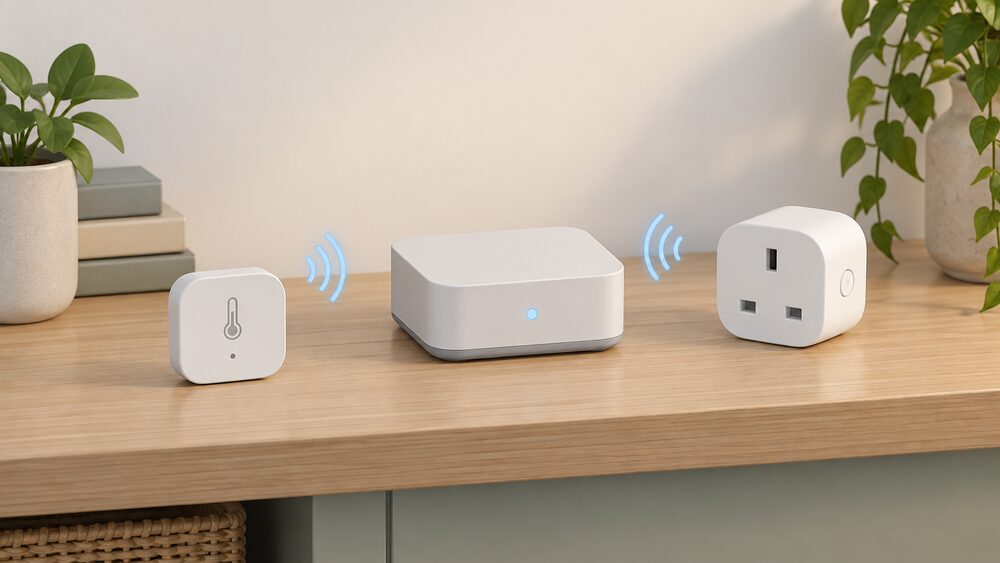
The range splits into four practical groups. At the socket end there are smart plugs and wall sockets: the S61s Outdoor Matter-over-WiFi plug with energy monitoring, the S60ZB Zigbee plug, and the Orb Socket, a Matter-over-WiFi wall socket sold in Type E and Type F versions for European and UK-style installations1. The S61s housing is polycarbonate3.
In the middle sit the bridges and controllers. The NSPanel Pro Gen2 is a wall-mounted control panel with a built-in Matter gateway that bridges Zigbee and Wi-Fi devices to Apple Home, Google Home, Alexa and Home Assistant, with dual-band Wi-Fi on 2.4GHz and 5GHz plus Zigbee 3.05. The NSPanel Pro 120 Type is the larger-format panel, and the maker is explicit that it carries no relay: it is a control panel, not a switch7.
At the metering end is the POW Ring Smart Power Meter, a split-core clamp that measures current up to 100A without touching live wires and snaps open or closed on side latches, intended for installation in a home's electrical panel to monitor usage by room, circuit or heavy-duty appliance4. Its transformer current detection range is 0 to 100A and it connects over 2.4GHz Wi-Fi4.
| Product | Type | Radio | Monitoring |
|---|---|---|---|
| Orb Socket (Type E/F) | Wall socket | Matter over WiFi, 802.11 b/g/n 2.4GHz1 | Daily, monthly, semi-annual usage and cost1 |
| S61s Outdoor (Type F) | Outdoor plug | Matter over WiFi3 | Energy data with firmware V1.0.6+3 |
| S60ZB | Indoor plug | Zigbee 3.02 | Real-time and historical, by hour, day, month2 |
| POW Ring (POWCT) | Circuit clamp | Wi-Fi 2.4GHz4 | By room, circuit or heavy appliance, 0 to 100A4 |
| NSPanel Pro Gen2 | Control panel | Wi-Fi 2.4/5GHz, Zigbee 3.05 | Energy monitoring included5 |
What SONOFF devices do for household energy independence
The contribution is measurement, not generation. A household that knows which circuits and appliances carry the load can act on it, and the official guidance for self-build homes is to install smart systems that control lighting, heating and cooling based on occupancy and time of day8. SONOFF's plugs and clamps are one way to gather the appliance-level data that kind of control depends on.
The independence this buys is partial and worth being precise about. Appliance-level monitoring is a diagnostic tool: it shows what a device draws and when, which is the input to decisions about running times, replacement or load shifting. It does not reduce dependence on the grid, on a supplier, or on gas for heating. The POW Ring extends the same idea to circuits, so a household can separate lighting, sockets and a heavy appliance rather than treating the house as one number4.
The dependence that remains is threefold. First, the grid and the supplier: nothing in the SONOFF range changes where the electricity comes from. Second, the cloud and the app: configuration, firmware updates and remote control run through eWeLink and a manufacturer account, and the maker's own product pages describe local control as a feature precisely because it is not universal1. Third, the hub: Zigbee devices need a bridge, and the maker names the ZBBridge-P and ZBBridge-U as examples2. A household that wants the data to stay in the home should look at which products run locally and which do not, and at how the data is held, which is covered in local data access and Modbus.
Platform compatibility: Apple Home, Google Home, Alexa, SmartThings and Home Assistant
SONOFF's newer products are built around Matter, which changes the compatibility picture considerably. The Orb Socket is listed as working with Apple Home, Amazon Alexa, Google Home, SmartThings and Home Assistant, with Siri, iPhone, iPad and Apple Watch fully supported in the Apple ecosystem1. The S61s Outdoor plug is described as connecting with Apple Home, Google Home and Alexa through Matter3. The POW Ring reaches Apple Home through a Matter bridge in eWeLink CUBE OS, and also works with Google Home, Alexa, SmartThings and Home Assistant4.
The NSPanel Pro Gen2 takes a different route: rather than joining a Matter fabric as a device, it acts as a Matter gateway, bridging Zigbee and Wi-Fi devices into Apple Home, Google Home, Alexa and Home Assistant5. The NSPanel Pro 120 Type is listed as working with Alexa, Google Home and Home Assistant, with a built-in Matter bridge for existing platforms7.
Zigbee devices are the exception. The S60ZB plug requires a Zigbee hub, and reaches Apple Home only via a Matter bridge using a ZBBridge-U or eWeLink CUBE2. Voice control on that plug requires the device to be added to a compatible SONOFF hub and a third-party account bound in the eWeLink app2. For a wider view of how these protocols differ in energy devices, Zigbee, Matter, Thread and KNX in home energy devices sets out the trade-offs.
The SONOFF Orb Socket: specifications and platform support
The Orb Socket is the product most directly aimed at a UK household wanting per-socket monitoring without an electrician's visit beyond fitting a wall box. It is a Matter-over-WiFi smart wall socket sold in Type E and Type F variants, communicating over IEEE 802.11 b/g/n at 2.4GHz1.
Its monitoring is the headline feature: daily, monthly and semi-annual electricity usage and costs, tracked against a customisable electricity rate1. Platform support covers Apple Home, Amazon Alexa, Google Home, SmartThings and Home Assistant through Matter, with Siri, iPhone, iPad and Apple Watch fully supported1. The maker also states that the socket can be used with local control even without internet access, and does not depend on the server1.
That last point is the one that matters most for independence. A Matter device that runs locally can be controlled by a local controller such as Home Assistant or Apple Home even if the maker's cloud is unreachable, which is a materially different proposition from a Wi-Fi plug that only responds through its own app. The caveat is that joining a Matter ecosystem still requires a Matter hub3, so the local controller is doing the work rather than the maker's servers.
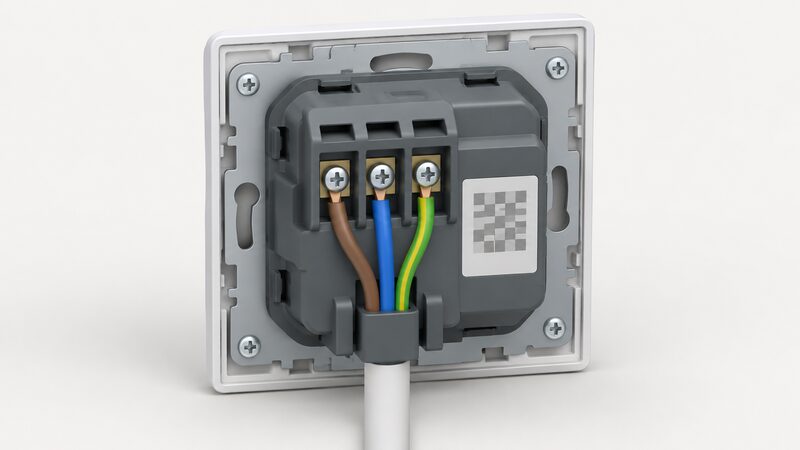
Power monitoring: what the plugs can tell you about your usage
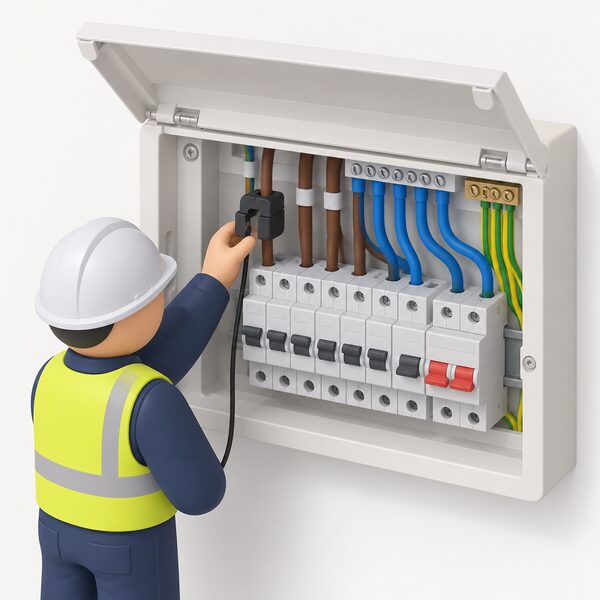
Smart plugs monitor a device's current, voltage and energy consumption, providing real-time reports through a phone app9. That is the same function SONOFF's monitoring plugs perform, and it is a different job from what a smart meter does. A smart meter measures how much gas and electricity the home is using and sends those readings automatically to the supplier11, and it tracks whole-home consumption per day, week, month or year on the in-home display13.
The distinction is scale. A smart meter can help a household be aware of which appliances use the most electricity14, but it cannot isolate one appliance. A plug can. The practical uses of a plug are monitoring consumption of an individual appliance, switching it on or off remotely, setting times for it to run, and activating it by voice9. For a household trying to find what drives a standing load, that appliance-level view is the useful one, and smart plugs and appliance-level energy monitoring covers the wider category.
The POW Ring takes the same principle to circuits, monitoring power usage by room, circuit or heavy-duty appliance from inside the electrical panel, with a split-core clamp that avoids contact with live wires4. Its 0 to 100A range covers a domestic circuit comfortably4. For a household comparing a plug-level approach with a whole-home monitor, smart meter vs standalone energy monitor sets out where each is strongest.
Security advisories and keeping firmware current
SONOFF has published a security advisory for the KNOB attack, tracked as CVE-2019-9506, affecting NSPanel Pro firmware v4.2.3 and before, with the resolution stated as upgrading to firmware v4.4.0 and above6. The advisory is dated 2 October 2026. A panel left on older firmware remains exposed to the issue the advisory describes, and the fix is a firmware upgrade rather than a hardware replacement.
Firmware currency matters beyond security, because some features only appear after an update. The S61s Outdoor plug requires firmware V1.0.6 or above for "Energy Consumption" data to appear in Samsung SmartThings and Home Assistant, upgraded through the eWeLink app3. A household that buys the plug for its monitoring and never updates it may find the energy data missing from the platform it wanted to use.
The general principle for connected appliances is to register the product with the manufacturer so you can be notified if there is a problem15. For SONOFF devices that means keeping the eWeLink account details current and watching for advisory notices. The UK's connected device security regime, which sets baseline requirements for consumer smart products, is explained in connected device security rules: the UK PSTI regime, and the wider question of what happens when a maker's cloud changes is covered in app subscriptions and cloud dependence in energy devices.
Buying in the UK: availability, sales and seasonal promotions
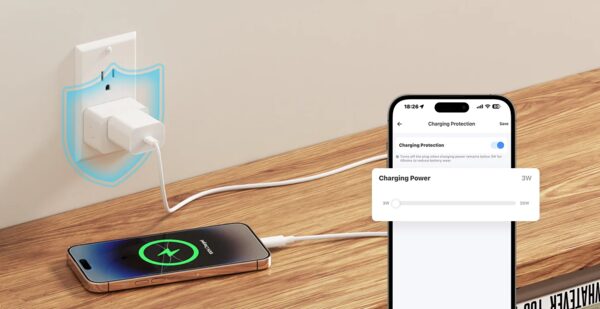
SONOFF sells through its own regional storefronts, including a UK store, and its products also reach UK buyers through online marketplaces and electrical retailers. The maker publishes no fixed UK list price for these devices, so prices are seller-quoted and vary by outlet, by bundle and by promotion. Where a household is comparing a plug-level monitor with a whole-home system, what home energy monitoring and management costs gives the wider cost picture.
Promotions are a regular feature of the official store. The 2025 Christmas sale opened on 19 December and ran to 31 December, with up to 35% off selected products and quantity-based extra discounts16. A Valentine's promotion ran from 2 to 15 February 2026 with a buy-two discount code across the official store17. A Summer Ready 2026 campaign page, dated 25 June 2026, showcased the newest smart home solutions including energy monitoring, water and heating control, sensors and gateway products18.
The pattern is seasonal: a winter sale, a February promotion and a summer campaign, with the deepest discounts on selected lines rather than the whole catalogue. For a household buying several plugs or a bridge at once, the quantity-based element of the Christmas promotion is the one that changes the arithmetic most16.
Where the range has limits
Three limits are worth stating before buying. The first is hub dependence: Zigbee devices need a Zigbee hub such as the ZBBridge-P or ZBBridge-U2, and Matter devices need a Matter hub to join a Matter ecosystem3. A household that assumes a plug works out of the box with a phone may find it needs a bridge as well.
The second is the split between local and cloud operation. The Orb Socket and the S61s plug are stated to work with local control without internet access1, but the eWeLink app remains the route for configuration, firmware updates and account-bound voice control2. Remote access from outside the home depends on the maker's servers and a broadband connection, which is the same dependence that applies across the connected-device market.
The third is that monitoring is not the same as control of cost. A plug reports what an appliance draws; it does not change the tariff, the standing charge or the fuel a home heats with. The value is in the decisions the data supports, and in the case of the POW Ring, in seeing circuits rather than a single whole-home figure4. Households wanting to compare SONOFF with a rival ecosystem can read Aqara vs SONOFF for energy monitoring, and those wanting the hub question answered in more depth can read SONOFF iHost smart home hub.
Sources18 cited
- SONOFF Orb Socket (Type E/Type F), SONOFF, 2026-09-20
- SONOFF S60ZB Zigbee Smart Plug, SONOFF, 2026-09-20
- SONOFF S61s Outdoor Matter Over WiFi Smart Plug, SONOFF, 2026-09-20
- SONOFF POW Ring Smart Power Meter, SONOFF, 2026-09-20
- SONOFF NSPanel Pro Gen2, SONOFF, 2026-09-20
- Security advisory: KNOB attack vulnerability, SONOFF, 2026-10-02
- SONOFF NSPanel Pro 120 Type, SONOFF, 2026-09-20
- Self-build homes: sustainability, Planning Portal, 2026
- Smart plugs, Centre for Sustainable Energy, 2025-10
- Getting smarter with energy, Centre for Sustainable Energy, 2026-07
- What is a smart meter?, Smart Energy GB, 2026-08-10
- Get help with your smart meter, Ofgem, 2026-09-17
- Are energy monitors the best way to measure your power usage?, Which?, 2026-03-31
- Standby power: the hidden costs of vampire devices, NICEIC, 2026-01-28
- Demand flexibility service: running appliances at cheaper times, Electrical Safety First, 2026-09-19
- 2025 Christmas sale, SONOFF, 2025-12-19
- Valentine's Day 2026 promotion, SONOFF, 2026-02-02
- Summer Ready 2026, SONOFF, 2026-06-25
 SONOFF Thermostats, TRVs and Heating SwitchesSONOFF's heating range in the UK: the Thermo Series TRV Gen2, Zigbee and Matter connectivity, local control, sensors, scenes and how the devices fit a British home.
 SONOFF iHost Smart Home HubIf the internet goes down, will your smart home keep working?