In this guide
Moixa no longer trades as an independent home battery company. Lunar Energy acquired Moixa on 24 August 2022, describing it as a global software company for distributed energy resources management, and the GridShare Membership scheme that Moixa sold to battery owners is no longer offered. Anyone searching for Moixa GridShare today is usually an existing battery owner trying to work out what happened to a reward, a warranty or a payment.
The scheme itself was straightforward while it ran. GridShare Membership was a free programme open to Moixa Battery owners, paying a guaranteed £50 annual reward for the first three years of membership, with reimbursement for savings lost when the battery was used for grid services1. Membership ran on a three-year contract and carried a warranty benefit for as long as the household remained a member1.
The dependence it created is the part worth understanding. A household that joined handed a degree of control of its battery to a third party's software platform, in exchange for a modest annual payment and extended warranty cover. When the company behind that platform was acquired and the scheme closed, the household kept the battery but lost the reward, the extended cover and the route to the original provider.
What happened to Moixa: the Lunar Energy acquisition
Moixa's history in UK home energy runs back further than GridShare. The company won a £1.3m contract for an energy storage demonstration in April 2014, under a government solar strategy that funded storage trials3. By April 2019 it was supplying both the interface and the energy storage units for the EFES project, a vehicle-to-grid and home storage trial4. It was also a consortium member on the V2GB vehicle-to-grid project alongside Nissan, Energy Systems Catapult, Cenex, Western Power Distribution, National Grid ESO and Element Energy5.
That record matters because it explains what Lunar Energy was buying. Moixa had become a software business, managing distributed energy resources rather than making batteries, and GridShare was the product of that shift. The acquisition completed on 24 August 2022, and the GridShare Membership page that households relied on carries a date of 7 March 2022, months before the sale1.
The practical consequence for a household is that the counterparty changed. A membership agreement made with Moixa passed into a company whose stated focus was home electrification at scale, and the consumer-facing membership programme was not carried forward. There is no published successor scheme for Moixa battery owners under the GridShare name.
GridShare Membership: what it was and who could join
GridShare Membership was Moixa's free membership programme, open to any Moixa Battery owner after installation, at no cost1. The eligibility wording was tighter than the headline. It was only available to customers who had purchased batteries directly from Moixa, and only select customers who had bought from third parties were applicable1.
That distinction is the first thing to check if a household is trying to establish whether it was ever a member. A battery bought through an installer or a third-party supplier may never have qualified, regardless of the hardware being identical.
Membership ran on a three-year contract1. Within it, the household agreed that its battery could be used to support the UK energy network, and Moixa agreed to pay a reward and to reimburse savings lost as a result. The scheme was one of a number of household flexibility arrangements that pay for control of a home device, a category that includes supplier-run demand flexibility and smart charging trials6.
For a household's energy independence, the trade is worth naming plainly. The battery stays on the property and keeps storing cheap off-peak electricity, which is a genuine reduction in reliance on peak-price grid power7. What the household gives up is exclusive control of when the battery charges and discharges, and it takes on a dependence on a company's software, its servers and its continued trading. That last dependence is exactly what failed here.
How the virtual power plant worked: 25,000 batteries and 250MWh of storage
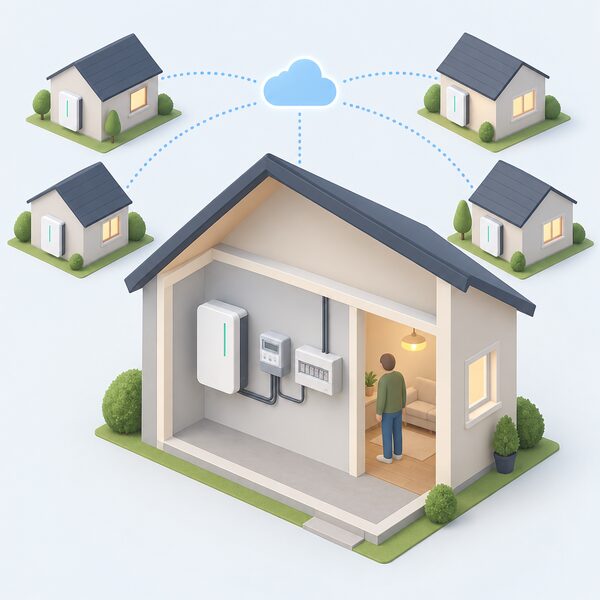
GridShare's proposition was aggregation. Rather than one household battery responding to grid signals, Moixa's software coordinated many, presenting them to the network as a single controllable resource. By January 2021 the software had connected over 25,000 small-scale residential batteries2.
The scale of that fleet sits in context against the wider storage picture. Grid-scale battery storage in Great Britain reached 7.3GW by June 2026, according to the government's clean flexibility roadmap8. A distributed fleet of home batteries is a different kind of asset: smaller individually, but sitting behind the meter where it can also serve the household's own consumption.
Participation was not universal even among members. Moixa stated that only batteries within its contracted areas were used to support the UK energy network1. A household could hold membership and still see its battery never called on, because no flexibility contract covered its region.
Where a battery was called on, the arrangement was a form of domestic virtual power plant, the same principle later applied to electric vehicles in vehicle-to-grid trials5. The household's stored energy became a small part of a network service, and the household was paid for the inconvenience rather than for the electricity itself.
The rewards: £50 a year for three years, plus reimbursement for lost savings
The headline payment was a guaranteed £50 annual reward for the first three years of membership1. Alongside it sat a separate reimbursement for savings lost when the battery was used for grid services. Moixa measured and reported the impact on the household's usual battery behaviour and then reimbursed any savings lost1.
The reimbursement was calculated by simulating how the battery would have behaved had it not taken part in grid services, then working out lost savings using either the household's actual tariff or an assumed tariff rate where no tariff information was provided1. Moixa's own worked example showed a £15 annual reimbursement against a £50 annual reward, giving a £50 net benefit in that case1.
| Item | Published figure | Basis |
|---|---|---|
| Annual reward | £50 a year | Guaranteed for the first three years of membership1 |
| Reimbursement, worked example | £15 a year | Simulated lost savings, actual or assumed tariff1 |
| Net benefit, worked example | £50 a year | Reward plus reimbursement in the example1 |
| Worked system | 3kWp solar with 4.8kWh battery | £50 GridShare reward in year one1 |
For scale, other household flexibility arrangements pay differently. A smart charging trial offered participants £10 each month9, and independent modelling of smart tariffs combined with low-carbon home technologies found savings of up to around £800 a year were possible10. Those are different products with different obligations, but they show that £50 a year is at the modest end of what households are paid for handing over control of a device.
The warranty benefit: cover for as long as you remain a member
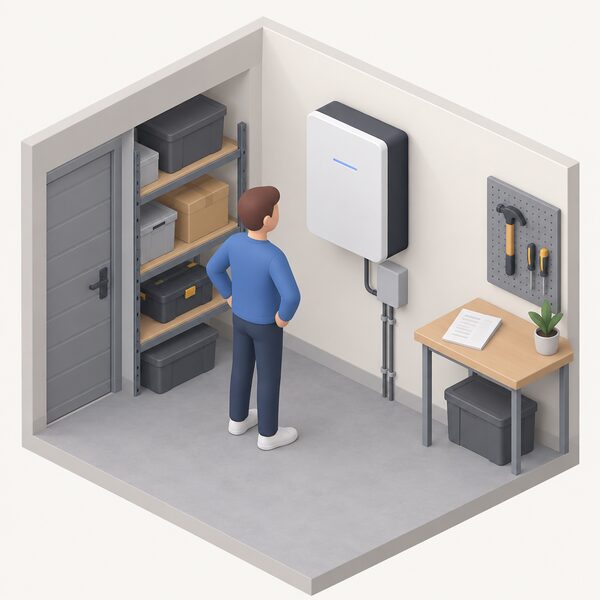
The most valuable part of GridShare Membership was probably not the cash. Moixa's terms promised a warranty for as long as the household remained a member1. Independent guidance on home battery storage lists the Moixa Smart Battery in 2kWh and 3kWh sizes with a 10-year warranty, extendable for GridShare members11.
That structure tied the warranty to continued participation. A household that left the scheme, or whose membership lapsed, lost the extension. A household that stayed kept cover, but only for as long as the company behind the scheme continued to honour it.
"Receive a warranty for as long as you remain a member"
This is the clearest illustration of the dependence a scheme like GridShare creates. The battery is a physical asset on the property, but the longest warranty term depended on a commercial relationship with a company that no longer operates the programme. Households weighing any similar offer should read the warranty condition as carefully as the payment.
Where GridShare fell short: contracted areas, predictable consumption and uptime rules
Three limits shaped what a member actually got. The first was geography: only batteries within Moixa's contracted areas were used to support the network, so members outside those areas held membership without their battery ever being called on1.
The second was consumption pattern. Automated personalised charging plans were only available for homes with predictable household consumption patterns; households without predictable consumption could still use a time-of-use tariff through static charging plans1. Members in an active flexibility or grid services area could not have an automated personalised charging plan at all, though their battery could still work with a time-of-use tariff through a static plan1.
The third was the underlying delivery record of UK energy schemes. An independent consultation found that schemes have been complex, not properly resourced and not given enough time to gain momentum or build capacity12. Scotland's call for evidence on heat and buildings cited ineffective partnership working, including management of the Capacity Market and the Green Homes Grant Voucher Scheme, as an example13. GridShare was a commercial product rather than a government scheme, but it operated in the same crowded, short-lived landscape.
The pattern across UK energy support is one of schemes opening, running for a period and closing. The Metering and Monitoring Service Package has accepted no new applications since scheme closure on 31 March 2022, with post-closure accreditation only through transfer of ownership14. The Green Homes Grant and Home Upgrade Grant are now closed15, the Green Deal is closed to new applicants16, and applications for Energy Bills Discount Scheme heat network support can no longer be made17. A household joining a time-limited energy scheme should assume it will end.
GridShare is no longer offered: what that means for existing members
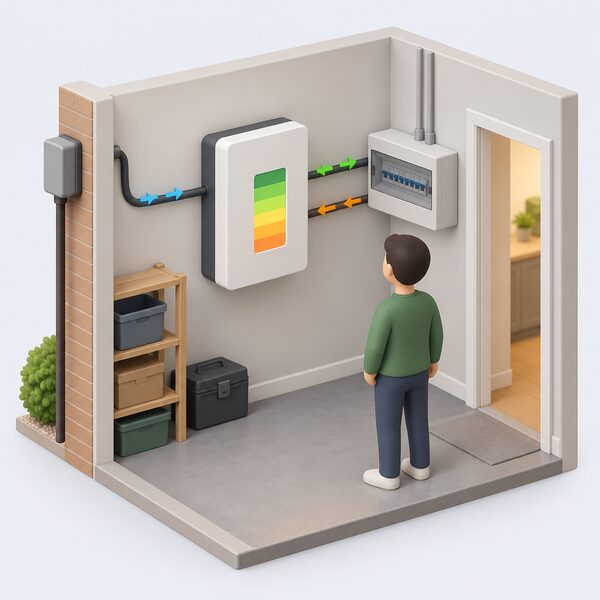
GridShare Membership is not available to join. The programme was sold by Moixa, Moixa was acquired by Lunar Energy on 24 August 2022, and no successor consumer membership scheme under the GridShare name has been published. The published terms, reward figures and contact addresses date from 7 March 20221.
For a household that was a member, the practical position is that the reward stream has stopped and the extended warranty benefit tied to continuing membership has no obvious provider. The battery itself is unaffected as a piece of equipment: it still charges, still discharges and still stores cheap off-peak electricity for the home7.
What has gone is the revenue and the cover. Households with an unresolved complaint about a scheme or a supplier have formal routes: the energy ombudsman service handles disputes between domestic customers and suppliers18. Where a payment has been missed, network operators may owe an additional £40 in some circumstances19, and guaranteed standards in Northern Ireland set compensation of £50 for a home and £125 for business premises for a failure to restore supply, then £25 for every 12 hour period after that20. Those are network standards, not scheme payments, and they do not replace a lost GridShare reward.
Leaving GridShare: what changes for your battery and your export tariff
A household that stops participating, or whose scheme has ended, keeps the battery and its household benefits. Independent guidance is clear that installing battery storage lowers the amount of electricity exported to the grid, reducing export payments, but that overall savings are greater than relying on export payments7. The battery earns its keep by cutting imports, not by exporting.
The export tariff interaction is the one to check. The Smart Export Guarantee requires electricity suppliers to pay small-scale generators for low-carbon electricity exported back to the National Grid22. Payments are exclusively an export tariff, based solely on how much electricity is exported, as recorded by a smart meter6. In scheme year five, 337.8 GWh, or 76.2%, of SEG exports were on tied tariffs4. Some smaller suppliers, including 100Green, offer export tariffs for solar panel users that are not covered by the Smart Export Guarantee6.
The critical point for battery owners is that having a storage battery may render a household ineligible for some SEG tariffs11. A battery reduces exports, and therefore reduces export payments, whatever scheme sits alongside it. The Feed-in Tariff scheme is closed to new applicants23, so a household on an existing FIT arrangement should check how its battery affects metered export rather than assume the two are independent.
If a household is considering switching supplier or tariff after leaving a flexibility scheme, exit fees apply to some fixed-rate tariffs, and the sensible comparison is the exit fee against the savings available from moving24. Switching routes for households with solar panels are set out in supplier guidance6, and general switching guidance notes potential savings of up to £497 on yearly bills25. Those figures are not GridShare payments and should not be read as replacing them.
For the wider picture of how monitoring, metering and flexibility schemes fit together in a UK home, the smart meters and home energy management guide sets out the underlying systems, and household flexibility and reward schemes covers the alternatives that remain open. Households comparing a battery's own monitoring and control arrangements can read app subscriptions and cloud dependence, which deal directly with what happens when a manufacturer's platform changes.
Sources25 cited
- GridShare Membership, Moixa, 7 March 2022
- We need level heads and clear policy to build the future, Solar Energy UK, 18 January 2021
- UK Solar PV Strategy Part 2, UK Government, April 2014
- EFES V2G data analysis, Cenex, 9 April 2019
- V2GB Vehicle to Grid Britain, Cenex, 17 September 2026
- Can I switch energy supplier if I have solar panels?, Uswitch, 4 June 2026
- Battery storage, Home Energy Scotland, 20 September 2026
- Clean Flexibility Roadmap: July 2026 update, UK Government, June 2026
- Smart Charging, Zapmap, 2026
- Flexible futures: integrating smart tariffs with low-carbon home technologies, Energy Saving Trust, 10 July 2026
- Solar panel battery storage, Which?, 14 May 2026
- Energy efficiency inquiry, CIBSE, 17 September 2026
- Heat and buildings: analysis of responses to call for evidence, Scottish Government, 10 May 2022
- Domestic RHI Annual Report, Scheme Year 11, Ofgem, July 2025
- Green Homes Grant, Home Upgrade Grant and Green Deal loans, House of Commons Library, 17 September 2026
- Green Deal: energy saving measures, UK Government, 17 September 2026
- Energy Bills Discount Scheme heat network support, UK Government, 1 April 2025
- Raise a dispute: Energy Swap, Energy Ombudsman, 19 September 2026
- Check if you can get payment for a power cut, Ofgem, 2026
- Customer standards, NIE Networks, 20 September 2026
- Customer standards: claims and complaints, NIE Networks, 19 September 2026
- Feed-in Tariffs: scheme closure, Ofgem, 17 September 2026
- Smart Export Guarantee Annual Report, Year 5, Ofgem, December 2025
- How to check your energy tariff and switch, British Gas Energy Trust, 30 July 2026
- A step-by-step guide to setting up gas and electricity in a new home, Energy Helpline, 20 September 2026
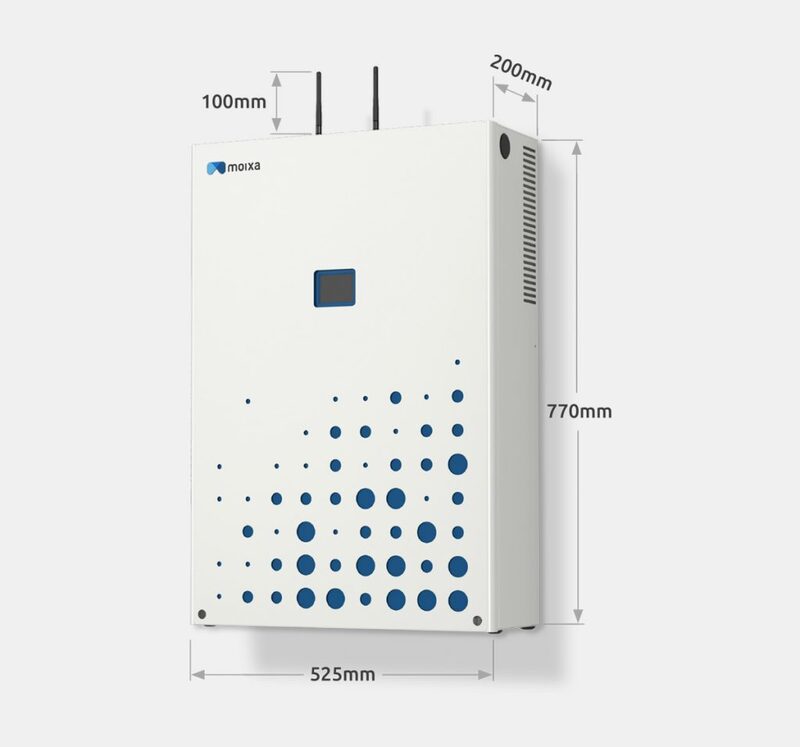
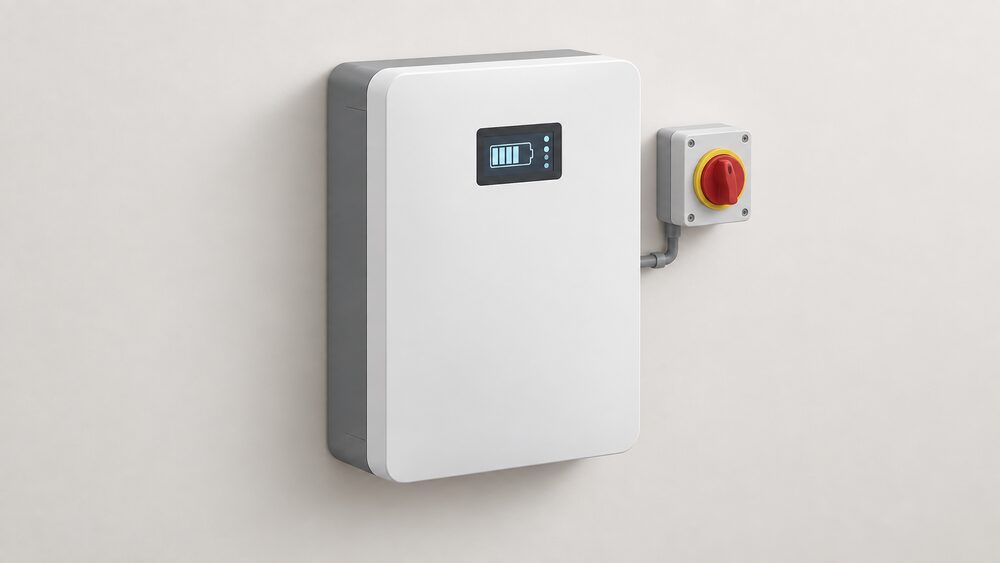 Moixa Smart BatteryThinking about a Moixa Smart Battery?