

In this answer
Short answer
A complaint about a NAPIT registered installer goes to NAPIT itself, but only after the householder has formally contacted the installer and allowed a minimum of 14 days for the member to acknowledge the complaint1. Complaints must be submitted using the complaints form on the NAPIT website, and NAPIT acknowledges receipt within 5 working days, with a stated standard of service that any communication will be responded to within 10 working days unless the matter is outside its control1.
The scheme covers work carried out by a company certificated by NAPIT that has been contracted or subcontracted to do work within the scope of its certification1. NAPIT Registration is authorised by the government to operate Competent Person Schemes in support of self-certification against the Building Regulations in England and Wales, and NAPIT Certification is accredited by the United Kingdom Accreditation Service (UKAS)2.
What the process cannot do matters as much as what it can. The NAPIT Complaints Process does not involve paying compensation or funding third parties to carry out rectification work; responsibility for remediating technical non-compliance lies with the member1. A householder pursuing a complaint is therefore seeking correction of the work, not a payout from the scheme.
What NAPIT is and what its registration covers
NAPIT is a government-approved Competent Person Scheme provider, which means its members can self-certify that their work complies with Building Regulations without needing to submit a building notice or use an approved inspector5. NAPIT Registration is authorised by the government to operate Competent Person Schemes in support of self-certification against the Building Regulations in England and Wales, and NAPIT Certification is accredited by UKAS to certificate installers across a wide range of schemes2. The organisation reported over 20,000 registered installers working across electrical, heating, plumbing, ventilation, microgeneration and building fabric4.
Membership is not a formality. NAPIT certificated scheme members demonstrate their competence, hold the necessary insurances and have the right processes and procedures to assure compliant and safe work6. That is the basis on which a householder can rely on the registration when commissioning work, and it is also the standard against which a complaint is judged.
The practical benefit to a household is the notification route. Installers accredited by NAPIT can submit a building regulations application on the householder's behalf, and solar installers should provide a certificate for the electrical installation and make the notification to Building Control via their certification body such as NAPIT7. That removes a step the householder would otherwise have to manage with the local authority, and it creates a paper trail that becomes evidence if something later goes wrong.
For energy independence, registration of this kind does not change what a home generates or stores. It changes who carries the compliance risk. A self-certifying installer absorbs the Building Regulations notification, and the scheme provides a route to challenge the work. The dependence that remains is on the scheme's willingness to act and on the installer's own solvency, because the scheme does not stand behind the work financially.

Who can complain, and what complaints NAPIT will take on

A complaint may be made by any person who has had work completed by a member who is certified for the relevant scope of work at the time1. The complaint process applies when a company certificated by NAPIT has been contracted or subcontracted to carry out work covered by the scope of its certification1. Two conditions therefore decide whether NAPIT will take a case: the business must have been certificated, and the work must fall inside what that certification covered.
NAPIT will look at work that does not comply with Building Regulations, British Standards or MCS published standards, or that has resulted in an unsafe situation, and the issue must first be raised directly with the installer8. That list sets the boundary. A dispute about price, timing or manners is not a technical non-compliance complaint, however frustrating it may be.
A representative can act for a householder, but NAPIT requires evidence of authority for a representative to act on behalf of a consumer1. Comparable redress schemes are explicit about the evidence they want: the Energy Ombudsman requires the complainant to have sufficient evidence, including the date the complaint was raised with the supplier9. Dated records of the original complaint to the installer are therefore worth keeping from the outset.
Some complaints belong elsewhere entirely. Complaints about energy bills should be made to the energy supplier, not the distributor10. Where a heat network is involved, the party responsible for handling complaints is the Energy Ombudsman, but consumers should first notify their heat supplier and try to resolve the issue11. Routing a billing dispute to NAPIT will not work, because the scheme's remit is the competence and compliance of its members' installation work.
Before you complain: contact the installer first and allow 14 days
The gate before NAPIT will accept a complaint is direct contact with the member. The consumer or consumer representative must have formally contacted the member directly and allowed a minimum of 14 days for the member to acknowledge the complaint1. This is a longer period than some other codes require, and it is measured from the householder's contact, not from the date the work was finished.
Other schemes show how much the waiting periods vary. Ofgem guidance for a consumer code route asks that the installer be given at least 10 working days to resolve the issue before the consumer code is contacted12. The Cavity Insulation Guarantee Agency allows 41 working days before a homeowner may contact it if the installer has not resolved the problem13. A householder dealing with more than one trade should not assume the same clock applies to each.
The 14 days is not dead time. It is the point at which the installer's own response becomes part of the record. A written complaint, sent by a method that produces a dated copy, establishes the date from which the 14 days run and gives NAPIT something to check against when the complaint arrives.
Where the work is notifiable and the installer is not in an approved Competent Person scheme, the compliance route changes entirely: the firm or the householder must give notice to the local authority of the intention to carry out the boiler work in advance and pay a notification fee14. In that situation the installer cannot self-certify, and the local authority becomes the body that inspects the work14. Failing to have an installation approved could leave a householder liable to a fine as well as facing additional costs to put things right16.
How to submit a complaint and what happens next
Complaints against members must be submitted using the complaints form found on the NAPIT website1. NAPIT Customer Services can be contacted on 0345 543 0330 for general queries2. The sequence after submission is short and stated in working days.
- The householder formally contacts the member and allows a minimum of 14 days for acknowledgement1.
- The complaint is submitted to NAPIT using the website complaints form1.
- NAPIT acknowledges receipt within 5 working days1.
- NAPIT responds to communications within 10 working days, unless the matter is outside its control1.
The 10 working day standard is a service commitment about communication, not a deadline for resolving the underlying technical dispute. Comparable complaint handling shows the same pattern: Cadent sends a response within 5 working days, or 10 working days where a site visit or third-party enquiry is required17. A case that needs an inspection or a manufacturer's input will take longer than the acknowledgement suggests.
Notification deadlines elsewhere in the installation process run on a different clock and are worth separating from the complaint timetable. Heat pump installers must notify the distribution network operator of an installation within 28 days, either before installation through apply to connect or within 28 days once the installation is complete through connect and notify18. These deadlines belong to the installer, not the householder, but a missed notification is itself a legitimate subject for a complaint.

Investigation, remediation and sanctions: what NAPIT can and cannot do
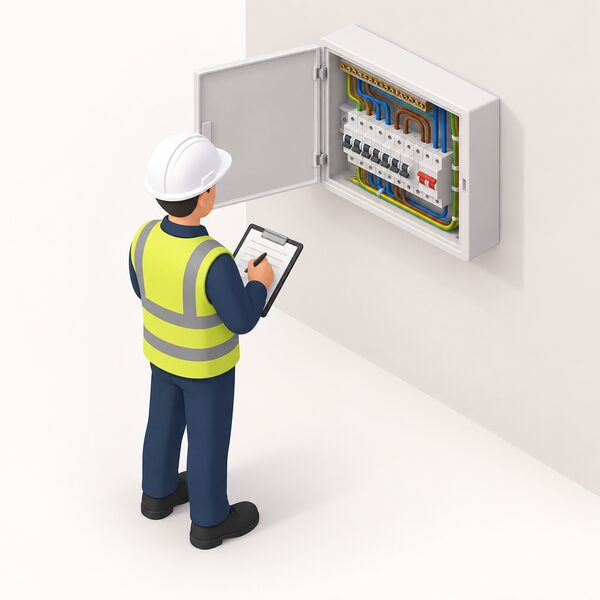
The responsibility for any required remediations for technical non-compliance lies with the NAPIT member to propose and rectify1. The scheme's role is to require that correction, not to perform it. A householder can expect that any necessary rectification work should be done without further charge, providing it was included in the original contract of work8. That expectation runs against the installer, and it depends on the installer still trading.
What NAPIT will not do is equally clear. The NAPIT Complaints Process does not involve paying compensation, or funding third parties to carry out rectification work1. A householder who wants the work corrected by a different firm, at the scheme's expense, is asking for something the process does not provide.
Sanctions exist, but their detail is not shared. Where sanctions are imposed onto a member's certification, NAPIT can share the status of the membership, however, the specific details as to any sanctions imposed will not be disclosed to the consumer or consumer representative1. A householder can therefore establish whether a business remains registered, but not what was done to it.
"Where sanctions are imposed onto the Members certification, NAPIT can share the status of the Membership, however, the specific details as to any sanctions imposed will not be disclosed to the Consumer / Consumer Representative"
Inspections carried out under the scheme have their own limits. The NAPIT Inspector will observe and gather evidence, but will not alter, repair or adjust any equipment, and inspections do not constitute a safety check or service8. An inspection is an evidence-gathering step in the complaint, not a remedy, and it does not replace a separate safety check by a qualified electrician.
For a household's independence, this is the sharpest limit in the process. The scheme can compel a registered business to correct its own work, and it can remove or restrict a certification. It cannot make a household whole in money, and it cannot correct the work itself. Where the installer has stopped trading, the scheme's leverage over that business disappears with it.
When a complaint falls outside the scheme
Some complaints cannot be resolved through the NAPIT process at all, and recognising that early saves time.
New build properties are the clearest example. New builds by developers are not eligible for the Boiler Upgrade Scheme19, and new builds generally are excluded from that scheme except eligible self-builds20. Where an installer is not in an approved Competent Person scheme, the firm or the householder will need to give notice to the local authority of the intention to carry out the boiler work in advance and pay a notification fee15. For heat pump work, before work begins the installer must either notify the local authority or arrange for a registered building control approver to oversee the work21. The compliance route for a new build therefore runs through building control, not through a Competent Person Scheme complaint.
Compensation is the second boundary. Because the process does not pay compensation or fund third-party rectification, a householder seeking money rather than correction needs a different route1. Where the installer is no longer trading and the guarantee is missing, fraudulent or cancelled, the National Energy Foundation has been identified in parliamentary debate as a body that can help in those cases22. The NAPIT Work Quality Guarantee may apply for work that is notifiable within the scope of the Building Regulations in England and Wales, and self-certificated by the installer as compliant, where the installer is no longer in business3.
Escalation within NAPIT has a defined path. In order to raise a complaint regarding NAPIT's handling of the complaint, it must first be raised to the complaint handler assigned to the case1. Non-routine matters that fall outside of procedure will be referred to the NAPIT Compliance Panel1. Other certification bodies operate a comparable two-stage structure: a consumer can complain to NICEIC if the contractor does not respond or the proposed resolution is unsatisfactory23.
Where the underlying dispute is with a network operator or supplier rather than an installer, separate routes apply. An energy supplier must try to fix any problems reported within 8 weeks and resolve the complaint24. Complaints about energy bills should go to the supplier, not the distributor10. For heat networks, the Energy Ombudsman handles complaints, but consumers should first notify their heat supplier and try to resolve the issue11. The Energy Ombudsman's dispute pages set out the evidence standard for those cases, including the date the complaint was raised with the supplier9.
Data, confidentiality and what happens to your information

NAPIT cannot remove personal data whilst the complaint is ongoing, or if a guarantee related to the complaint has not yet expired1. A request to erase data during an active complaint will therefore be refused, and the refusal is a condition of the process rather than a discretionary decision.
Complaints are not kept entirely within the scheme. NAPIT's data sharing partners include government departments, enforcement authorities, consumer protection organisations, technical experts, manufacturers, scheme owners, legal counsel and other certification or registration bodies1. Comparable schemes describe the same practice: all complaints are treated in confidence, although details may be passed to the installer, manufacturer or system designer for further investigation26.
The practical consequence is that a complaint puts the householder's account of events into a network that includes the installer being complained about. That is necessary for the investigation to proceed, but it means the complaint should be written on the assumption that the installer will read it.
Where a householder wants installation details rather than to raise a complaint, ownership rules apply. A Feed-in Tariff company can only provide details of an installation when the person requesting it has a legitimate claim over the ownership of the installation27. The same principle of verified standing runs through the complaint process, which is why evidence of authority is required for a representative1.
Sources27 cited
- Complaints against members policy, NAPIT, 2026-09-20
- Consumer advice, NAPIT, 2026-09-17
- Consumer advice for households, NAPIT, 2026-09-17
- NAPIT welcomes Climate Change Committee report, NAPIT, 2025-02-26
- Glossary of terms, NAPIT, 2026-09-19
- Top tips for new EV drivers on World EV Day, NAPIT, 2024-09-09
- NAPIT responds to the government's plug-in solar consultation, NAPIT, 2026-07-16
- FAQs, NAPIT, 2026-09-17
- Raise a dispute: Metropolitan Infrastructure Limited, Energy Ombudsman, 2026-09-19
- How to make a complaint, Electricity North West, 2026-09-19
- Heat networks consumer protection draft guidance, Ofgem, 2025-09-05
- Who to contact, Ofgem, 2026-09-17
- Consumer concerns, CIGA, 2026-09-20
- Building regulations for boilers and heating, Planning Portal, 2026
- Building regulations: boilers and heating, Welsh Government, 2026-09-17
- Building regulations and heating installation work, OFTEC, 2026-09-20
- Making a complaint, Cadent Gas, 2026-09-20
- Building regulations renewables guidance, Bedford Borough Council, 2026-09-17
- Boiler Upgrade Scheme guidance for installers V5, Ofgem, 2026-04-28
- Boiler Upgrade Scheme: installers, Ofgem, 2026-09-17
- Approved Document L Volume 1 consultation version, Welsh Government, 2026-09-17
- Energy market consumer protection, Hansard, 2026-06-17
- Consumer complaints resolution process, NICEIC, 2026-09-17
- Complain about your energy supplier or network operator, Ofgem, 2026
- Raise a dispute: Greenhill Housing Association, Energy Ombudsman, 2026-09-19
- Complaints procedure, The Installation Assurance Authority, 2026-09-20
- Feed-in Tariffs, Energy Ombudsman, 2026-09-20
 Consumer Rights for Faulty WorkIf an installer does shoddy work, can you make them come back and put it right, and can you get money back if they won't?
 Complaining About a SupplierHow do you complain about your energy supplier, and how long should it take?
 Complain About Energy SupplierThe order of a complaint: the supplier's own procedure, the eight-week point or deadlock, and referral to the Energy Ombudsman in Great Britain or the Consumer Council in Northern Ireland.
 The Full Installers GuideHow do you find an installer you can trust, and what should you check before signing anything?
 Installer in Northern IrelandHow do you check an installer in Northern Ireland is properly registered, and who do you complain to if the work goes wrong?
 Telling the Network OperatorWho tells the network operator you are having a home EV charger fitted, and when?