

In this answer
Short answer
There is no Hot Weather Payment in the UK. No scheme of that name exists, no government has confirmed one, and no household can claim one. The only proposal on record is a £25 payment for each period of very hot weather between 1 June and 30 September, put forward for eligible London households in a London Assembly committee call for evidence dated June 20261. It is a proposal for London, not a national benefit, and it has not been adopted.
The idea borrows its structure from the Cold Weather Payment, which pays £25 for each seven-day period of very cold weather between 1 November and 31 March2. That scheme is real, automatic and paid to people on certain benefits in England, Wales and Northern Ireland3. Scotland has no Cold Weather Payment at all: it was replaced by the Winter Heating Payment from winter 2022/23, a single payment of £62.00 paid regardless of how cold it is4.
So the honest answer to the search is that a Hot Weather Payment is a proposal, not an entitlement. What follows sets out what has been proposed, who it would cover, how the payment period would work if it were built on the cold-weather model, and why the proposal exists at all.
The proposed scheme: £25 per very hot weather period
The proposal is set out in evidence submitted to the London Assembly's Planning and Regeneration Committee for its inquiry into whether London's homes are ready for a heatwave. It states that eligible households could receive a £25 payment for each period of very hot weather between 1 June and 30 September each year1. That is the whole of the published detail on the amount. No rate other than £25 has been proposed, and no costings, take-up estimates or delivery body have been published alongside it.
The £25 figure is not arbitrary. It matches the Cold Weather Payment, which pays £25.00 for each seven-day period of very cold weather between 1 November and 31 March2. The same £25 appears in official guidance describing Cold Weather Payments of £25 for each seven-day period of very cold weather, defined as an average of zero degrees Celsius or below6, and in Met Office seasonal advice stating that people claiming certain benefits will receive a payment of £257. Independent guidance repeats the same figure: a £25 payment if the temperature in your area is 0°C or below for seven days in a row8.
The design logic is therefore a mirror. A winter scheme pays a fixed sum per cold spell; a summer scheme would pay the same fixed sum per hot spell. What the proposal does not do is set out a temperature threshold, a duration, or a definition of "very hot weather". Until those exist, the £25 is a rate attached to an undefined trigger.
For a household, the practical position is unchanged by the proposal. Nothing is payable, nothing is claimable, and no start date has been announced. The relevance is directional: it signals that policymakers are beginning to treat summer overheating as a cost to households, in the same way that winter cold has been treated since the Cold Weather Payment was introduced.
Who would qualify and where it would apply

The proposal is framed for eligible households in London1. It does not extend to England, Wales, Scotland or Northern Ireland as a whole, and no national equivalent has been proposed. That geographic narrowness is the single most important limit on the idea: for the great majority of UK households, even a confirmed scheme of this design would not reach them.
The existing winter schemes show how differently the four nations treat this kind of payment. Cold Weather Payments are made to certain recipients of means-tested benefits in England, Wales and Northern Ireland9, and independent guidance confirms the scheme applies to households in England, Wales and Northern Ireland10. Scotland is outside it: the Winter Heating Payment replaced the Cold Weather Payment in Scotland from winter 2022/239.
Eligibility for the winter schemes turns on benefit receipt rather than on housing or health. A household may get a Cold Weather Payment if it is getting certain benefits or Support for Mortgage Interest3, and the scheme is aimed at people on certain benefits, paid when the local temperature reaches below 0°C9. Age UK's guidance sets out the practical test: a household is usually eligible if it claims Income Support or income-based Jobseeker's Allowance and has either a disability or pensioner premium, a child who is disabled, or a child under five11.
Scotland's Winter Heating Payment works differently. Eligibility does not depend on a period of cold weather where the household lives; households qualify if they were getting a qualifying benefit and met the other conditions on any day of the qualifying week, which for winter 2025/26 ran from 3 to 9 November 20259. The payment is available to people receiving Income-based Jobseeker's Allowance or Support for Mortgage Interest, among others12. The Scottish Government's own consultation response described removing the cold weather condition as providing people on other qualifying low income benefits with an additional payment13.
Any hot-weather equivalent would have to answer the same questions: which benefit, which household composition, and whether the trigger is local weather or simply receipt of a qualifying benefit. None of those answers has been published.
The 1 June to 30 September window: how a payment period works
The proposed window runs from 1 June to 30 September each year1. That is the summer counterpart to the Cold Weather Payment season, which runs from 1 November to 31 March each winter9. The winter scheme is available between 1 November and 31 March for people receiving certain benefits6, and the current published season is 1 November 2025 to 31 March 20262.
Within that season, the winter scheme pays per spell rather than per year. A household gets £25.00 for each seven-day period of very cold weather between 1 November and 31 March3, and payments are made when the local temperature is either recorded as, or forecast to be, an average of zero degrees Celsius or below over seven consecutive days14. The trigger is met by forecast as well as by observation, which matters in practice: a household does not wait for a cold spell to end before a payment is generated.
Payment follows quickly. After each period of very cold weather in an area, a payment should arrive within 14 working days15, and the same 14 working day timescale appears in official scheme rules3. Payments are automatic: an eligible household is paid without applying3, and independent guidance confirms that households meeting the criteria usually get Cold Weather Payments automatically16.
Scotland's timings differ. Winter Heating Payment is paid from December and through winter each year4, and payments should be made automatically between December and February9. The Child Winter Heating Payment, a separate Scottish benefit, was first paid in 2020 and is paid once a year from October and through the winter17.
A summer scheme built on the winter model would therefore need a season, a per-spell trigger, a payment window and an automatic payment route. Only the season has been proposed.
Is the Hot Weather Payment the same as the Cold Weather Payment?
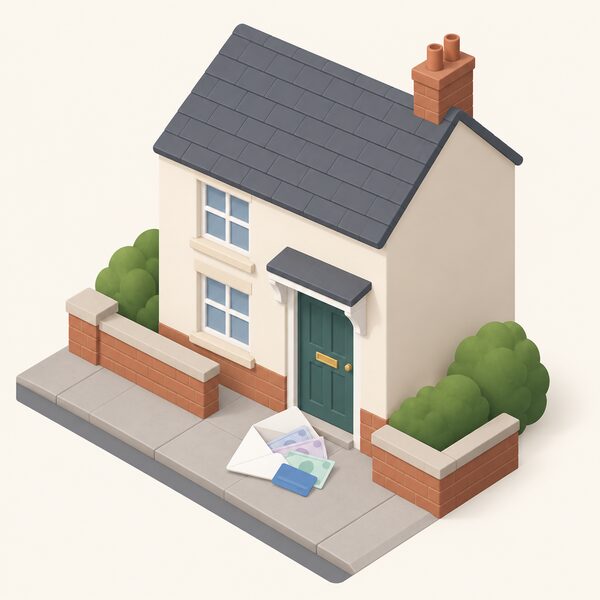
No, and the distinction matters because the two are frequently conflated. The Cold Weather Payment is an established winter scheme. A Hot Weather Payment would be a separate summer scheme sharing only its payment structure. Cold Weather Payments are explicitly different to Winter Fuel Payments2, and the same separation would apply to any summer equivalent.
The winter landscape is already crowded and easy to confuse. The named schemes are the Warm Home Discount, Cold Weather Payment and Winter Fuel Payment, all designed to help certain households18. Cold Weather Payments are one-off payments to help pay for extra heating costs5, triggered by temperature rather than by date. Winter Fuel Payment is a separate annual payment. In Scotland, the Winter Heating Payment is a one-off, tax-free payment during the winter to help people with heating costs19, and it does not depend on how cold it is4. Independent guidance notes that its eligibility requirements are the same as the Cold Weather Payment in England and Wales, but it is paid regardless of temperature16.
The scale of the winter scheme gives a sense of what a summer equivalent might involve. Over 1.1 million £25 Cold Weather Payments were made to households in England and Wales across November to the end of March in the 2023/24 season20. That is a large, automated delivery operation, and it exists because the trigger is objective and the eligibility list is fixed.
A Hot Weather Payment would need the same machinery: a defined trigger, a defined eligible population, and an automatic payment route. None of that has been proposed. The proposal is a rate and a window, not a scheme.
What temperature threshold would trigger a payment?
No threshold has been proposed for a Hot Weather Payment. The winter scheme shows what a workable threshold looks like. A Cold Weather Payment is paid when the local temperature is either recorded as, or forecast to be, an average of zero degrees Celsius or below over seven consecutive days14. The same rule appears in official scheme rules: a payment is made if the average temperature in an area is recorded as, or forecast to be, zero degrees Celsius or below over seven consecutive days3. The Commons Library describes the scheme as aimed at people on certain benefits and paid when the local temperature reaches below 0°C9.
Three features of that design would have to be mirrored for summer. First, a numeric threshold: 0°C in winter, undefined in summer. Second, a duration: seven consecutive days in winter, undefined in summer. Third, a forecast element, so that payments can be generated without waiting for the spell to finish. The proposal supplies none of the three.
There is also a measurement question. The winter trigger is assessed on local temperature, which is why payments vary by postcode area rather than being national. A summer trigger would face the same geography: a heatwave in London is not a heatwave in Aberdeen, and a scheme covering London only would not need to resolve that, but a national one would.
"You'll get a payment if the average temperature in your area is recorded as, or forecast to be, zero degrees Celsius or below over seven consecutive days."
Until a threshold and a duration are published, the proposed £25 has no defined trigger, and a household cannot know whether a given summer would produce any payment at all.
Why the proposal exists: overheating in UK homes

The proposal is a response to a measured problem. The Climate Change Committee commissioned Arup to appraise the current and future risks posed by summertime overheating to the UK housing stock at scale, considering what factors influence risk, how homes can be adapted or upgraded to mitigate the impacts, and how much that would cost21. The committee's 2026 progress report states that hotter heatwaves could see 92% of existing homes overheat, creating dangerous conditions for vulnerable people22.
The mechanism is well understood. Most UK homes were designed to retain heat, not release it, making them prone to overheating during heatwaves23. The National Energy Action guidance notes rates rising dramatically over the past decade24. This is a housing-stock problem rather than a weather problem alone: the same external temperature produces very different internal conditions depending on glazing, orientation, insulation and ventilation.
The policy gap is that the existing support system faces winter. Cold Weather Payments exist to help with extra heating costs5, and the winter schemes are built around cold triggers. Summer cooling costs have no equivalent. That is the gap the London proposal addresses, and it is why the idea is framed as a payment rather than as a building standard.
For a household, the practical implication is that summer cooling is currently an unsubsidised cost. Where a home overheats, the options are physical rather than financial: shading, ventilation and, where those are insufficient, mechanical cooling. The site's guide to passive cooling sets out the measures that reduce internal heat without running costs, and heatwaves and health at home covers who is most at risk when internal temperatures rise.
The energy independence angle is direct. A winter payment offsets a gas or electricity bill; a summer payment would offset an electricity bill, because cooling runs on electricity. A household that installs solar and runs cooling from its own generation reduces its exposure to both the tariff and the absence of any summer support. The cooling and energy independence page covers that trade-off in full.
What help exists now for summer energy costs
There is no summer-specific energy payment. The named schemes are the Warm Home Discount, Cold Weather Payment and Winter Fuel Payment, all designed to help certain households18, and all winter-facing. Cold Weather Payments are one-off payments to help pay for extra heating costs5. Winter Heating Payment in Scotland is a one-off, tax-free payment during the winter to help people with heating costs19, currently £62.004.
Northern Ireland has its own recent development. On 16 April 2026, the Northern Ireland Executive agreed proposals for a Home Heating Oil Support Scheme to provide financial assistance to households impacted by rising home heating oil costs25. That is a heating scheme, not a cooling one, but it shows that devolved administrations can move on fuel costs outside the standard benefit framework.
For households on certain benefits, the winter schemes remain the only automatic support. A household may get a Cold Weather Payment if it is getting certain benefits or Support for Mortgage Interest3, and payments are automatic rather than claimed16. In Scotland, a household does not need to apply for Winter Heating Payment and will get it automatically if eligible26. The Scottish Government has committed to exploring the feasibility of moving the February payment date forward following delivery of the Winter Heating Payment27.
The practical position for summer is therefore that cooling costs sit with the household. Where a home overheats, the response is physical: reduce heat gain, ventilate at night, and where necessary use mechanical cooling. The site's guides to external shading and night ventilation cover the measures that carry no running cost, and air conditioning running costs sets out what mechanical cooling adds to an electricity bill.
Sources27 cited
- Planning and Regeneration Committee Collated Call for Evidence: Are London's homes ready for a heatwave?, London Assembly, June 2026
- Cold Weather Payment, GOV.UK, 17 September 2026
- Cold Weather Payment, nidirect, 17 September 2026
- Winter Heating Payment, mygov.scot, 17 September 2026
- Grants and benefits to help you pay your energy bills, Citizens Advice, 17 September 2026
- Home and business grants, schemes and advice, East Herts Council, 17 September 2026
- Keeping your home warm in winter, Met Office, 20 September 2026
- Energy schemes, Turn2us, 8 September 2026
- Cold Weather Payments and Winter Heating Payment, House of Commons Library, 26 February 2026
- Affording warm homes, Green Alliance, September 2025
- Cold Weather Payment, Age UK, 15 September 2026
- Government help with gas and electric bills, StepChange, 20 September 2026
- Scottish Government response to the consultation on Low Income Winter Heating Assistance, Scottish Government, 7 June 2022
- Grants and funding, Tameside Council, 17 September 2026
- How much Cold Weather Payment will I get, Turn2us, 25 February 2025
- Cold Weather Payment, Winter Fuel Payment and Fuel Direct, Which?, 24 August 2026
- Child Winter Heating Payment, mygov.scot, 17 September 2026
- Gas and electricity, Confused.com, 2026
- What is a Winter Heating Payment, Turn2us, 21 October 2025
- £5 billion in support for energy bills paid this winter, GOV.UK, 5 April 2024
- Addressing overheating risk in existing UK homes, Climate Change Committee, 19 September 2026
- Progress in reducing emissions: 2026 report to Parliament, Climate Change Committee, 24 June 2026
- Fuel poverty in summer, National Energy Action, 11 August 2026
- Tips for babies in a heatwave, National Energy Action, 11 August 2026
- Home Heating Oil Support Scheme FAQs, Department for Communities, 16 April 2026
- Winter Heating Payment Scotland, Citizens Advice Scotland, 17 September 2026
- Winter Heating Payment: Low Income Scotland equality impact assessment, Scottish Government, 18 November 2022
 How Much Does a Heat Pump CostA heat pump usually costs around eleven thousand pounds installed, though quotes vary a lot depending on your home.
 The Full Cooling and Air Conditioning GuideDo you really need air conditioning in a British summer, or would a fan and better shading do the job?
 Weather Compensation ControlsDoes your boiler or heat pump run hotter on cold days and cooler when it is mild?
 Planning Permission in EnglandDo you need planning permission for an air source heat pump?
 Overheating and Hot WeatherIs your home getting uncomfortably hot in summer, and is there anything you can do about it?
 The Full Heat Pumps GuideWill a heat pump keep my house warm in winter, and what does one cost to buy and run?