
In this guide
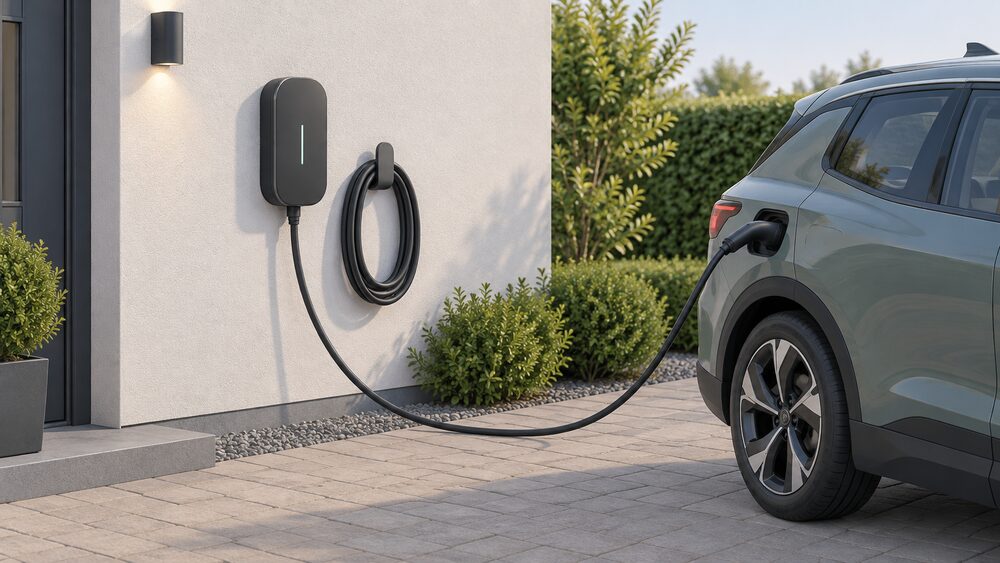
Hypervolt is a UK-headquartered charger maker that sells its wallboxes directly to households and then works with local installers, rather than routing everything through an energy supplier or a national installation network. Its current domestic product is the Home 3 Pro, a 7kW unit with three charging modes and a starting price of £1,099 including installation1.
That price sits at the lower end of what a fitted home charger costs. Independent guidance puts installation including the charge point at £400 to £1,000 depending on power, and a separate guide puts installation alone at £500 to £1,000 per charger2. Official guidance suggests installation costs range between £450 for a basic model and around £1,200 as power and capabilities increase4. A maker buying guide describes a premium smart charger as typically £1,050 to £1,200 or more installed5.
The appeal for a household is straightforward: a British company, a charger that works with the main smart tariffs, and solar-aware modes that let a home with panels push generation into the car rather than the grid. The dependence is equally clear. The charger needs a qualified installer, a grid connection, and for its smartest features a broadband link and the maker's cloud platform.
The range: Home 3 and Home 3 Pro
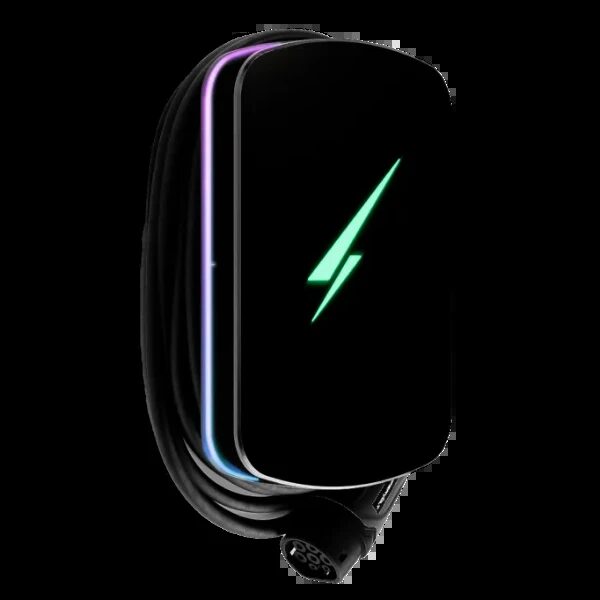
Hypervolt's domestic line is built around the Home 3 and the Home 3 Pro. The Home 3 Pro is the model with the fullest published specification: a 7kW charge rate, three charging modes, and a tethered cable arrangement rather than a socket1. The three modes are Boost, which charges at full rate; Eco, which blends solar and grid power; and super eco, which uses solar generation only1. That last mode is the one that matters most to a household with panels, because it will simply stop charging when the sun goes in rather than drawing from the grid.
| Feature | Home 3 Pro |
|---|---|
| Charge rate | 7kW1 |
| Modes | Boost, Eco, super eco1 |
| Cable | 5m tethered, 10m option1 |
| Starting price | £1,099 installed, including standard installation and VAT1 |
| Tariff compatibility | OVO smart tariff; Intelligent Octopus Go from late 20241 |
The Home 3 Pro is sold with a 5m cable as standard, and an independent product listing describes the option of a super-long 10m charging lead1. Cable length is not a trivial detail: it decides whether the car can be parked nose-in, whether a second vehicle can reach, and whether the unit can be sited on the wall nearest the consumer unit rather than nearest the driveway.
Hypervolt has continued to develop the platform rather than the hardware. Multi-Mode Scheduling rolled out to Home 3.0 and Home 3 Pro owners from February 2024, converting existing schedules automatically. An Adaptive Telemetry Replay Engine followed in March 2024, streaming back data missed during internet outages, first on Home 3.0 and Home 3 Pro with Home 2 support planned later. App releases through 2024 added biometric sign-in, energy estimates for scheduled charging, linked accounts and timezone support.
For households weighing a tethered unit against a socketed one, types of home EV charger sets out the trade-offs, and the Hypervolt Home 3 Pro specification page covers the model in more detail.
Price: from £1,099, or £1,400 depending on the route
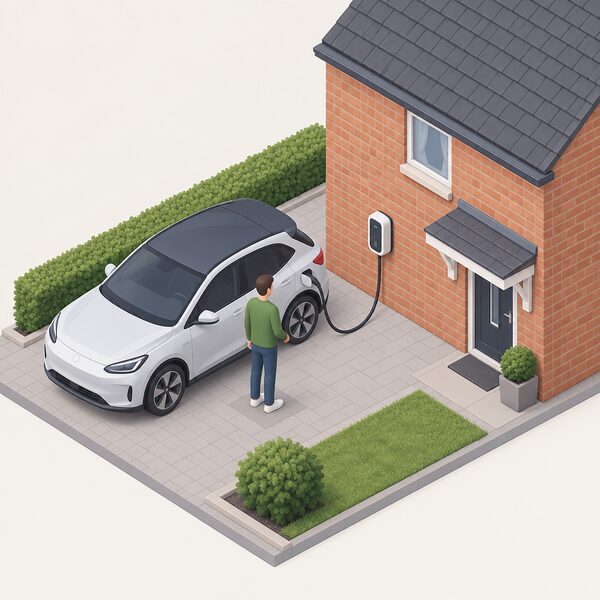
Hypervolt's own product page states a starting price of £1,099 with installation, including standard installation and VAT1. The same figure appears on an energy supplier's Hypervolt offer page, again described as from £1,099 with installation including standard installation and VAT7. That consistency matters: it is the maker's and a supplier's published starting point, not a quote.
The £1,099 is a floor, not a typical bill. Official guidance on domestic charger installation puts costs at £450 for a basic model rising to around £1,200 as power and capabilities increase4. Independent guidance puts installation including the charge point at £400 to £1,0002, and a separate guide puts installation alone at £500 to £1,000 per charger3. A maker buying guide describes a premium smart charger as typically £1,050 to £1,200 or more installed5. Against those ranges, the Hypervolt starting price sits at the bottom of the premium bracket.
| Source | Figure | Basis |
|---|---|---|
| Hypervolt and OVO | from £1,0991 | Installed, standard installation and VAT included |
| Planning Portal | £450 to around £1,2004 | Installation, basic to higher capability |
| Flexi-Orb | £400 to £1,0002 | Installation including the charge point |
| Uswitch | £500 to £1,0003 | Installation alone, per charger |
| So Energy | £1,050 to £1,200 or more5 | Premium smart charger, installed |
What moves a quote is the same set of factors that applies to any wallbox: cable run length from the consumer unit, whether the supply needs upgrading, whether the unit is going on a garage or an outbuilding, and whether earth rod or additional protection is needed. Households comparing Hypervolt with other brands can see the wider market in the home EV charger cost guide, and the installation process page explains what a site visit should cover.
Cable lengths, colours and customisation
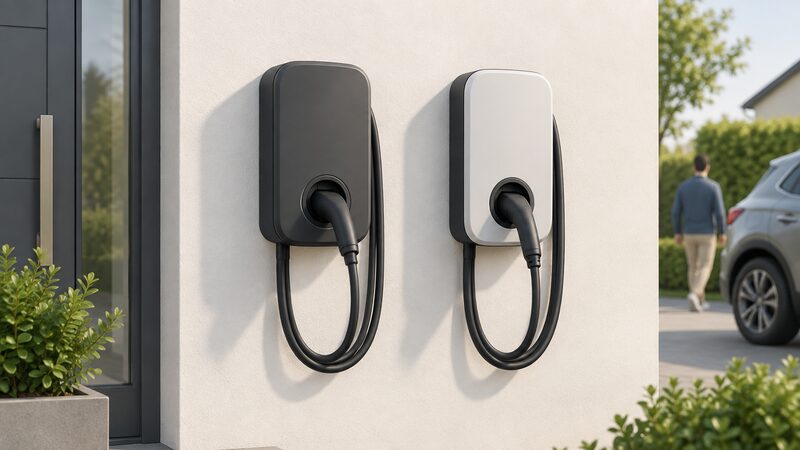
Hypervolt advertises different colours and cable lengths, plus custom lighting, as part of the product's design offer7. The Home 3 Pro ships with a 5m cable, with a 10m lead available as an option1. Custom lighting is a cosmetic feature rather than a charging one, but it is part of why the brand has a following among households that care what goes on the front of the house.
The practical customisation is the cable. A 5m lead suits a car parked directly alongside the unit. A 10m lead covers a driveway where the car sits further back, or a shared driveway where the parking position varies. Households that want to keep a cable in the boot rather than on the wall should look at untethered units instead, which the connectors and cables guide covers.
Smart features: scheduling, tariff integrations and solar charging
The Home 3 Pro's smart layer is where most of its value sits. The three charging modes, Boost, Eco and super eco, let a household decide session by session whether to charge fast, blend solar with grid, or take solar only1. Independent guidance on solar integration lists solar diversion, app control and dynamic scheduling as the features that matter most, because solar diversion lets the charger prioritise generation for the car rather than exporting it8.
Beyond modes, the platform supports scheduling and tariff-linked charging. Hypervolt states that its chargers are designed to work seamlessly with all the leading smart energy tariffs, plus solar panels and home battery systems9. The Home 3 Pro is described as already compatible with OVO's smart tariff1, and it became compatible with Intelligent Octopus Go in late 2024.
The general shape of a smart charger's feature set is well established: scheduled charging, energy monitoring, remote start and stop, charging history and software updates, with many units also integrating with solar panels, dynamic load management and off-peak tariffs10. Hypervolt's differentiator is the depth of its solar modes and the pace of its software releases, including a Solar Insights beta launched in July 2026 that splits charging sessions into solar and grid energy for homes with generation.
For households with panels, charging an EV from solar explains the wider picture, and EV energy tariffs covers how a time-of-use tariff changes the economics.
Tariff partnerships: OVO, Octopus, EDF and KrakenFlex
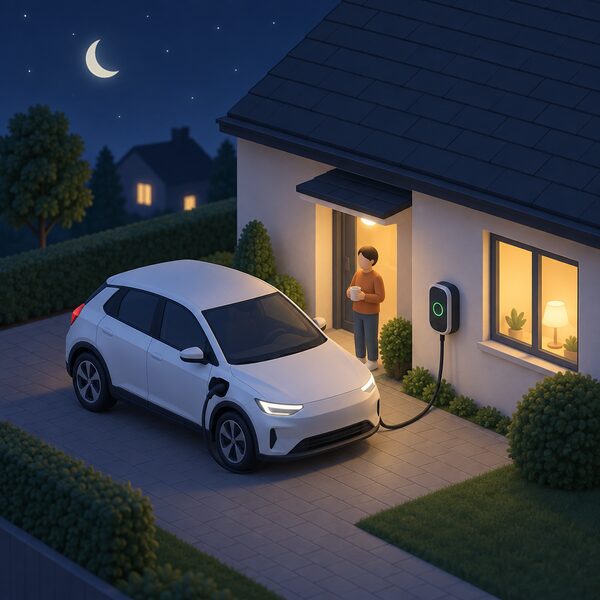
Hypervolt lists partnerships with OVO Energy, Octopus, EDF and more6. The OVO relationship is the most developed: OVO and Hypervolt launched a Charge Anytime offer, and the Home 3 Pro is described as compatible with OVO's smart tariff1. Hypervolt also worked with OVO and Kaluza on a beta for OVO Charge Anytime, reported in March 2024.
The EDF partnership, announced in January 2025, is different in kind. EDF and Hypervolt announced a strategic partnership to explore a frequency response service from EVs using UltraGrid software and PowerShift, alongside access to EDF's smart charging EV tariff. That is a grid services arrangement rather than a consumer tariff, and it points to where Hypervolt sees the platform going: chargers as flexible assets that can be paid for helping balance the network.
Hypervolt also launched Ultra Mode in July 2025, with a pre-launch phase focused on grid support including 30-minute charger tests. Households interested in the flexibility side of charging, rather than just cheap overnight rates, will find the smart charging and rewards page useful.
The tariff landscape is not Hypervolt-specific. Independent guidance notes that smart chargers such as the Ohme Home Pro, Wallbox Pulsar Max and Zappi work with most EV tariffs from Octopus, E.ON Next and OVO11. The Energy Saving Trust's position is that an EV, heat pump or home battery makes a smart tariff much more valuable12. A charger that integrates cleanly with those tariffs is worth more to a household than one that does not.
Hypervolt as a company: size, awards and Trustpilot rating
Hypervolt describes itself as a UK-headquartered technology company developing EV charging stations, ecommerce platforms and a cloud operating system for managing renewable assets13. A separate announcement describes Hypervolt Limited as a UK-based technology company at the forefront of the electric vehicle charging industry14. The company sells direct and then works with local installers, a route it set out for households in areas that already enable pavement charging9.
On scale, Hypervolt reported in June 2024 that it was approaching 100,000 charging units installed in UK homes6. For context, official statistics record 340,222 domestic charging device installations funded under the Electric Vehicle Homecharge Scheme in the UK15, and independent statistics estimate around 1.4 million chargers installed at homes with driveways as of the end of 202516. Hypervolt's installed base is therefore a meaningful slice of the home market, though the maker's figure is now dated.
The company's awards record is well documented in its own announcements:
- Named a Deloitte Fast 50 and EMEA Fast 500 winner6
- DrivingElectric's Home EV Charger of the Year for 2023 and 20246
- Crowned Best Home Charger in the 2023 DrivingElectric Awards6
- Official EV Charging Partner for Innovation Automotive across the UK, Ireland, Malta and Cyprus13
- An equivalent partnership role with Motorfinity6
On customer sentiment, Hypervolt states a Trustpilot score of 4.9 out of 51, and has described itself as sitting atop Trustpilot as the highest rated EV charging manufacturer in the industry6. A separate announcement notes both companies in a partnership rated Excellent on Trustpilot14. These are the maker's own characterisations of third-party ratings, and the underlying reviews are public.
What owning a Hypervolt means for energy independence
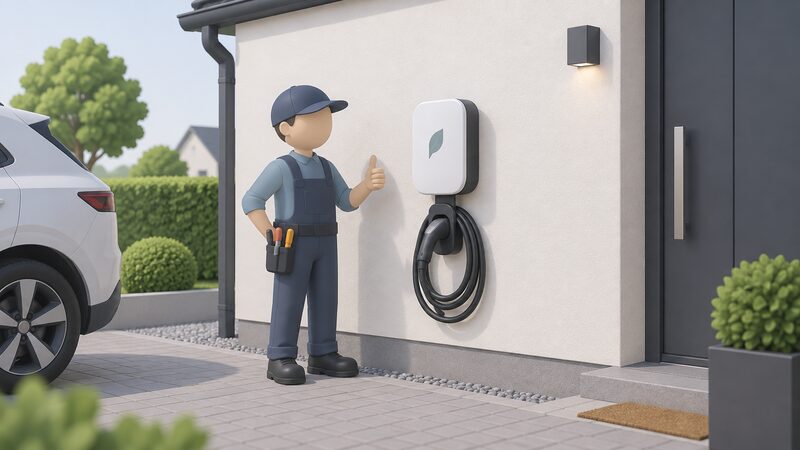
A home charger is one of the few energy devices a household can buy that shifts a real cost from a volatile market to a controllable one. Charging at home on a time-of-use tariff moves consumption to off-peak hours, and charging from rooftop solar removes the fuel cost entirely for the miles covered. Independent guidance is explicit that solar diversion, app control and dynamic scheduling are the features that make this work, because they let the charger prioritise generation over grid import8.
The Hypervolt Home 3 Pro supports that pattern directly through its Eco and super eco modes, and through tariff integrations with OVO, Octopus and EDF1. A household with panels and a smart tariff can, in principle, cover a large share of its motoring from its own roof and its own off-peak window.
What remains is dependence, and it is worth stating plainly. The charger draws from the grid whenever solar is short, so the household stays connected to a supplier and to the network. The smart features depend on a home broadband connection and on Hypervolt's cloud platform: scheduling from the app, energy monitoring and remote diagnostics all run through the maker's servers. The hardware itself is a wallbox that needs a qualified installer and a compliant supply, which the electrical requirements page covers. And the longest warranty and support terms depend on a continuing relationship with the maker and its installer network.
For households thinking about the bigger picture, EV charging and household energy independence sets out how a charger, a tariff and a solar array fit together, and smart EV chargers explains what the smart layer actually does.
Sources16 cited
- Hypervolt charger offer, OVO Energy, 2026
- Home chargepoint installation costs, Flexi-Orb, 2025
- Best EV tariffs for multi-car families, Uswitch, 2025
- Electric vehicle chargers planning guidance, Planning Portal, 2026
- Home EV charger buying guide, So Energy, 2026
- Hypervolt and Motorfinity partnership, Hypervolt, 2025
- OVO EV charger offers, OVO Energy, 2026
- Integrating solar panels with EV charging, Uswitch, 2025
- EV charging for drivers without driveways, Hypervolt, 2025
- Home charging FAQs, Ratio EV, 2026
- Does a hybrid car need an EV tariff, Uswitch, 2025
- Should I switch to a time of use tariff, Energy Saving Trust, 2026
- Hypervolt and Innovation Automotive partnership, Hypervolt, 2024
- Hypervolt and loveelectric partnership extension, Hypervolt, 2024
- Grant schemes for EV charging infrastructure statistics, Department for Transport, 2026
- Home and community charging statistics, Zapmap, 2025