
In this answer
Short answer
A safety recall on a washing machine is a household energy problem as much as a consumer rights problem. The appliance sits on a mains supply, fills and drains water, and runs for hours at a time, often while the house is empty. When a maker or a regulator issues a recall, the action asked of the owner is usually simple and immediate: stop using the machine and arrange for it to be checked, modified, replaced or refunded.
The pattern is consistent across recalled electrical goods. Electrical Safety First recommends that anyone who discovers they have an electrical item that has been recalled should stop using it until it has been checked by the manufacturer1. Where a product is found to be affected, the instruction is to stop using it immediately2. Retail recalls of this kind have ended in a full refund at the point of return3.
For a household, the recall is also a reminder of where independence ends. A washing machine cannot be repaired, updated or made safe by the owner; the remedy depends on the manufacturer's recall programme, its engineers and its spare parts. That dependence is the reason registration matters, and the reason the serial number on the rating plate is the single most useful piece of information an owner holds.
Which Hotpoint washing machines are being recalled
Recall scope is always defined by the maker's own list, and it is set model by model rather than by brand. A notice covering one product line does not automatically extend to another, and a maker that recalls a range states plainly whether other products are caught. In the Crown Upright Fan Heater recall, for example, the notice records that no other CROWN Fan Heaters are affected9. That is the standard form: a named set of models, a named set of serial numbers, and an explicit statement about everything else.
The same discipline applies to larger appliances. The Hoover H-Dry 300 BATD H7A1TCE-80 tumble dryer recall, dated April 2026, lists the exact affected models by their full designations, including the HTDBWH7A1TCE-80, HBTDWH7A1TCE-80, BHTD H7A1TCE-80, BHTDH7A1TCEB-80, BATDH7A1TCEB-80, BATD H7A1TCE-80 and BATD H7A1TCER-80 variants10. Owners of an affected appliance are told to stop using it immediately and contact the manufacturer to arrange for a modification to take place10.
That is the shape any washing machine recall takes. The affected models are named individually, the fault is described, and the remedy is a modification carried out by the maker's engineers rather than a repair the owner can attempt. Where a recall notice exists, it is the authoritative list, and it is the document to check a specific machine against.
How to check if your machine is affected: the serial number and model label
The check runs on two pieces of information: the model, which identifies the range, and the serial number, which identifies the individual unit within a production batch. Makers publish serial number checkers for exactly this purpose. LG's battery recall programme, for instance, asks owners to enter the serial number of their battery in a serial number checker to see if it is affected, or to register in consumer registration11. The same two-step logic applies to any appliance recall: find the plate, read the number, check it against the maker's list.
Serial numbers appear in more than one place on some products. LG's guidance for its RESU batteries records that there are two methods to check the serial number, which appears in two places: underneath the battery adjacent to the cable entry, and behind the access cover at the bottom right12. On a washing machine the rating plate is normally inside the door opening or on the rear panel, and the model and serial number sit together on it.
Registration is the second half of the check, and it is what makes a future recall reachable. Electrical Safety First recommends registering all electrical appliances so that, in the event of a problem, the manufacturer can contact the owner4. Its guidance for portable heaters is more direct still: register the heater so you can be contacted easily if there is a safety recall13. The same advice appears in its press material, which asks owners to make sure they register their heater with the manufacturer so that, if there is a problem, they can be contacted to repair or replace14.
What to do if your machine is on the recall list
The first action is to stop using the appliance. Electrical Safety First's product recall pages carry the same instruction across very different products: anyone who discovers they have an electrical item that has been recalled should stop using it until it has been checked by the manufacturer1. The Screwfix space heater recall puts it in retail terms: stop using it immediately and return it to your nearest Screwfix for a full refund15. The Bosmere greenhouse heater notice is equally blunt: if you have an affected product please stop using it immediately2.
The second action is to make contact and arrange the remedy. In the Hoover dryer recall, owners are told to stop using the appliance immediately and contact the manufacturer to arrange for a modification to take place10. The Fireball Turbofan 3000 notice describes products being recalled for rectification, with the affected units identified by the number 12, 13 or 14 in the last four digits of the serial number16. That level of specificity is what allows a maker to book the right work for the right machine.
Owners who are unsure whether a product is caught can use Electrical Safety First's online product checker to see if an appliance has been recalled17. Registration with the manufacturer is the parallel route, so that a problem is notified directly17.
"Electrical Safety First recommends that anyone who discovers they have an electrical item that has been recalled should stop using it until it has been checked by the manufacturer"
Is it safe to keep using the machine in the meantime?
The published position is that a recalled appliance should not be used while it awaits inspection. That applies across product categories and is stated in identical terms on heater, water heater and heat pump recall pages18. The reason is that the fault may be one that only shows itself in use. The Bosmere greenhouse heater, for example, was recalled because water may enter the heater, posing a risk of electric shock and fire2. The Argos fan heater was recalled due to a risk of electric shock and burn hazard21. The Komodo Heat Mats notice gives the reason simply as risk of electric shock22.
Washing machines carry a separate, everyday risk that exists whether or not a unit is recalled. Smart Energy GB's guidance is that it is never a good idea to leave an appliance running unattended, and that a washing machine should only be used when someone will be home to keep an eye on it23. That advice is about general household practice rather than recall status, but it bears directly on how a recalled machine should be treated in the interval before an engineer attends.
Where a fault is intermittent, the diagnostic route is to look for a pattern. Energy Saving Trust guidance on heat pump faults recommends checking the fault log for recurring fault messages and speaking to the installer and manufacturer to find out what is happening24. The principle transfers: a machine that trips, overheats or behaves unusually should be reported to the maker with as much detail as the owner can give.
Repairs, refunds and replacements: what Hotpoint offers
Recall remedies fall into three categories, and which one applies depends on the fault and on whether a repair is possible. Consumer guidance on warranties and guarantees sets out what a claimant is entitled to, for example a refund, repair or replacement6. Retail recalls have often resolved in a full refund: the Tesco halogen heater recall told owners to return the product to their nearest Tesco Extra or Superstore where they would be given a full refund3. The GoodHome Colenso White Freestanding Fan Heater recall asked owners to return to store when possible for a full refund25. The Crown Upright Fan Heater notice said simply that an affected product should be returned to the local store for a full refund9.
Where a modification is the remedy, the work is carried out by the maker's engineers. In the Whirlpool hob recall, consumers could select a convenient time for an engineer to visit their home free of charge5. LG's battery recall programme is rolling out diagnostic software via a technician site visit at no cost to the owner12. Those two examples establish the norm for recall work: the visit is arranged around the owner's convenience and carries no charge.
| Remedy | When it applies | What the owner does |
|---|---|---|
| Modification or repair | Fault can be corrected in the home | Book an engineer visit, free of charge5 |
| Replacement | Repair is not possible or parts are unavailable | Arrange through the maker's recall programme |
| Refund | Retail recall, product returned | Return to store for a full refund3 |
How the recall process works and how long it takes
The process runs in a fixed order: notification, check, contact, remedy. Notification reaches owners who have registered the appliance, which is why registration is pressed so consistently by safety bodies4. The check is the serial number lookup against the maker's list11. Contact follows, and the remedy is booked.
Timing is set by the maker's programme rather than by a single statutory deadline, but comparable official appointment rules give a sense of the scale. Ofgem's smart meter guidance requires that the energy supplier must offer the consumer an appointment to take place within six weeks of the request being made26. For microbusiness consumers, the regulation allows a 60-working day, or twelve-week, timeframe for first-time appointments26. Those are different schemes, but they show the order of magnitude a household can reasonably expect for a booked visit.
If contact does not come, escalation follows a set path. In the energy sector, customers are told to contact their supplier if they have not heard about compensation within three weeks8. Where a supplier cannot be found, the Energy Ombudsman can be reached on 0330 440 1624, pressing option 3 for heat networks when prompted27. Where a heat network is not registered on the Ombudsman's website, the same number, 0330 440 1624, is the route to raise a dispute28.
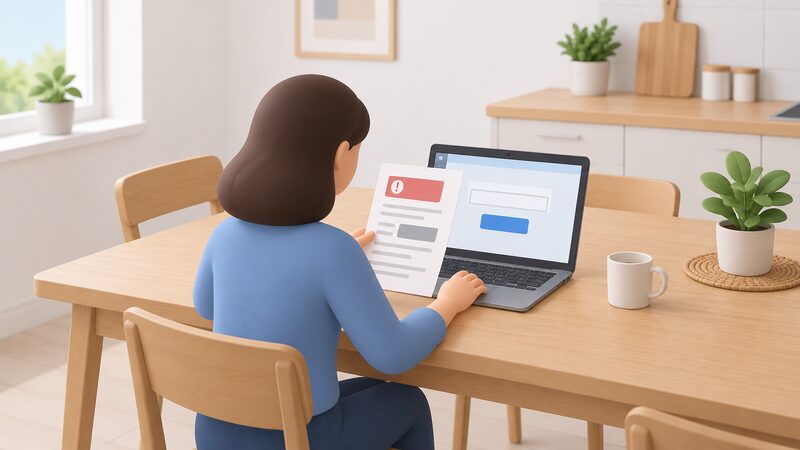
What the recall means for a household's energy independence
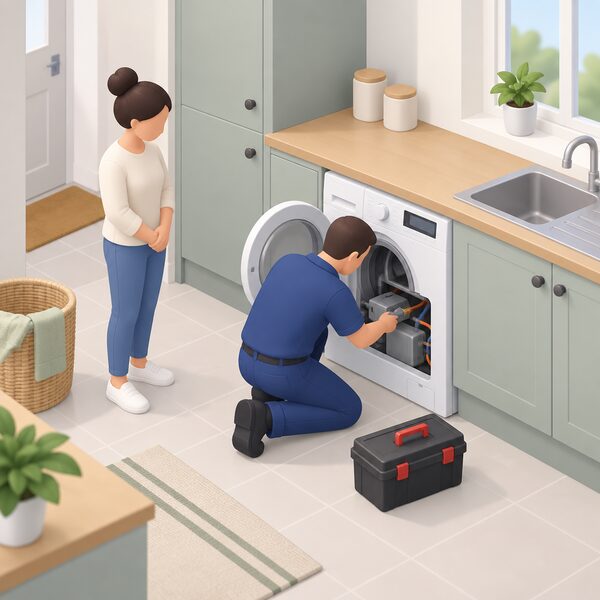
A washing machine is one of the few major appliances a household cannot maintain itself. The recall process makes that dependence explicit: the fault is diagnosed by the maker, the modification is designed by the maker, the engineer is dispatched by the maker, and the spare parts come from the maker. Nothing in the chain is within the owner's control beyond registering the appliance and reporting the fault.
That is the honest limit. Registration is the one lever a household holds, and it is a real one: it is what allows a manufacturer to contact an owner about a problem4. A second-hand owner can use the same route, since the recommendation to register appliances is not restricted to first purchasers4. The serial number checker is the other lever, and it works without any account or registration at all11.
Beyond that, the household's position is to wait for the maker's programme to reach it. The remedy itself, whether a modification, a replacement or a refund, restores the appliance to safe use but does not change the underlying relationship: the machine remains dependent on a manufacturer's parts, engineers and support for as long as it is in service. For broader context on how recalls and safety notices work across home energy equipment, see Home Energy Product Recalls and Safety Notices, and for the manufacturer landscape behind these appliances, Home Energy Equipment Manufacturers.
Sources28 cited
- Ground source heat pump recall, Electrical Safety First, 2026-09-17
- Bosmere N292 2KW greenhouse heater recall, Electrical Safety First, 2026-09-17
- Tesco halogen heater 1200W and 1600W recall, Electrical Safety First, 2026-09-17
- Recycling electricals and batteries, Electrical Safety First, 2026-09-17
- Whirlpool AKM 274IX gas hob recall, Electrical Safety First, 2026-09-17
- Claim using a warranty or guarantee, Citizens Advice, 2026-09-17
- Claim compensation if an item or product causes damage, Citizens Advice, 2026-09-17
- How to find out if there's a power cut, Which?, 2026-06-04
- Crown upright fan heater recall, Electrical Safety First, 2026-09-17
- Hoover H-Dry 300 BATD H7A1TCE-80 review, Which?, 2026-04
- LG ESS Home Battery recall notice, LG Energy Solution, 2026
- LG ESS battery serial number check, LG Energy Solution, 2026
- Portable heaters safety advice, Electrical Safety First, 2026-09-17
- Comment on Ofgem energy price cap announcement, Electrical Safety First, 2026-09-19
- Screwfix space and convector heaters recall, Electrical Safety First, 2026-09-17
- Fireball Turbofan 3000 electric heater recall, Electrical Safety First, 2026-09-17
- Running appliances at cheaper times, Electrical Safety First, 2026-09-19
- 2kW upright fan heater recall, Electrical Safety First, 2026-09-17
- Sorand water heater 2000W recall, Electrical Safety First, 2026-09-17
- B&Q Airforce 2000W convection heater ND20-7AJ recall, Electrical Safety First, 2026-09-17
- Argos Simple Value 2kW upright fan heater recall, Electrical Safety First, 2026-09-17
- Komodo heat mats recall, Electrical Safety First, 2026-09-17
- Washing machine energy saving tips, Smart Energy GB, 2026-08-17
- How to ensure a heat pump runs efficiently, Energy Saving Trust, 2026-05-19
- GoodHome Colenso 2000W white freestanding fan heater recall, Electrical Safety First, 2026-09-17
- Final decision on smart meter GSOPs, Ofgem, 2026-01-30
- Raise a dispute, Energy Ombudsman, 2026-09-19
- Heat networks affected by the Energy Prices Act 2022, Energy Ombudsman, 2026-09-20
 Product RecallsHow recalls and safety notices work for energy equipment in UK homes, who issues them, how to check a product, and what replacement, repair and refund routes exist.
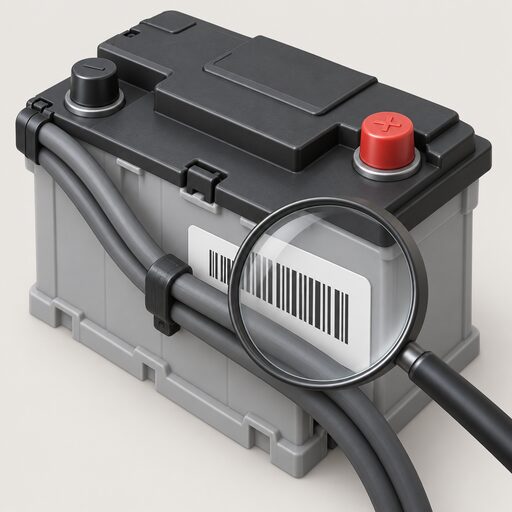 Recalls and Safety NoticesWhich LG RESU home batteries have been recalled, and how can you tell if yours is one of them?
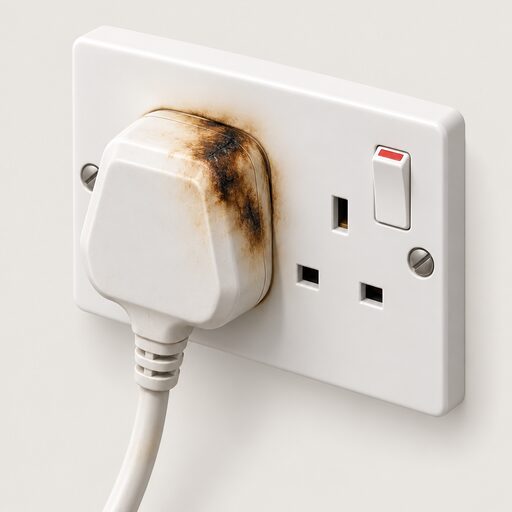 Air Conditioning SafetyA safety guide to home cooling appliances: plug and circuit loading, flammable refrigerants in portable units, condensate and water damage, venting, window sealing and product recalls, with the markings to look for.
 The Full Brands GuideWhich boiler, heat pump or solar brand can you trust, and who actually owns it?
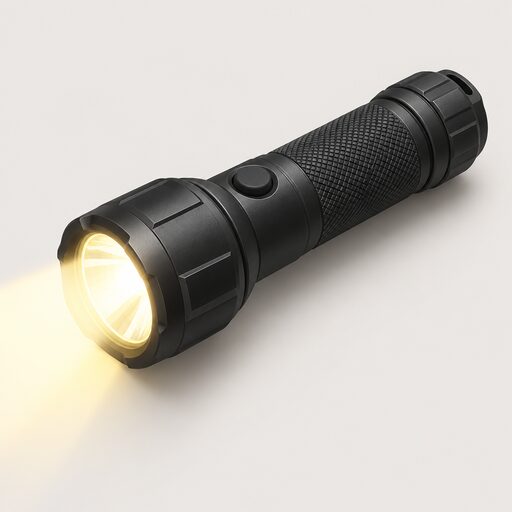 Prepare a Home for a Power CutA household checklist for before, during and after an outage: what to keep charged and to hand, which appliances to switch off, how long food stays safe and what to do about medical equipment.
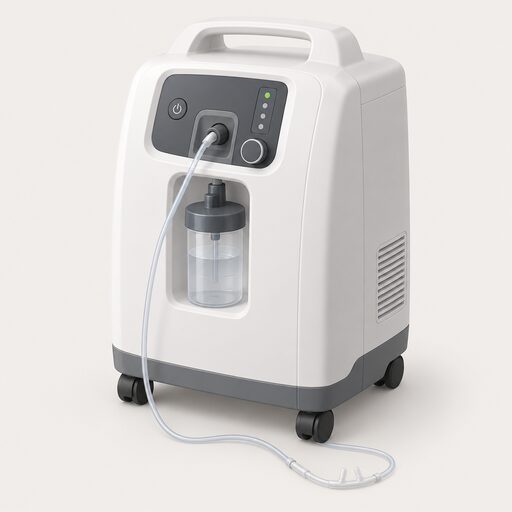 Vulnerable Households EnergyIf someone in your home relies on powered medical equipment, or needs extra warmth because of a health condition, what help is available?