
In this guide
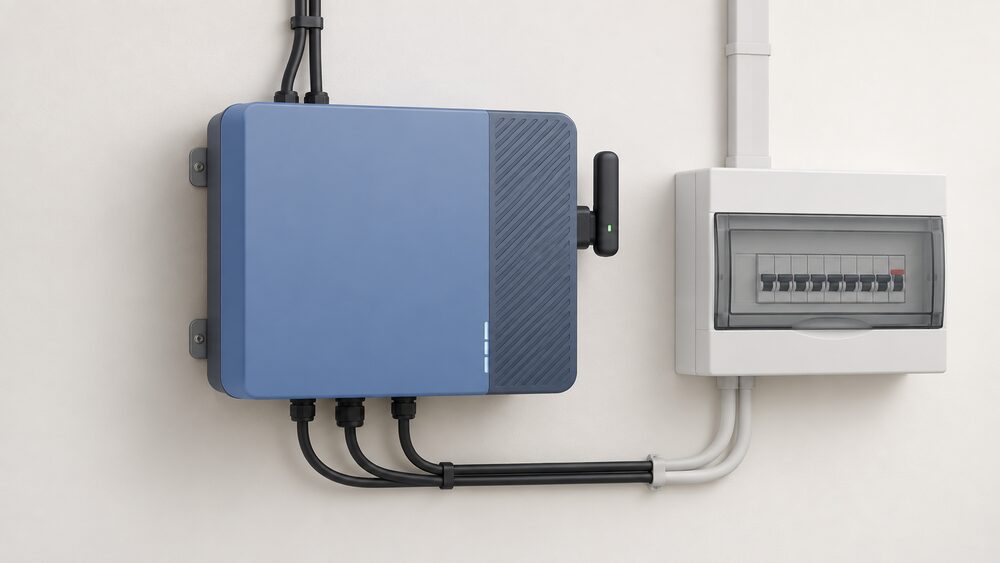
Solplanet is the residential inverter brand of AISWEI, a manufacturer whose portfolio covers PV inverters, EV chargers and energy management systems1. For a UK household the brand matters mainly as a string inverter choice: single and three phase units, hybrid versions that accept a battery, and a monitoring chain that runs through the Solplanet Cloud rather than anything local.
The headline commercial facts are straightforward. Standard end-user warranty cover runs up to five years, extendable to up to ten2. Array oversizing is permitted up to 150% on most residential series, and up to 200% on the ASW SH Series 2-6kW3. Monitoring is cloud-only: Solplanet states that its inverters do not support local monitoring5. Off-grid operation is not supported, and the maker states there is no warranty for damage caused by off-grid use5.
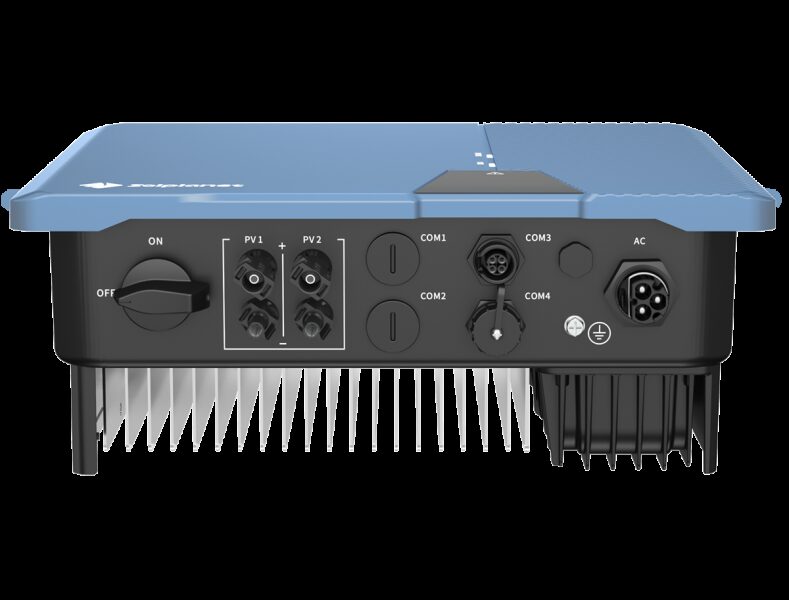
Solplanet at a glance: AISWEI's residential inverter brand
AISWEI describes a broad portfolio of PV inverter products, EV chargers and energy management systems1. Solplanet is the brand under which that hardware reaches households, and the residential line is built around string inverters in single and three phase forms, with hybrid models that pair with low voltage and high voltage batteries5.
The company's own framing of the storage side is that it offers a comprehensive portfolio of energy storage solutions including single phase and three phase hybrid inverters, and both high and low voltage batteries2. The Ai-LB Series low voltage battery is described as fully compatible with Solplanet's line of hybrid inverters, and as a perfect match for the ASW H-S2 hybrid series6. That matters for a household planning to add storage later: the battery and the inverter are designed as one system rather than assembled from different makers.
The brand also sells the surrounding pieces. The Ai-Dongle is listed as compatible with a wide range of Solplanet inverters7, and the Wi-Fi stick connects selected inverters to the AISWEI cloud and app8. Solplanet has also announced smart EV chargers as part of the wider AISWEI product set1.
What this means for independence is mixed. A Solplanet hybrid inverter with a Solplanet battery lets a household store its own generation and shift it into the evening, which reduces the electricity bought from a supplier. It does not remove the grid connection, and it does not remove the manufacturer: the battery pairing, the monitoring and the warranty all run through one company's ecosystem. A household that wants to mix brands, or to keep operating hardware without a manufacturer's cloud, is working against the design.
The residential range: string and hybrid, single and three phase
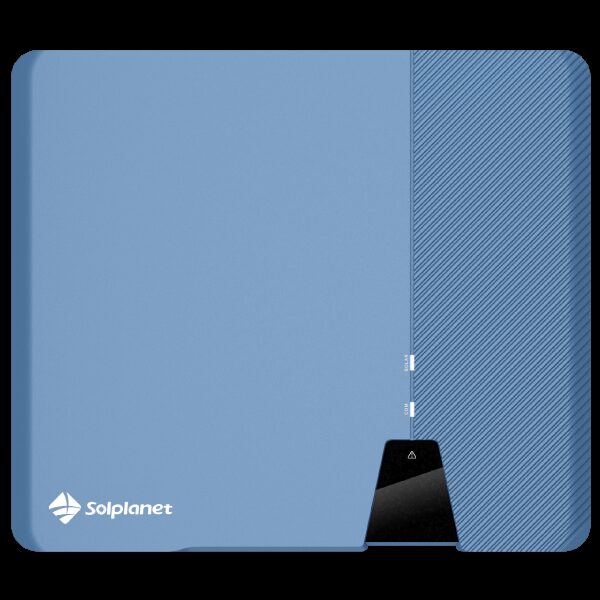
Solplanet's residential line splits by phase and by whether the unit accepts a battery. The ASW 3-6K-S-G2 series is a single phase string inverter range, and the ASW 1-2.5K-S-G2 series covers the smallest single phase installations3. The ASW SH Series 2-6kW is described as a single phase hybrid inverter for installations from 2 to 6 kW4, and Solplanet states that it manufactures single and three-phase hybrid inverters for residential, commercial and industrial settings10.
The ASW 05-15kH-T2/T3-DG series sits above those, and is the one series in the material listed as compatible with a diesel generator10. That is a distinct product from the standard residential hybrid range and should not be read as making the rest of the line generator-ready.
| Series | Type | Phase | Notable feature |
|---|---|---|---|
| ASW 1-2.5K-S-G2 | String | Single | Up to 150% oversizing9 |
| ASW 3-6K-S-G2 | String | Single | Phoenix Contact DC connectors, integrated DC switch3 |
| ASW SH Series 2-6kW | Hybrid | Single | Up to 200% oversizing, Modbus TCP/IP4 |
| ASW 05-15kH-T2/T3-DG | Hybrid | Three | Diesel generator compatible, AFCI10 |
Solplanet states that it manufactures single and three phase hybrid inverters tailored for residential, commercial and industrial settings2. For a UK house the practical split is simple: single phase for most domestic supplies, three phase where the property has a three phase connection and the array or battery is large enough to justify it. The hybrid models are the ones that matter if a battery is planned, and the string models are the cheaper route where it is not. The wider differences between these categories are set out in string inverters and hybrid inverters.
Sizing and DC/AC ratio: up to 150% array oversizing
Oversizing means fitting more panel capacity than the inverter's rated AC output, which spreads generation across more of the day and lifts yield in weak light. Solplanet permits this generously. The ASW 3-6K-S-G2 series allows up to 150% oversizing of the attached PV system array3, the ASW 1-2.5K-S-G2 series allows up to 150% of the attached PV array9, and the ASW 05-15kH-T2/T3-DG series is listed at up to 150% PV array oversizing for higher yields10. Solplanet's general guidance is that the PV array can typically be oversized by 150% depending on location and site irradiation levels10.
The ASW SH Series 2-6kW goes further, with up to 200% PV array oversizing for higher energy yields4. Solplanet's general guidance is that the PV array can typically be oversized by 150% depending on location and site irradiation levels2, which is the figure to hold onto where a specific model's datasheet is not to hand.
Two things follow. First, a household can fit more panels than the inverter's nameplate suggests, which matters where roof space is generous but the budget for a larger inverter is not. Second, oversizing is not free of consequence: it changes how often the inverter runs at its ceiling, and it depends on the site. The maker's own wording ties the 150% figure to location and irradiation, so a shaded or east-facing array is a different proposition from an unshaded south-facing one. Roof orientation and shading are covered in orientation, shading and roof suitability, and system sizing in what size solar system does a home need.
Monitoring: Solplanet Cloud only, with no local option
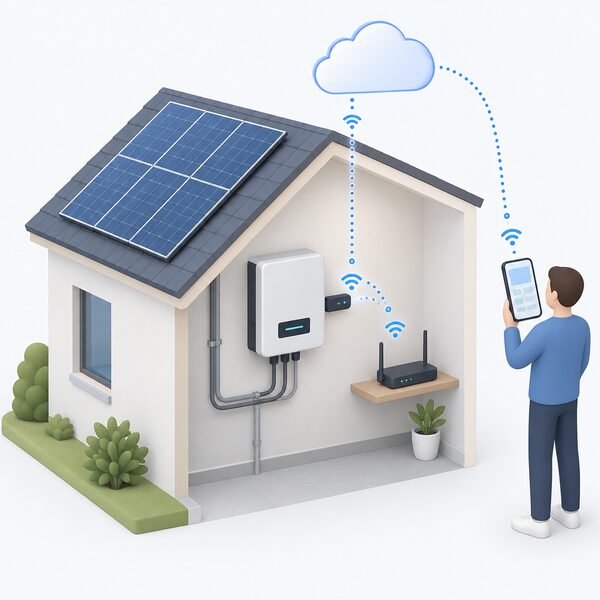
This is the clearest limitation in the range. Solplanet states that its inverters do not support local monitoring, and that monitoring solutions upload data to the Solplanet Cloud, which requires an internet connection5. The Wi-Fi stick enables connection and monitoring of selected inverters via the AISWEI cloud and app8. A distributor listing for the ASW5K-LT G2 Pro describes easy commissioning and monitoring with the cloud-based Solplanet app7.
The mobile application has a stated ceiling: the ASW 3-6K-S-G2 and ASW 1-2.5K-S-G2 series each allow up to five inverters to be monitored by Solplanet's mobile application3. That is a domestic-scale limit rather than a commercial one.
For a household, the dependence is on broadband, on AISWEI's servers and on a manufacturer's app. The inverter keeps generating without any of them; what stops is the visibility. Scheduling from away, energy monitoring and remote diagnostics all sit behind that chain. Households weighing this against alternatives should read monitoring a solar PV system, which sets out what local and cloud monitoring each give.
Safety, cybersecurity and certifications
Solplanet's safety story rests on certification and on a small number of built-in protections. The ASW 05-15kH-T2/T3-DG series is listed with an arc fault circuit interrupter, or AFCI10. The ASW 3-6K-S-G2 series is described as featuring increased PV system safety with optional 24/7 monitoring3. Solplanet also states that all of its inverters are equipped with a DC switch for smooth and uninterrupted power distribution2, and the ASW 3-6K-S-G2 series is listed with an integrated DC switch3.
On the certification side, the material available does not give a Solplanet-specific certification count or a list of standards the brand holds. What it does give is the general UK position: MCS 005 is the certification route for solar photovoltaic modules11, and microinverters used in plug-in solar are typically certified to EN 50549, the European safety standard12. Those are the frameworks a UK installation sits inside rather than Solplanet's own certificates. Certification for a specific model should be confirmed against the MCS product directory and the installer's paperwork, and the wider framework is explained in MCS certification for solar PV installations and solar panel standards and testing.
Cybersecurity is not addressed in the material for this brand. The relevant structural point is the one already made: because monitoring is cloud-only, the inverter's data path runs through AISWEI's infrastructure, and there is no local-only configuration that avoids it5. Households that treat that as a material consideration are choosing between brands on architecture, not on price.
Warranty: when cover starts and what it depends on
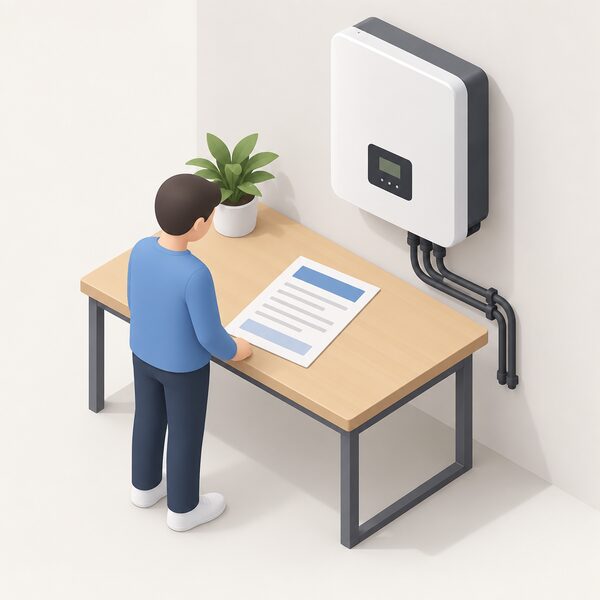
Solplanet offers end-users a standard warranty of up to five years, and states that this does not affect the legal warranty provided by any wholesaler or retailer2. The warranty can also be extended for up to 10 years13. Cover applies to solar inverters, connections and monitoring devices14, and in the event of unforeseen malfunctions or defects it ensures that repair or replacement costs are covered13.
The start date is the part most householders get wrong. Solplanet states that the start date is the earliest of two dates: the date of first installation, or six months after the initial shipment date5. In practice that means a unit that sits in a warehouse or a van for months can have part of its cover consumed before it is ever switched on.
"Either the date of the first installation; or Six months after the initial shipment date."
Claims run through the customer support department or an online claim form14. A service specialist provides support and, if necessary, the logistics network delivers a replacement inverter directly to the end user2. A warranty status tool validates the current cover of an inverter, connection or monitoring device13.
Independent context is worth holding alongside the maker's terms. Solar panels can carry warranties of up to 20 or 25 years, but inverters are not expected to last as long16, and most inverters have warranties of five years as a minimum, often extendable by up to 15 years17. Solplanet's five-year standard sits at the lower end of that range, with the ten-year extension bringing it into line. Registration practice for small systems is covered in plug-in solar kits, and the general framework in solar panel warranties and degradation.
Where Solplanet falls short: no off-grid or island mode
Solplanet is explicit. Asked whether its inverters can be used in off-grid systems with a diesel generator, the maker's answer is no: Solplanet inverters are designed to be on-grid inverters, with no island mode settings and no warranty for damages caused by off-grid use5. That is a firm limit, not a configuration question.
The exception in the range is the ASW 05-15kH-T2/T3-DG series, which is listed as compatible with a diesel generator10. A generator-compatible hybrid inverter is not the same as an off-grid inverter: it describes how the unit behaves alongside a generator in a system that still has a grid connection, not a unit that can form its own island. Households reading that line as off-grid capability are reading it wrong.
The practical consequence is that a Solplanet installation cannot carry a home through a power cut. When the grid goes down, an on-grid inverter shuts off, and the household's generation stops with it. That is standard behaviour for the category rather than a Solplanet defect, and it is explained in do solar panels work in a power cut. Households that need independence from the grid itself are looking at a different class of equipment, covered in off-grid solar for homes, cabins and boats, where the trade-offs include lower efficiency18.
There is a second, softer limit. Because monitoring is cloud-only and the battery pairing is brand-specific, the system's useful life is tied to a manufacturer's continued operation of its platform and its supply of compatible batteries. Nothing in the material suggests that is at risk; it is simply the dependence a household accepts in exchange for an integrated system.
Owning a Solplanet inverter: installation, noise and everyday running
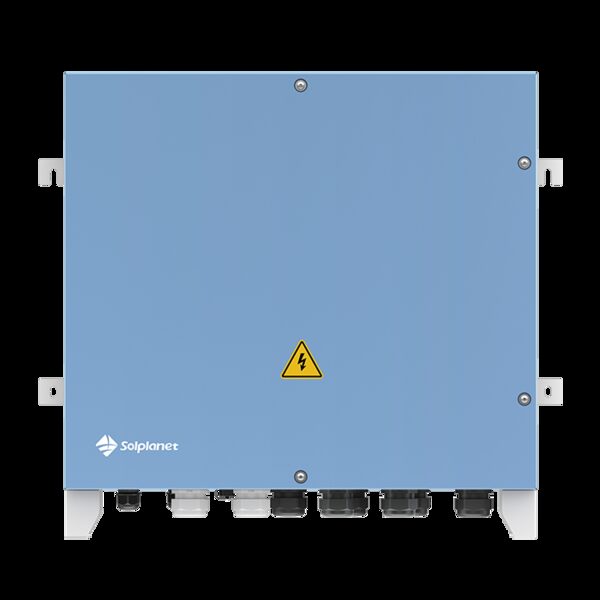
Installation is a competent-person job, and the material points to the general UK position rather than anything Solplanet-specific. NICEIC covers solar panel installation, maintenance and repair as electrical work19. Official guidance on solar equipment states that it does not normally give rise to noise nuisance, but that care in installing it will ensure there are not loose elements such as cables which could give rise to wind noises, and that associated equipment such as inverters are located internally20. That last point is the one that governs what a household actually hears: an inverter mounted on a bedroom wall is a different experience from one in a garage or utility room.
On noise specifically, the material gives no decibel figure for Solplanet inverters. The general guidance above is the only relevant statement, and it frames noise as an installation question rather than a product specification.
Everyday running is mostly invisible. The inverter converts, the app reports, and the household sees the generation figures. Faults surface as error codes, and Solplanet publishes a fault route for each. Codes 1, 11 and 39 are described as permanent faults, with the guidance to disconnect from the utility grid and the PV array, wait three minutes, then reconnect, and to contact support if the fault persists5. Code 40 relates to the maximum operating temperature, so the check is heat sink airflow and ambient temperature2. Code 51 relates to power distribution, with a check on whether a fuse has been damaged5. Codes 49 and 50 point to the signal cables for the PV1-SPD and PV2-SPD surge protectors5. Codes 41 to 45 follow the same disconnect, wait three minutes, reconnect route5. Codes 46 and 6 relate to maximum DC input voltage, checked against the open-circuit voltages of the strings5.
Zero export is supported across the range. Solplanet states that all of its inverters are capable of zero export once the function is set up in the mobile app, using the smart meter on the inverter2. For the wider range, the 0-export function runs through an AiCom datalogger and a defined smart meter set on the datalogger web server, app or AISWEI cloud, and residential inverters can also use a defined smart meter connected directly to the inverter by RS4855. Where an installer sets the export limit in the equipment, an EREC G100 Export Limitation Scheme is not required, because the export capacity limitation is set by the manufacturer of the equipment21. The rules around this are set out in export limitation and G100 for home solar and connecting solar to the grid: G98 and G99 explained.
Thin-film modules are supported. Solplanet states that its inverters can be used with thin-film solar panels, though it describes this as a rare setup, and that they operate correctly with non-adhered thin-film panels5. Thin-film modules are less efficient than monocrystalline or polycrystalline panels but are flexible, giving them a wider range of uses19. The Phoenix Contact DC connectors on the ASW 3-6K-S-G2 series are described as making those inverters compatible with a wide range of solar panels3. Module types are compared in types of solar panel sold in the UK and solar cell technology.
For a household weighing independence, the position is this. A Solplanet inverter turns a roof into generation, and a Solplanet hybrid with a Solplanet battery stores some of it, which cuts the electricity bought from a supplier. The grid connection remains, the supplier remains, and the monitoring, battery pairing and warranty all run through one manufacturer's cloud and one manufacturer's installer network. Off-grid operation is ruled out by the maker. Households that want the wider picture should start at solar PV for UK homes and solar panels and household energy independence.
Sources21 cited
- Solplanet presents new smart EV chargers, Solplanet, 2022-08-19
- Solplanet solar energy questions, Solplanet, 2024-05-30
- ASW 3-6K-S-G2 single phase inverters, Solplanet, 2026-08-19
- ASW SH Series 2-6kW, Solplanet, 2026-08-24
- Solplanet questions and answers, Solplanet, 2024-05-30
- Ai-LB Series battery, Solplanet, 2023-02-16
- ASW5K-LT G2 Pro 5.0kW three phase inverter, Alternergy, 2026-09-17
- Wi-Fi and 4G connect and monitor, Solplanet, 2024-04-13
- ASW 1-2.5K-S-G2 single phase inverter, Solplanet, 2025-10-30
- ASW 05-15kH-T2/T3-DG series, Solplanet, 2026-04-15
- MCS microgeneration certification, BSI, 2026-09-17
- Plug-in solar explained, Low Carbon Hub, 2026-07-09
- Solplanet warranty, Solplanet, 2024-05-21
- Solplanet warranty, Solplanet, 2024-05-22
- Barcud Solar Panel Installation Scheme Specification, Sell2Wales, 2026-06-15
- Solar panel problems and how to solve them, Which?, 2026-03-26
- Solar panels, Energy Saving Trust, 2026-08-27
- Hybrid inverter vs off-grid inverter, LuxPowerTek, 2024-07-24
- Solar panel installation, maintenance and repair, NICEIC, 2026-09-17
- Clifton local listed building consent order guidance, Bristol City Council, 2025-02
- G99 fast track process, Electricity North West, 2026-09-19