In this guide
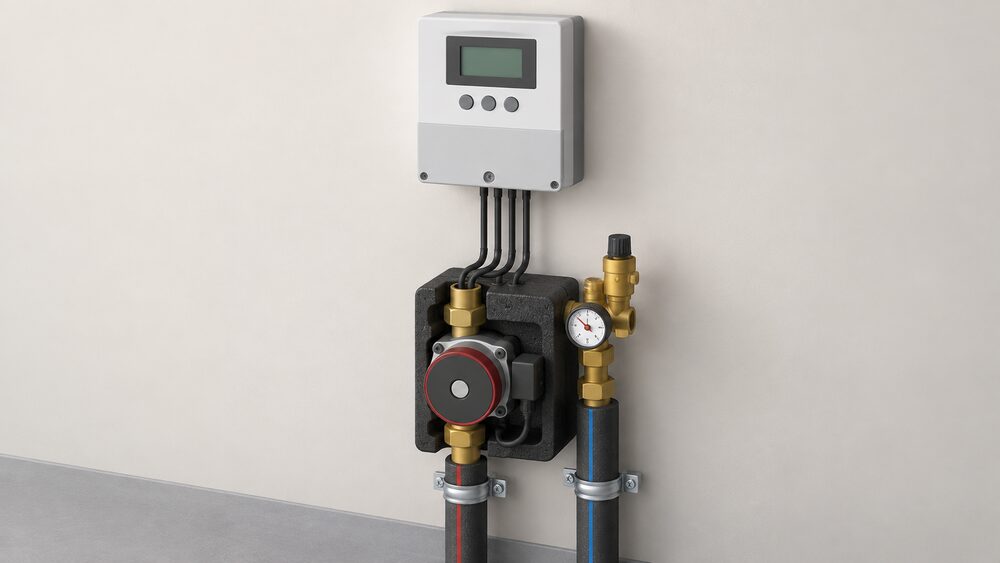
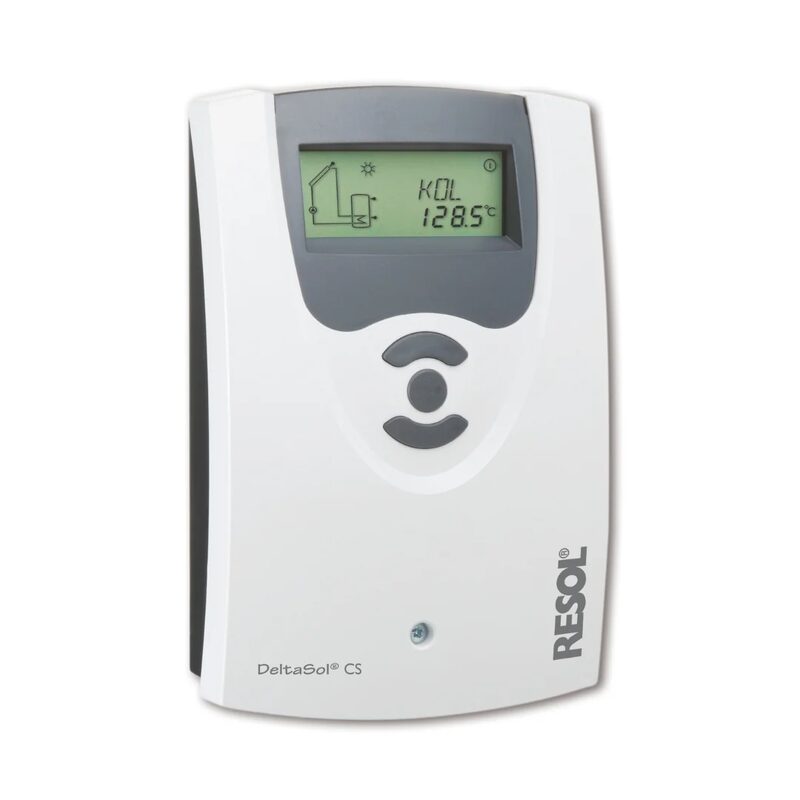
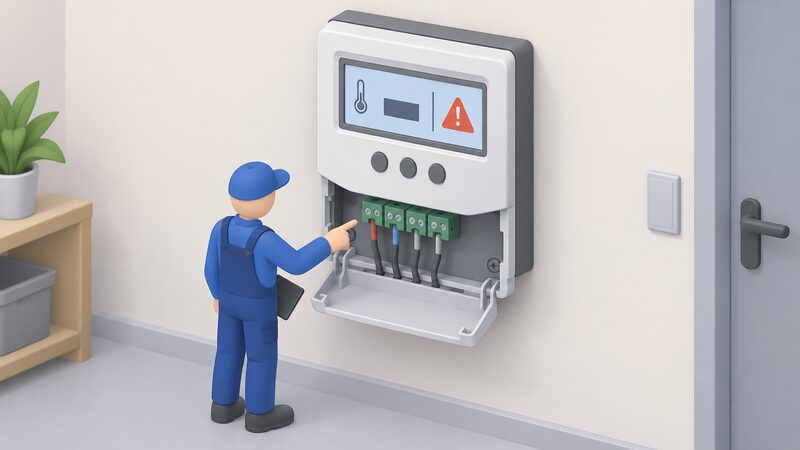
A RESOL controller is the box on the wall that decides when a solar thermal pump runs. It reads the temperature at the collector and at the cylinder, compares the two, and switches the pump so that heat moves from the roof into stored hot water only when there is a gain to be had. The DeltaSol BS/2 is the unit RESOL describes as its controller "for standard solar thermal systems"1, with four temperature sensor inputs and a single semiconductor relay output that includes speed control1.
That is the whole job, and it is a modest one in hardware terms. The value sits in the logic: collector minimum limitation, store maximum limitation, collector emergency shutdown, an antifreeze function for the solar circuit and domestic hot water hygiene functions are all built into the BS/21. A controller that gets these wrong either fails to collect usable heat or, worse, lets a collector stagnate or a circuit freeze.
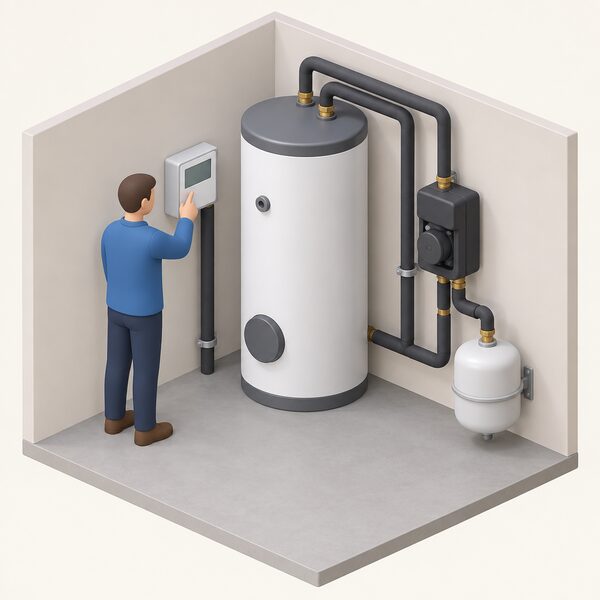
For a household, the controller is the point where energy independence is won or lost on a solar thermal system. The panels and cylinder are passive; the controller decides whether the free heat on the roof is actually captured. What it does not do is remove dependence on the rest of the system. A solar thermal controller still needs mains electricity for the pump and its own electronics, and it still works alongside a cylinder, an immersion or a boiler for the days when the roof cannot keep up. The wider picture of how collectors, cylinders and pump stations fit together is set out in solar thermal cylinders and controls.
DeltaSol BS/2: the controller for standard solar thermal systems
The BS/2 is the entry point of the DeltaSol BS family, and its specification is deliberately narrow. It has four temperature sensor inputs and one relay output in total, a semiconductor relay that supports speed control so the pump can be modulated rather than simply switched1. RESOL's German-language datasheet for the BS series describes the same family as "Regler für thermische Standard-Solarsysteme", controllers for thermal standard solar systems, and confirms the output arrangement: one semiconductor relay on the BS/2, two on the BS/4 and BS Plus2.
The functions carried across the range are what make the difference between a working system and a stalled one. Function control is listed as a feature of the BS series, along with a three-button interface and protection class II2. The BS/2 adds collector minimum limitation, store maximum limitation, collector emergency shutdown, an antifreeze function for the solar circuit, DHW hygiene functions and cooling functions with a cooling mode1. Heat quantity measurement is available where a flowmeter is fitted1.
The BS/4 goes further. It offers three selectable basic systems, plus tube collector function, a thermal disinfection function and a time-controlled thermostat function2. That makes it the more flexible unit where a system has more than one collector array, a more complex cylinder arrangement or a need for scheduled legionella protection. The BS/2 Komplettpaket, the complete package version, ships with three Pt1000 sensors: one FKP6 and two FRP62.
| Model | Sensor inputs | Relay outputs | Notable functions |
|---|---|---|---|
| DeltaSol BS/2 | 41 | 1 semiconductor relay, speed control1 | Collector and store limits, antifreeze, DHW hygiene1 |
| DeltaSol BS/4 | Not stated | 2 semiconductor relays2 | 3 selectable basic systems, thermal disinfection2 |
| DeltaSol BS Plus | Not stated | 2 semiconductor relays2 | Temperature controller class I2 |
| DeltaSol CS/2 | 45 | 1 semiconductor relay, 1 PWM output5 | VBus data interface5 |
Certification and standards: BSFZ and beyond
RESOL announced in September 2026 that it is BSFZ-certified, publishing a news item titled "We are BSFZ-certified!"4. The company also holds ISO 9001 certification4. Those are the two credentials the maker puts its name to for the controller business.
The DeltaSol BS/4 carries a specific certification basis: UL 60730-1:2009 and CSA B60730.1:2002, and it is described as cTUVus-certified2. That is an automatic electrical control standard, and it matters because a solar controller switches mains-voltage pump loads. The BS series as a whole is listed at protection class II2, which is the constructional class covering the insulation arrangement of the unit.
At system level, the standard that governs solar thermal installations is BS EN 12975-1, the standard for thermal solar systems and components6. A controller is one component within a system that has to comply as a whole, so the certification of the box is necessary but not sufficient: the collector, the pump station, the expansion vessel and the cylinder all sit inside the same compliance picture. The Solar Keymark scheme, which covers solar thermal product testing and factory inspection, is the European certification route for collectors and systems, and its network approved resolutions on product testing, freezing risks, collectors and factory inspections in March 2025.
For a household, the practical reading is that a RESOL controller is a certified component from a maker with a quality management system behind it, and that the certification is at component level. The system-level compliance is the installer's responsibility, and it is worth asking for it. More on how solar thermal compares with PV as a route to hot water is at solar thermal vs solar PV.
Maintenance and service over the controller's life
RESOL runs its own repair service rather than routing everything through distributors. The service is reachable by email at service@resol.de, by phone on +49 (0) 23 24/96 48-732 and by fax on +49 (0) 23 24/96 48-7694. It asks for the device type as a minimum, and offers an estimate of costs on request4.
The terms are unusually explicit for a controls maker. RESOL states that repair costs will be communicated in advance if an error is detected, that software updates are possible, that exchange devices are offered during complex repairs, and that repair of older devices is possible4. It also commits to informing the customer if a repair is not possible or not economic4. That last point is the one to note: as with any electronics, there is a point at which the maker judges a unit beyond saving, and the householder does not set that threshold.
In practice, a solar thermal controller has few moving parts and no consumables, so its service life is governed by the electronics, the relay or semiconductor output switching the pump, and the sensor wiring rather than by wear. The sensors themselves are the more common failure point, and they are replaceable independently of the controller. Where a controller is part of a wider solar thermal installation, the annual check on the system is the natural moment to confirm the controller is still reading sensors correctly and that the pump is being modulated as intended. General guidance on maintaining a solar thermal system sits with solar water heating.
Faults, diagnostics and what the codes mean
RESOL controllers do not publish a single consumer-facing fault code table in the way inverter makers do. Faults fall into two broad families. Sensor faults happen when the control system receives missing, incorrect, unstable or implausible sensor data, including open or shorted sensors, drifting sensor values, poor connector contact, incorrect sensor placement and temporary signal interruption7. Control or software faults relate to logic, settings, timing or operating states, including incorrect parameter settings, control sequence problems, wrong mode transitions, poor threshold tuning and configuration mismatch between system parts7.
That distinction is useful because it points at different remedies. A sensor fault is a physical problem: a cable, a connector, a probe or its position. A control fault is a configuration problem, and it is resolved by checking settings against the system design rather than by replacing hardware.
One caution applies to any code a householder finds online. Fault codes are not standardised across brands, models or firmware versions, and the same number can carry different meanings on different products8. A code read from a RESOL controller means what RESOL's documentation for that model says it means, and nothing else. Where a fault cannot be resolved by checking sensors and settings, the repair service is the route, and it will quote before work begins4.
Beyond solar thermal: DeltaTherm PV MAX
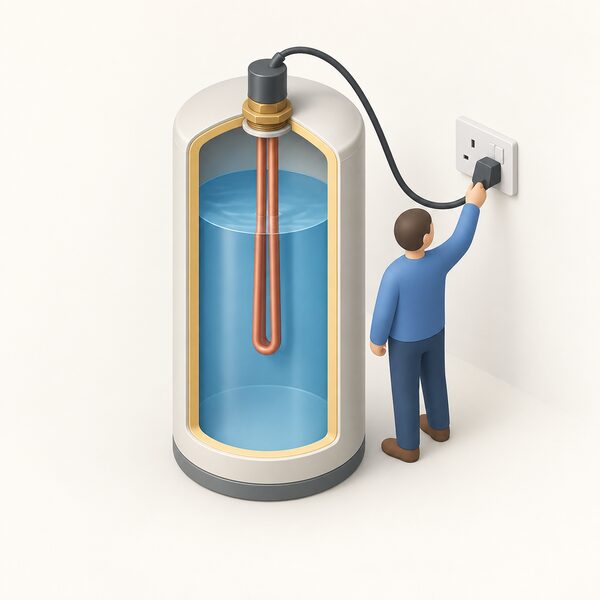
RESOL's product line extends past solar thermal. The company published a news item in May 2026 titled "Together for more energy efficiency", covering the DeltaTherm PV MAX9. The DeltaTherm name marks the shift: where DeltaSol controllers manage collectors and cylinders, the DeltaTherm PV MAX addresses the use of photovoltaic electricity for heat.
That places RESOL in the same territory as solar diverters, the devices that send surplus PV generation to an immersion heater rather than exporting it. The principle is the same, using electricity that would otherwise go to the grid to raise cylinder temperature. The difference is that a diverter works on the AC side of a PV system, while a device in the DeltaTherm line is a heating controller with its own logic. How diverters compare is covered at solar diverters, and a specific product route is at myenergi eddi.
For a household, the significance is about where independence comes from. A solar thermal controller captures heat that never passes through the electricity grid at all. A PV-driven heating controller captures electricity that the household has generated itself, which reduces the amount drawn from a supplier but keeps the system tied to mains electricity for the pump, the controls and the heating element. Neither removes the cylinder, the backup heat source or the grid connection. What they change is how much of the hot water comes from the roof rather than from a boiler or an immersion running on imported energy.
Buying RESOL controllers in the UK
RESOL controllers reach UK households through solar thermal distributors and installers rather than retail channels. One UK distributor lists the DeltaSol SL controller at £241.80, described as a regular price, with good stock3. RESOL itself publishes no consumer price for the DeltaSol CS/2, listing it as price on request5. Where a controller is supplied as part of a solar thermal package, the price is normally folded into the installation quote rather than itemised.
Availability varies by model. The DeltaSol BS/2, BS/4 and BS Plus are the standard-system units, while the CS/2 adds a PWM output alongside its semiconductor relay and carries the same four sensor inputs and VBus data interface5. The VBus interface is the connection that lets a controller talk to RESOL's wider accessories and monitoring, so it is worth confirming which models in a quote carry it.
For a household, the buying decision is less about the controller than about the system it sits in. The controller is a small part of the installed cost of a solar thermal system, and the choice between a BS/2 and a BS/4 follows from the collector and cylinder arrangement rather than from preference. Where a system is being specified from scratch, the controller specification should be settled alongside the cylinder and pump station, which is the subject of solar thermal cylinders and controls. Where a household is weighing solar thermal against PV for water heating, solar thermal vs solar PV sets out the trade-offs, and the pillar guide at Solar PV for UK Homes covers the electrical route in full.
Sources9 cited
- DeltaSol BS/2 product page, RESOL, 2026-09-17
- DeltaSol BS series datasheet, RESOL, 2026-09-17
- DeltaSol SL controller, Secon Renewables, 2026-09-17
- RESOL repair service, RESOL, 2026-09-17
- DeltaSol CS/2 product page, RESOL, 2026-09-17
- MCS microgeneration certification, BSI Group, 2026-09-17
- Heat pump control fault diagnostics, IDM Energie, 2026-07-07
- Solar inverter fault codes, SolaX Power, 2026-08-12
- DeltaTherm PV MAX news item, RESOL, 2026-05-20