
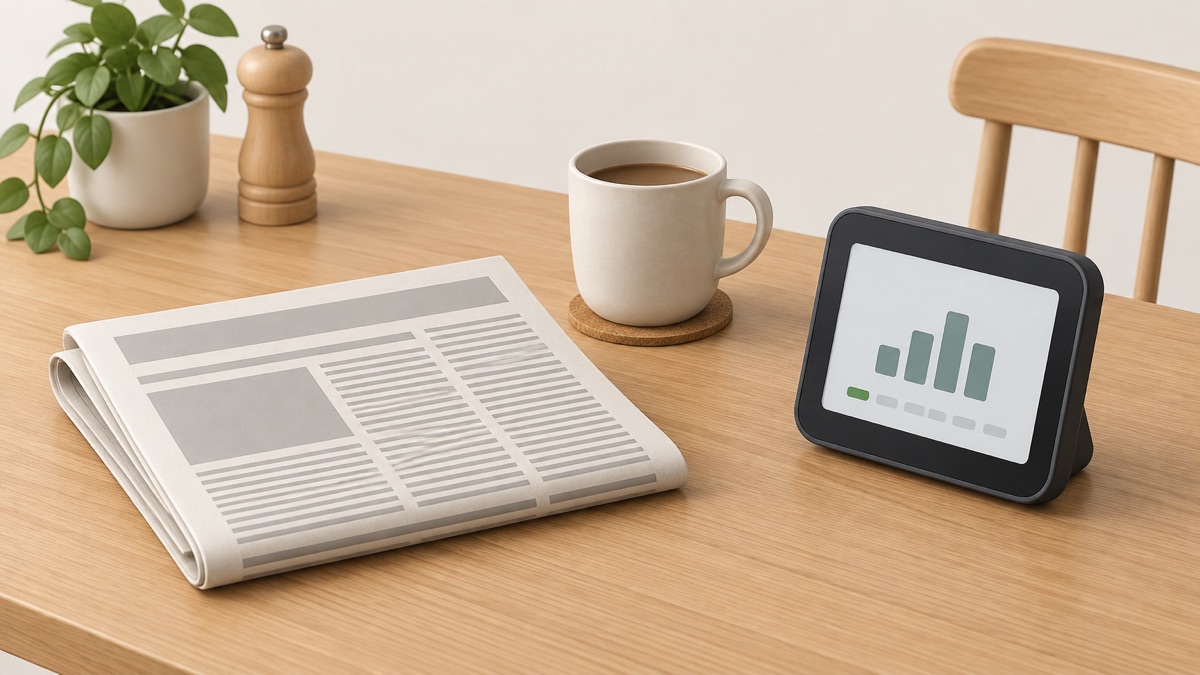
Community Energy Scotland published a leaflet on home energy monitoring on 11 May 2026, as part of its Rural Energy Hubs project1. The organisation said the guide is intended to help households understand how much energy they use and where it is wasted1.
The leaflet explains everyday terms including kilowatts (kW) and kilowatt-hours (kWh), how to spot patterns in energy use, and why small changes such as boiling only the water needed or switching devices off at the wall can add up to savings over time1. It also covers the different ways households can track energy use, whether they have a smart meter or a traditional one, from in-home displays and apps to smart plugs and more advanced monitoring systems1. According to Community Energy Scotland, these options can help households identify energy-hungry appliances, spot problems early and make informed choices about future improvements1.
"we've created a leaflet on energy monitoring in the home as part of our Rural Energy Hubs project"
The organisation said the resource focuses on building confidence and understanding before major changes are made to a home, and that monitoring can act as a stepping-stone towards longer-term changes such as improved insulation, low carbon heating or renewables1. The leaflet was developed as part of the Rural Energy Hubs project, part of which looked at the non-technical barriers households face when trying to cut energy use and how those challenges can be overcome1. A digital version can be viewed and downloaded from the organisation's website1. No cost, print run or distribution figures for the leaflet have been reported1.
Why it matters for households
Monitoring sits upstream of most decisions a household makes about its own energy. A smart meter or a traditional meter with a separate display gives a reading of what a home is actually using, rather than what its occupants assume it is using. That distinction matters for energy independence: a household that knows which appliances drive its consumption, and when, is in a better position to judge whether a change to the fabric of the building, a heating system or a generation technology would pay off. Community Energy Scotland frames the leaflet as a first step rather than a substitute for those measures, and notes that uncertainty about where to start is itself a barrier1. The guide is one output of a project run by a community energy membership body in Scotland; it does not itself offer funding, installation or a tariff.
What happens next
Community Energy Scotland has listed its annual conference for 6 October 2026, an annual general meeting and workshop, and a conference save-the-date notice among its other news items1. No further dates relating to the Rural Energy Hubs project or the leaflet have been reported1.
Sources1 cited
- New resource: Your guide to energy monitoring in the home - Community Energy Scotland, communityenergy.scot