In this guide
DMEGC Solar is a volume module manufacturer whose panels reach UK householders mainly through plug-in solar kits and through installers fitting larger rooftop arrays. The brand's own case pages report a 462 kWp rooftop installation at Varfell Farms in Cornwall using over 1,000 DMEGC Solar modules, alongside residential cases of 4 kWp in the UK, 18 kWp in France, 8.3 kWp in Poland, 6.4 kWp in Spain and 18 kWp in the Netherlands1. Its mono-crystalline silicon modules hold a TÜV SÜD Attestation of Conformity issued on 18 August 20253.
The clearest UK price point is a two-panel DMEGC 930W Hoymiles HiFlow plug-in solar kit listed at £4564. For a full rooftop system there is no published DMEGC list price, and independent UK guidance puts a typical 4.5 kWp domestic system at around £7,6005. Warranty terms are published as supply agreement conditions rather than as a single consumer-facing document, and they apply from a series of dates running through 2025 and 20266.
What follows sets out the range as it appears in the UK, the specification figures the maker publishes, what the warranty actually covers and who holds it, the cost evidence, the company's status, and what the brand means for a household's energy independence.
What DMEGC offers in the UK
DMEGC Solar's UK presence is easiest to see in two places: the plug-in solar market and larger commercial rooftop work. The company's own case pages report a 462 kWp rooftop installation at Varfell Farms in Cornwall using over 1,000 DMEGC Solar modules, which is the largest UK reference it publishes1. Residential cases are reported for the UK at 4 kWp, with further residential references of 18 kWp in France, 8.3 kWp in Poland, 6.4 kWp in Spain and 18 kWp in the Netherlands2.
For householders, the more accessible route is the plug-in kit. A two-panel DMEGC 930W Hoymiles HiFlow Plug In Solar Kit is listed at £456, which places the brand in the small self-install segment rather than only in full rooftop systems4. Plug-in solar panels are now available to buy and use across Great Britain, and the technology is described as compatible with UK domestic electrical systems13. That matters for DMEGC because a plug-in kit is often the first encounter a householder has with the brand.
The wider context is that solar panels are the most common domestic renewable energy source in the UK, so a module maker's route to householders runs through both installer channels and retail kits15. DMEGC sits in the volume end of that market: modules sold in quantity to installers, kit assemblers and commercial projects, rather than a premium brand sold on a single distinctive technology.
Specifications: what the datasheets state
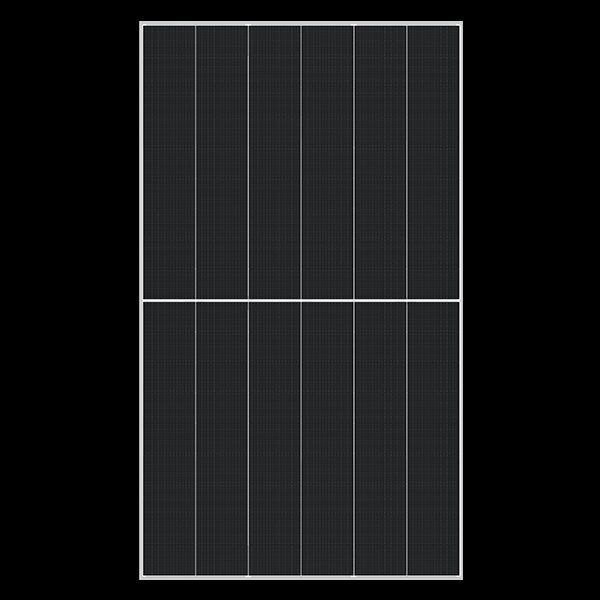
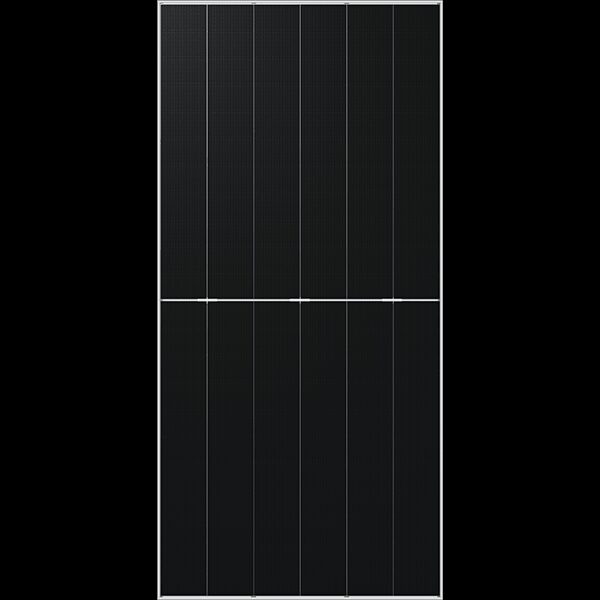
The specification position for DMEGC is complicated by the fact that the maker publishes more than one figure for the same attribute. Annual degradation is given as 0.35% on one product page and 0.4% on another, both dated 17 September 2026, and the two are not reconciled12. Over a 25-year period that gap compounds, so the figure that applies to a specific model is worth confirming before a purchase.
The datasheet version in circulation is identified as EN DS-G12RT-B48HBW-L-20251223, issued on 23 December 202512. That document reference is the one to quote when asking a supplier which revision applies to the module being offered.
On certification, solar photovoltaic modules are covered by the MCS 005 standard, which is the certification route for modules installed under the MCS scheme16. DMEGC's mono-crystalline silicon modules hold a TÜV SÜD Attestation of Conformity, No. N8A 076043 0117 Rev. 08, issued on 18 August 20253. A separate conformity report for the company is valid until 11 May 202617.
| Attribute | Published figure | Date |
|---|---|---|
| Annual degradation | 0.35% and 0.4%, unreconciled | 2026-09-1712 |
| Datasheet reference | EN DS-G12RT-B48HBW-L-20251223 | 2025-12-2312 |
| Conformity attestation | TÜV SÜD No. N8A 076043 0117 Rev. 08 | 2025-08-183 |
| Conformity report validity | until 2026-05-11 | 2026-05-1117 |
| Module standard | MCS 005 | 2026-09-1716 |
One model, the DMEGC DM400M10-54HBB 400W all-black panel, is listed as discontinued18. That is a reminder that module ranges turn over quickly and that a replacement of the same model may not be available if a panel fails years into a system's life. For how module figures are read more generally, reading a solar panel datasheet sets out the conventions.
Warranty: supply agreement terms, not a household document
DMEGC's warranty is published as a set of conditions attached to module supply agreements, and the trigger dates matter. The warranty applies to DMEGC and GREENHOUSE branded modules sold under module supply agreements signed on or after 30 June 2025, and separately to agreements signed on or after 1 October 20256. Further versions apply where DMEGC SOLAR enters into a modules supply agreement with a customer on or after 1 April 2026, and again for agreements from 1 June 20268. A separate Australian version applies to modules sold and installed in Australia under agreements entered into on or after 1 June 202611.
The practical consequence is that the warranty runs between DMEGC and its customer, which is normally the installer, distributor or kit seller rather than the householder. What a homeowner can enforce is usually the term passed on in the sale contract, so the paperwork that matters is the one issued with the installation or the kit.
For comparison, typical warranty periods in the UK market run to 10 years for plug-in solar panels and 25 years for rooftop solar panels19. A 25-year manufacturer's warranty is the term attached to at least one MCS certified monocrystalline array with built-in optimisers, and a manufacturer warranty registered over at least a 25-year period is a recognised condition in some funded schemes20. DMEGC's own published terms should be read against those market norms rather than assumed to match them. Solar panel warranties and degradation explains how product and performance warranties differ.
Cost: kit prices are published, system prices are quoted
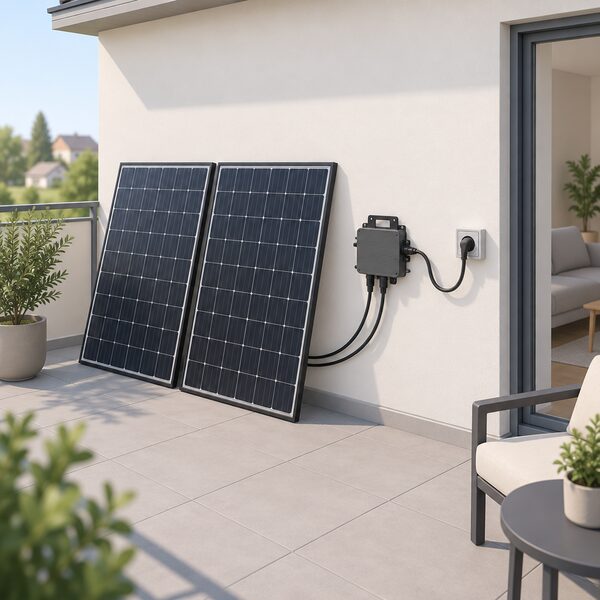
There is no published DMEGC list price for modules sold on their own, and no manufacturer price for a fitted system. The one clear UK figure is the two-panel DMEGC 930W Hoymiles HiFlow Plug In Solar Kit at £4564. That is a retail kit price and should be read as such: it covers the panels and the paired microinverter hardware, not installation, mounting or electrical work.
For a full rooftop system, independent UK guidance gives a range of figures. A typical domestic system of around 4.5 kWp is put at around £7,6005. Elsewhere the same subject is costed at between £6,100 and £11,000 depending on the size of the property, and at around £6,100 as an average installation cost22. A further independent figure puts the initial cost typically between £6,000 and £10,00024.
| Cost item | Figure | Source type |
|---|---|---|
| DMEGC 930W Hoymiles HiFlow plug-in kit | £456 | Retail listing4 |
| Typical 4.5 kWp domestic system | around £7,600 | Independent guidance5 |
| Solar panels by property size | £6,100 to £11,000 | Independent guidance22 |
| Average installation cost | around £6,100 | Independent guidance23 |
| Typical initial cost | £6,000 to £10,000 | Independent news24 |
The spread reflects system size, roof complexity, whether scaffolding is needed and whether the quote includes a battery. None of these figures is DMEGC-specific, and none states its VAT position, so they should be read as quoted rather than as confirmed VAT-inclusive prices. How much do solar panels cost in the UK? covers the cost structure in more detail.
Company status and where the modules are made
DMEGC Solar is a Chinese module manufacturer, and its published case studies cover the UK, France, Poland, Spain, the Netherlands and Australia1. The UK reference installation is the 462 kWp Varfell Farms rooftop array in Cornwall, using over 1,000 modules1. Residential cases reported by the maker include 18 kWp in France, 8.3 kWp in Poland, 6.4 kWp in Spain and 18 kWp in the Netherlands, all described as using full black modules2.
The company is not among the energy suppliers listed as active in Energy Ombudsman dispute records, which cover a different part of the market entirely25. That is not a statement about DMEGC's financial position; it simply means the ombudsman records in this area concern suppliers and installers rather than module manufacturers.
What the manufacturing location means in practice is a longer supply chain for replacements. A module that fails years into a system's life may need to be matched from a different production batch or replaced with a different model, and the discontinued DM400M10-54HBB is an example of a model that has already left the range18. Buyers weighing a brand should look at how long the specific model has been in production and whether the supplier holds stock. Solar panel standards and testing explains what the conformity documents cover.
What DMEGC panels mean for energy independence
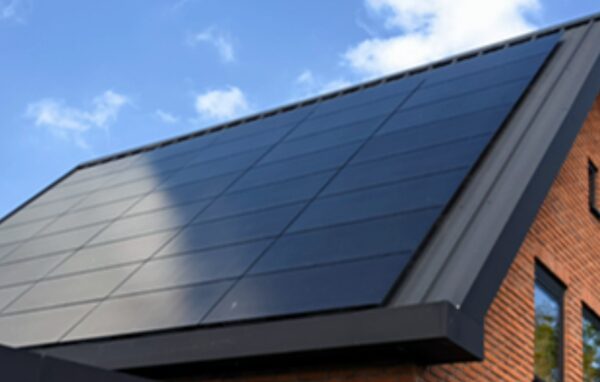
Solar panels capture the sun's energy and convert it into electricity for use in the home, or send it back to the electricity grid in return for a payment known as the Smart Export Guarantee20. The energy source is the sun's free energy, and once the installation is paid for, the electricity generated is free to use20.
That is the independence a DMEGC array delivers: a reduction in the amount of electricity bought from a supplier, and an improvement in a home's Energy Performance Certificate19. It is not independence from the grid. A grid-connected system still relies on the network for the periods when the panels are not generating, and on a supplier for whatever is imported. A plug-in kit adds a further dependence on the microinverter paired with it, and on the socket circuit it uses.
"Once you have paid for the installation of your solar panels, the electricity they generate is completely free for you to use"
The dependence that remains is worth stating plainly. A DMEGC module is a component, not a system: it needs an inverter, mounting, cabling and a grid connection, and its warranty runs through a supply agreement rather than directly to the householder6. The brand's contribution to independence is the generating hardware and its price point, particularly in the plug-in segment where a £456 kit is the lowest-cost route into self-generation4. For the wider picture, solar panels and household energy independence sets out what a home can and cannot disconnect from.
Sources27 cited
- DMEGC Solar, DMEGC Solar, 2026
- DMEGC Solar residential and commercial cases, DMEGC Solar, 2026
- Attestation of Conformity No. N8A 076043 0117 Rev. 08, DMEGC Solar, 2025-08-18
- Plug-in solar panels, Which?, 2026-04-27
- Solar panels, Energy Saving Trust, 2026-08-27
- DMEGC module warranty terms, agreements from 30 June 2025, DMEGC Solar, 2025-06-30
- DMEGC module warranty terms, agreements from 1 October 2025, DMEGC Solar, 2025-10-01
- DMEGC module warranty terms, agreements from 1 April 2026, DMEGC Solar, 2026-04-01
- DMEGC module warranty terms, agreements from 1 April 2026 (second version), DMEGC Solar, 2026-04-01
- DMEGC module warranty terms, agreements from 1 June 2026, DMEGC Solar, 2026-06-01
- DMEGC SOLAR Australia warranty terms, DMEGC Solar, 2026-06
- DMEGC module datasheet EN DS-G12RT-B48HBW-L-20251223, DMEGC Solar, 2025-12-23
- Simple tips for a greener Easter, Home Energy Scotland, 2026-03
- Plug-in solar panels vs rooftop systems, Which?, 2026-04-27
- Top energy saving ideas for your home improvement project, Energy Saving Trust, 2026-08-03
- MCS Microgeneration Certification, BSI Group, 2026-09-17
- DMEGC conformity report, DMEGC Solar, 2026-05-11
- DMEGC DM400M10-54HBB 400W all-black solar panel, TradeSparky, undated
- How do solar panels work?, Smart Energy GB, 2026-03-16
- Solar panels, Oxfordshire County Council, 2026-09-17
- Generating your own energy: solar electricity, Welsh Government, 2018-09
- Make your home more energy efficient, Confused.com, 2026-07-06
- Energy saving upgrades for home renovation, Energy Saving Trust, 2026-05-05
- Do solar panels increase home value?, CPA, 2026-01-20
- Raise a dispute: Mergreen Energy Ltd, Energy Ombudsman, 2026-09-19
- Raise a dispute: Metric Energy Limited, Energy Ombudsman, 2026-09-19
- Raise a dispute: FMG Energy Solutions Ltd, Energy Ombudsman, 2026-09-19