
In this answer
Short answer
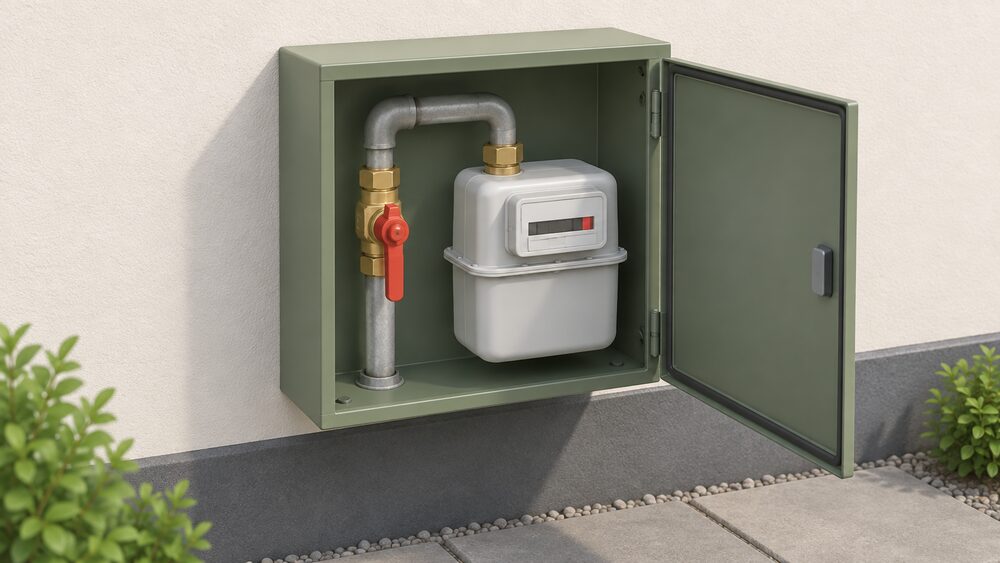
The emergency control valve (ECV) is the red handle beside your gas meter. It is a manual quarter-turn valve, not a device that trips and resets, so there is nothing to "reset" in the electronic sense. Turning it a quarter turn closes it and stops gas flowing to the meter and beyond; turning it back is a separate, controlled step that the householder does not carry out alone.
The short answer to the search is that the ECV can be closed by the householder in an emergency, but it is not reopened by the householder. Cadent's guidance is to turn the handle either 90 degrees to the left or 90 degrees to the right, a quarter turn clockwise or anti-clockwise, to switch the supply off1. On restoring supply, SGN states that "for safety reasons, customers should not attempt to turn their gas supply back on themselves"2, and Cadent says not to turn it back on until advised it is safe to do so1.
What follows covers where the valve sits, when to use it, how it operates, and the one situation where it must not be touched at all: a meter in a cellar or basement.
What the emergency control valve is and where it sits
The ECV is the point at which gas enters your property's pipework, and it is the boundary of responsibility between the gas network and the home. Cadent, which runs the gas distribution network across much of England, states that it is "responsible up to the Emergency Control Valve (ECV), which is located before your gas meter"8. Everything downstream of the valve, including the meter and the pipework into the house, belongs to the supplier and the householder respectively.
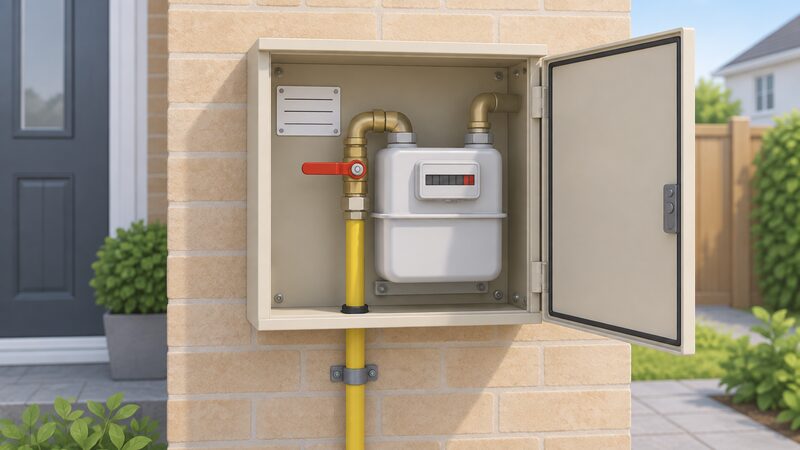
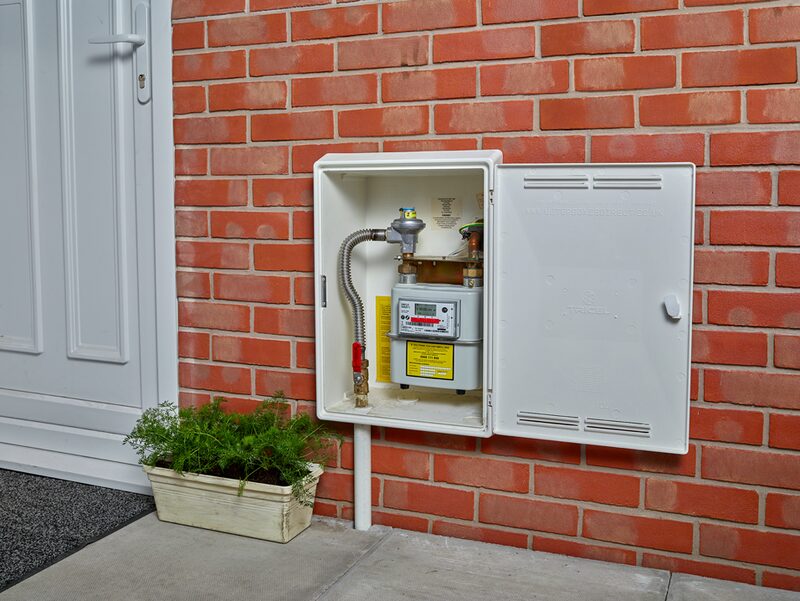
Physically, the valve is usually a red plastic or metallic handle that isolates the supply of gas to your meter and beyond3. Cadent's own instruction is to open the gas meter box and locate the red tap handle near to the pipe, which is the ECV1. It is normally found next to the gas meter5, and operating instructions should be found close by3. In most modern properties it sits in the meter box on the outside of the property9. Liquid Gas UK's homeowner guidance likewise asks whether an ECV can be seen on the outside wall of the property10.
Operating instructions should be found close by10. Where a label is present it will show the closed position; where there is no label, the guidance is to turn the emergency control handle through 90 degrees to close the valve5.
When to turn the gas off at the meter
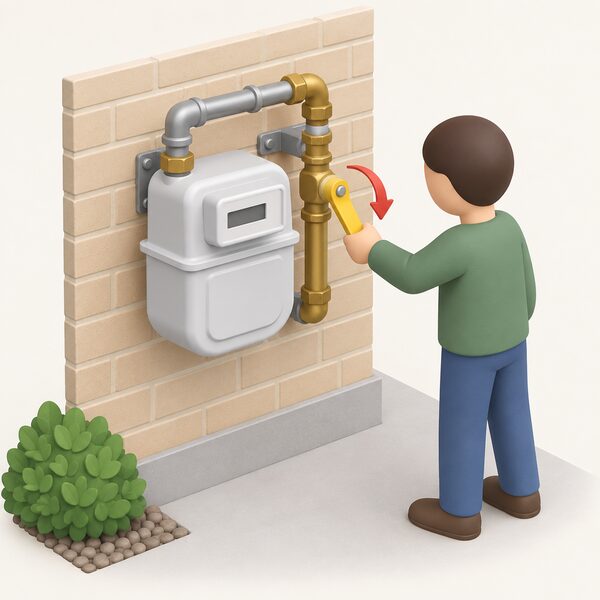
The ECV exists for gas escapes. Liquid Gas UK states that the ECV allows the user to shut off the supply in the event of a gas escape10. That is its purpose, and it is the situation in which a householder is expected to use it.
The standard emergency sequence is consistent across network operators. Northern Gas Networks advises opening doors and windows to let fresh air in, then turning off the gas at the meter if it is safe to do so9. Wales and West Utilities sets out the same steps: open all your windows and doors to ventilate the property or area, then switch off the gas at the meter using the ECV unless the meter is in the cellar or basement11. Cadent's version adds that electric switches should not be used and naked flames should be extinguished6.
There is a second, quieter reason to know where the valve is: a planned interruption. If the network needs to work on the supply, the gas would be turned off at the emergency control valve by the meter12. In a wider gas supply emergency, the instruction is to immediately and safely turn off any equipment or appliances that use gas13.
If there is any doubt about how to turn the gas off, the network operator can be contacted immediately to arrange for an engineer to safely turn off the gas supply15. The same applies when evacuating: Northern Gas Networks states there is no safety reason to turn off your gas supply before vacating, though it may be turned off at the emergency control handle if preferred or advised by an authorised agency16.
How the ECV is operated and reset
Operation is mechanical and simple. The handle sits aligned with the pipe when open. To close it, turn the lever so it is at 90 degrees to the gas pipe17. Cadent's wording allows either direction: turn it either 90 degrees to the left or 90 degrees to the right, a quarter turn clockwise or anti-clockwise1. Northern Gas Networks describes the same movement as a quarter turn so that it is at a right angle with the gas pipe4.
There is no reset button, no trip to clear and no sequence to follow to restore the valve. Once closed, the valve stays closed until it is physically reopened. That reopening is the part that is not a householder task. SGN's incident guidance is that engineers will visit all affected properties to temporarily turn off gas supplies at the meter, provide an information card or letter, and visit each property to restore supply and perform safety checks2. Cadent's emergency engineer visit follows the same pattern: a trained advisor talks the caller through the steps, arranges an emergency engineer, who carries out a full safety check, makes the situation safe and provides safety advice18.
For householders who would struggle with the handle, there is an alternative. The EasyAssist ECV is a small device designed to help those who would struggle to hold and turn a traditional ECV handle, isolating the gas supply at the push of a button19. It is a fitting, not a change to the rules on who restores supply.
"For safety reasons, customers should not attempt to turn their gas supply back on themselves."
The exception: meters in cellars and basements
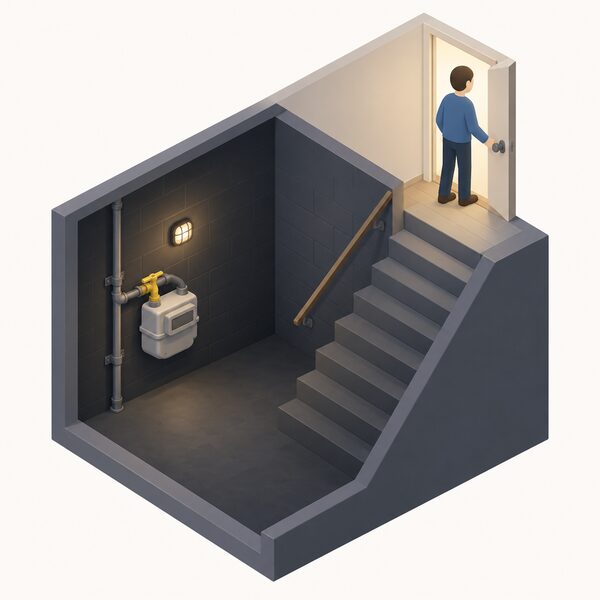
The one firm prohibition in this subject concerns cellars and basements, and every source that mentions it agrees. Wales and West Utilities' step 3 is to switch off the gas at the meter using the ECV unless the meter is in the cellar or basement11. Cadent's safety advice is to evacuate if the leak is in a cellar or basement7. Uswitch is blunter: if the smell of gas is found in the cellar or basement of your home, and that is where the smell emanates from, do not go down the stairs, because you could quickly be overwhelmed7.
The same rule applies to flooding. Cadent's flood advice is not to switch off your gas supply if your gas meter is under water or the meter is in the cellar20, and separately, not to attempt to turn off the gas if the meter is under water or in a cellar20. Northern Gas Networks' flood guidance repeats it: turn off your gas at the emergency control handle if safe and able, but do not attempt it if the meter is in a cellar or basement21.
The practical consequence is that a household with a cellar meter has no safe manual route to isolate its own supply. That is a real limit on household energy independence: the gas can only be shut off at the meter by an engineer, and the householder's role is to evacuate and call. Knowing this in advance, and knowing where the meter is because that is where the gas supply is turned off if advised to do so or in a gas emergency6, is the preparation that matters.
Who to call, and what happens next
The National Gas Emergency Service number is 0800 111 99917. It is the number for a suspected gas leak, and Citizens Advice directs anyone who suspects a gas leak with a gas meter to report it immediately to the National Gas Emergency Service on 0800 111 99923. The same number appears in boiler-repair guidance: turn your boiler off, go outside and call the emergency gas number on 0800 111 99914.
The call itself is part of the procedure. The caller speaks to a trained advisor who will talk them through the steps that they need to take, and who will arrange for an emergency engineer18. The engineer carries out a full safety check, makes the situation safe and provides safety advice18. Where an incident affects a wider area, engineers visit all affected properties to temporarily turn off gas supplies at the meter, leave an information card or letter, and then visit each property to restore supply and perform safety checks2.
For a property on bulk LPG rather than mains gas, the actions differ. Liquid Gas UK states that no matter where gas is smelled, the manual outlet valve on the cylinder or tank is closed, all appliances and the property's emergency valve are turned off, doors and windows are opened, lights and electrical equipment are not switched on or off, the supplier is called, 999 is dialled for the fire brigade, and the premises are left12.
Where the valve sits in the wider gas network
The ECV is also the point at which a property is disconnected. When a meter is removed, the pipe to the property may remain, capped, at the emergency control valve24. A full disconnection is arranged through the energy supplier, and the sealing, or capping, of the gas pipe is carried out at that same valve24.
That boundary matters for what a householder may and may not do. Engineers with Gas Safe Register accreditation are not allowed to install new gas services or carry out alterations to the gas service before the ECV, nor to extend pipework to additional ECVs from an existing ECV, nor to disconnect your service pipe at the gas main outside your property25. Work on the network side of the valve is the network operator's, and new connections are handled through the operator, with Cadent responsible up to the ECV8.
For a household, the ECV is therefore both a safety device and the edge of what can be controlled from inside the home. It gives a householder the ability to stop gas entering the property in an emergency, which is a genuine and immediate form of control. It does not give the ability to restore supply, to work on the service pipe, or to isolate a supply whose meter sits in a cellar. Those remain with the network operator, the supplier and the gas emergency service.
Sources25 cited
- Locating your meter and turning off the gas, Cadent Gas, 2026-09-20
- Gas supply updates, SGN, 2026
- FAQs and guidance on gas disconnection, Northern Gas Networks, 2025-10-30
- Gas off, Northern Gas Networks, 2026-08-24
- Be winter ready, SGN, 2026
- Smell gas, SGN, 2026
- Gas leaks safety, Uswitch, 2026-06-01
- Gas connections disconnection, Wales and West Utilities, 2026-09-20
- What do I do if I smell gas?, Northern Gas Networks, 2026-09-20
- Homeowner safety check, Liquid Gas UK, 2026-09-20
- Smell gas, Wales and West Utilities, 2026-09-20
- Safety advice, Liquid Gas UK, 2026-09-20
- Gas supply emergencies, Cadent Gas, 2026-09-20
- Make the right call, Cadent Gas, 2026-09-20
- Got an engineer coming, Cadent Gas, 2026-09-20
- Flood advice, Northern Gas Networks, 2025-10-22
- What to do if you smell gas, Confused.com, 2025-09-08
- Emergency engineer visit, Cadent Gas, 2026-09-20
- Locking cooker valves, Cadent Gas, 2026-09-20
- Flood advice, Cadent Gas, 2026-09-20
- Take no chances with gas safety, Northern Gas Networks, 2026-09-14
- Find out if your energy meter is faulty, Citizens Advice, 2026-09-20
- Carbon monoxide advice, Northern Gas Networks, 2026-07-24
- Disconnecting from the gas network, IGEM, 2026-09-20
- New gas connection, Cadent Gas, 2026-09-20
 Turn Off Gas, Water, PowerWhere the gas emergency control valve, internal stopcock and consumer unit main switch are usually found and how each is operated.
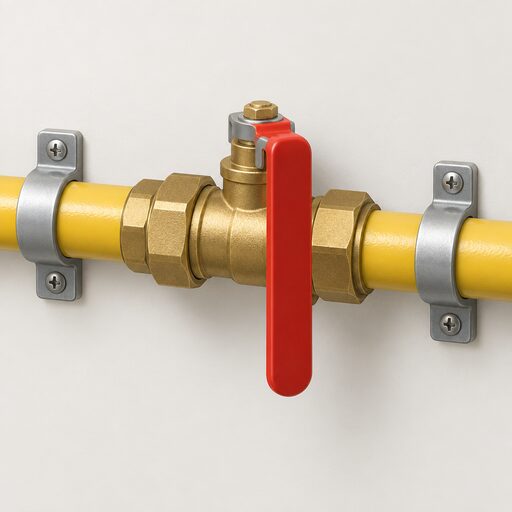 Smell Gas or Suspect COThe emergency steps for a suspected gas escape or carbon monoxide alarm, including ventilation, ignition sources and turning the supply off at the emergency control valve.
 Prepayment MetersHow do you top up a prepayment meter for gas or electricity, and what happens when the credit runs out?
 Gas Supply EmergenciesIf gas runs short, will my home lose supply?
 Thermostatic Radiator ValvesHow a thermostatic radiator valve senses room air temperature and throttles flow to a single radiator, what the numbered settings mean, where TRVs should and should not be fitted, and what the Building Regulations require across the UK.
 Reading an Energy BillA line-by-line walk through a domestic gas and electricity bill: unit rate, standing charge, kWh consumption, meter readings, tariff name and balance, plus the 12-month back billing limit and the guaranteed standards payments that apply when a supplier or network operator gets it wrong.