

In this guide
Avro Energy went into administration in September 2021, two days before the extended deadline to file its 2020 accounts, which remain outstanding1. The company had accrued £55 million in combined operating losses to the point of administration, and Ofgem expected the total cost associated with the failure to amount to £700 million1. It was one of the largest supplier collapses of the 2021 crisis.
For households, the practical outcome was orderly. Octopus Energy took on Avro Energy's approximately 580,000 domestic customers from 26 September 2021, under the supplier of last resort process2. Supply continued without interruption, and customers did not need to act to keep their gas and electricity flowing. What changed was the supplier, the tariff and the account the household was paying into.
That is why the Avro name still generates queries years later. Credit balances, final bills and the question of who now holds the account are the three things that outlast a failed supplier. This page sets out what Avro Energy was, what happened to it, and what the failure says about the limits of supplier-based energy independence.
What Avro Energy offered UK households
Avro Energy was a domestic gas and electricity supplier selling to households on the GB market, the market that covers England, Scotland and Wales. It competed on price rather than on service or on fuel source, and it did so successfully enough to reach a substantial customer base before the 2021 wholesale price surge.
The clearest documented marker of its market position is a snapshot from the early years. As of 24 May 2016, the cheapest tariff available for a direct debit customer with typical consumption was Avro's "simple and connect" online tariff3. That is an official statistic from a period when the company was a small challenger, and it should be read as exactly that: a dated position, not a description of where Avro sat in 2021.
The offer itself was conventional. A household joining Avro got a credit account, a direct debit, a unit rate and a standing charge, and a supply relationship with a company that bought wholesale energy and resold it. There was no generation, no network ownership and no physical asset in the home. That structure is what made the company vulnerable to wholesale price movements, and it is also what made the failure survivable for customers: nothing in the house belonged to Avro.
For the wider picture of how challenger suppliers of this kind fit into the market, challenger and small energy suppliers in the UK sets out the model, and UK energy suppliers: the full guide covers the market as a whole.
What happened: administration in September 2021

Avro Energy went into administration in September 2021, two days before the extended deadline to file its 2020 accounts1. The deadline itself had already been moved: the company pushed back the date to file from 30 June 2021 to 28 September 20211. The 2020 accounts remain outstanding.
The financial picture at the point of failure was a company that had been losing money for some time. Avro accrued £55 million in combined operating losses to the point of administration1. Ofgem expected the total cost associated with the failure to amount to £700 million1. That £700 million is the expected cost of the failure as assessed by the regulator, not a sum billed to households.
| Item | Figure | Date or period |
|---|---|---|
| Original accounts filing deadline | 30 June 2021 | moved by the company1 |
| Extended accounts filing deadline | 28 September 2021 | 1 |
| Administration | September 2021 | two days before the extended deadline1 |
| Combined operating losses to administration | £55 million | to September 20211 |
| Expected total cost of the failure | £700 million | Ofgem expectation1 |
Avro was not alone that month. The 2021 crisis took a series of suppliers in quick succession, and the pattern was the same each time: a company that had bought energy at prices it could no longer recover through its tariffs, with a customer base that had to be moved somewhere. Energy supplier failures: every collapse and what happened to customers covers the full sequence, and supplier of last resort: what happens when your supplier stops trading explains the mechanism that handled the transfers.
Who took over Avro Energy customers
Octopus Energy took on Avro Energy's approximately 580,000 domestic customers from 26 September 20212. The transfer ran through the supplier of last resort process, which Ofgem operates when a supplier stops trading: the regulator appoints a new supplier, the accounts move across, and supply continues.
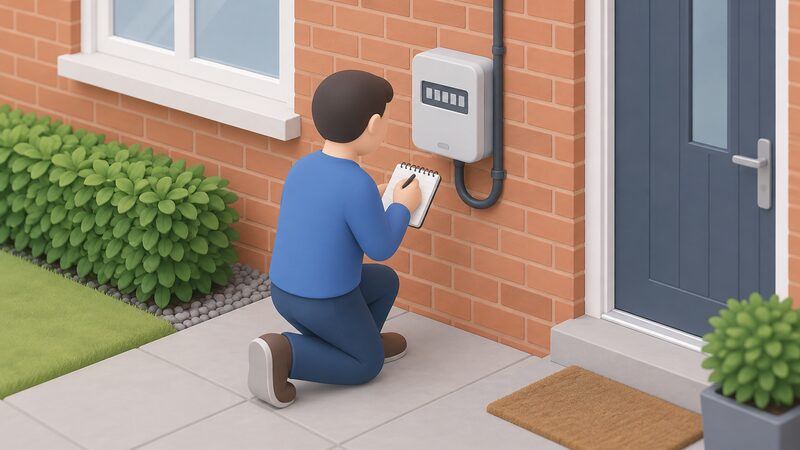
The mechanics matter for anyone still chasing an old balance. A supplier of last resort transfer moves the account, the meter point and normally the credit balance with it. The household does not choose the new supplier at that moment, and does not need to do anything to keep the lights on. What the household does need to do is take a meter reading at the point of transfer, because that reading fixes the boundary between the old account and the new one.
For the same month, the comparison is instructive. Green Supplier Limited's approximately 255,000 domestic customers moved to Shell Energy from 27 September 2021, a day after the Avro transfer began2. Two failures, two different receiving suppliers, two sets of customers who had no say in either. Who took over Shell Energy customers covers the other side of that pair.
| Failed supplier | Domestic customers | Receiving supplier | Transfer date |
|---|---|---|---|
| Avro Energy | approximately 580,000 | Octopus Energy | from 26 September 20212 |
| Green Supplier Limited | approximately 255,000 | Shell Energy | from 27 September 20212 |
Credit balances, final bills and what a household can still claim
This is the part of the Avro story that still has practical consequences. When a supplier fails, the credit balance on a domestic account normally transfers to the receiving supplier along with the supply. Where that happened, the claim sits with the new supplier, not with the failed company. Ofgem publishes guidance on checking whether money is owed on an energy bill, which is the starting point for any household unsure of its position4.
Final bills follow the same logic. A final bill is produced when an account closes, and the meter reading taken at transfer is what allows it to be produced at all. Where a final bill was never issued before administration, the administrator's records become the only source, and the route to a claim runs through the administration rather than through a supplier's customer service team.
The order of events is worth setting out plainly:
- Take a meter reading at the point of transfer, and keep it.
- Check the closing balance on the old account against that reading.
- Pursue any credit balance with the receiving supplier first.
- Where the balance was never transferred, pursue it through the administrator.
- Where the receiving supplier has handled the account incorrectly, use the normal complaints route.
The general process for closing an account and recovering a balance is set out in final bills and credit refunds from an energy supplier, and the specific case of a failed supplier is covered in how do I get my credit back after my supplier failed?. Where a household believes it has been treated incorrectly by the receiving supplier, the normal complaints route applies, and complaining about an energy supplier: the process and the Ombudsman explains the stages.
What the failure cost, and who bore it

The £700 million expected cost of the Avro failure is the headline figure, and it is worth being precise about what it represents. It is Ofgem's expectation of the total cost associated with the failure, published in a parliamentary committee report in July 20221. It is not a fine, not a levy presented to households, and not a sum the company paid.
The £55 million in combined operating losses to the point of administration is the company's own accumulated position1. The gap between the two figures reflects the difference between what a company loses while trading and what it costs the system to unwind it: moving customers, honouring balances, and absorbing the difference between the wholesale energy already bought and what the new supplier can recover.
For households, the cost surfaces indirectly, through the standing charges and levies that fund the market's resilience arrangements. Energy supplier profits and margins explained sets out how supplier costs and margins work, and energy supplier financial resilience rules covers the rules introduced afterwards to reduce the chance of a repeat.
What Avro Energy means for household energy independence
A supplier like Avro Energy offered a household one thing: a commercial relationship for buying gas and electricity. It did not offer generation, storage, a network connection or any physical asset in the home. When the company failed, the household's supply continued, but the tariff, the account and the credit balance all moved to a supplier the household had not chosen.
That is the structural limit. Choosing a supplier changes who bills you and at what rate. It does not change the fact that the energy arrives through a network the household does not own, generated by plant the household does not control, priced in a wholesale market the household cannot influence, and intermediated by a company that can stop trading. The Avro case is a clean demonstration because the failure was total and the transfer was automatic.
The measures that reduce that dependence are the ones that change the physical arrangement rather than the billing arrangement. The Energy Company Obligation is a government energy efficiency scheme in Great Britain to tackle fuel poverty and help reduce carbon emissions, and it helps to make homes more energy efficient by installing improvements, free of charge to eligible households5. It is up to energy suppliers to determine which energy efficiency measures they want to fund, the level of funding they provide, and the retrofit coordinator or installers they choose to work with, so what is available varies by area and by supplier5. In Scotland, the route to advice and support runs through the Scottish Government's fuel poverty programme7, and in Northern Ireland through the Housing Executive's energy advice tool8.
For the wider argument about what supplier choice can and cannot deliver, energy suppliers and household energy independence sets out the position.
The supplier landscape since 2021
The market Avro operated in no longer exists in the same form. The 2021 failures removed a large number of small suppliers, and the companies that remain are, on the whole, larger and better capitalised. The Energy Ombudsman's dispute pages list the suppliers currently in its scheme, and the pattern is instructive: a long tail of small and specialist companies, each with an active status recorded as of 19 September 20269.
| Supplier listed in the ombudsman scheme | Status recorded |
|---|---|
| Arlo Energy | active, 19 September 20269 |
| Atlas Energy | active, 19 September 202610 |
| Zenza Energy | active, 19 September 202611 |
That list is not a stability guarantee. It records that a company is trading and within the ombudsman scheme on a given date, nothing more. The lesson of Avro is that a supplier's status is a snapshot, and that the household's protection comes from the transfer mechanism rather than from the supplier's continued existence.
For households weighing a switch, the relevant pages are switching compensation and supplier guaranteed standards of performance and the energy switch guarantee: what suppliers promise when you switch. For the question of what happens if it goes wrong again, what happens if my energy supplier goes bust? covers the process from the household's side.
Sources11 cited
- Energy pricing and the future of the energy market, UK Parliament, 26 July 2022
- Check who's taken over your energy supply, Ofgem
- Retail energy markets in 2016, Ofgem, 2016
- Check if you are owed money on your energy bill, Ofgem
- Energy Company Obligation (ECO): homeowners and tenants, Ofgem
- ECO4 Flex open, South Cambridgeshire District Council
- Scotland without fuel poverty, Scottish Government
- Energy advice tool, Northern Ireland Housing Executive
- Raise a dispute: Arlo Energy, Energy Ombudsman, 19 September 2026
- Raise a dispute: Atlas Energy, Energy Ombudsman, 19 September 2026
- Raise a dispute: Zenza Energy, Energy Ombudsman, 19 September 2026