In this guide
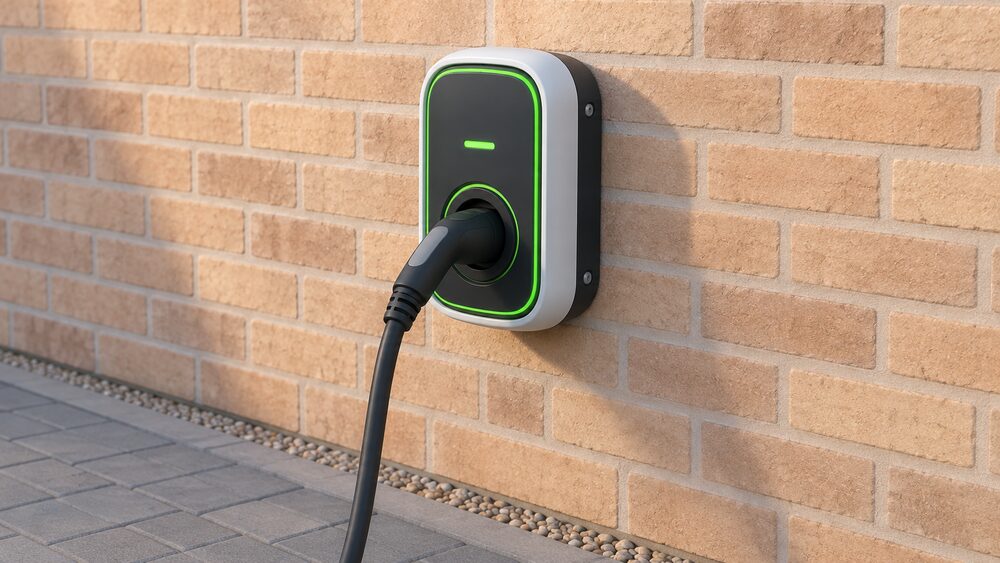
Rolec is one of the longest-standing British names in electric vehicle charging. The company states it has manufactured and installed over 390,000 EV chargepoints worldwide and has been supplying charging equipment to homes and businesses globally for more than 17 years1. Its domestic range is built around the WallPod family and the newer EVO, with the Zura and HEX lines sitting alongside them for commercial and shared use.
For a household, the appeal is straightforward: a UK-based manufacturer with a long production history, a charger that can be pointed at any OCPP-compatible app rather than locked to one provider, and built-in PME fault detection that removes the need for a separate earth electrode on many installations3. The EVO is sold in 7.4kW and 22kW versions and is described as compatible with all EVs and plug-in hybrids3.
The limits matter as much as the benefits. Rolec's own warranty terms are not set out in the material available here, so the length of cover and the registration step cannot be stated with confidence. Remote features depend on a home internet connection and a third-party app. And the company's public charging business now runs largely through Monta's back-office software, which is a dependence on another firm's platform5.
Rolec at a glance: 17 years of UK chargepoint manufacturing
Rolec has been manufacturing and supplying electric vehicle charging equipment to families and businesses globally for over 17 years, and states it has produced and installed more than 390,000 chargepoints worldwide1. The company holds ISO 14001:2015 certification for its environmental management, and Frankie Mellon is named as managing director1.
That history matters for a household in a way that a specification sheet does not capture. A charger is a long-lived piece of electrical equipment bolted to an outside wall, and the practical question over its life is whether spares, firmware and support will still exist in eight or ten years. A manufacturer with a long production record and a broad commercial install base is a different proposition from a brand that has appeared in the last two years.
Rolec's commercial reach is also relevant to domestic buyers, because it shapes the software ecosystem. The company states it is integrated with over 45 charge point management system partners around the globe6. In practice that means a Rolec unit can be enrolled in a wide range of back-office platforms rather than being tied to a single manufacturer's cloud.
The wider UK context is one of rapid growth. There were 92,141 public charge points in total at the end of April 2026, with 32,471 charge points added in the 24 months to that date7. More than one million charge points are installed at home or work across the UK8. Home charging is where most of the energy goes, and it is the part of the network a household actually controls.
The home range: WallPod, Zura and EVO
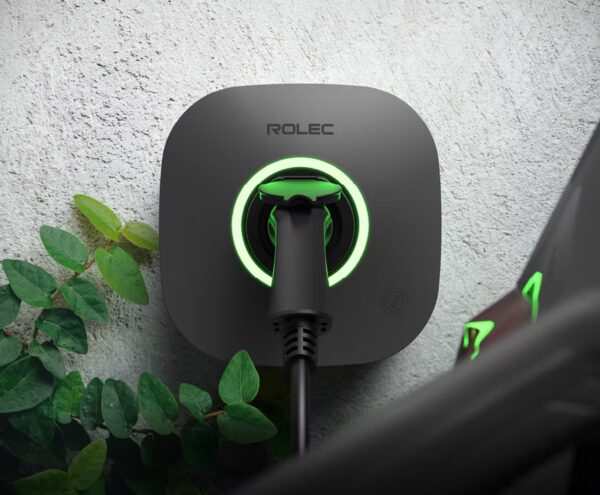
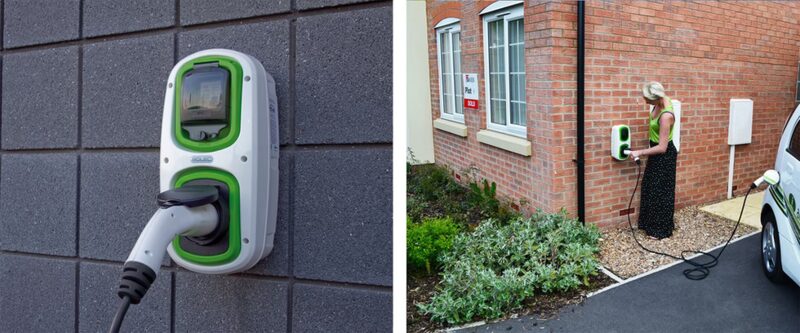
Rolec's domestic line has evolved through several generations. The WallPod:EV is the long-running workhorse, and the facelifted version carries built-in TruePEN PME fault detection on selected models4. The WallPod:EV HomeSmart is the connected variant, described by Rolec as providing an easy mobile phone app charging experience4. The WallPod:EV OpenCharge is aimed at commercial and workplace environments and integrates with back-office systems including Rolec's own VendElectric platform4.
The EVO is the current headline domestic product. It is available in 7.4kW and 22kW models and is described as an easy-to-use, fully compatible charging solution for all EVs and plug-in hybrids, with a universal charging socket3. Rolec positions it around installation simplicity, and it supports plug and go, mobile app or RFID controlled charging3.
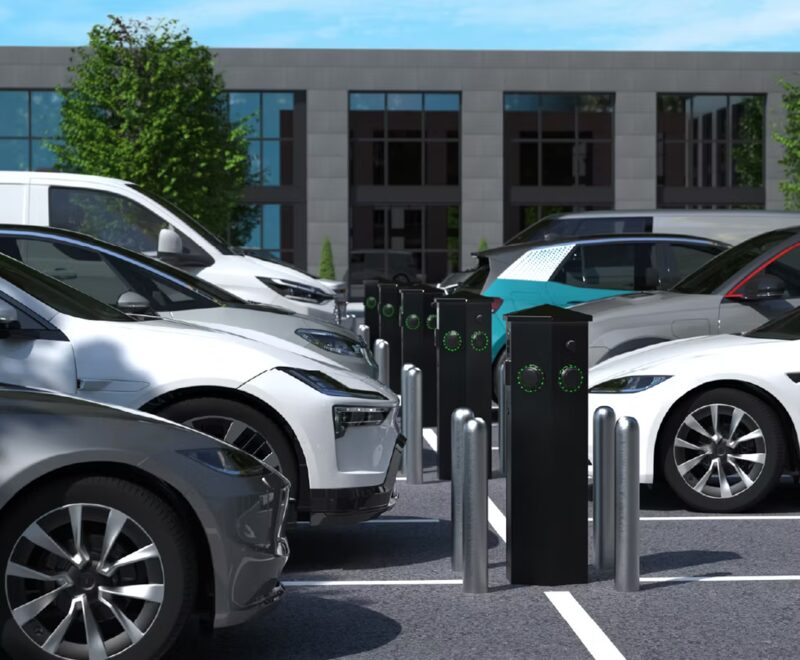
The HEX is the shared and commercial unit, offering plug and go, app, contactless payment on model-dependent variants, or RFID controlled charging6. The Zura name appears in Rolec's commercial and destination charging work rather than as a distinct domestic wallbox in the material available here.
| Product | Intended use | Control options | Output |
|---|---|---|---|
| WallPod:EV | Domestic | Standard, no app | Not stated |
| WallPod:EV HomeSmart | Domestic | Mobile app | Not stated |
| WallPod:EV OpenCharge | Commercial and workplace | OCPP back office, VendElectric | Not stated |
| EVO | Domestic | Plug and go, app, RFID | Up to 7.4kW or 22kW3 |
| HEX | Shared and commercial | Plug and go, app, contactless (model dependent), RFID6 | Not stated |
For a household choosing between them, the practical distinction is the control layer rather than the power. A 7.4kW single-phase unit is the standard domestic answer; 22kW requires a three-phase supply, which most UK homes do not have. The differences between the WallPod variants come down to whether the unit talks to an app and whether it can be enrolled in a management platform.
Price: from £299 installed, and what that assumes
Rolec does not publish a list price for a supplied-and-fitted home charger, and prices are installer-quoted. The figures that do exist in the market are indicative rather than Rolec-specific. One UK retailer lists a 7.4kW untethered charger at £359.98 including delivery, a 7.4kW tethered unit at £399.99 including VAT, and a 7.4kW domestic charger with installation included at £799.98 including delivery9. A tethered unit with installation is listed at £944.98 including delivery, and an untethered unit with installation and a five-year extended warranty at £899.98 including delivery9.
Energy suppliers offer their own installed packages as a comparison point. OVO quotes from £1,099 with installation for a Hypervolt charger and from £1,249 with installation for an Andersen unit, both including standard installation and VAT, with installation and 3+ years warranty from £949 on some offers10. E.ON Next includes standard installation on its Wallbox Pulsar Max and Vestel EVO4 range11.
Three things move a fitted quote: the output and model, whether the installation is a straight swap or new cabling, and the cable run and siting. A tethered unit costs more than an untethered one because the cable is supplied with it. A 22kW unit needs a three-phase supply, which changes the electrical work substantially. Wider cost context is set out in home EV charger cost.
Smart charging and app control: ev.energy, OCPP and OpenCharge
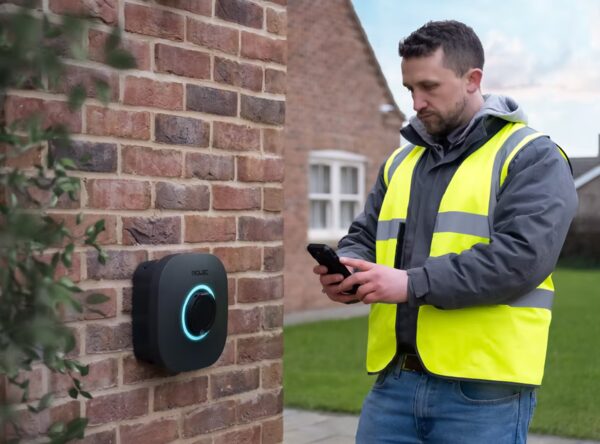
Rolec's smart charging position rests on OCPP, the Open Charge Point Protocol. The EVO allows users to connect the charger to any OCPP app of their choice3, and Rolec states that as with all its units, users can opt to connect to any OCPP-compatible app2. The WallPod:EV OpenCharge is described as integrating with any OCPP compliant back-office management system in the world4.
That openness is the most consequential thing about a Rolec charger for a household. Most wallbox makers tie smart features to their own app and their own servers. An OCPP-compatible unit can be moved between platforms, which means the household is not locked to one company's software continuing to exist and continuing to work.
The WallPod:EV HomeSmart has been described by Rolec as supporting automatic off-peak charging and rewards through the ev.energy app. That is the mechanism by which a charger follows a time-of-use tariff: the app reads the tariff and schedules charging into the cheap window. Smart chargers generally work with most EV tariffs from suppliers such as Octopus, E.ON Next and OVO, though compatibility is not universal and the tariff's own supported-charger list is the thing to check12.
"Smart EV chargers connect to the internet, allowing you to control charging remotely through a mobile app."
The dependence is real. Local charging continues without a network connection, but scheduling, monitoring and remote diagnostics all run through a home broadband connection, a third-party server and an app. More on this is at EV charger apps and connectivity and smart EV chargers.
Safety: TruePEN PME fault detection and certifications
The safety feature Rolec promotes hardest is TruePEN PME fault detection. The WallPod:EV and WallPod:EV HomeSmart are equipped with it, and the facelifted WallPod:EV carries built-in TruePEN on selected models4. Rolec states that this provides a safer electric vehicle charging solution for the home14.
The technical point behind it is PME, protective multiple earthing, which is how most UK distribution networks are configured. In a PME arrangement the neutral and earth are combined at the supply, and a broken neutral can raise the potential of the earthing system. A charger that detects this condition and disconnects is safer than one that relies on a separate earth electrode, which is the traditional alternative and requires a rod driven into the ground.
"This provides a safer electric vehicle charging solution for your home"
For a household, the practical effect is that a Rolec unit may avoid the cost and disruption of an earth electrode installation, which matters on terraces, flats and hard-surfaced driveways where driving a rod is difficult or impossible. The wider regulatory picture, including RCD requirements and the standards a domestic charge point must meet, is covered at EV charge point safety and standards and RCD protection.
Rolec and Monta: the largest UK hardware brand on a major network
Rolec's public charging business runs substantially through Monta. Monta supplies the back-office software and payment systems for EV chargers belonging to a range of businesses15, and Rolec has described itself as Monta's largest UK hardware brand, marking three years of partnership and more than 50,000 chargepoints5.
That partnership sits inside a public charging market that is heavily concentrated. Six networks make up 50% of rapid and ultra-rapid chargers8, and the top ten rapid networks account for around 64% of all rapid and ultra-rapid chargers at 50kW and above17. Shell Recharge Ubitricity is the network with the most chargers overall, followed by Connected Kerb and Pod16. Greater London alone holds 31,699 chargers of all types, around 30% of the UK total8.
The relevance to a household is indirect but real. A domestic Rolec charger is a hardware purchase; the software that manages it may come from Rolec, from Monta, or from any of the 45-plus management platforms Rolec integrates with6. That is a layered dependence: the household owns the box on the wall, but the intelligence that schedules and bills may sit with a company it has no contract with.
What owning a Rolec charger means for household energy independence
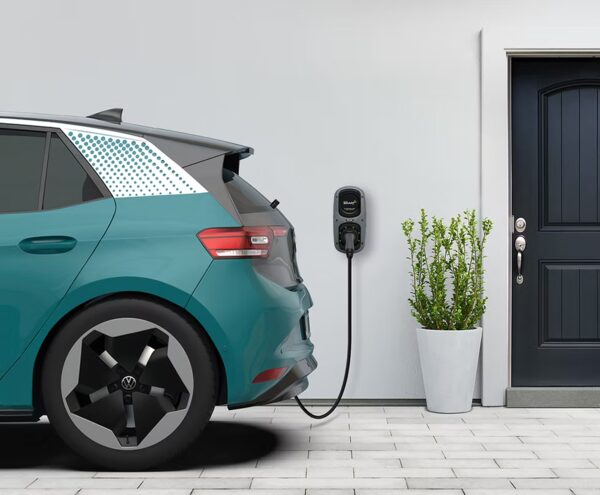
A home charger is the single biggest lever a household has over what its motoring costs and where the energy comes from. Charging at home means buying electricity rather than petrol or diesel, and it means the household can choose when that electricity is drawn. On a time-of-use tariff, the difference between charging at peak and charging overnight is the difference between paying the standard rate and paying the off-peak rate19.
What a Rolec charger does for that independence is mostly about the control layer. Because the EVO and the OpenCharge units are OCPP-compatible, the household can move the charger between apps and platforms rather than being tied to one provider's cloud2. That is a meaningful form of independence: the hardware keeps working even if a particular software company changes its terms or disappears.
What remains dependent is substantial. The charger draws from the grid, so the household still buys electricity from a supplier. Smart features need a home internet connection and a working app. The unit itself is a manufactured product with a finite support life. And installing a home charger is classified as development, with the householder responsible for ensuring the correct permissions are in place20, which is a planning dependence rather than a technical one. The wider picture is at EV charging and household energy independence.
Warranty and support for owners
Rolec's warranty terms are not set out in the material available here, so the length of cover, the registration requirement and the exclusions cannot be stated. That is a gap a buyer should close before purchase, because the terms vary widely across the market and the differences are not cosmetic.
Comparable UK makers show what the range looks like. One manufacturer covers all its EV chargers with a 3-year warranty9, and another states that products registered outside a 30-day period receive a 12-month parts and labour guarantee only, and that products not registered will not benefit from the warranty at all21. Registration is therefore not a formality; on some brands it is the difference between three years of cover and none.
On faults, the first action for an electrical problem is the installer or electrician who fitted the unit, to check whether the equipment itself is at fault22. Rolec publishes support articles and a contact route through its own site. For the general position on cover, exclusions and what voids a guarantee, see EV charge point warranties and aftercare and faults and troubleshooting.
Sources22 cited
- Rolec announces strategic partnership with UKSOL, Rolec, 2026-01-06
- EVO: your easiest installation yet, Rolec, 2026-01-06
- EVO product page, Rolec, 2026-09-17
- Introducing the WallPod:EV facelift, Rolec, 2026-01-06
- Rolec marks three years and 50,000+ chargepoints with Monta, Rolec, 2026-07-10
- HEX product page, Rolec, 2026-09-17
- Over nine in 10 rapid EV charge points built outside London in last two years, ChargeUK, 2026
- EV charging statistics, Zapmap, 2026-08
- EV chargers, EVEC, 2026-09-18
- What offers do you have on EV chargers?, OVO Energy, 2026-09-17
- How to do electric vehicle charging at home, E.ON Next, 2026-09-17
- Does a hybrid car need an EV tariff?, Uswitch, 2025-07-02
- Home charging FAQs, Ratio EV, 2026-08-24
- What is TruePEN PME fault detection?, Rolec, 2022-02-10
- Destination charging, Zapmap, 2026-02-26
- EV charging statistics, Zapmap, 2026-08
- Rapid charging prices, Zapmap, 2026-08
- EV charging statistics, Uswitch, 2025-12-15
- EV energy tariffs, Uswitch, 2025-09-17
- Planning permission for electric vehicle charging, Planning Portal, 2026
- Warranty information, EVEC, 2026-09-17
- Voltage changes in your home or business, UK Power Networks, 2026-09-17