
In this answer
Short answer
Radiators generally need bleeding at least once a year, and the most useful time to do it is at the start of winter, when the heating comes back on after summer. Uswitch puts the routine at least once a year, but preferably every few months1. Vaillant's advice is more frequent still, at least every six months, typically as winter approaches2. The Energy Saving Trust keeps it looser, suggesting a couple of times a year with a check before the cold arrives3.
The task itself is small. Bleeding means releasing trapped air so hot water can circulate properly and heat the radiator evenly4. Vaillant puts the process at approximately five minutes per radiator5, and it needs nothing more than a radiator bleed key and a cloth6. What matters more than the exact interval is the pattern: a radiator that needs bleeding once a year is behaving normally, while one that needs it monthly is telling you something about the system.
This page covers the recommended frequency, why air gets in at all, the signs that a radiator is due, the best time of year to do it, and what to do when bleeding does not solve the problem.
Why radiators need bleeding at all
A central heating system is meant to be sealed, with water circulating from the boiler through pipework and radiators and back again. Air enters anyway, through dissolved gases in fresh water, small leaks, or the drawing in of air when the system cools. That air collects at the highest point it can reach, which in most radiators is the top panel. Once it settles there, hot water cannot fill that part of the radiator, so the top stays cool while the bottom heats normally.
The effect is a loss of output rather than a breakdown. Worcester Bosch describes regularly bleeding radiators as key to ensuring the heating is working at full efficiency and keeping the house warm8. Ivie makes the same point in plainer terms: bleeding removes air pockets, which in turn improves heating system efficiency9. The Energy Saving Trust includes bleeding among its cold weather tips, advising that any radiators be bled to make sure they are working effectively10.
How quickly air accumulates varies. Which? notes that radiators need bleeding every few years to get rid of trapped air bubbles11, while most other guidance treats annual bleeding as the baseline. The difference is not a contradiction so much as a range: a well-sealed system in a house with few dissolved-gas issues may go longer between bleeds, while a system with a small leak or frequent pressure loss will need attention sooner. For a household, the practical consequence is that bleeding is one of the few heating maintenance tasks that can be done without a contractor, and it directly affects how much of the heat paid for actually reaches the room.
Signs a radiator needs bleeding
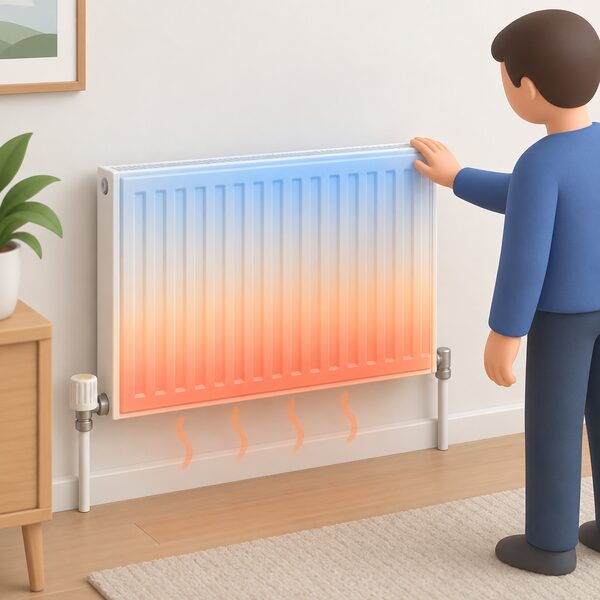
The classic sign is a temperature difference across the radiator itself. Smart Energy GB describes the clearest indicators as a radiator that is cold at the top, slow to warm up, or making gurgling noises4. Which? puts it as: if the top of the radiator is cool, or much colder than the bottom while the heating is on, it is a sign the radiators need bleeding11. Fuse Energy lists the same pattern alongside gurgling, bubbling or hissing noises, slow warm-up, and frequent boiler pressure drops7.
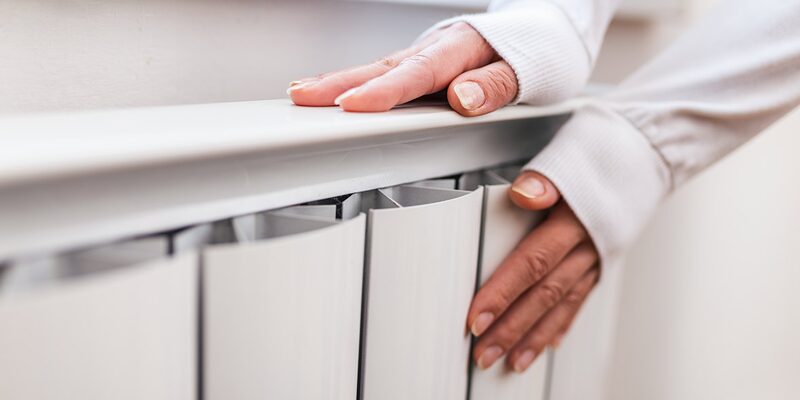
A simple physical check works as well as listening. The Chartered Institute of Plumbing and Heating Engineering suggests placing a hand on each corner of the radiator to assess whether it is heating evenly, since a cool spot is likely to mean the radiator needs bleeding12. Viessmann describes the same test: a cold spot, or a radiator that takes a long time to heat up13. Ecotricity frames it as two questions, whether radiators are not warming up as much as they should, or taking longer than usual to warm up14.
| Sign | What it suggests |
|---|---|
| Warm at the bottom, cold at the top | Trapped air at the top of the radiator7 |
| Gurgling, bubbling or hissing | Air moving through the system4 |
| Slow to warm up | Reduced water volume in the radiator14 |
| Frequent boiler pressure drops | Air being released or drawn in7 |
| Cold spots when checked by hand | Uneven filling, often air12 |
Once a year, before winter: when to do it
The consensus across official, independent and maker guidance is that the annual bleed belongs at the start of the heating season. Smart Energy GB states the general rule as about once a year, ideally before winter when the heating is used more regularly4. Ovo Energy agrees, suggesting once a year even if radiators seem to be working properly, with the ideal time being when the central heating is turned back on after summer15. Baxi's recommendation is to check radiators at least once a year, when the heating is switched on again after the summer16.
The same timing appears across fuel types and system types. Certas Energy, advising oil-heated homes, says to bleed at least once a year and treats the approach of winter as the prompt17. Aira, writing about heat pumps, says bleeding radiators once a year relieves air bubbles to help them heat optimally18. Viessmann's winter preparation guidance says ideally this should be done once a year19. HeatGeek calls it a smart idea to bleed at least once per year20.
The reason the timing matters is practical rather than technical. Air that has collected over a summer of disuse will be sitting in the radiators on the first cold morning, and the household will feel it as rooms that never quite warm up. Bleeding before that point means the system starts the season at full output. It also means the check happens while the weather is mild, rather than in the middle of a cold snap when a heating engineer is hardest to book.
How long bleeding takes and what it involves
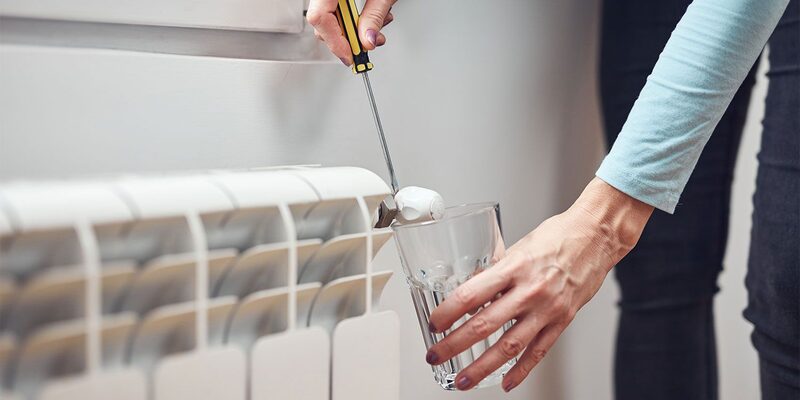
The task is short. Vaillant puts the bleeding process itself at approximately five minutes for each radiator5. Smart Energy GB describes it as usually only taking a few minutes per radiator4. Boiler Central gives a much shorter figure of 20 to 30 seconds per radiator, requiring only a radiator bleed key and a cloth6. The spread reflects how much air is being released and how practised the person doing it is; a radiator venting a large pocket of air takes longer than one releasing a small bubble.
The sequence matters more than the speed. Uswitch sets out the method: turn on the heating and wait for all radiators to heat up so pressure builds, identify which radiators have trapped air, then switch the heating off before bleeding1. Fuse Energy states the condition plainly: always bleed radiators with the central heating system turned off and the radiators completely cold7. Smart Energy GB repeats it, advising the process be worked through step by step with the heating switched off and the radiator cool4. Uswitch is explicit about why: it is vital to switch off the central heating and let it cool down completely before bleeding, to avoid scalding1.
Where several radiators need attention, the order is usually furthest first. Uswitch advises starting with the radiator furthest away from the boiler1, and Which? gives the same instruction, starting with the one on the ground floor furthest from the boiler11. Baxi's guidance for a single cold radiator runs the other way, starting with the radiator nearest the boiler and repeating for each one21. Baxi also sets out a fuller routine for that case: turn the central heating and all radiators on maximum for around 15 minutes, turn everything off and let it cool for an hour, then bleed each radiator22.
Where bleeding falls short
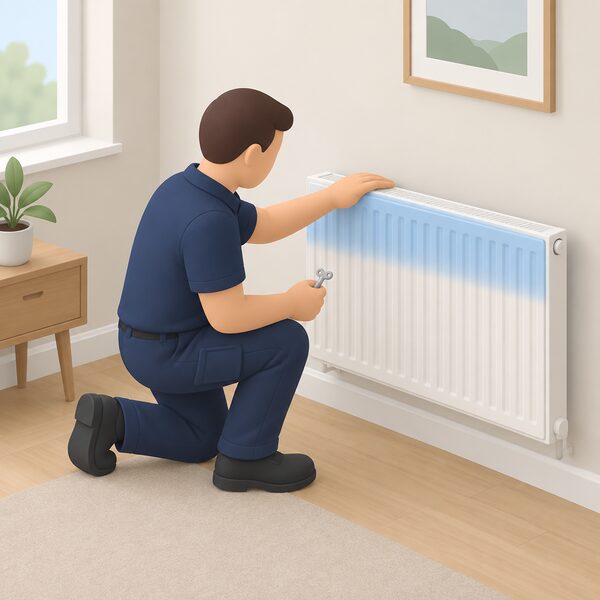
Bleeding fixes trapped air. It does not fix sludge, a failing pump, a seized valve or an unbalanced system, and the signs can look similar. Vaillant's troubleshooting guidance for radiators that are not working points to bleeding the affected radiators as the remedy for partial cold spots23, but where that does not resolve the problem the cause lies elsewhere. Drayton Controls advises that if cold spots appear, the radiator should be bled or the system looked at, to prevent unnecessary wastage24. The Association of Plumbing and Heating Contractors makes the same link in its seasonal checklist: if radiators are not heating evenly, trapped air might be to blame25.
Frequent bleeding is itself a symptom. Viessmann lists radiators that need bleeding frequently as a warning sign for the central heating system26, and Uswitch advises concern if a radiator needs bleeding one or more times a month, or if bleeding has no effect at all1. In both cases the next step is a qualified heating engineer rather than more bleeding.
There is also a pressure consequence. Vaillant notes that bleeding too often can reduce pressure in the system, and it may need topping up afterwards2. That is a routine adjustment on most sealed systems, but it is a reason not to bleed radiators as a habit. Smart Energy GB adds a safety condition: always check the boiler manufacturer's instructions before making adjustments, and contact a qualified heating engineer if unsure or if the problem keeps coming back4.
For a household, the value of bleeding is that it is one of the few heating tasks that needs no contractor, no parts and no spend, and it recovers heat that would otherwise be paid for and lost. The dependence that remains is on the boiler, the sealed system and, in most homes, the gas supply that feeds it. Bleeding keeps that system working at the output it was designed for; it does not change what the system runs on.
Sources26 cited
- How to bleed a radiator, Uswitch, 2026-09-04
- Practical heating tips, Vaillant, 2026
- Cold weather energy saving: your top tips, Energy Saving Trust, 2025-09-22
- How to bleed a radiator, Smart Energy GB, 2026-08-17
- How to bleed a radiator, Vaillant, 2026
- How do you bleed a radiator?, Boiler Central, 2026-07-14
- How to bleed a radiator system, Fuse Energy, 2026-06-23
- Energy saving tips, Worcester Bosch, 2026-09-20
- Reduce your heating bill: tips, Ivie, 2026-09-20
- Energy saving house viewing tips, Energy Saving Trust, 2026-05-20
- How to bleed your radiators, Which?, 2025-09-16
- Keeping warm in winter, CIPHE, 2022-12-19
- How to bleed a radiator, Viessmann, 2022-08-24
- Ecotricity explains how to bleed a radiator, Ecotricity, 2024-11-20
- How to bleed a radiator, Ovo Energy, 2025-10-24
- Bleed a radiator in 8 easy steps, Baxi, 2026-09-17
- How to prepare your oil heated home for winter, Certas Energy, 2026-09-18
- Ready your Aira heat pump for winter, Aira, 2026-09-17
- Tips to make central heating effective this winter, Viessmann, 2023-09-15
- How to bleed a radiator and why, HeatGeek, 2026-09-17
- Why is my radiator cold?, Baxi, 2026-09-17
- Why is my radiator not working?, Vaillant, 2026
- Radiator mistakes that could be costing you, Drayton Controls, 2022-01-25
- Spring into home care, APHC, 2025-05-07
- How to flush a central heating system, Viessmann, 2022-04-05
- How to keep your boiler working in cold weather, Which?, 2025-12-11
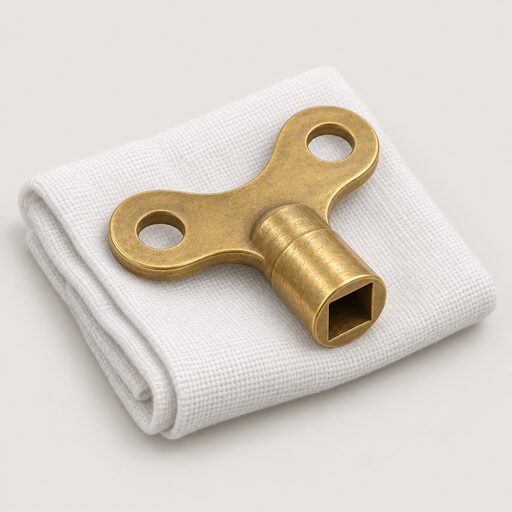 Bleed a RadiatorThe step-by-step method for bleeding a radiator, the tools needed and the order to work through a house.
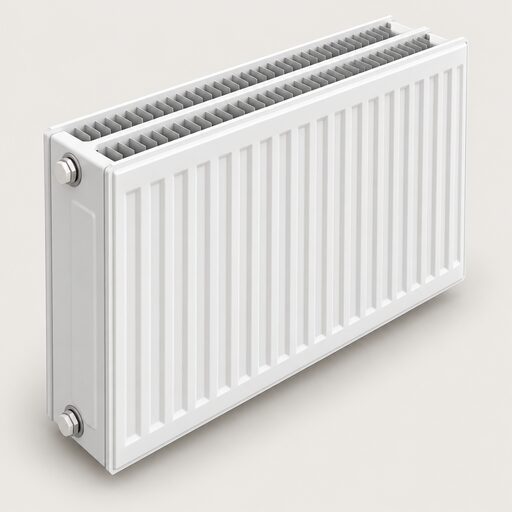 Radiators and Heat EmittersA radiator's real heat output depends on how hot the water inside it is compared with the room, so the figure in a catalogue often overstates what you will actually get.
 Servicing and MaintenanceHow often does a heat pump need servicing, and what actually happens during the visit?
 Boiler WarrantiesHow long does a boiler warranty actually last, and what do you have to do to keep it?
 Radiators and EmittersWill your radiators still heat the house properly with a heat pump?
 Heating Control FaultsWhy is my heating on when the thermostat says it is off, or why does one radiator stay cold?