
In this answer
Short answer
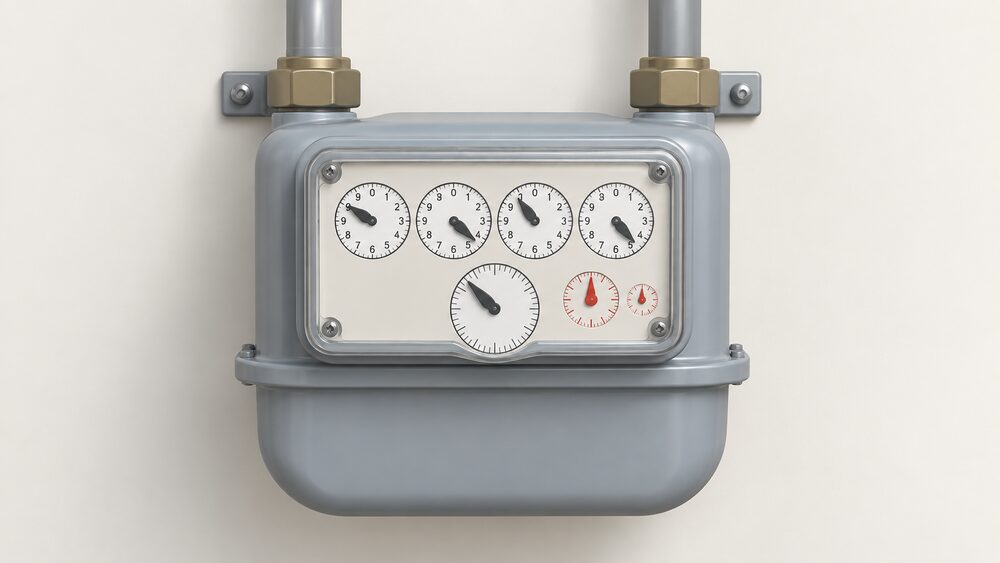
A gas dial meter has four or more dials, each turning to point at a number between 0 and 91. When a pointer sits between 9 and 0, you write down 9, not 02. That single rule is the one most often got wrong, and it is the difference between a reading your supplier accepts and one that understates what you have used.
The reason is mechanical. The pointer has not yet completed its turn to 0, so 0 would record a figure the dial has not reached. Writing 9 records the last number the pointer passed. The same logic runs through every dial: when a pointer rests between two numbers, you always write down the lower number, which is not necessarily the nearest one to the pointer2.
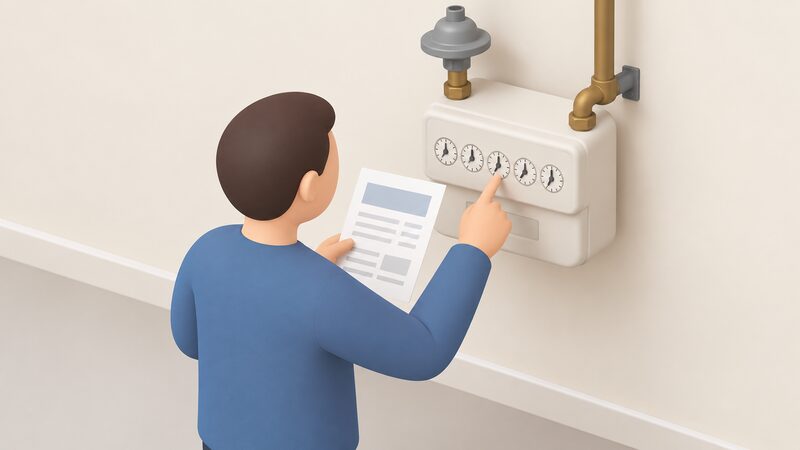
Reading a dial meter takes about a minute once you know the sequence. Work from left to right, read only the four main dials, ignore the large dial and any red dials, and check the dial to the right before you finalise any number a pointer appears to sit on1. The sections below set out the rule, the step-by-step method, and what the reading feeds into.
What the dials on a gas meter show
A gas dial meter has four or more dials, each turning to point to a number between 0 and 91. An electricity dial meter has five or more, so the gas version is the shorter of the two5. The dials sit next to each other and alternate direction: one turns clockwise, the next anticlockwise, and so on along the row. That alternation is why a reading taken by eye can look wrong when it is right, and why the pointers appear to move in opposite directions as gas is used.
Dial meters are the imperial generation of gas meter. They measure gas usage in cubic feet (ft³), not cubic metres3. Imperial gas meters, which include dial meters and some analogue meters, show readings in cubic feet and have four numbers to read6. Newer meters are metric, show readings in cubic metres (m³) and have five numbers to read6. If your meter has a row of small clock faces rather than a digital display, it is almost certainly imperial, and the four-digit reading is what your supplier wants.
The dials themselves are a display, not the metering mechanism. Gas meters approved under UK law must be within 2% accurate, and electricity meters within +2.5% and -3.5%4. The accuracy requirement sits with the meter, so the job of the householder is simply to transcribe what the dials show without introducing an error at the point of reading. That is where the nine-to-zero rule earns its place: it is the transcription rule that stops a correct meter producing an incorrect bill.
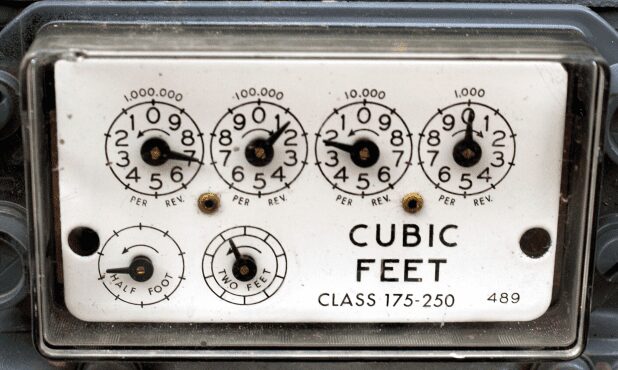
The nine-to-zero rule: when the pointer sits between 9 and 0, write 9
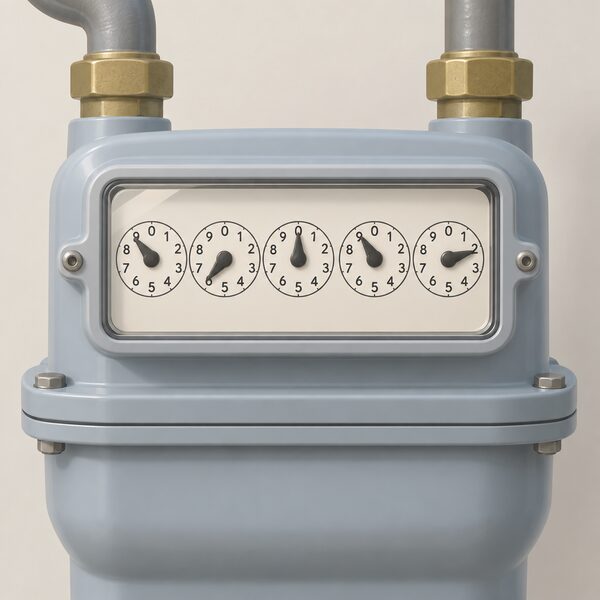
If the number is between 9 and 0, use 92. That is the rule in full. It applies on a gas dial meter and on an electricity dial meter alike, and it is the same instruction whether the pointer is a hair past the 9 or almost touching the 0.
The wider rule it belongs to is this: when the pointer is between two numbers, always write down the lower number, which is not necessarily the nearest number to the pointer2. Between 3 and 4, you write 3. Between 9 and 0, the lower number in the sequence is 9, because the dial runs 0 through 9 and the pointer is still completing the 9. Writing 0 would jump the dial forward to a figure it has not reached.
There is a second check that catches the same problem from the other direction. Look at the next dial to the right: if it shows a high number, 8 or 9, the pointer has not passed the digit it hovers above; if it shows a low number, 0 or 1, it has7. So a pointer that appears to sit exactly on 5, with the next dial showing 9, has not actually reached 5, and the number to record is 4. Some guides express this as reducing the previous number by one when the next dial along is on 98. Others describe underlining a number the pointer points straight at, then taking one away from an underlined number if it is followed by a 99.
"If the pointer is between two numbers, write down the smaller number. If the pointer is between 0 and 9, write down 9."
The two formulations, write 9 when between 9 and 0, and reduce the previous digit when the next dial is on 9, are the same correction applied at different points in the row. Applying both is not double-counting: the first governs the dial you are looking at, the second governs the dial to its left.
How to read a dial meter step by step
The sequence below follows the published guidance for dial meters, which is consistent across consumer bodies, energy advice services and suppliers1.
- Read the dials from left to right2.
- Read only the four main dials. You might see four or more dials, but you only need to read the four main ones8.
- Ignore the large dial and the red dials2. Dials without numbers or hands should be disregarded10.
- For each dial, write down the number the pointer has just gone past7.
- If the pointer is between two numbers, write the lower number2.
- If the pointer is between 9 and 0, write 92.
- If a pointer sits directly over a number, check the next dial to the right: a high number there (8 or 9) means the pointer has not passed it, so reduce by one; a low number (0 or 1) means it has7.
- Write the four digits in order as your reading.
A worked example makes the last step concrete. One published dial meter reading is 71207. Another example page gives 94762. In a third case, the dials appear to show 15659, but the actual reading is 15649, because the fourth dial pointer is pointing at 5 while the next dial is between 9 and 05. That is the rule doing its work: the apparent 5 becomes a 4, and the reading drops by one digit in the fourth position.
Which dials to ignore, and why the count differs
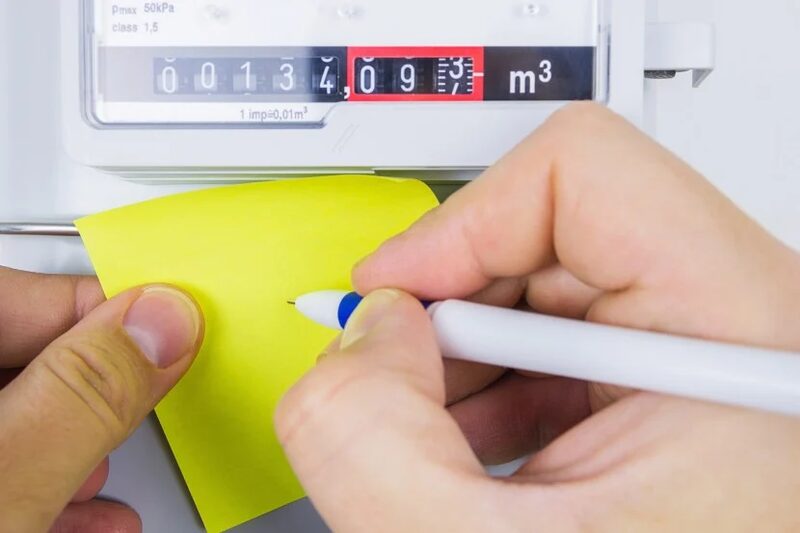
Read the first four dials from left to right and ignore the large dials or red dials1. The red dials and any marked 1/10 or 1/100 show fractions of a unit, and suppliers bill on whole units, so including them would produce a reading that does not match the meter's own register. On a digital metric gas meter the same principle applies: ignore the numbers after the decimal point, sometimes shown in red1.
The count differs between fuels. Electric has five digits to read, and gas has four6. That is why a gas dial meter reading is four digits and an electricity dial meter reading is five, and why a reading copied from one to the other will be rejected. On a digital display, for both gas and electricity you usually use the first five digits from the left10, but on a gas dial meter the four main dials are the whole reading.
If your meter is not a dial meter, the method changes but the left-to-right order does not. A digital metric gas meter reading is the five numbers from left to right, including the zeros, but not the numbers in red or any numbers after the decimal point3. A digital imperial gas meter reading is the first four numbers from left to right, ignoring the rest of the numbers shown in red1. A digital gas meter reading is the numbers from left to right, including all zeros but ignoring the red numbers or any number after a decimal point11. Standard gas meters need the first four or five numbers10.
Smart gas meters remove the dials altogether. On a smart gas meter with a button to the left and right of the screen, press either button and wait until you see '01' with numbers followed by 'M3'12. On a keypad model, press 9 and you will see 'VOLUME' on the screen, which then changes to numbers followed by 'M3'12. A Secure smart gas meter works the same way: press number nine on the keypad, the word 'volume' appears followed by the gas reading in cubic metres, and you take the first five digits13. For meter readings, the reading will be a number followed by 'm3'3.
Why the nine-to-zero rule matters for your bill
A reading that is one digit out in one position is not a rounding error. It is a whole unit of gas, and on a dial meter that unit is a cubic foot. Get the nine-to-zero rule wrong and you either understate your usage, which leads to a catch-up bill later, or overstate it, which means paying now for gas you have not used. Neither is a billing dispute you want to open over a transcription mistake.
The scale of the underlying problem is visible in supplier performance data. Bills accuracy on traditional meters stood at 91.0% for British Gas in January to March 202614. That figure covers billing accuracy generally rather than meter reading specifically, but it shows that roughly one bill in ten on traditional meters is not accurate, and a misread dial is one route into that group.
The reading also feeds the wider question of what a household pays per unit. The electricity-to-gas price ratio is a live policy question, with a recommendation that the UK government should act to reduce the ratio to 2.9 or below15. That ratio is calculated from unit prices, and unit prices are applied to the units your meter records. An accurate reading is the input to every downstream figure.
There is a separate check worth knowing if you suspect the meter on your bill is not yours. In Wales, you can find out if the gas meter on your bill is correct by comparing the Meter Point Reference Number (MPRN) on your bill with the MPRN registered to your address, and contacting your gas supplier if they do not match16. The MPRN is the identifier assigned to the gas meter at your property and typically ranges from six to ten digits17, or between six and 11 digits according to other guidance18. If a reading looks persistently wrong, the MPRN is the first thing to verify.
If a pointer seems stuck, or the reading will not move
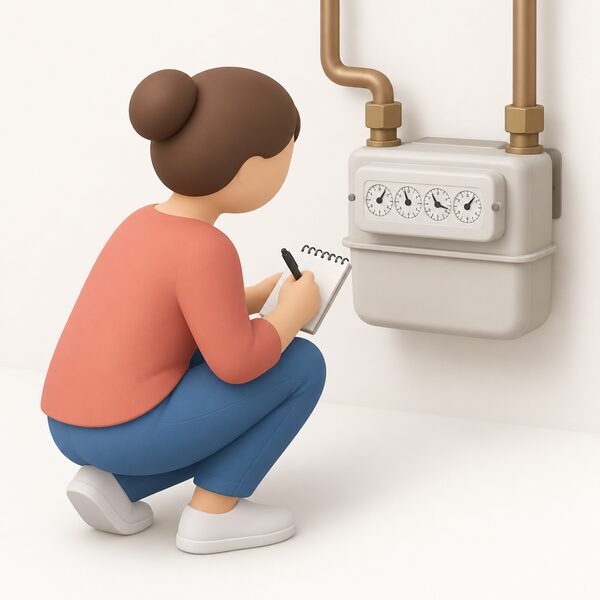
A pointer resting between two numbers is normal and is exactly what the rule covers: record the lower number2. A pointer that appears genuinely stuck, or a reading that does not change between checks, is a different matter. For gas meter issues, call your gas supplier, whose number can be found at the top of your energy bill19. Suppliers handle meter faults, exchanges and accuracy disputes, and there is a separate route for reporting a meter you believe is faulty21.
If you can smell gas, that is not a meter-reading question. If you can already smell gas and think there could be a leak, call the National Gas Emergency Service immediately on 0800 111 999 at any time22. The same number applies if you smell gas, experience low gas pressure or suspect carbon monoxide23. Do not wait to finish a reading, and do not use a phone inside the property if you suspect a leak.
For everything else, the reading itself is the householder's job, and it is the point at which a household has the most direct control over what it pays. A dial meter does not report to a supplier on its own, and it does not depend on a signal, an app or a cloud service. The dependence runs the other way: the supplier depends on you to transcribe the dials correctly. That is a small piece of energy independence, and the nine-to-zero rule is the part of it most often lost.
Sources23 cited
- How to read your energy meter, Citizens Advice, 2026-09-17
- Gas dial meter, EnergyLinx, 2026-09-20
- Energy meters, Energy Helpline, 2026-09-20
- Gas meters and electricity meters: what you need to know, Which?, 2026-01-16
- Gas and electricity meter reading, Uswitch, 2026-04-23
- How to read your gas meter, National Energy Action, 2026-07-13
- Reading your gas or electricity meter, Centre for Sustainable Energy, 2026-08
- Meter readings, OVO Energy, 2026-09-17
- Gas meters, Change Works, 2026-07-16
- How to read your gas and electricity meter, Confused.com, 2025-12-15
- Gas digital meter, EnergyLinx, 2026-09-20
- How can I read a smart gas meter, Smart Energy GB, 2026-08-17
- How to read a smart meter, Good Energy, 2025-08-20
- British Gas customer service details, Citizens Advice, 2026
- What is the electricity to gas price ratio and why is it important?, Nesta, 2026-04-01
- Check if you're responsible for paying an energy bill, Citizens Advice Wales, 2023-11-28
- FAQs, 100Green, 2026-07-14
- How to understand your energy bill, Which?, 2022-03-14
- Make the right call, Cadent Gas, 2026-09-20
- Staying safe and warm this winter, Northern Gas Networks, 2025-11-03
- Find out if your energy meter is faulty, Citizens Advice, 2026-09-20
- Smell gas, Cadent Gas, 2026-09-20
- Am I eligible for compensation for being without gas?, Northern Gas Networks, 2026-01-14
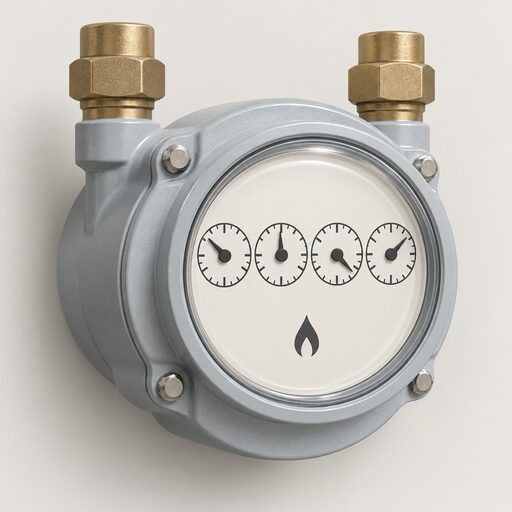 Read a Gas MeterHow to read dial, digital metric and older imperial gas meters, including which dials to ignore and what to record when a pointer sits between two numbers.
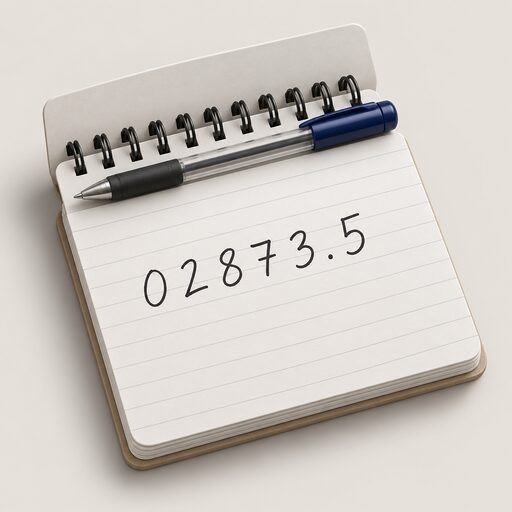 Take a Meter ReadingWhich numbers do you actually read on a gas or electricity meter, and which ones do you ignore?
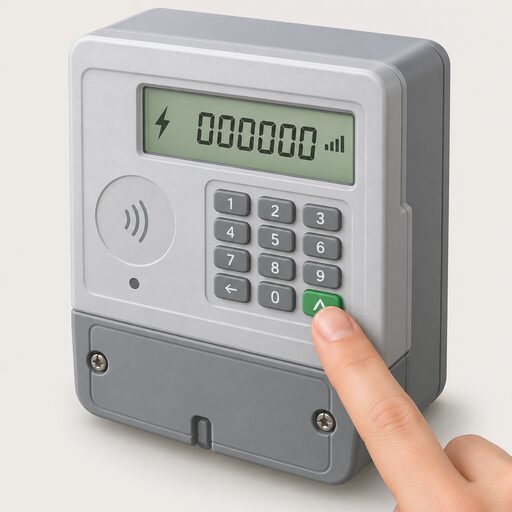 Get a Reading From a Smart MeterHow to bring up a meter reading on a smart electricity or gas meter when a manual reading is still needed, and the difference between the meter itself and the in-home display.
 Reading an Energy BillA line-by-line walk through a domestic gas and electricity bill: unit rate, standing charge, kWh consumption, meter readings, tariff name and balance, plus the 12-month back billing limit and the guaranteed standards payments that apply when a supplier or network operator gets it wrong.
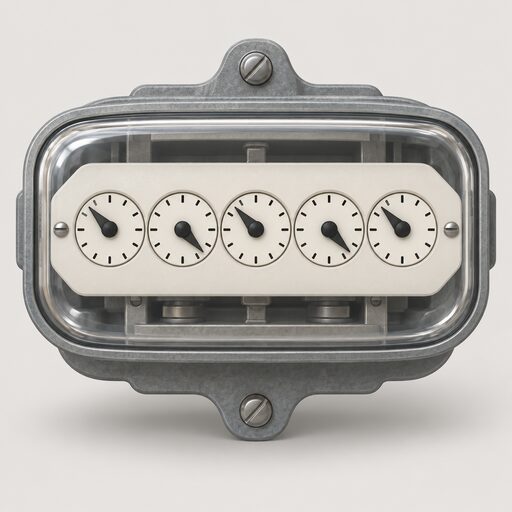 Meter Readings and EstimatesWhy is my energy bill estimated, and how often should my meter be read?
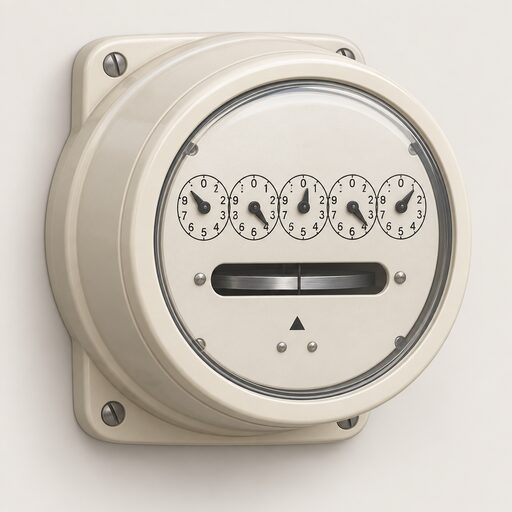 Read an Electricity MeterHow to read single-rate, two-rate and dial electricity meters and which register is the night rate on a restricted meter.