
In this answer
Short answer
The fine for burning unauthorised fuel in a smoke control area is up to £1,000 for each offence. That figure appears in the Welsh Government's guidance for homes and businesses, in the UK Government's air pollution guidance and in HETAS guidance for stove users, and it applies where unauthorised fuel is burned without an exempt appliance1. A separate fixed penalty of £300 applies to some solid fuel offences, and burning waste or treated wood in a smoke control area carries a fine of up to £3004.
The offence is not simply about the fuel. It is an offence to acquire an unauthorised fuel for use within a smoke control area unless it is used in an exempt appliance, and it is illegal to sell and buy unauthorised fuels for use where a smoke control order applies, unless the fuel is for an exempt appliance, a building, a fireplace, or a fixed boiler or industrial plant6. Wood is the common example of an unauthorised fuel, and it can only be burned in an exempt appliance in a smoke control area8.
Enforcement sits with local authorities, not with HETAS and not with the Energy Ombudsman. A household's first contact is usually an Improvement Notice rather than a penalty, and where a case reaches court the level of fine is decided by the court1. For a household weighing up a stove, the practical effect is that the appliance, the fuel and the way it is operated all determine whether the rules are met, and that is what this page sets out.
The fine: up to £1,000 for each offence
The headline penalty is a fine of up to £1,000. The Welsh Government's guidance for homes and businesses states that buying or receiving controlled, meaning unauthorised, solid fuels for burning within a smoke control area without an exempt appliance can lead to a fine of up to £1,0001. The UK Government's guidance on preventing air pollution puts it as being fined up to £1,000 for each offence, and HETAS guidance for stove users gives the same maximum for burning unauthorised fuel without an exempt appliance2.
The wording matters. The Welsh Government's guidance for local authorities on the acquisition and sale of unauthorised fuels describes the penalty for breaking the rule on unauthorised fuels as a fine not exceeding level 3 on the standard scale, which it gives as £1,0006. That is the same ceiling expressed in the older statutory language, and it confirms that the £1,000 figure is a maximum rather than a fixed sum.
Two other figures sit alongside it. Burning waste or treated wood in a smoke control area carries a fine of up to £300, and manufactured solid fuels offences can attract a £300 fixed penalty fine issued by a local authority, with a court able to impose a fine of more than £300 depending on the severity of the offence4. Separately, financial penalties of up to a maximum of £5,000 can apply in the event of a single act of non-compliance, a figure that appears in a Scottish Government consultation on energy efficiency regulations for privately rented homes rather than in smoke control enforcement10.
For a household, the fine is the visible edge of a wider rule set. The same legislation that sets the penalty also restricts what can be bought and sold, which means the exposure is not limited to the moment fuel is put on the fire.
What counts as an unauthorised fuel
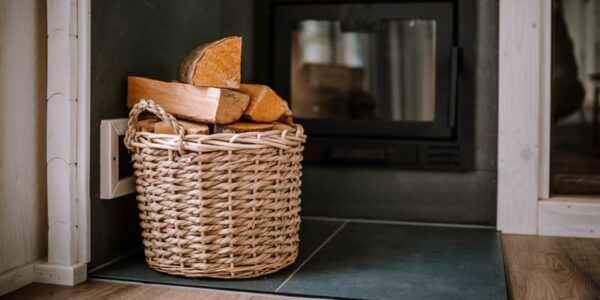
Unauthorised fuel is any fuel that is not listed on Defra's Authorised/Certified Fuels list. Wood is the example that matters most to households, and it can only be burned in an exempt appliance in a smoke control area8. The Welsh Government's guidance for local authorities states that it is illegal to sell and buy unauthorised fuels for use in an area where a smoke control order applies, unless the fuel is for an exempt appliance, in a building, a fireplace, or a fixed boiler or industrial plant7.
The Clean Air Act 1993 sets the underlying rule. It is an offence to acquire an unauthorised fuel for use within a smoke control area unless it is used in an exempt appliance6. That makes the acquisition, not only the burning, part of the offence, and it applies to the householder buying the fuel as well as to the retailer selling it.
There is a moisture condition attached to wood fuel as well. HETAS guidance on the Ready to Burn regulations states that a household could be fined if it sells unauthorised fuel or has stored fuel so that it has a moisture content of more than 20%4. That is a separate strand from the smoke control rules, and it bears on how fuel is stored as well as what is bought.
"Unauthorised fuel is any fuel that is not listed on Defra's Authorised/Certified Fuels list."
In Wales, the fuel rule is stated in terms of the appliance as well: only the types of fuel that the manufacturer says can be used in the appliance may be used7. That means a compliant appliance does not authorise any fuel a household chooses to put in it. The manufacturer's specification is the limit.
Exempt appliances and authorised fuels: how to stay within the rules
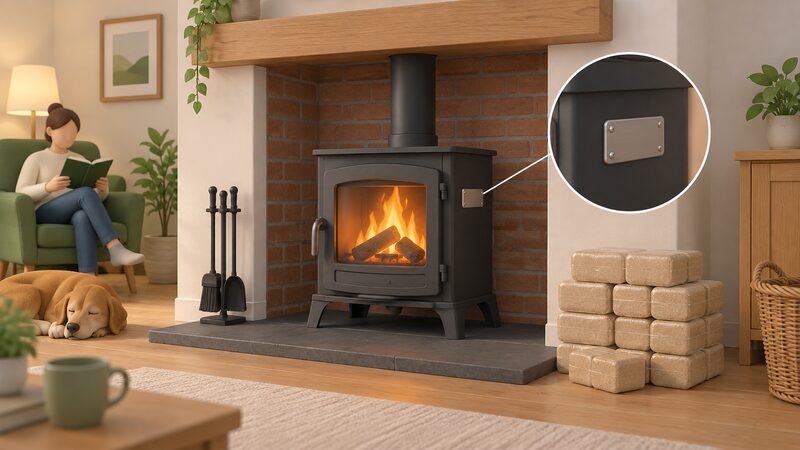
There are two routes to compliance in a smoke control area, and they can be combined. A household can burn an authorised fuel, or it can burn an unauthorised fuel such as wood in an exempt appliance. HETAS guidance states that you can only burn unauthorised fuels such as wood in an exempt appliance, and that you can also burn authorised fuels in an exempt appliance11. Where the appliance is not on the exempt list, only smokeless fuels may be burned11.
An appliance exemption shows that a fuel-burning appliance, such as a stove, oven or boiler, emits smoke below the acceptable limits. Exempt appliances are added to the exempt appliances list, which also shows which unauthorised fuels each appliance is allowed to burn13. Manufacturers, importers and distributors must apply for an exemption for appliances that will be used to burn unauthorised fuel in smoke control areas, so the exemption is a property of the appliance and its tested performance rather than of the household13.
| Requirement | What it means in practice |
|---|---|
| Authorised fuel | Fuel listed on Defra's Authorised/Certified Fuels list1 |
| Exempt appliance | Appliance on the exempt appliances list, showing which unauthorised fuels it may burn13 |
| Non-exempt appliance | Smokeless fuels only11 |
| Manufacturer's specification | Only fuels the manufacturer says can be used7 |
| Visible smoke | Chimney smoke is not allowed, with only a few exceptions3 |
The Welsh Government's civil sanctions factsheet records that exceptions to the criminal sanctions, often referred to as defences, have been removed to facilitate quicker intervention to tackle smoke emissions14. That removal narrows the room for argument once an offence is identified, and it makes the appliance and fuel paperwork more important than the circumstances of a single evening's burning.
HETAS guidance for stove users summarises the position as burning being allowed in a smoke control area if it is an exempt appliance or an authorised fuel is being used, avoiding visible smoke15. All three conditions are part of the same test.
Who issues fines and how enforcement works
Local authorities enforce the smoke control rules. HETAS guidance on the regulations for wood and manufactured solid fuels identifies local authorities as the body responsible for enforcement under Part 6 of the regulations, and the same guidance notes that the legislation makes it possible for local authorities to issue fixed penalty notices for offences without the need for a conviction9. That is what allows a council to act on a smoke control breach without taking a case to court first.
The usual first step is not a fine. The Welsh Government's guidance for homes and businesses states that a household can first be issued with an Improvement Notice, explaining the rules and offering advice on the impacts of pollution from solid fuel burning and how to minimise emissions1. A penalty follows where the notice is not complied with or where the offence is serious enough to go further.
Where a case does reach court, the level of fine is decided by the court6. That is the mechanism behind the £1,000 maximum: it is a ceiling available to the court, not a sum a council can simply impose for a first breach.
The Energy Ombudsman's own guidance is explicit that it does not issue fines or dictate how companies operate, describing that as the responsibility of a company's trade body or regulator, and it lists punishing companies, dictating how companies operate and issuing fines among the things it cannot do16. For smoke control matters, the route is the council's environmental health or pollution team.
Why people break the rules: what the HETAS survey found
HETAS, with others, commissioned a study to bring together the results of numerous quality research projects covering fuels, appliances and user behaviour18. The finding that matters for enforcement is that the rules are often broken through how a stove is used rather than through a deliberate decision to burn prohibited fuel. HETAS states that it exists to make the journey to cleaner air practical and proportionate, helping households who choose to burn reduce emissions at source19.
The measures HETAS reports as signs of progress point the same way: more households moving away from open fires, increased use of Ready to Burn fuels, registrants reporting fewer user-caused issues during routine sweeping, and steady growth in sweeping and servicing bookings19. Each of those is a behaviour change rather than a change in the law, which suggests that advice and servicing reach parts of the problem that penalties do not.
The Burn Better initiative is supported by Defra, the Solid Fuel Association and HETAS, and it is aimed at how fuel is burned rather than at whether it is burned20. HETAS guidance on burning better sets out the operating practices that reduce smoke, and the Ready to Burn scheme gives households a way to identify fuel that meets the requirements4.
The compliance checklist HETAS gives for smoke control area households is that the stove must be Defra-exempt, the fuel must be Ready to Burn, and the appliance must be operated well5. That is a useful summary of where breaches actually arise: an exempt appliance used badly, or a compliant appliance fed the wrong fuel, produces the same visible smoke as a non-compliant installation.
How to check your fuel and appliance are compliant
The first check is whether the property is in a smoke control area at all. HETAS guidance states that you can find out if you live in a smoke control area by looking at the interactive map on Defra's UK AIR website8. OFTEC's guide for solid fuel appliances advises householders to check whether their property is sited within a smoke control area, which will restrict choice of fuel, with advice available from the local authority23. The council holds the definitive record for its area.
The second check is the appliance. The exempt appliances list shows which appliances are exempt and which unauthorised fuels each is allowed to burn13. If the appliance is not on that list, only smokeless fuels may be burned in a smoke control area11.
The third check is the fuel. Authorised and certified manufactured solid fuels are listed on Defra's Authorised/Certified Fuels list1. Defra implemented the Ready to Burn scheme for manufactured solid fuels and wood fuel, with HETAS administering the scheme for manufactured solid fuels and Woodsure running it for wood fuel24. There is work to make it easier for those living in Wales and Scotland to buy certified fuel by extending the legislation beyond England19.
The fourth check is the installation and its servicing. OFTEC guidance states that fuel-burning appliances should be checked and serviced at least annually by a suitably qualified heating technician25. HETAS encourages sweeping at least twice a year when burning wood or bituminous house coal and at least once a year when burning smokeless fuels22.
For a household, the compliance position is straightforward to establish and easy to lose track of. The appliance exemption, the fuel certification and the servicing record are the three documents that show the rules are being met, and each of them is checkable before fuel is bought rather than after smoke appears. Where a household wants to understand how these rules sit within the wider framework, the UK home energy regulation and policy guide sets out the structure, and HETAS and OFTEC registration explains how the two registration bodies divide solid fuel and oil work.
Sources26 cited
- Smoke control area guidance for homes and businesses: FAQs, Welsh Government, 2025-07-30
- Stove users enforcement guide, HETAS, 2026
- Preventing air pollution, GOV.UK, 2026-09-20
- Ready to Burn: a look at the regulations in more detail, HETAS, 2024-08-19
- Energy Savers Week: how to cut heating costs with your wood burner, HETAS, 2026
- Smoke control area guidance for local authorities: acquisition and sale of unauthorised fuels, Welsh Government, 2025-07-30
- Smoke control guidance for local authorities: FAQs, Welsh Government, 2025-07-30
- Smoke control area changes: everything you need to know, HETAS, 2026
- New legislation for wood and manufactured solid fuels, HETAS, 2024-08-19
- Consultation on draft energy efficiency regulations for privately rented property in Scotland, Scottish Government, 2025-06
- 6 log burner rules, HETAS, 2026
- Wood, coal and smokeless fuel: which is right for your stove, HETAS, 2026
- Get an exemption for an appliance to burn unauthorised fuel, GOV.UK, 2026-09-20
- Smoke control area guidance for local authorities: civil sanctions factsheet, Welsh Government, 2025-07-30
- Ban on wood burners, HETAS, 2025-12-15
- Energy Ombudsman FAQs, Energy Ombudsman, 2026-09-19
- We may be able to help resolve your energy dispute, Energy Ombudsman, 2026-09-20
- Wood burning stoves and air pollution, HETAS, 2024-08-19
- Clean Air Night 2026: routes to cleaner air, HETAS, 2026-02-12
- How to burn better, HETAS, 2026
- What is the Cleaner Choice scheme, HETAS, 2026
- Chimney sweeps, HETAS, 2026
- Your home guide to solid fuel appliances, OFTEC, 2026-09-17
- House coal, HETAS, 2026
- Guide to carbon monoxide safety, OFTEC, 2026-09-20
- Homes and energy, Manchester City Council, 2026-09-20
 Do Smart Controls Save Money?Do smart heating controls really cut your bills, and by how much?
 Fuel Poverty in the UKWho counts as living in fuel poverty, and why does the number change depending on where in the UK you live?
 Changing Habits SavingsWhat the evidence says behavioural change saves: around £90 to £120 a year for one degree off the thermostat, £100 to £110 a year for using a full set of heating controls, and £304 to £351 a year for a bundle of small changes.
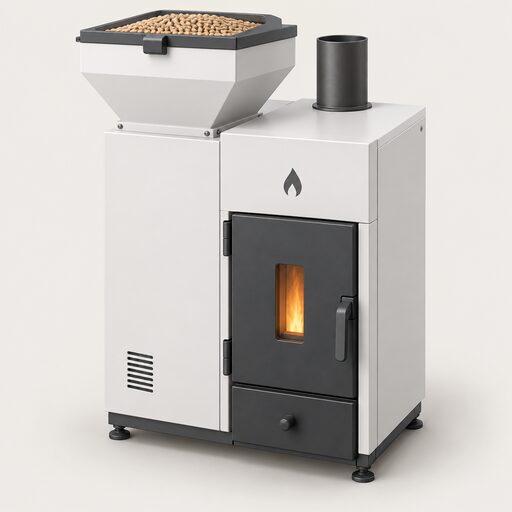 Biomass Boilers and StovesHow pellet and log biomass boilers and room stoves work in UK homes: the £5,000 Boiler Upgrade Scheme grant and its rural, off-gas-grid conditions, emissions limits, smoke control area law, fuel sourcing and the practical demands of storage and maintenance.
 Home EV Charger CostA home charge point usually costs between seven hundred and fifteen hundred pounds fitted, with most people paying around a thousand.
 How Much Does a Heat Pump CostA heat pump usually costs around eleven thousand pounds installed, though quotes vary a lot depending on your home.