
In this guide
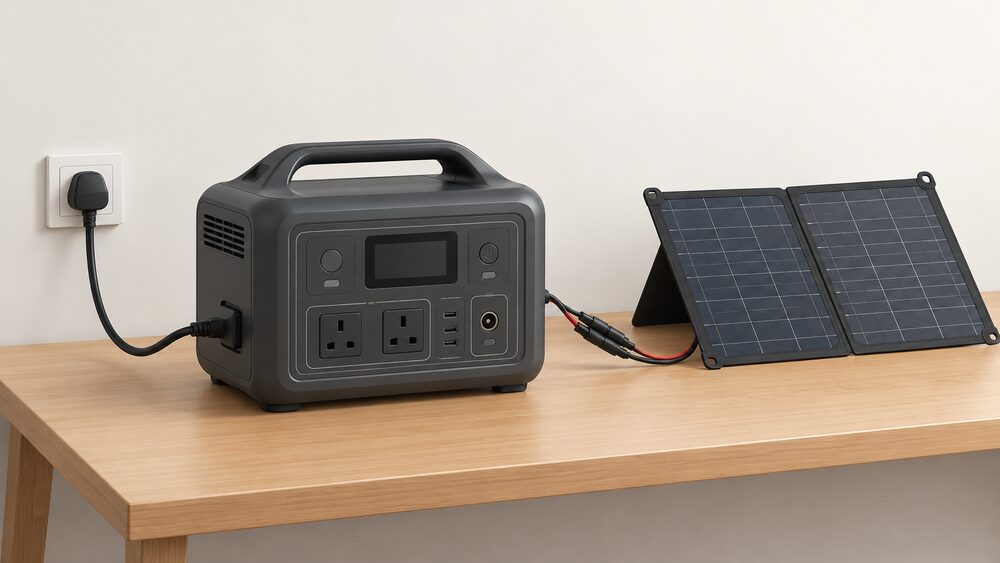
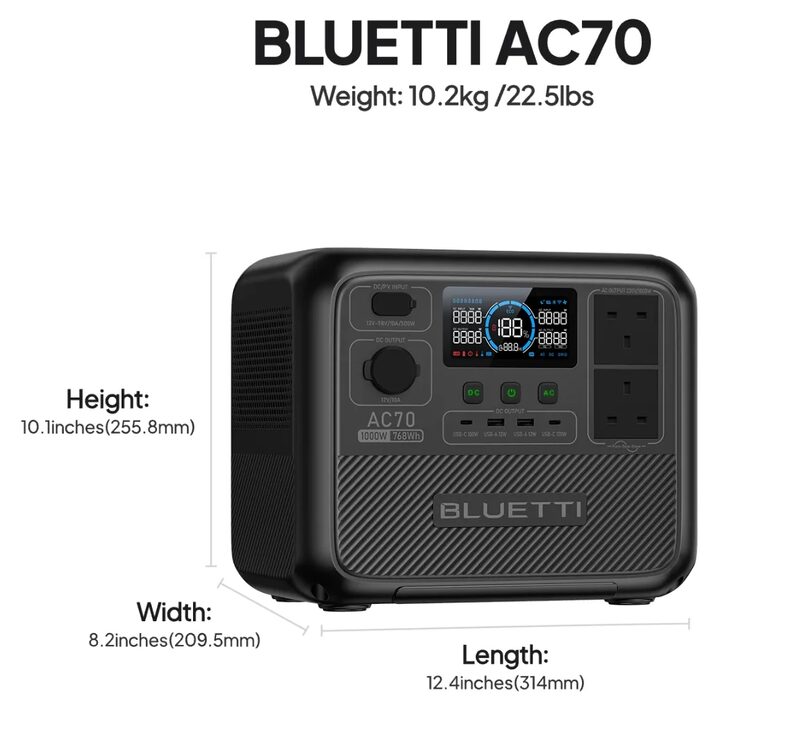
BLUETTI is a consumer battery brand that sells two distinct things in the UK: portable power stations you carry, and larger home battery backup units that sit against a wall and run through a UPS circuit. The portable range runs from small units such as the AC2P at 300W and 230Wh up to the EP500Pro at 5,100Wh, while the home backup range is described by the maker as plug-and-play, needing no certified electrician, no planning permission and no installation1.
The chemistry across the range is lithium iron phosphate, which BLUETTI states lasts 2,500 to 6,000+ cycles, roughly 7 to 17 years of daily use4. Charging is fast on the newer models: an 80% recharge typically takes about 45 minutes with the maker's TurboBoost technology5. Every home battery backup unit includes a UPS function that switches to stored power in under 10 milliseconds when grid power drops, which the maker contrasts with the 20 to 100 milliseconds typical of consumer UPS devices6.
What this buys a household is time and independence from the socket, not independence from the grid. A power station is charged from the mains, from solar panels or from a car, and it holds that energy until a cut. It does not generate anything, and the larger home backup units still depend on a wall circuit to recharge. The sections below set out what each type runs, how long the batteries last, what the warranty actually covers, and where the limits sit.
What a BLUETTI power station is and what it can run
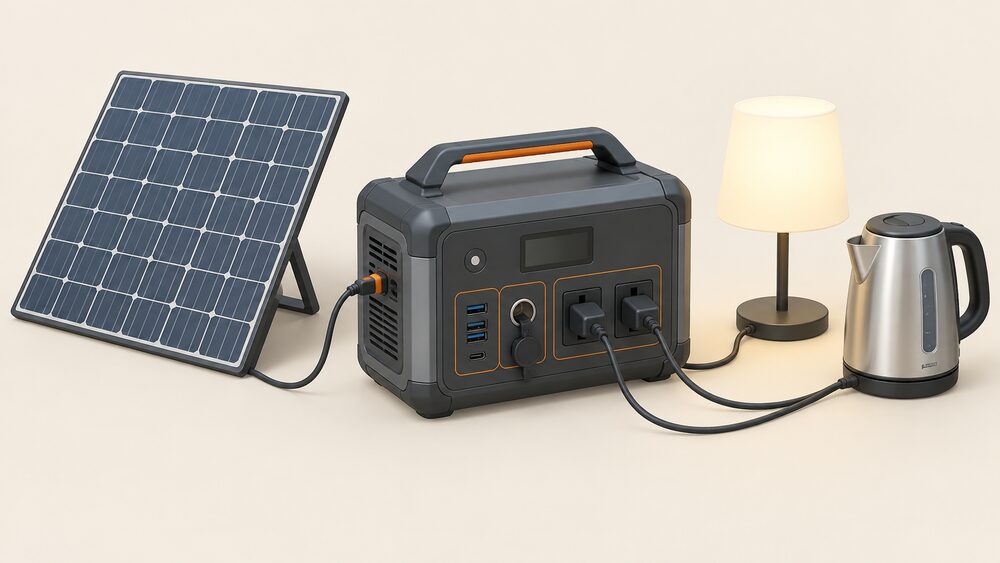
A BLUETTI power station is a battery, an inverter and a set of output sockets in one box. The maker describes them as powering multiple devices simultaneously, including laptops, refrigerators, lamps, robot vacuums and coffee makers5. That list is the practical shape of the category: electronics, lighting, small motor loads and kitchen appliances that cycle on and off rather than running continuously.
Capacity and output vary widely across the range, and the two figures do different jobs. Capacity in watt hours sets how long a load runs; output in watts sets what can start at all. The AC2P is listed at 300W continuous with 230Wh of storage, while the Elite 100 V2 is listed at 1,800W with 3,600W peak power for tough loads1. The peak figure matters for anything with a motor or compressor, because starting current is higher than running current.
| Model | Capacity | Output | Notes |
|---|---|---|---|
| AC2P | 230Wh | 300W | Smallest in the UK range1 |
| Premium 100 V2 | 1,024Wh | 2,000W | Mid-range10 |
| Elite 100 V2 | 1,024Wh | 1,800W, 3,600W peak | TurboBoost charging9 |
| EP500Pro | 5,100Wh | Not stated | Largest portable unit7 |
The EP500Pro is the outlier: at 5,100Wh it is a portable unit in name only, and the maker describes it as able to charge a home for up to two days, though a second BLUETTI page gives the same claim as one or two days, so the two documents disagree on the upper figure7. For sizing a household's actual loads, the general guidance on what size portable power station you need applies to any brand.
LiFePO4 chemistry and cycle life: 2,500 to 6,000+ cycles
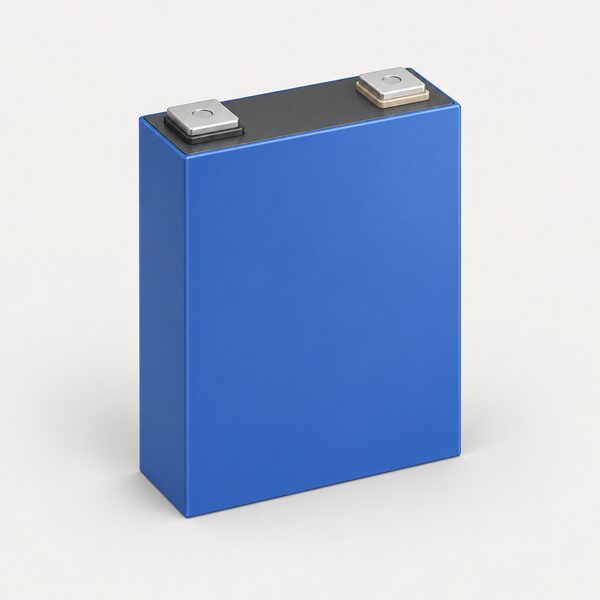
Every current BLUETTI unit uses lithium iron phosphate, usually shortened to LiFePO4 or LFP. The maker's headline figure is that these batteries last 2,500 to 6,000+ cycles, roughly 7 to 17 years of daily use4. That range is wide because it covers the whole product line rather than one cell, and the model-level figures sit inside it: the Elite 300 is listed with LiFePO4 cells rated for 6,000+ cycles, the expansion battery range at over 2,500 cycles, and one BLUETTI chemistry page gives LiFePO4 generally as 2,500 to 3,500 cycles11.
BLUETTI's own pages give LiFePO4 cycle life variously as 2,500 to 3,500 cycles, 3,000 to 4,000+, 3,000 to 5,000 or more, 4,000 to 6,000, and 4,000 to 10,000 cycles depending on which page is read. A household comparing models should treat the figure on the specific model page as the one that applies, and treat the wider claims as marketing ranges rather than test results.
What drives the difference in practice is depth of discharge and temperature. A battery cycled shallowly, kept cool and not left flat for months will outlast one run to empty in a hot garage. The general mechanics of LFP against other chemistries are set out in portable power station batteries.
Charging options: wall, solar, car and generator
BLUETTI home backup systems list four charging routes: AC wall outlets, solar panels, generator charging and car charging6. The portable units add a fifth option in the form of a dedicated alternator charger, listed at 560W of charging power and described as working with BLUETTI and most power stations14.
Speed is the selling point on the newer models. An 80% recharge typically takes about 45 minutes with TurboBoost technology, and the Elite 100 V2 is listed at 45 minutes to 80% from a 1,200W AC input, reaching 100% in 70 minutes when AC and solar charge together5. The Elite 30 V2 is listed at 45 minutes to 80%, and the Apex 300 at 55 minutes to 80% and 75 minutes to full on standard solar charging15. One BLUETTI price list gives the Elite 200 V2 as reaching 80% in 1.1 hours, slower than the 45-minute figure used elsewhere, so the numbers vary by model and by which input is used17.
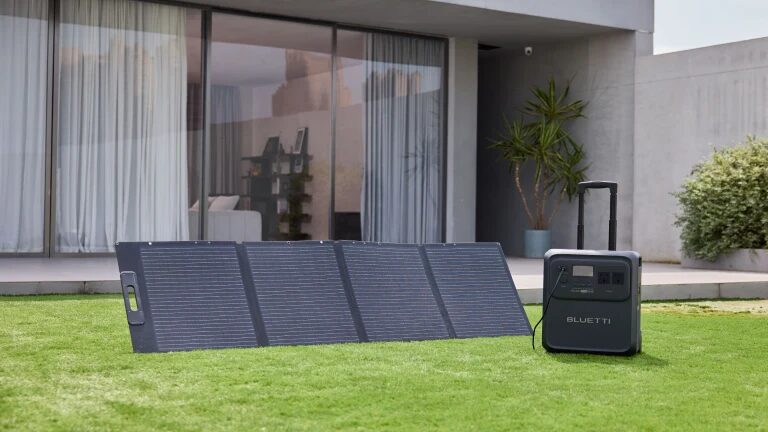
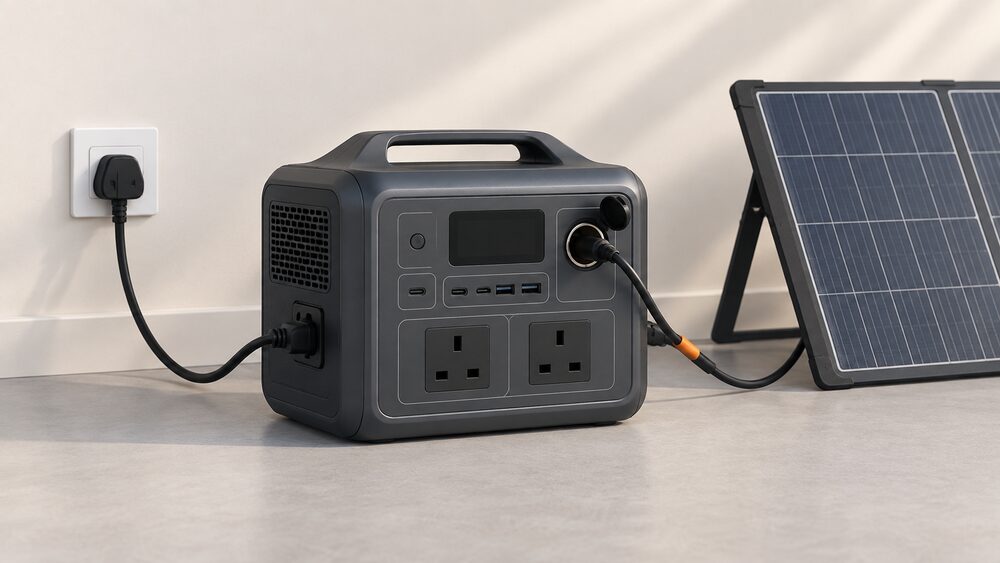
Solar input is the part that changes the household's position. Most BLUETTI power stations work with third-party solar panels as long as they have MC4 connectors and match the input power requirements of the station18. That means a household is not tied to BLUETTI's own panels, though the panel's voltage and current must fall inside the station's solar window. The maker's own bundles pair specific panels with specific units, from a 100W portable panel up to a 500W panel with the Elite 30019. How to match a panel to an input is covered in charging a portable power station from solar panels.
UPS backup: switching in under 10 milliseconds
All BLUETTI home battery backup units include a built-in UPS function that switches to stored power in under 10 milliseconds the moment grid power drops, which the maker describes as far faster than the 20 to 100 milliseconds typical of consumer UPS devices6. The same changeover figure appears across the range: the Elite 100 V2 at 10ms, the Elite 30 V2 at 10ms, the FridgePower at 10ms automatic switching, and the general power station specification at 10ms or less9.
One model sits outside that: the Elite 400 is listed with a 15 millisecond UPS switching time23. That is still fast enough for most equipment, but it is a different figure and worth noting for anyone comparing units on this specification alone.
Ten milliseconds matters for a specific reason. A desktop computer, a router, a NAS drive or a piece of medical equipment will ride through a gap that short without rebooting, because the internal power supply holds up for longer than the transfer takes. A gap of 20 to 100 milliseconds may not. This is the difference between a power station that protects equipment and one that merely restarts it afterwards. The wider comparison between these units and dedicated UPS hardware is at UPS vs portable power station, and the general principles are in uninterruptible power supplies for the home.
Portable power station or home battery backup: which fits which home
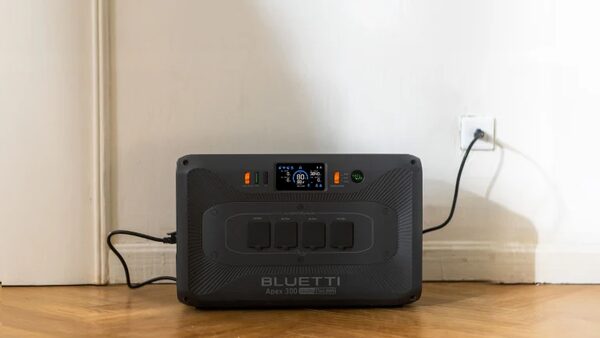
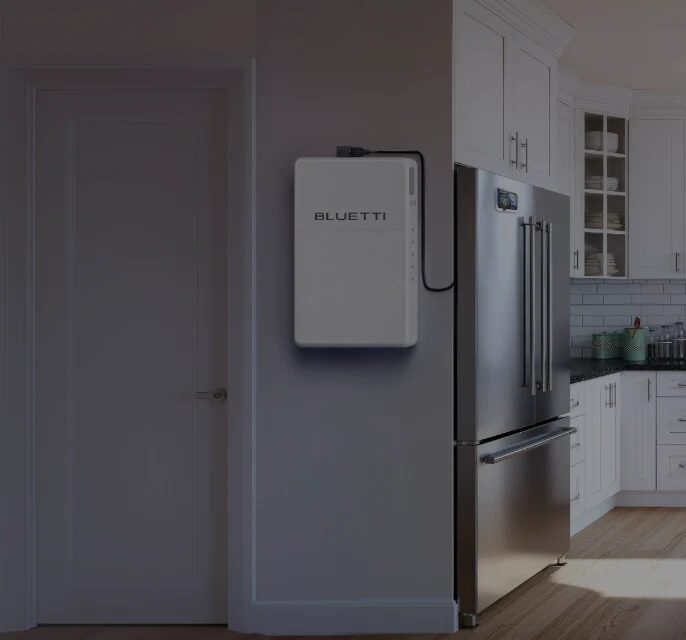
The two product families answer different questions. A portable power station is carried to where it is needed, charges from a wall socket or a car, and covers a defined set of appliances for a defined period. A home battery backup unit sits in one place, is described by the maker as fully plug-and-play with no installation, no planning permission and no certified electrician required, and runs a UPS circuit continuously3.
The scale difference is large. The AC200L is listed as scalable up to 100 kWh for whole-home or small business backup, which is a different order of storage from the 230Wh AC2P17. Between those extremes sit the mid-range units: the Premium 100 V2 at 1,024Wh, the Elite 100 V2 at the same capacity, and the AC300 with B300K expansion listed in the home battery backup collection10.
| Household situation | Type that fits | Why |
|---|---|---|
| Flat, short cuts, phone and laptop | Small portable, 230 to 1,024Wh | Light, no installation, charges from a socket1 |
| House with a freezer and router | Mid portable, 1,024Wh and up | Enough capacity for a fridge cycle and electronics9 |
| Medical equipment or home office | Home backup unit with UPS | Under 10ms changeover, continuous circuit6 |
| Whole-home or small business | Scalable system to 100 kWh | Maker states whole-home capability17 |
The dependence that remains is the same in both cases: the unit must be recharged from somewhere, and that somewhere is usually the grid. A household that wants to recharge without the grid needs solar panels sized to the station's input, which is a separate purchase and a separate calculation. For a wider view of how these units compare with generators and fixed batteries, see backup power costs compared and the backup power pillar.
Safety indoors: no fuel, no fumes, no carbon monoxide
BLUETTI states that its power stations are fully electric, with no fuel, no fumes and no risk of carbon monoxide4. That is the central safety difference between a battery unit and a petrol or diesel generator, both of which produce carbon monoxide and must run outdoors. A battery unit can be used inside a flat, in a bedroom or in a hallway without ventilation.
That does not make the category risk-free. Lithium batteries store a large amount of energy in a small space, and the general fire and disposal considerations apply to any brand. The site's guidance on lithium battery safety and recalls covers the wider picture, and are portable power stations safe to use indoors deals with the specific question.
Water is the other limit. BLUETTI states that its power stations are water-resistant but not fully waterproof, and advises keeping them dry during use2. The AC240 is not waterproof but carries an IP65 rating for water and dust resistance, and the B210P is listed with an operating temperature range of minus 20 to 40 degrees C25. An IP65 rating covers dust and water jets, not immersion.
Warranty, returns and buying from BLUETTI UK
The warranty position depends on which document is read and which product is bought. BLUETTI states that all new units come with a two-year warranty while refurbished units have a six-month warranty2. The maker's warranty policy describes portable power station cover as varying from 24 months to 72 months by product8. A BLUETTI UK page gives the range as 2 to 6 years, and another page states that depending on the model, BLUETTI provides 2 to 10 years of warranty26.
Claims run through a single contact address, sale-uk@bluettipower.com, available Monday through Sunday8. The policy states that a unit will be repaired by a BLUETTI service centre or swapped for a replacement product with equivalent specifications according to model and service life, performed by BLUETTI or a local authorised service partner8. The UK store lists a price guarantee, global warranty and lifetime support6.
On buying, BLUETTI UK lists free local shipping with most orders arriving within three to five business days, and Klarna as a payment option described as interest-free over three months26. The UK store also runs a referral scheme offering 10% off26. Prices move with promotions: the AC70P is listed at £569.00, and the UK store has run a Black Friday sale from 1st November to 5th December with up to 53% off, a 6th Anniversary sale from 7th to 23rd September 2025 with the Elite 100 V2 from £469, and a Prime Summer sale from 27 June to 1 July 2026 with up to 67% off28. Sale prices are time-limited and the figures above are the ones published for those windows.
The company behind the brand: scale, service network and UK recognition
BLUETTI describes itself as having 13 years of innovation and 22 global service centres1. The UK store carries a warranty range of 2 to 6 years, a price guarantee, free local shipping and lifetime customer support, and runs a referral scheme26. Review counts on individual product pages give a rough sense of UK volume: the Elite 100 V2 shows 100 reviews, the Apex 300 shows 13, and the AC300 with B300K shows 510.
The brand is one of several in the consumer battery market, and the site's comparison pages set it against its closest competitors: BLUETTI vs Jackery and EcoFlow vs BLUETTI. Individual model pages cover the BLUETTI Elite 200 V2 and the wider portable power stations category.
The dependence a household takes on with any of these units is a dependence on a manufacturer. The app-based monitoring and control described on BLUETTI's pages runs through the maker's software, and the warranty runs through the maker's service network and its authorised partners. That is a different kind of dependence from the grid, but it is a real one: the hardware is only as useful as the company's continued support for it. For the wider picture of what independence from the grid actually requires, see backup power and energy independence.
Sources32 cited
- BLUETTI UK home page, BLUETTI
- BLUETTI portable power station FAQ, BLUETTI
- BLUETTI home battery backup collection, BLUETTI
- BLUETTI disaster preparedness, BLUETTI
- BLUETTI cell technology, BLUETTI
- BLUETTI home battery backup, BLUETTI
- BLUETTI EP500Pro, BLUETTI
- BLUETTI warranty policy, BLUETTI
- BLUETTI Elite 100 V2 portable power station, BLUETTI
- BLUETTI 1 to 2kWh collection, BLUETTI
- BLUETTI Elite 300 charger bundle, BLUETTI
- BLUETTI expansion battery, BLUETTI
- BLUETTI hybrid power solutions, BLUETTI
- BLUETTI alternator charger for road trips, BLUETTI
- BLUETTI Elite 30 V2, BLUETTI
- BLUETTI Apex 300, BLUETTI
- BLUETTI Black Friday sale, BLUETTI
- BLUETTI off-grid solar power, BLUETTI
- BLUETTI Elite 100 V2 with 100W panel, BLUETTI
- BLUETTI Elite 300 with 500W panel, BLUETTI
- BLUETTI FridgePower charger, BLUETTI
- BLUETTI caravan power station, BLUETTI
- BLUETTI best generator for home backup power UK, BLUETTI
- BLUETTI greater than 2kWh collection, BLUETTI
- BLUETTI AC240, BLUETTI
- BLUETTI new release, BLUETTI
- BLUETTI Elite 100 V2 charger bundle, BLUETTI
- BLUETTI premium series collection, BLUETTI
- BLUETTI Elite 100 V2 with 350W panel, BLUETTI
- BLUETTI Elite 400 with 500W panel, BLUETTI
- BLUETTI Prime Summer Power Encore sale, BLUETTI
- BLUETTI Apex 300 with B300K, BLUETTI
 BLUETTI Elite 200 V2 portable power stationHow long will the BLUETTI Elite 200 V2 actually run a fridge, a boiler or a few lights during a power cut?
 BLUETTI Home Batteries and Portable Power StationsBLUETTI sells home batteries and portable power stations direct to UK householders, so you set them up yourself rather than paying an electrician.