

In this answer
Short answer
The energy price cap applies automatically. There is no application form, no registration and no claim to make, and no household needs to ask to be covered. The cap applies where a customer has not signed up for a fixed-term contract with their supplier, which in practice means standard variable tariffs and prepayment tariffs1. If a household is on a default tariff and pays by standard credit, Direct Debit, prepayment meter or Economy 7 meter, it is covered3.
What the cap does is set a maximum amount that suppliers can charge per unit of energy for customers on default tariffs, rather than fixing a total bill4. Ofgem reviews and sets the level every three months3. A separate cap is set for each of the 14 regions and applies throughout the region, with no breakdown below regional level, so the rates on a bill vary by where a household lives as well as by how it pays2.
The practical consequence is that the only action a household can take on the cap itself is none. The decisions that change what is paid are about tariff type, payment method and consumption, not about eligibility. What follows sets out who is covered, what sits outside the cap, how the level is set, and where a complaint goes when something goes wrong.
No application, no registration, no claim
The cap is a condition of a supplier's licence, not a benefit a household signs up for. Ofgem sets it with reference to the Domestic Gas and Electricity (Tariff Cap) Act 2018, which requires licence conditions giving effect to the cap6. Because the obligation sits on the supplier, coverage follows from the tariff a household is on rather than from anything the household does.
That distinguishes the cap from the support payments households sometimes confuse it with. Cold Weather Payments are automatic, with no need to apply, and do not have to be paid back7. Energy rebates are applied automatically with no registration9. Cost of living payments are automatic, with nothing to claim9. Standards of Performance payments from network operators are made automatically by cheque to all customers affected, with no claim needed10. The pattern across all of them is the same: the mechanism is triggered by circumstances, not by an application.
For the cap specifically, the trigger is the tariff. A household that has agreed a fixed tariff with its supplier is outside the cap for the duration of that deal1. A household that has never fixed, or whose fix has ended and which has rolled onto a standard variable tariff, is inside it. Nothing needs to be sent, confirmed or renewed.

What the cap covers and who sets it
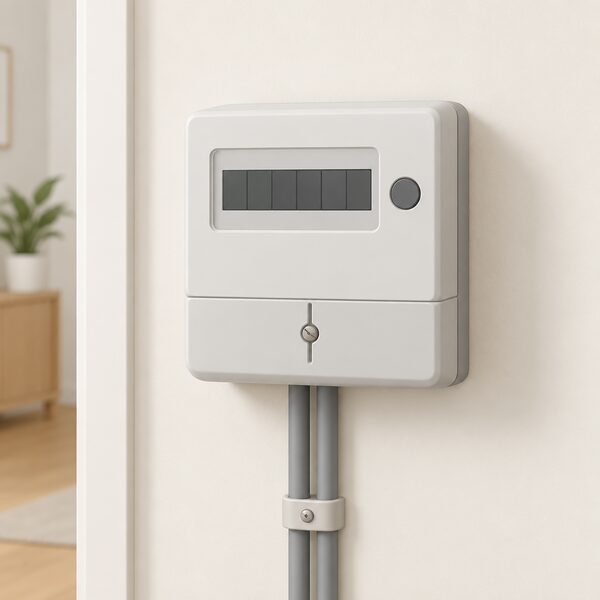
The cap protects people who are on tariffs where the unit rate can go up or down depending on the energy market1. Ofgem describes these as standard variable tariffs1. Independent guidance describes the same mechanism as a limitation on the amount suppliers are allowed to charge customers on standard variable and prepayment tariffs11.
The statutory basis is the Domestic Gas and Electricity (Tariff Cap) Act 2018, which requires Ofgem to put in place and maintain the licence conditions that give effect to the cap6. The cap therefore binds every domestic supplier licensed in Great Britain through the same conditions, which is why there is no supplier-by-supplier check for a household to carry out.
Several things sit outside it. Fixed tariffs, business energy contracts, heat networks and heating oil are not protected by the cap1. A household with its own contract with an energy supplier, rather than a default arrangement, follows the supplier's complaints procedure instead, with details on the bill or the supplier's website12. Households in Northern Ireland are in a separate market with separate arrangements, and the guidance there is framed around fuel suppliers' codes of practice rather than the Great Britain cap13.
How the cap level is set and reviewed
Ofgem reviews and sets a level for how much an energy supplier can charge for each unit of energy and daily standing charge every 3 months3. The level is not a single national number: a separate price cap is set for each of the 14 regions and applies throughout the region2. Within a region there is no further breakdown, so two households in the same area on the same payment method face the same maximum rates.
The cap values published by Ofgem are exclusive of VAT, which is applied by suppliers to consumers' bills5. That matters when comparing a headline figure with what leaves a bank account. The temporary zero rate of VAT for qualifying supplies of domestic electricity in Great Britain ends on 31 March 2027, and standard 5% VAT applies again from 1 April 202714.
The methodology itself is reviewed. Ofgem has decided not to make an adjustment to the consumption level used to set the cap at this stage, and intends to review it in the coming year15. The Act requires only one cap across the market, so allowances cannot differ by supplier size16. The benchmark review and the backwardation and deadband decisions set out how the mechanics are adjusted between periods8.
| Element | How it is set | Source |
|---|---|---|
| Unit rate and standing charge maximum | Set by Ofgem each quarter | 3 |
| Regional variation | 14 separate regional caps | 2 |
| Review frequency | Every 3 months | 3 |
| VAT | Excluded from published cap values | 5 |
| Consumption benchmark | No adjustment at this stage, review to follow | 15 |
Prepayment meters and the separate prepayment cap
Prepayment customers are covered, and have been for longer than the default tariff cap has existed. Tariff caps for customers on prepayment meters were introduced in April 2017, ahead of the wider cap2. The prepayment cap is set as its own figure rather than as a variant of the Direct Debit cap.
For cap period 15a, running from 1 October to 31 December 2025, the level of the prepayment price cap rose from £1,672 to £1,707 a year for a typical customer, a £35 or 2% increase compared with the previous level for cap period 14b4. Those figures are for a typical customer on prepayment, and the same regional and consumption caveats apply.
Where a prepayment meter is in place, the protections around topping up matter as much as the rate. A supplier must offer help if a customer cannot afford to top up, for example by giving extra credit in a vulnerable situation17. Any emergency credit received must be paid back when the customer next tops up, under an affordable payment plan agreed with the supplier18. Where a supplier installs a prepayment meter without permission, and a household is unhappy with how the complaint was handled, the Energy Ombudsman is the escalation route19.

If payments fall behind
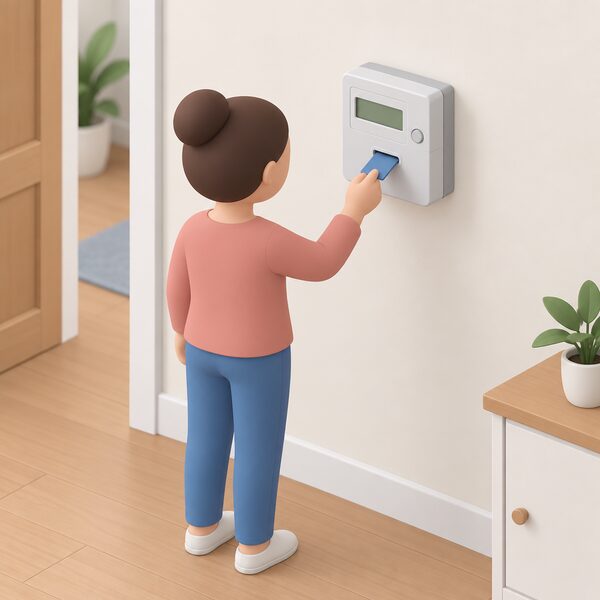
Falling behind does not remove a household from the cap, but it changes the relationship with the supplier. A supplier must offer help when a customer cannot afford to top up, including extra credit in a vulnerable situation17. Emergency credit is repayable on the next top up, with a payment plan agreed between supplier and customer18.
In Northern Ireland, fuel suppliers' codes of practice say they should take a customer's ability to pay into account, and a complaint can go to the Utility Regulator if they do not13. That is a separate framework from the Great Britain cap and its supplier licence conditions.
There is also a compensation dimension. Where a payment has been missed, a supplier may owe an extra £4020. Customer credit balances behave differently again: they would lag behind changes to bills such as an adjustment of the price cap, remaining high after a cap reduction until unwound21. That lag is a feature of how balances and cap changes interact, not a penalty.
Where to go with a complaint about your supplier
The route starts with the supplier. A household with its own contract can follow the supplier's complaints procedure, with details on the bill or the supplier's website12. Consumer rights include a right to complain to the supplier and a right to a resolution, and if the response is unsatisfactory, the right to ask the Energy Ombudsman to investigate22.
The Ombudsman has conditions. A complainant must have complained to the supplier first, then wait eight weeks or receive a deadlock letter, have evidence including the date the complaint was raised, and confirm the supplier name matches the bill23. Where a dispute is raised against a named supplier, the complainant must have checked it is the correct supplier, complained already, and have sufficient evidence including the date the complaint was raised24.
Ofgem is not the route for an individual case. It regulates suppliers, and its formal enforcement powers include opening investigations, making orders and imposing penalties in response to non-compliance and suspected non-compliance25. Its published contact address for price cap policy matters is RetailPriceRegulation@ofgem.gov.uk26. For consumer matters more broadly, a complaint can be referred to local Trading Standards Officers, who may then investigate on the consumer's behalf27.

Sources27 cited
- Energy price cap, Ofgem, 2026
- The energy price cap, House of Commons Library, 2026
- Changes to the energy price cap between 1 October and 31 December 2025, Ofgem, 2025
- Summary of changes to the energy price cap, 1 October to 31 December 2025, Ofgem, 2025
- Energy price cap levels, 1 October to 31 December 2025, Ofgem, 2025
- Energy price cap wholesale adjustment decision, Ofgem, 2024
- Grants and funding, Tameside Council, 2026
- Government payments, discounts and heating bills, Scope, 2026
- Be scam aware, Cadent Gas, 2026
- Standards of performance, National Grid, 2026
- Ofgem guide, Uswitch, 2026
- Alternative homes energy guidance, Ofgem, 2026
- Overdue utility bills, nidirect, 2026
- Temporary zero rate of VAT for domestic electricity in Great Britain, GOV.UK, 2026
- Energy price cap operating cost and debt allowances decision overview, Ofgem, 2025
- Energy price cap methodology, backwardation and deadband decision, Ofgem, 2025
- Get help with your prepayment meter, Ofgem, 2026
- Prepayment meters consumer guidance, Ofgem, 2026
- Installing a prepayment meter without your permission, Ofgem, 2026
- Check if you can get payment for a power cut, Ofgem, 2026
- Customer credit balance explanatory note, Ofgem, 2024
- Understanding your rights, Energy Ombudsman, 2026
- Raising a dispute, Energy Ombudsman, 2026
- Raising a dispute against Betr Business, Energy Ombudsman, 2026
- Supplier Performance Report, July to December 2023, Ofgem, 2024
- Energy price cap benchmark review decision, Ofgem, 2025
- Consumer protection rights, GOV.UK, 2026
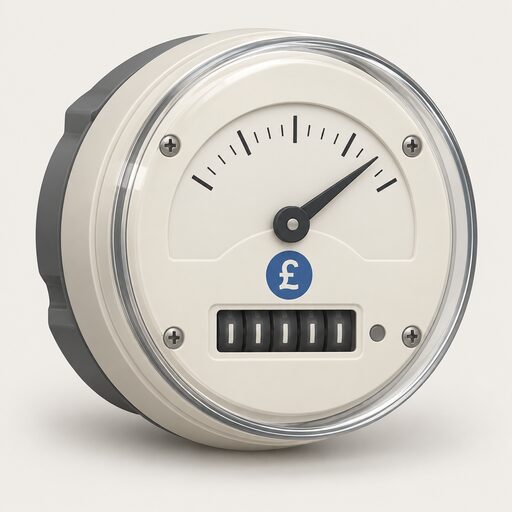 Energy Price CapThe price cap sets the most you pay for each unit of gas and electricity, plus the daily standing charge, but not your total bill.
 OfgemOfgem sets the rules energy suppliers and network companies must follow, including the price cap on standard tariffs.
 The Full Energy Bills and the Price Cap GuideWondering why your bill went up even when you used less power?
 Tracker vs Price CapTracker tariffs can cost more than the price cap, so how do they compare?
 Fixed and Variable TariffsCompares capped standard variable tariffs with fixed deals, including exit fees, contract end and rollover.
 Price Cap RatesPaying by direct debit, prepayment or standard credit changes what you pay under the price cap, so which method is cheapest?