

In this answer
Short answer
The NICEIC Platinum Promise is the guarantee behind work carried out by NICEIC-registered tradespeople. NICEIC states that all work carried out by its registered tradespeople is backed by the Platinum Promise, and that where a problem arises with the technical standards of commissioned work it will step in and address the issue, subject to its terms and conditions1. It is a technical standards remedy, not a general guarantee of a trader's conduct.
The registration sits with a business, not a person. NICEIC certifies businesses, not individuals, unless they are a sole trader, and there are over 40,000 currently certified with it2. Those businesses are certified on particular schemes rather than holding one blanket approval, and NICEIC-registered electricians are assessed on an annual basis3.
For a household, the Promise is one layer in a stack that also includes statutory rights against the trader, the business's own complaints process and, for renewables, MCS certification. It supports energy independence only indirectly: it does not make a home self-sustaining, but it is one of the checks that reduces the risk of a poor installation of the equipment a household relies on.
What the Platinum Promise is and who it backs
The Promise is a named consumer protection attached to NICEIC registration. NICEIC's own wording is that all work carried out by NICEIC-registered tradespeople is backed by its unique Platinum Promise, and that where issues arise with the technical standards of work a household commissions, NICEIC will step in and address them, subject to its terms and conditions1. The scope is therefore defined by two things: the work must have been commissioned, and the problem must concern technical standards.
The party backed is the business. NICEIC certifies businesses, not individuals, unless they are a sole trader, and its businesses are certified on certain schemes2. That distinction matters when a named electrician moves employer: the certification, the assessment history and the Promise stay with the company, not the person. A household contracting a limited company is contracting the certified entity; a household contracting a sole trader is contracting an individual who is also the certified entity.
The scale is substantial. NICEIC states it has over 40,000 currently certified businesses2. That breadth is why the Promise is often quoted in quotes and contracts as a reassurance, and why it is worth checking rather than assuming: the register is the evidence, not the logo on a van.
"All work carried out by NICEIC-registered tradespeople is backed by our unique Platinum Promise"

What the Promise covers: technical standards of NICEIC-registered work

The Promise is deliberately narrow in subject and broad in application. Its subject is technical standards: NICEIC's stated job is to make sure the work undertaken by its certified businesses meets the required technical standards4. Its application is to work a household has commissioned, which is the phrase NICEIC uses when describing when it will step in1.
That framing places the Promise alongside, not instead of, the ordinary law. A trader who fails to carry out a service with reasonable care and skill must put things right at no extra cost, within a reasonable time, and without causing significant inconvenience6. Those are statutory remedies owed by the trader. The Promise is a scheme-level intervention by the certification body when the technical standard of the work is in question.
It also sits alongside the business's own obligations. All NICEIC-certified businesses are required to have a complaints handling process in place4, so the first route for a defect is the firm that did the work. The Promise becomes relevant when that route does not resolve a technical standards problem.
What the Promise is not is a conduct guarantee. It does not cover pricing disputes, missed appointments or commercial terms, because those are not technical standards. It does not cover work that was never commissioned. And it does not displace the householder's own rights: other remedies for breach remain available, including damages, recovery of money paid where consideration has failed, specific performance and treating the contract as at an end, provided the consumer does not recover twice for the same loss7.
How the remedy works when something goes wrong
The route has an order to it. The householder complains to the business first, because every NICEIC-certified business must have a complaints handling process4. If that does not resolve the matter, NICEIC operates a three-step complaints process, and its role at that stage is to make sure the work undertaken by its certified businesses meets the required technical standards4.
Evidence carries the complaint. Warranty and guarantee claims generally require details of what the problem is8, and a complaint to a network operator follows the same logic: the purpose is usually to get answers about what went wrong, and possibly an apology or changes to stop it recurring9. For a technical standards complaint, that means the contract, the certificates, dates, photographs and any inspection report.
The wider redress landscape shows how remedies are typically structured. Guaranteed standards of performance entitle a customer to compensation when a provider fails to meet them10, and the Northern Ireland Housing Executive requires accounts, receipts and certificates, including an insurance backed bond which guarantees the work where applicable, before grant payment11. The pattern is consistent: a remedy is only as good as the paperwork that triggers it.
Why the Promise matters for Building Regulations self-certification

Self-certification is the practical benefit that runs alongside the Promise. NICEIC sets out the benefits of electrical certification as including self-certification rights, consumer protection and technical support, and states that this ensures the work is completed safely and meets all necessary regulations12. For a household, that means the registered business notifies the work as compliant rather than the householder making a separate building control application.
The regulatory purpose behind that notification is safety and welfare. The Northern Ireland Building Regulations are intended to ensure the safety, health, welfare and convenience of people in and around buildings13, and the same principle underpins the equivalent regimes across the UK. Competent person schemes exist so that registered businesses can certify their own compliance with those requirements.
The paperwork matters at sale. FENSA advises that when selling a home, the buyer and their solicitor will need proof that newly installed windows and doors were fitted to the required standards14, and the same logic applies to notifiable electrical work. The CWISC scheme issues a guarantee incorporating the certificate of compliance with the Building Regulations to the householder15, which is the model: a certificate that travels with the property.
Self-build and retrofit projects face the same test from a different direction. Sustainability guidance for self-build homes advises aiming to meet the requirements laid out by sustainable building certifications such as BREEAM16, and the CIGA new build guarantee exists to introduce independent assessment and ongoing surveillance, without which a guarantee will not be available17. Certification and guarantee are linked throughout the sector: the certificate is what makes the guarantee enforceable.
NICEIC as a certification body: scale, UKAS accreditation and the redeveloped scheme
NICEIC is accredited by UKAS to offer the redeveloped scheme, and states that it has assessed all new applicants to that scheme since its launch on 9 March 20265. Accreditation is the structural point: it is what allows a certification body's assessments to be recognised, and it is not unique to NICEIC. NAPIT Certification is accredited by UKAS to certificate business or tradesperson across a wide range of schemes18, and the CWISC scheme states that operation of the scheme is subject to accreditation by UKAS15.
The redeveloped scheme changed how assessment works. NICEIC published guidance on the transition to risk-based surveillance on 31 March 2026, and expected to have contacted all existing MCS Approved Installers about the transition by June 20265. A webinar covering the new part of the business assessment was scheduled for 17 September 20265. For households, the practical effect is that the assessment a business undergoes is not static: what a certificate meant in one year may reflect a different assessment regime in the next.
Technical standards also move. Amendment 4 of the 18th Edition Wiring Regulations was published on 15 April 2026, and NICEIC-certified businesses will need to demonstrate access to Amendment 4 to maintain NICEIC certification from 15 October 20265. That is a dated obligation with a consequence: a business that cannot show access to the current amendment risks its certification, and with it the Promise.
Where the Promise sits alongside MCS certification for renewables
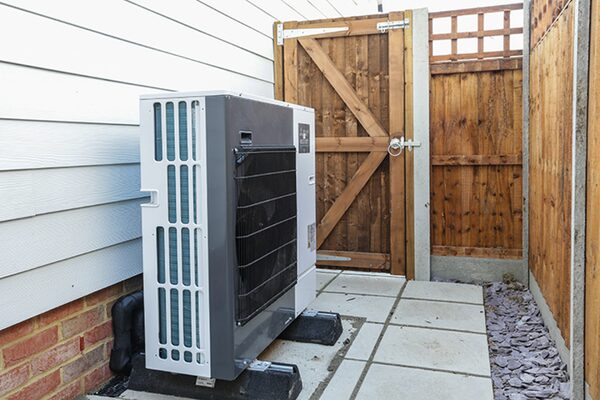
For renewable work, the relevant quality mark is MCS. MCS is the UK's quality mark for renewable energy technologies like solar panels and heat pumps19. NICEIC is approved to offer the latest version of the MCS Installer Scheme and has thousands of businesses certified on it5, so a household may encounter a single business holding both NICEIC electrical certification and MCS certification.
The two do different jobs. MCS certification is the technology-specific mark; the Platinum Promise is the electrical certification body's technical standards remedy. Where a heat pump or solar installation includes notifiable electrical work, both may be in play, and the scheme a business is certified under determines which protections apply to which part of the job.
Grant eligibility adds a further layer. Heat pumps that integrate with solar photovoltaic systems are eligible under the Boiler Upgrade Scheme20, and the scheme's installer guidance sets out what an installer must do. Retrofit standards have also moved: PAS 2030:2023 came into effect in 2025, providing updates to the existing technical guidance on best practice retrofit21. A household checking a renewables installer is therefore checking three things at once: the MCS registration, the electrical certification and, where a grant is involved, the scheme's own installer requirements.
The independence question is worth stating plainly. None of these protections makes a home self-sustaining. A certified installation still depends on the grid for import and export, on a supplier for billing, and on the manufacturer for the equipment's own warranty. What certification and the Promise do is reduce the risk that the household carries the cost of a technical failure alone.
Sources21 cited
- How to work with your tradesperson, NICEIC, 2026-09-17
- Householders and landlords help hub, NICEIC, 2026-09-17
- Everything you need to know about choosing an electrician, NICEIC, 2025-11-21
- Consumer complaints resolution process, NICEIC, 2026-09-17
- Redeveloped MCS Installer Scheme: what are the key changes and benefits, NICEIC, 2026-04-23
- Your consumer rights when buying services, Consumer Council, 2026
- Consumer Rights Act 2015, Part 1, Chapter 4, legislation.gov.uk, 2026-09-17
- Claim using a warranty or guarantee, Citizens Advice, 2026-09-17
- Claims and complaints, NIE Networks, 2026-09-19
- Guaranteed standards, SGN, 2026
- How long will the whole process take, Northern Ireland Housing Executive, 2026-09-17
- Everything you need to know about EV charging points, NICEIC, 2024-09-27
- Building Regulations, Building Control NI, 2026
- What to check before appointing an installer, FENSA, 2026-09-20
- CWISC scheme overview, The IAA, 2026-09-20
- Self-build homes: sustainability, Planning Portal, 2026
- New build guarantee benefits, CIGA, 2026-09-20
- Consumer advice, NAPIT, 2026-09-17
- Why MCS certification matters, MCS Certified, 2026-08-17
- Boiler Upgrade Scheme guidance for installers, Ofgem, 2026-04-28
- EINAS 2025: heat and buildings, Department for Energy Security and Net Zero, 2025
 Workmanship WarrantiesIf something goes wrong with your solar panels, who actually fixes it and who pays?
 Warranties and DegradationHow long do solar panels actually last, and what do the warranties really cover?
 Insurance-Backed GuaranteesDescribes what an insurance-backed guarantee covers, how long it runs and when a code or grant scheme requires one.
 When Your Installer Goes BustWhat happens to deposits, part-completed work, workmanship guarantees and complaints when a home energy installation company fails, and how to claim on deposit protection, an insurance-backed guarantee, card or finance cover, and who honours the manufacturer's warranty.
 Manufacturer Approved NetworksDoes an approved installer badge mean better work, or just a longer warranty on the boiler or heat pump?
 Home Battery WarrantiesHow long does a home battery warranty really last, and what does it actually promise?