
In this answer
Short answer
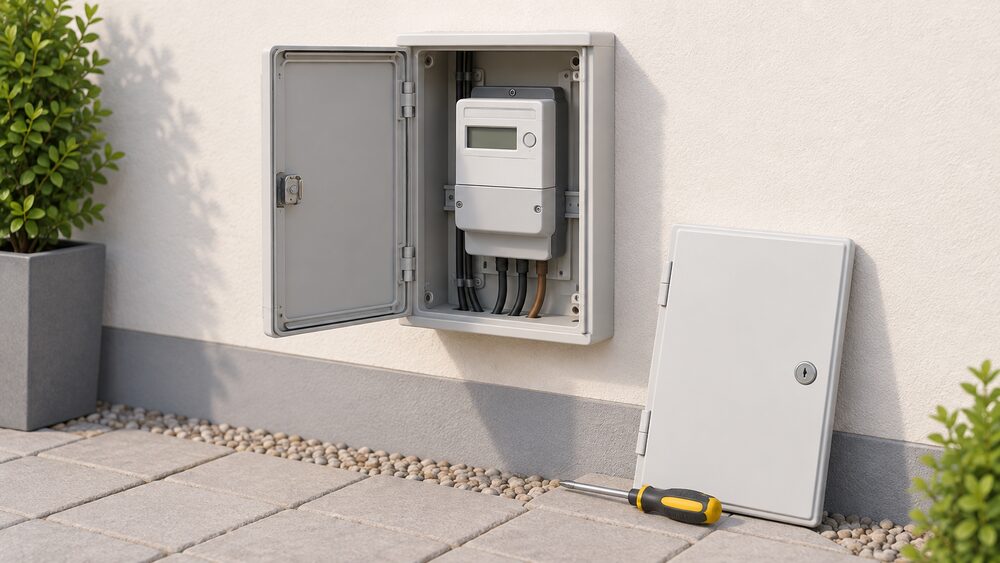
The short answer is that the meter box belongs to the property owner, not to the energy supplier or the network operator. UK Power Networks states plainly that "Meter boxes are the responsibility of the home owner" and that "The homeowner owns the electricity meter box"1. NIE Networks puts it the same way for Northern Ireland: "The meter box is the property and responsibility of the property owner"2. So repairs, replacement doors and new boxes are arranged by the household, not by the company that sends the bill.
What sits inside the box is a different matter. The meter itself is owned by the electricity supplier, and only the supplier can move it3. The supplier also owns and maintains the meter tails that connect from the main incoming supply3. That split, box to the household, meter to the supplier, is the rule that decides almost every case.
In practice the work is rarely a solo job. The box surrounds live equipment, and the guidance is to consult a qualified electrician and builder who can determine how the work is done safely3. Network operators will often isolate the supply so a builder or electrician can work, and some run their own repair services for doors, hinges and locks5.
Meter box or meter cubicle: which one you have and who owns it
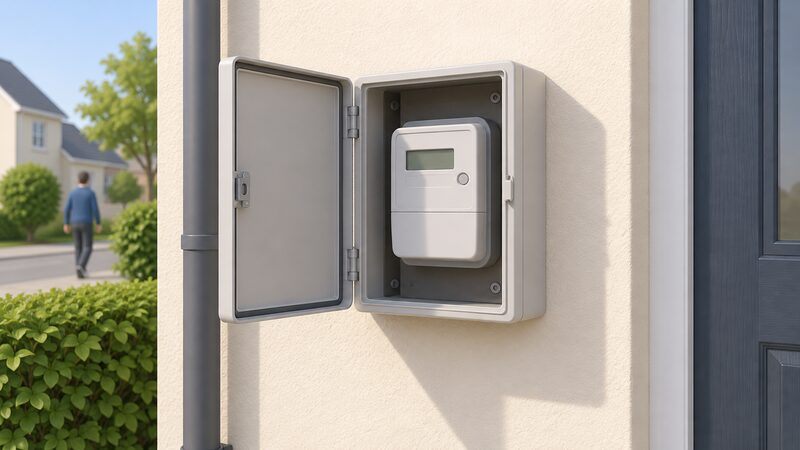
The terms overlap, but the ownership rule does not change. NIE Networks describes the common arrangement in modern homes: "In most modern homes, electricity meters are located in an outdoor meter cubicle and is the property of the home owner"5. The meter may also sit inside the property, or in an external meter box or cubicle, depending on the age and design of the building10.
Gas meter boxes come in four recognised types: built in or recessed, semi concealed, surface or wall mounted, and kiosk11. The built-in or flush mounted electricity box is commonly used for new house builds and fits flush against the outside wall; fitting one requires a cavity to be created in the property wall, and the box then fits into that cavity1. That construction detail matters, because a box set into the wall involves building work as well as electrical work.
Ownership of the box follows the property. For gas, Northern Gas Networks states that the customer is responsible for both the purchase of a new box and getting the meter reconnected to internal pipework by a Gas Safe registered engineer, for semi concealed or built in meter box replacement11. For electricity, the same principle applies to the enclosure, while the meter inside remains the supplier's property1.
Where a building is multi-occupied, a third party can appear. A Building Network Operator owns and maintains the electrical infrastructure in a multi-occupied building, from the main intake fuse for the building up to each individual customer's electricity meter12. In that setting the box may fall under the building's arrangements rather than a single household's, and the managing agent or BNO is the first point of contact.
When the network operator steps in and when it is the householder's job
The division of labour follows the ownership split. A network operator is responsible for the pipes and wires that move energy13. Electricity network operators help connect a home to electricity, can move the electricity meter, and fix power cuts that are not caused by a problem inside the home13. Energy network operators more broadly manage and maintain the wires, pipes and other infrastructure that delivers electricity and gas to a home, business and community14.
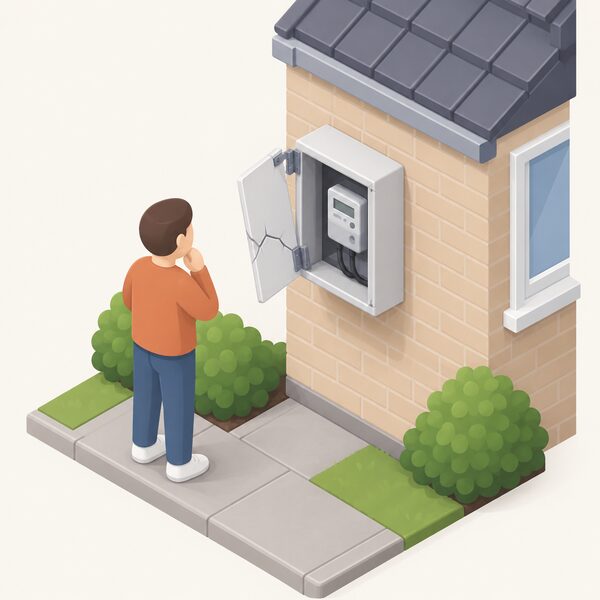
That remit covers the service cable and the supply up to the meter, not the box around it. So a cracked or missing door, a broken hinge, a seized lock or a rotten wooden backboard is a householder's job to arrange, even though the network operator may attend to isolate the supply so the work can be done5.
There is one clear exception on the electricity side. UK Power Networks states that if the meter board does not hold its electricity supply, the electricity supplier is responsible for the replacement9. In other words, the board that carries the network's supply is the network's concern; a board that carries only the supplier's equipment is the supplier's.
For gas, the boundary runs along the service pipe. Northern Gas Networks offers a disconnection and reconnection service: one of its engineers will temporarily disconnect the service pipe, the small pipe connecting the meter to the gas main in the street, before the household's own tradesman removes the old box, and will reconnect the service pipe once the new box is installed, for new semi concealed or built in meter boxes11. The tradesman does the box; the network does the pipe.
Getting the electricity supply made safe before any repair
No repair should begin with the supply live. NIE Networks states that if the meter box needs replacing, it will assist by turning off the power while a builder or handyman replaces the meter box5. UK Power Networks states that if it is required, it can temporarily turn off the power to allow the replacement6. Both are isolation services, not repair services.
The sequencing matters. For a supply move, UK Power Networks sets out that if the household digs the trench itself, it must be ready for cable installation, and the meter box must be installed where the meter is to be moved to and connected16. The box goes in before the meter is reconnected, and the supply is made safe in between.
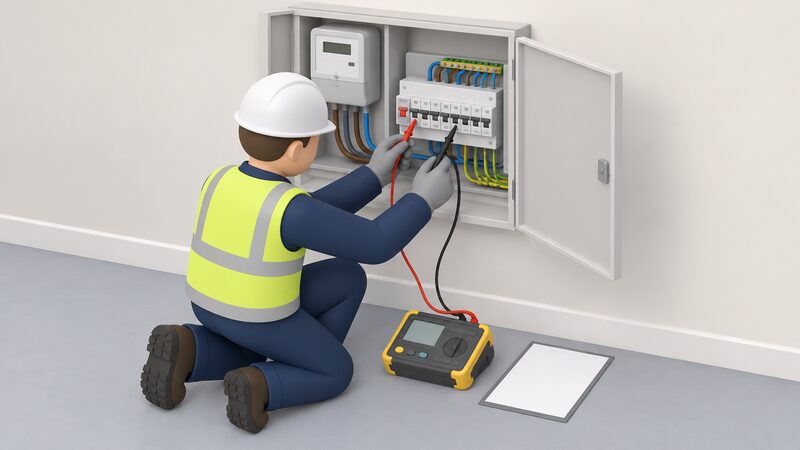
Once the electrical work is done, certification should follow. Welsh Government building regulations guidance states that if qualified electricians carry out the work they should give a Minor Works Certificate, which means the work has been tested for safety, and that the competent person should also provide a completed Electrical Installation Certificate showing the work was tested17. Those certificates are the record that the repair was done properly, and they matter at sale or re-let.
For gas, the safety rules are separate and strict. Appliances should be installed and serviced by a Gas Safe registered engineer18, and SGN states that appliances should always be fitted, fixed and checked by a Gas Safe registered engineer19. A meter box repair that involves disturbing the meter connection therefore needs a Gas Safe registered engineer, not a general handyman.
Finding an approved contractor and what the repair involves
For household energy work, the recognised route to a competent tradesperson is a competent person register. Leeds City Council guidance suggests searching a competent person register such as TrustMark, the government endorsed scheme for work done around the home20. Derbyshire County Council guidance describes the same route for energy efficiency measures: find a TrustMark approved contractor near you to carry out a survey for the improvements you need21.
For the electrical side, a registered electrician is the appropriate trade. Citizens Advice states that a household might still need a registered electrician or gas engineer for other work, for example preparatory digging, fitting a meter box or reconnecting the supply inside the home22. That covers the three parts of a typical job: the groundworks, the enclosure, and the internal connection.
For gas, the meter connection is reserved. Northern Gas Networks states that the customer must arrange an OAMI, an Ofgem Approved Meter Installer, to visit after the alteration is completed to connect the meter back to the service pipe, internal pipework and appliances23. The box can be fitted by the household's own tradesman; the meter reconnection cannot.
Where a meter is being installed as part of a metered arrangement, the installer must provide a handover pack containing a process to follow to check that the meter is operating correctly, maintenance or calibration requirements, and reading instructions24. That is the paperwork a household should expect to receive and keep.
| Task | Who does it | Source |
|---|---|---|
| Buying the box, boards, ducting and sand | The customer | 4 |
| Fitting the meter board or box, laying ducting | The customer's tradesperson | 4 |
| Isolating the electricity supply | The network operator | 5 |
| Disconnecting and reconnecting the gas service pipe | The gas network | 11 |
| Reconnecting the meter to internal pipework | A Gas Safe registered engineer or OAMI | 11 |
| Certifying the electrical work | The qualified electrician | 17 |
Costs, responsibility boundaries and what to do if the parties disagree
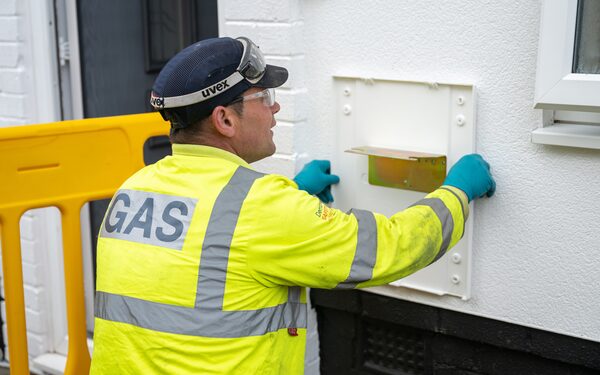
Published prices for meter box repair are not generally available; the work is quoted by the tradesperson who surveys it, and the cost depends on the box type, the access and whether the supply needs isolating. What is published is who pays for what. SSEN states that it will replace a meter box free of charge, but the customer will need to buy the meter box itself8. Northern Gas Networks states the customer is responsible for both the purchase of the new box and getting the meter reconnected to internal pipework by a Gas Safe registered engineer11.
For a supply move, the customer's responsibilities include agreeing the installation date, buying materials such as meter boards, meter boxes, hockey stick, ducting and sand, fitting meter boards and boxes, laying ducting, booking the supplier date, and settling additional land right or traffic management payments4. That list is a useful guide to the shape of a meter box job even where no move is involved.
Where building work is involved, building control fees can arise. Bromley Council states that the applicant is liable to pay the fee25. Where a landlord owns the property, the tenancy rules apply: the landlord is legally responsible to repair damage to electrical wiring26.
If a dispute arises with a supplier, Ofgem directs consumers to the supplier's own complaints process first, and the Energy Ombudsman handles complaints that cannot be resolved27. For disputes with an installer, the Consumer Code for Independent Guarantee Arbitration scheme can award an apology, completion of specified works to rectify a defect, a nominal sum payment, reimbursement of the arbitration fee to the customer, or customer payment of outstanding amounts to the installer28.
On smart meter faults, the guaranteed standards set timeframes. Ofgem's final decision on smart meter guaranteed standards of performance states that the energy supplier must complete an initial assessment, take an appropriate action and offer to update the consumer, within 5 working days29. If a smart meter installation fails due to a fault within the energy supplier's control, the consumer will receive compensation29. For a smart meter that stops working, Welsh Government guidance says to contact the supplier, which is responsible for maintenance and will fix or replace the meter as needed30.
What this means for a household's energy independence
A meter box repair is a small job with a clear ownership rule, and it sits at the boundary between what a household controls and what it does not. The enclosure is the household's asset and the household's liability: it can be repaired, replaced or upgraded by tradespeople the household chooses, and the certificates that follow the work belong to the household17. That is genuine independence over the physical fabric of the connection.
The dependence that remains is on the network and the supplier. The supply must be isolated by the network operator before work can proceed5, the gas service pipe must be disconnected and reconnected by the network11, and the meter itself can only be moved by the supplier3. For smart meters, maintenance sits with the supplier, which will fix or replace the meter as needed30. None of that can be arranged by the household alone, and none of it can be bypassed.
The practical consequence is that a meter box repair is a coordination job rather than a self-help job. The household arranges the tradesperson, buys the box and materials, books the isolation, and keeps the certificates. The network and supplier do the parts that touch their equipment. Understanding which is which is what prevents a stalled repair, an uncertified job, or a bill for work that was never the household's to pay.
Sources30 cited
- Electricity meter boxes, UK Power Networks, 2026-09-17
- Meter services FAQs, NIE Networks, 2026-09-19
- Other options customers have chosen, UK Power Networks, 2026-09-17
- What do you need to move, UK Power Networks, 2026-09-17
- How do I get my outdoor meter cubicle replaced, NIE Networks, 2026-09-19
- Replace meter box, UK Power Networks, 2026-09-17
- Meter box repairs, SGN, 2026
- Meter box replacement, SSEN, 2026-09-20
- Replace meter board, UK Power Networks, 2026-09-17
- Safe isolation, NIE Networks, 2026-09-19
- Meter box services: what to expect, Northern Gas Networks, 2025-12-29
- LCTs in multi-occupied buildings, UK Power Networks, 2026-09-17
- Find my network operator, Energy Networks Association, 2026
- Customers, Energy Networks Association, 2026-09-17
- Safe isolation, NIE Networks, 2026-09-19
- What's involved, UK Power Networks, 2026-09-17
- Building regulations: electrics, Welsh Government, 2026-09-17
- What to do if you smell gas, Confused.com, 2025-09-08
- Carbon monoxide, SGN, 2026
- Energy Company Obligation (ECO) scheme, Leeds City Council, 2026-09-20
- Energy Company Obligation ECO4 scheme, Derbyshire County Council, 2026-09-17
- Move your gas or electricity meter, Citizens Advice, 2026-09-20
- FAQs and guidance, Northern Gas Networks, 2025-10-30
- Domestic RHI: guide to metering, Ofgem, 2026
- Building control application guidance notes, Bromley Council, 2026-09-17
- Landlord and tenant rights and responsibilities, GOV.UK, 2026-09-17
- Complain about your energy supplier, Ofgem, 2026
- Independent arbitration dispute process, CIGA, 2026-09-20
- Final decision: smart meter guaranteed standards, Ofgem, 2026
- Smart meters, Welsh Government, 2026
 Network Operators and 105When the lights go out, who do you actually ring?
 Smart Meter Faults and FixesYour smart meter has stopped working.
 Rented Homes and Landlord MetersWho is responsible for the energy in your rented home?
 Move, Exchange or Remove a MeterMoving a meter is not a DIY job and it is illegal to do it yourself.
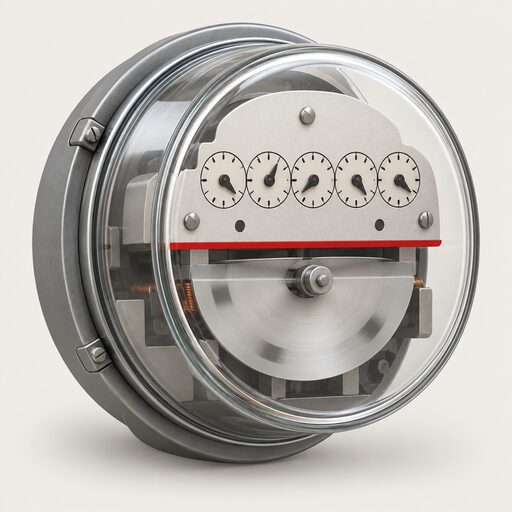 Behind-the-Meter SystemsWhere does your meter sit, and what does that mean for the solar panels or battery you put in at home?
 Controls in Rented HomesCan you change the heating controls in a rented home, and who pays if they break?