
In this answer
Short answer
No, an oil boiler installer does not have to be OFTEC registered by law. But the Building Regulations route for oil-fired work expects an installer registered with a competent person scheme, and OFTEC is the scheme that covers oil. The Planning Portal states plainly that for an oil fired boiler "an installer should be registered with one of the relevant Competent Person Schemes"1, and the Centre for Sustainable Energy's boiler guidance says installers should be on the Gas Safe Register for gas or "registered with OFTEC for oil-fired systems"2.
The practical consequence is self-certification. An installer registered with a scheme can self-certify that their work complies with building standards3. OFTEC-registered installers can self-certify their installation work in England, Wales, the Channel Islands and the Isle of Man, avoiding the need for a building control officer to check it4. Use an installer who is not registered with a scheme such as OFTEC and the household has to obtain a Building Control Notice and arrange an inspection, which OFTEC describes as potentially costly and time consuming5.
So the answer is a rule with a soft edge: registration is not a licence to work, but it is the difference between paperwork that is handled for the household and paperwork the household has to arrange itself.
Why an OFTEC-registered installer matters for Building Control
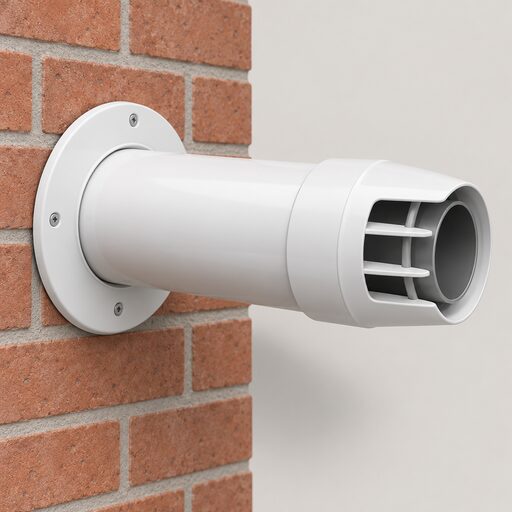
Building Regulations approval for a new boiler is generally achieved by employing an installer registered under an approved scheme9. That is the mechanism: rather than a household applying separately for approval, the registered business notifies the work and certifies it. The Welsh Government's own building regulations guidance for boilers and heating says an oil fired boiler installer should be registered with the Competent Person Schemes, and the same wording applies to solid fuel fired boilers9.
Where the installer is not registered, the fallback is a Building Control Notice and an inspection. OFTEC's guidance describes that as costly and time consuming5, and the same wording appears in its domestic oil storage publication10. The saving from using a registered installer is therefore administrative and financial rather than a matter of the work being legal or illegal.
The benefit is stated in OFTEC's own terms: a site inspection by a local council building control officer, or a private approved building inspector, is not required, saving time and money10. For a household off the gas grid, that is the concrete value of the register. It does not make the installation safer by itself, and it does not remove the need for the work to comply; it moves the compliance check onto the installer's own certification.
There is a Northern Ireland dimension. The register OFTEC maintains covers trained and assessed technicians qualified to work safely with oil-fired appliances in Northern Ireland6, and the devolved guidance there points households to OFTEC-registered technicians for installation and servicing. Building control procedure differs across the four nations, so the notification route is not identical everywhere, even though the register itself is UK-wide.
How the scheme works: audits, inspectors and registered businesses
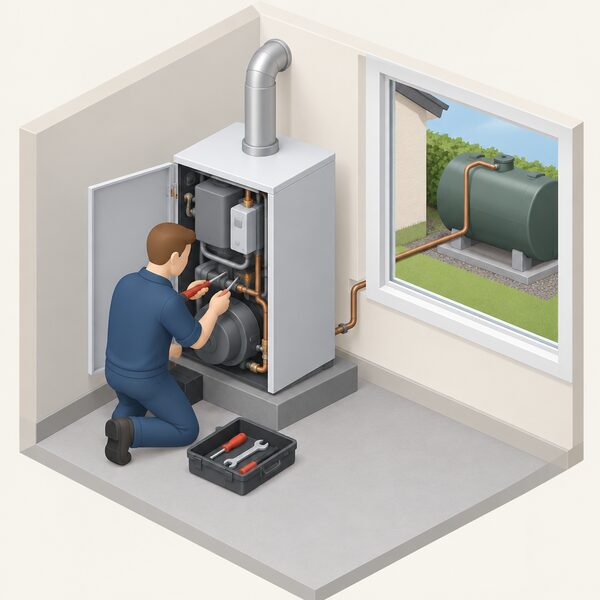
OFTEC's competent person scheme is a register of technicians employed by oil, solid fuel and renewable heating businesses10. That structure is the part households most often misread. OFTEC does not employ heating technicians directly; a technician has to work for a heating business that is OFTEC registered8. The registration, the audit and the liability sit with the business.
Technicians on the register are inspected regularly by OFTEC to ensure their work meets the required standard, and the business they work for must also pass an audit10. That is a two-level check: the individual's competence and the business's processes. It is why a household checking a quote should look at the business name on the register rather than only the name of the person who visited.
The register is not limited to boilers. The technician search covers oil-fired boilers and warm air heaters, oil-fired vaporising appliances with and without an internal boiler, oil storage tanks, and the design of heat pump installations11. A business registered for boilers is not automatically registered for tanks or for heat pump design, so the scope of the registration is worth confirming against the work being quoted.
OFTEC itself is a registration body for off-gas grid heating technicians12, established in 1991 as a not for profit trade organisation, and its scheme was the first competent person scheme to be formally recognised, in 2002. It moved its base from Ipswich to Melton in Suffolk in March 2022, which is why older contact details circulate.
"OFTEC does not employ heating technicians directly, you need to work for a heating business that is OFTEC registered"
Is Gas Safe registration enough for an oil boiler?
No. Gas Safe registration covers gas and LPG work, and the two schemes are fuel-specific. The Energy Saving Trust's boiler guidance is explicit: for gas and LPG boilers the installer must be Gas Safe registered13. The Planning Portal records that a gas boiler installer should be Gas Safe Registered from 1 April 20099.
For oil, the equivalent check is OFTEC. Which? advises checking that the company or engineer is on the Gas Safe register or OFTEC registered for an oil-fired boiler14, and its heating controls guidance lists GasSafe for gas boilers and OFTEC for oil boilers15. Which?'s boiler buying guidance puts it in household terms: if you have an oil boiler, look for an Oftec-qualified engineer16.
The distinction matters when a household is comparing quotes from firms that do both fuels. A business can hold both registrations, and many do. What a household cannot assume is that a Gas Safe card covers oil work, or that an OFTEC registration covers gas. The registration is tied to the fuel and the appliance type.
There is a separate point about boiler registration. Since 2005 it has been a legal requirement to register new gas and oil boilers in the UK17. That is a notification requirement on the installation, distinct from who may carry it out, and it is normally handled by the installer as part of the job.
Servicing, idling and the annual visit
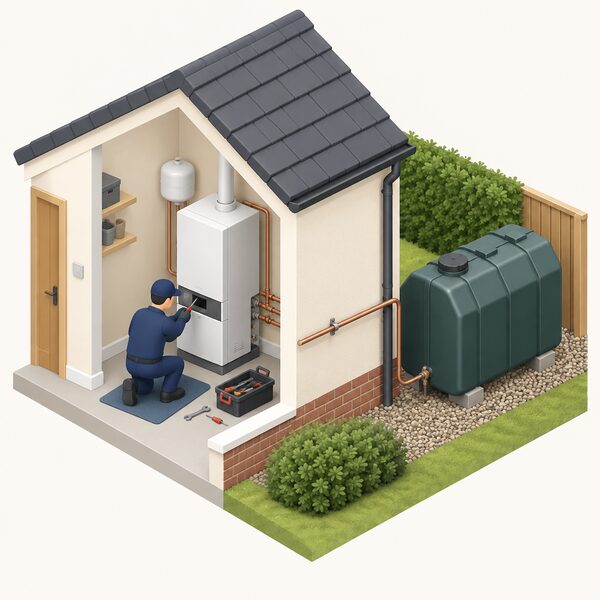
Annual servicing is the consistent recommendation across official and independent guidance, and it is where OFTEC registration shows up most often for households that are not buying anything. Northern Ireland's official guidance says to arrange for the boiler and tank to be serviced at least once a year by an OFTEC technician, including any underground pipework6. Which? says a heating oil tank should be inspected at least once a year by an Oftec-registered technician18, and that servicing should use an Oftec-registered technician19.
UKIFDA recommends booking an annual service with a local OFTEC-registered engineer20. OFTEC's own summer guidance calls an annual service an important investment21, and its solid fuel guidance recommends annual inspection and servicing by an OFTEC registered solid fuel technician22. Confused.com's boiler servicing guidance says to check that the company or engineer is on the Gas Safe register or OFTEC registered for an oil-fired boiler14.
Idle periods are the exception that proves the rule. OFTEC warns that leaving a boiler idle for months at a time can lead to components seizing up21. A second home or a property empty over a season is therefore a case where the annual visit is doing more work than a routine check.
Does an OFTEC-registered installer give a workmanship warranty?
OFTEC operates a workmanship warranty. It covers liquid fuel-fired boiler, cooker, storage and supply installations7. The condition attached is specific: in the unlikely event that work does not meet building regulations and the installer is no longer trading, the work will be put right7.
That condition is the whole shape of the protection. It is a backstop for a business that has ceased trading, not a general guarantee that runs alongside a live installer's own terms. A household with a complaint about a trading installer is dealing with that installer, and then with consumer law, rather than with the OFTEC warranty. Where a business has failed, the warranty is the route that remains.
The distinction between a workmanship warranty and a manufacturer's warranty is worth holding onto. A maker's warranty covers the appliance; the OFTEC warranty covers the installation work. Both can be in play on the same job, and they are claimed from different parties.
Finding and checking an OFTEC-registered installer
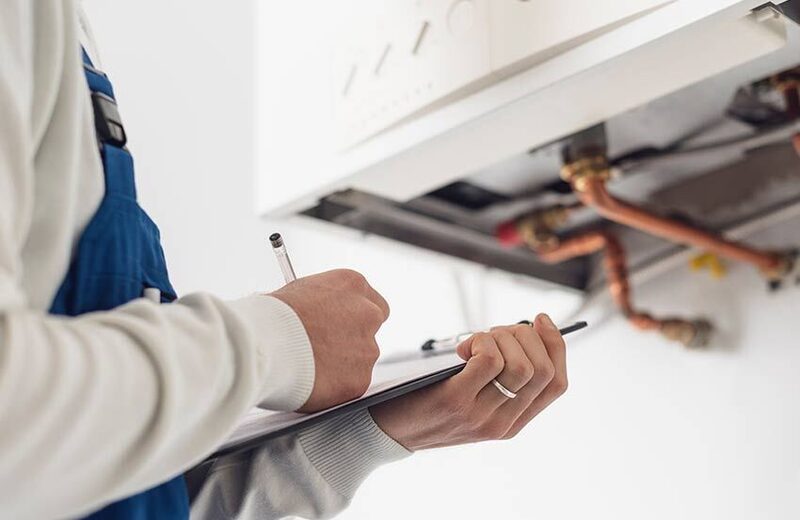
OFTEC publishes a searchable register of technicians11. The search covers the appliance types listed above, so a household can confirm that the business is registered for the work being quoted, not merely that it appears somewhere on the register.
The register lists technicians employed by registered businesses, so the business name is the useful search term8. A household that has been visited by an individual should be able to match that person to a registered business. If the name given does not appear, that is the point at which to ask questions before signing anything.
Independent guidance points the same way. The Energy Saving Trust says to make sure installers are certified with a scheme like TrustMark and registered with GasSafe for gas boilers or OFTEC for oil boilers15. UKIFDA advises that an OFTEC-registered tank installer will advise on the best place to locate a heating oil tank so that it meets safety standards and building regulations25. Certas Energy's oil boiler services are carried out by OFTEC-registered engineers26.
For contact, OFTEC's registration team can be reached on 01473 626 298 in the UK8. Northern Ireland official guidance gives 01473 626298 as the number for checking the register6. Energy UK lists 0845 658 5080 for oil appliance enquiries27.
What registration does and does not do for energy independence

An oil-heated home is dependent on delivered fuel, a tank, a servicing trade and a registration scheme. OFTEC registration does not change any of that. What it changes is the household's position when work is done: a registered business certifies its own compliance, carries an audit trail, and sits behind a workmanship warranty that applies if the business stops trading7.
The dependence that remains is real. The fuel is bought from a distributor, the tank needs annual inspection18, the boiler needs an annual service6, and the trade that does the work is a registered business rather than a household's own labour. OFTEC's warning about DIY repairs, that they can lead to an unsafe heating system, invalidate a warranty and cause problems when selling the property23, is the clearest statement of where the boundary sits.
For a household comparing this with a heat pump or a gas connection, the registration question is a small part of a larger one. The relevant comparison pages are OFTEC registration for oil and renewable heating installers and competent person schemes, with the wider hiring and checking route set out in the home energy installers and retailers guide.
Sources27 cited
- Building regulations: boilers and heating, Planning Portal, 2026
- Upgrading and replacing your boiler, Centre for Sustainable Energy, 2026
- Use a competent person scheme, GOV.UK, 2026-09-17
- Building regulations and heating installation work, OFTEC, 2026-09-20
- Your home guide to liquid fuel heating, OFTEC, 2026-09-20
- Domestic oil installation and boiler servicing, nidirect, 2024-08-27
- Workmanship warranty, OFTEC, 2026-09-20
- Frequently asked questions, OFTEC, 2026-09-17
- Building regulations: boilers and heating, Welsh Government, 2026-09-17
- Why choose an OFTEC registered competent person, OFTEC, 2026-09-17
- Find an OFTEC registered technician, OFTEC, 2026-09-17
- 10 top tips for homes to save on heating bills this Christmas, OFTEC, 2024-12-20
- Boilers, Energy Saving Trust, 2026-05-20
- Boiler servicing, Confused.com, 2025-07-23
- Thermostats and heating controls, Energy Saving Trust, 2026-02-10
- Five signs you need a new boiler, Which?, 2025-09-16
- Boiler retirement: using trigger points to support homeowners, Which?, 2026-07-10
- Heating oil tanks, Which?, 2026-06-01
- Getting the best heating oil prices, Which?, 2026-07-07
- UKIFDA winter heating checklist 2025, UKIFDA, 2025-10
- Five summer heating tips to help households save money on energy bills, OFTEC, 2026-05-26
- Your home guide to solid fuel appliances, OFTEC, 2026-09-17
- Five reasons households should not attempt DIY repairs this summer, OFTEC, 2026-08-17
- Different boiler types, Uswitch, 2025-09-17
- Tank care and security, UKIFDA, 2026-02-18
- Is it cheaper to leave heating on low all day?, Certas Energy, 2025-08-20
- Carbon monoxide, Energy UK, 2024-11-21
 Using an Installer in EnglandHow do you check an installer is registered to sign off their own work, and what happens if they are not?
 Gas Safety RulesAnyone working on gas in your home has to be on the Gas Safe Register, whether they are installing, fixing or servicing an appliance.
 Boiler InstallationGetting a new boiler means following building rules, and the person fitting it must be registered to sign the work off.
 Checking an InstallerBefore you sign anything, how do you know your installer is genuine?
 Registering a WarrantyGetting a new boiler covered for longer usually means registering it quickly, often within a month of installation, or the long guarantee drops to a year.
 Installer in Northern IrelandHow do you check an installer in Northern Ireland is properly registered, and who do you complain to if the work goes wrong?