In this guide
Qcells is a panel brand that UK householders meet by name long before they meet a datasheet, usually because an installer has put it on a quote. The brand's own account of its modules rests on a cell platform called Q.ANTUM, a four-level quality programme, and internal testing the maker describes as up to three times stricter than the global standard, with finished modules taking initial certification from external institutes such as IEC and UL1.
What the brand does not publish is a UK price list, a UK warranty schedule or a UK model range in the material available here. Qcells states that all its products are engineered in Germany, and that its solar modules have a lifespan of over 25 years1. Independent guidance on panels generally puts life at 25 years or more, and up to 30 years when properly maintained2.
The practical questions a householder asks about Qcells, then, are mostly about technology, testing, roof loading and registration rather than about a price. This page sets out what the maker states, what official and independent sources say about the surrounding rules, and where the evidence runs out.
Q.ANTUM: the cell technology behind Qcells panels
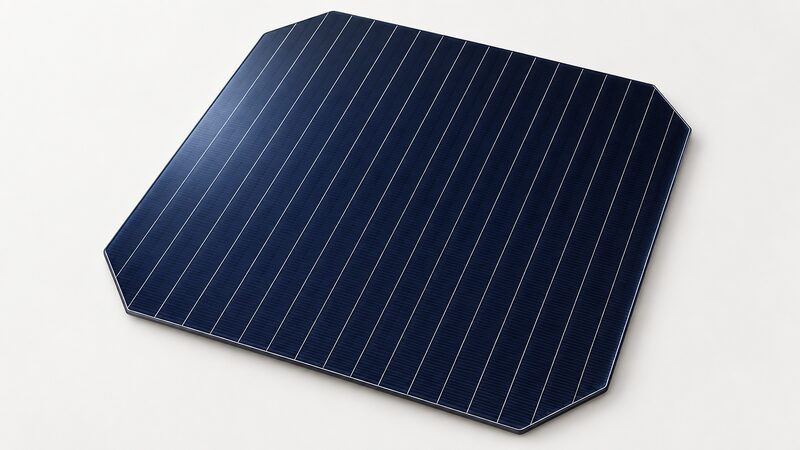
Q.ANTUM is the maker's own name for the cell architecture inside its modules, and the two variants it describes work in different ways. Q.ANTUM DUO uses wire interconnection, which the maker states decreases shading by 75%1. Q.ANTUM NEO integrates two functions that are usually separate layers: the passivation layer and the electrical interconnection are combined into what Qcells calls the NEO Power Transmitter layer1.
That is a maker's description of its own product, and it should be read as such. What it tells a householder is that the brand's differentiation sits at cell level rather than at the level of frame, glass or junction box. It also explains why shading behaviour is a selling point: a panel that loses less output when part of it is shaded is worth more on a roof with a chimney, a dormer or a tree nearby. The general mechanics of shading loss are covered in how shade affects solar panel output, and the wider cell landscape in solar cell technology.
For context on how panels are built at all, independent guidance describes them as small semiconductive cells gridded together to form a larger panel and encased in glass or plastic3. Monocrystalline types take their efficiency from single-crystal silicon3. Panels are also designed to capture diffused light filtered through cloud as well as direct light, which is why a UK roof produces in overcast conditions rather than only in clear sun4. Qcells' Q.ANTUM claims sit inside that general picture rather than outside it.
Durability testing: what the maker claims and what it does not
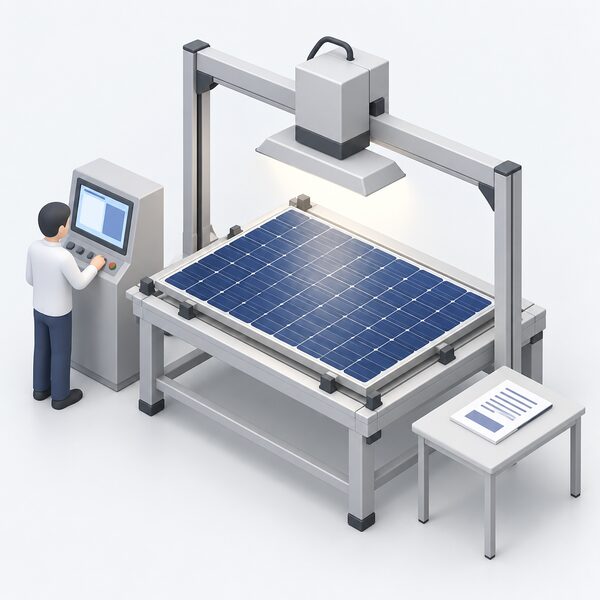
Qcells states that its products pass through a strict four-level quality programme, and that its internal quality testing runs to standards up to three times stricter than the global standard1. Finished modules then take initial certification from external institutes, which the maker names as IEC and UL1. Those two statements describe different things: an internal regime the maker sets for itself, and external type testing against published standards.
The maker also states that its solar modules have a long lifespan of over 25 years1. Independent guidance on panels generally is consistent with that, describing life of 25 years or more and up to 30 years when properly maintained2. One consumer review of a rival brand's panel records a 25 year performance figure at 87.4% of initial output, which shows the shape such guarantees take across the industry rather than anything specific to Qcells5.
What this means in practice is that the durability case for Qcells rests on the maker's own quality programme plus third-party IEC and UL certification, and not on a published cycle count. A householder who wants the test evidence for a specific model can ask the installer for the IEC 61215 summary for that module; the standards themselves are set out in solar panel standards and testing.
Quality Controlled PV and independent certification
Independent certification in the UK solar market runs through the Microgeneration Certification Scheme, which official guidance describes as having been developed in partnership with the industry and other organisations representing consumer interests6. MCS product certification is a route by which a manufacturer's product is certified, and TÜV Rheinland (China) Ltd holds scope covering solar PV, heat pumps, building-integrated solar PV, solar heating and solar mounting7. That scope was expanded to include heat pumps and solar mounting as well as solar PV8, and the same body operates a mobile lab for in-situ testing of large-scale solar PV9.
Official guidance also notes that building control bodies may accept certification under independent schemes of certification and accreditation as evidence of compliance with a relevant standard10. That is the mechanism by which a certificate on a datasheet turns into something a building control officer will accept, and it applies to installers, systems, products, components and structures.
Qcells' own position is that its modules get initial certification from external institutes such as IEC and UL, and that products pass through its four-level quality programme1. The maker does not, in the material available here, claim a specific MCS product certificate number for a named UK module. For how certification works on the installer side, see MCS certification for solar PV installations.
| Body or scheme | What it covers | Who states it |
|---|---|---|
| IEC and UL | Initial certification of Qcells modules | Maker1 |
| Qcells four-level quality programme | Internal quality control, testing up to 3 times stricter than the global standard | Maker1 |
| TÜV Rheinland (China) Ltd | Solar PV, heat pumps, BIPV, solar heating, solar mounting | Independent7 |
| MCS | Product certification route developed with industry and consumer representatives | Official6 |
Lightweight construction and what it means for your roof
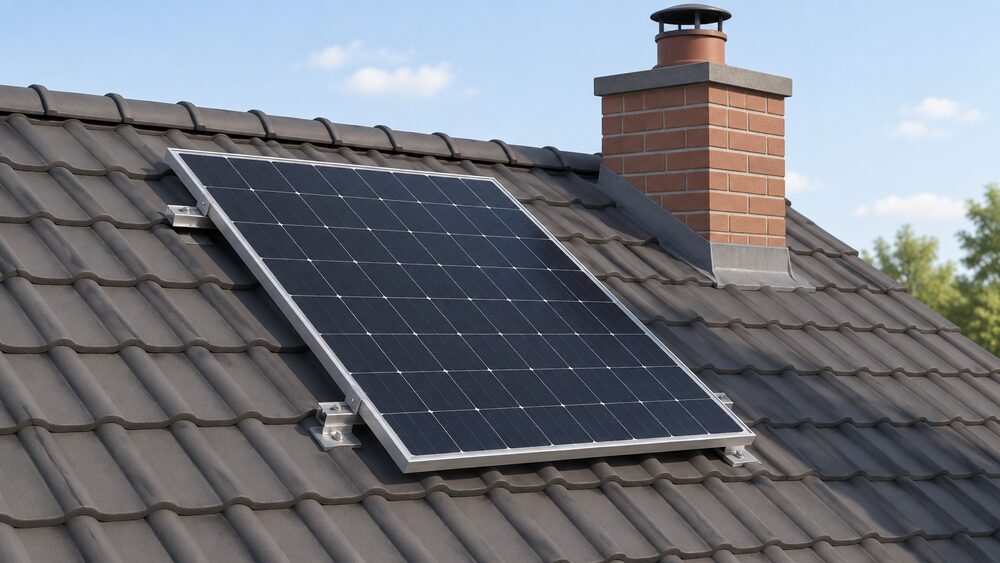
No solar panel is light enough to be treated as a surface finish, and the official position is blunt. Planning guidance states that solar panels are not light and that the roof must be strong enough to take their weight, especially if the panel is placed on a roof11. Building regulations treat the additional loading on the roof structure as the reason the check is required12.
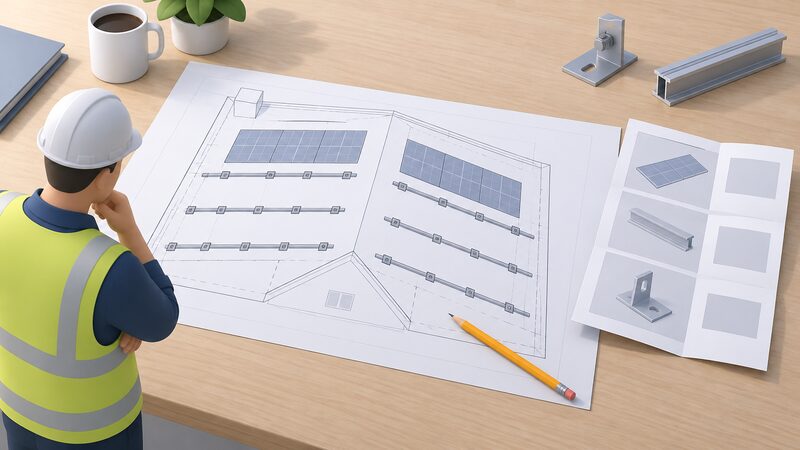
That loading question is answered by a structural assessment, not by a brand name. Where a building notice is used, the additional information that may be required includes structural calculations, thermal performance specification such as CO2 emissions and thermal calculations, a certificate for cavity wall insulation, and the manufacturer's installation details for solar panels indicating loadings and fixings13. The last item is where a Qcells mounting and loading document would sit in a submission.
Roof geometry changes the cost as much as the weight does. Skylights or roof vents may make installation harder and increase costs, and a steep roof may slowly build up dirt on the panels14. Flat roofs are possible, with more flexibility over panel angle, but are more complex because panels may need additional mounting systems and the roof must support the extra weight, so a flat roof installation might cost more than a pitched one15. Panels on flat roofs are normally tilted up to maximise production16. Roof-integrated panels leave no gaps for birds or rodents but can be complex to retrofit17.
Supplier audits and responsible sourcing
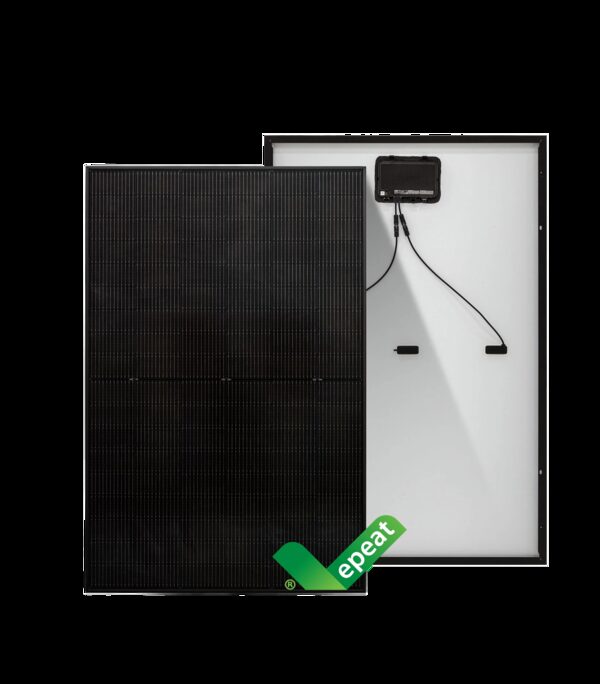
The maker's account of how its components are controlled is the four-level quality programme and internal testing up to three times stricter than the global standard, with external IEC and UL certification of finished modules1. Qcells also states that it began implementing a global conflict minerals management policy in 2023, aligned with Responsible Minerals Initiative guidance and process1.
Beyond the maker's own statements, the material available here holds no independent audit report naming Qcells suppliers. What it does hold is the surrounding regulatory picture. Manufacturers, importers and distributors of consumer connectable products carry duties that include investigating potential compliance failures, maintaining records and taking action in relation to compliance failures18. Public procurement and scheme specifications set their own product quality rules, and one Welsh scheme specification states its quality of products requirement simply as new19.
Supply chain concentration is a separate and larger point. China holds more than 80% of manufacturing capacity across all stages of solar panel production, including polysilicon20. Qcells states that all its products are engineered in Germany1, which describes where the design work sits rather than where every input is sourced. For a household, the practical consequence is that no panel brand offers full supply chain independence, and the question is which parts of the chain a maker can evidence.
Registering your Qcells system: what information you need
Registration is not a brand process, and it splits into two quite different cases.
For a professionally installed domestic system, the requirement is registration with the Distribution Network Operator. Independent guidance states that a householder planning to install a solar panel system must register it with their DNO16, and that the installer will also register the solar panel system and any battery storage with the DNO as an important safety process15. In the London area the operator is UK Power Networks, and the guidance there is that the system must be registered with UKPN, usually done by the installer21.
For plug-in solar, the sequence is different and the manufacturer carries the first step. Manufacturers must register compliant devices on the ENA Type Test Register, on the ENA Direct Connect platform, and obtain confirmation that the device has been assessed and identified as compliant before placing it on the market22. A householder is legally required to register any plug-in solar panel device before use in the UK23, and should check that the specific model is on the list of devices meeting UK standards on the ENA Connect Direct LCT device register23. The details needed at that point are your name, your postcode and the make and model of the device23. An earlier version of the same specification, since withdrawn, set out the same manufacturer registration duty24.
For a Qcells array fitted by an installer, the paperwork a householder should expect to hold is the kind recorded on public scheme handovers: panel manufacturer, panel model and capacity, number of panels, configuration, roof orientation, rail manufacturer and material, bracket type and material, and the inverter make, model, rating, location and guarantee period19. Handover at practical completion also covers record drawings, test and completion certificates, maintenance instructions, manufacturers' directory and colour product literature, a full description of works and commissioning certificates19. The grid connection rules themselves are explained in connecting solar to the grid.
Who makes Qcells panels: the company behind the brand
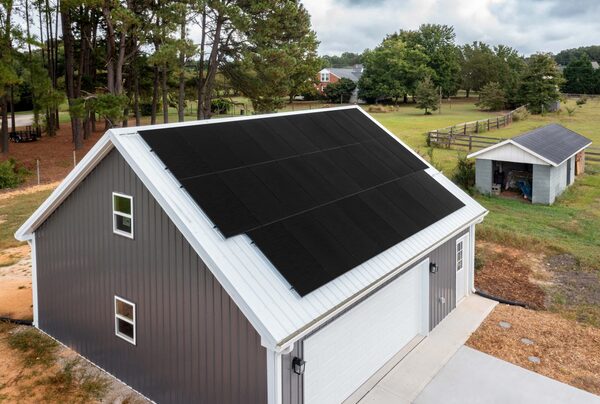
Qcells is a brand of Hanwha Qcells, and the maker states that all its products are engineered in Germany1. That is a design and engineering statement. It does not mean the modules are manufactured in Germany, and the material available here does not give a factory location for UK-bound Qcells modules.
The brand has a public profile beyond domestic panels. Qcells provided additional funding for a briefing on solar's role in decarbonising Scottish homes, alongside Forster Group, Viridian Solar and City Plumbing25. That places the company inside the UK policy conversation rather than only at the retail end.
The wider manufacturing picture matters for how a household reads any brand's provenance. China holds more than 80% of manufacturing capacity across all stages of solar panel production, including polysilicon20. A European engineering base is therefore a statement about where design and quality control sit, not about where silicon is refined or cells are cut.
For a household weighing energy independence, the position is straightforward. A Qcells array reduces dependence on imported electricity and on a supplier for the units it generates, and the maker's stated module lifespan of over 25 years1 is the period over which that reduction accrues. What remains is the grid connection itself, which is why DNO registration is a legal requirement rather than an administrative one16, and the inverter, which is a separate product with its own maker and its own warranty. The brand of the panel does not change any of that. The wider picture is set out in solar panels and household energy independence, and the panel types sold in the UK are compared in types of solar panel sold in the UK.
Sources25 cited
- Energy Harvesting Technology, Qcells, 2026-08-17
- Are solar panels worth it?, Uswitch, 2026-09-16
- Solar panel installation, maintenance and repair, NICEIC, 2026-09-17
- Do solar panels work in winter?, Uswitch, 2026-09-15
- JA Solar solar panels review, Which?, 2026-08-12
- The Microgeneration Certification Scheme, Planning Portal, 2026
- Certifying your product, MCS, 2026-05-18
- TÜV Rheinland expands certification scope to include heat pumps and solar mounting systems, MCS, 2025-11-11
- Setting the standard: product certification and the future of UK solar, MCS, 2025-12-08
- Approved Document L Volume 1 consultation version, Welsh Government, 2026-09-17
- Solar electricity photovoltaics, Planning Portal, 2026-09-17
- Solar panels guidance, City of York Council, 2026-09-17
- Building Notice advice note, Building Control Northern Ireland, 2013
- How do solar panels work?, Smart Energy GB, 2026-03-16
- Solar panel installation, Energy Saving Trust, 2026-09-07
- Solar panels, Energy Saving Trust, 2026-08-27
- Solar panel problems and how to solve them, Which?, 2026-03-26
- Regulations: consumer connectable product security, GOV.UK, 2024-01-08
- Barcud solar panel installation scheme specification, Sell2Wales, 2026-06-15
- POSTnote 771: solar panel manufacturing, Parliamentary Office of Science and Technology, 2026-06-25
- Solar panels, London Borough of Hammersmith and Fulham, 2026-09-17
- Plug-in solar interim product specification, Department for Energy Security and Net Zero, 2026-06
- Plug in solar, Electricity North West, 2026-09-20
- Plug-in solar interim product specification (withdrawn), Department for Energy Security and Net Zero, 2026-06
- Solar plays crucial role in decarbonising Scottish homes, Solar Energy UK, 2022-12-01